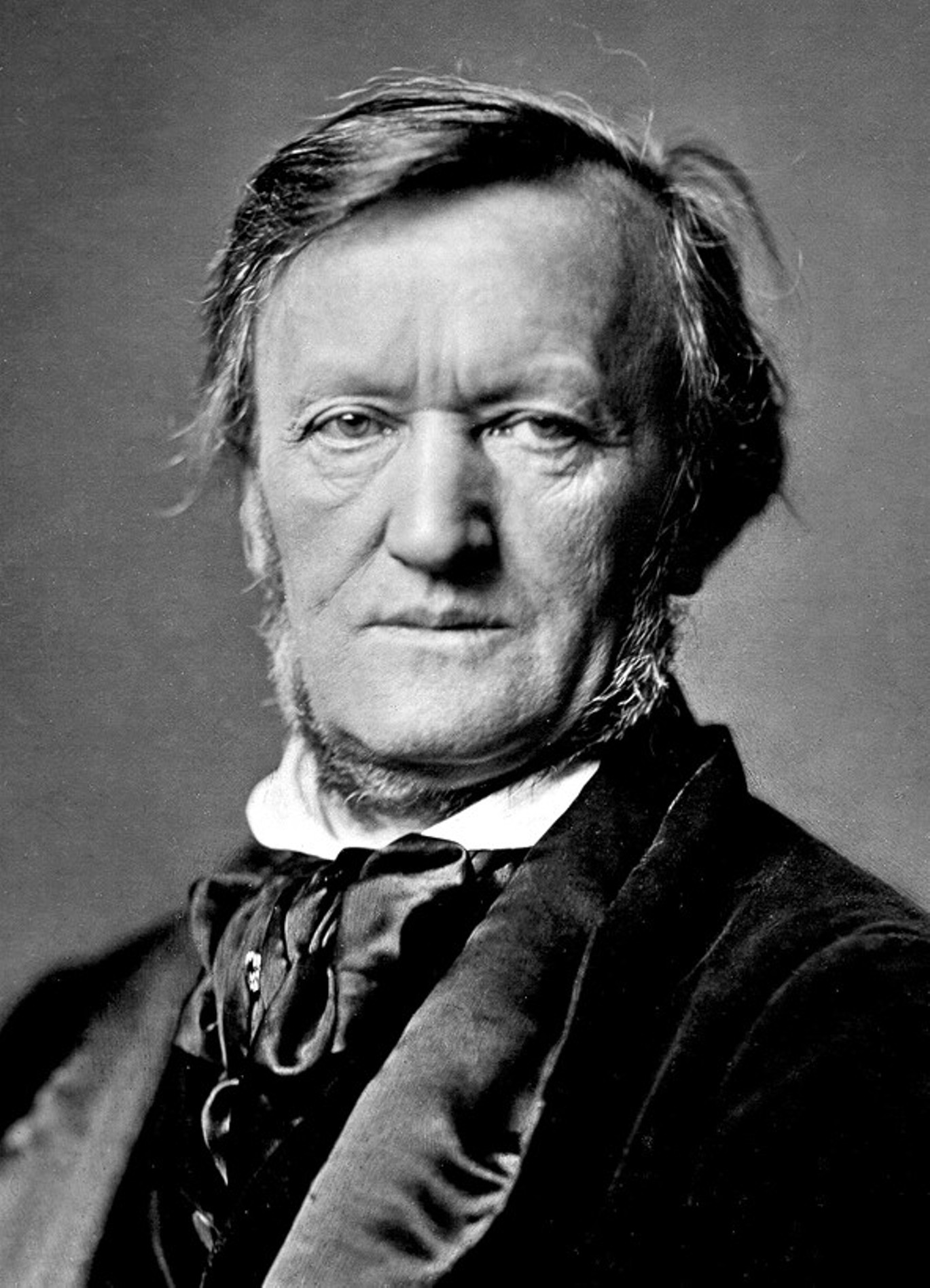
Richard Wagner
 Germany
Birthday
+1813-05-22
Birth Sign
Sagittarius
Birthplace
Leipzig
Age
Died at 69
About
Born in Leipzig in 1813, Richard Wagner was a German composer, conductor, and writer who fundamentally reshaped the world of opera. He didn't just write the music; Wagner penned the libretti for all his stage works, a singular approach that allowed him to meticulously craft his vision of the "total work of art," or Gesamtkunstwerk. This concept aimed to fuse music, drama, poetry, and visual arts into a unified, immersive experience. Wagner's mature works, often called music dramas, moved away from the traditional operatic structure, favoring a continuous, sung narrative where music evolved organically from the text.
Fame & Fandom
Richard Wagner's legacy endures not merely as a historical footnote but as a living, breathing force within the global cultural consciousness. In August 2026, he stands as the 13th most famous person in Germany, holding steady from the previous cycle. His influence transcends national borders, placing him as the 37th most famous person from Germany on the world stage. Within the specific realm of classical music, his dominance remains unchallenged, ranking as the 17th most famous person in Classical, also holding steady from the previous cycle. These placements reflect the iFANN Global Fame Rankings.
This fame is anchored by a unique, ritualistic community known as "Wagnerians." Unlike modern pop fandoms with casual online groups, these adherents form a highly structured, almost religious order centered around the Bayreuth Festival. Their devotion manifests in grueling endurance tests, such as 23-hour marathons of the *Der Ring des Nibelungen* cycle, where fans sit through physical discomfort on unpadded benches as an act of worship. The festival itself serves as a pilgrimage site, drawing devotees who travel globally to process up the hills of the Festspielhaus. This collective power recently demonstrated its strength in August 2026 when the audience audibly booed an AI-assisted staging, rejecting deviations they viewed as disrespectful to the composer's vision. While no single formal name exists for all listeners, the core group operates under the banner of "Wagnerians," maintaining hereditary traditions and institutional pressure that shape productions more than any social media campaign could.
Interesting Facts and Legends
Richard Wagner penned the libretti for all his stage works, ensuring his vision of the Gesamtkunstwerk remained untouched by outside interpretation. The 1876 premiere of Der Ring des Nibelungen at the inaugural Bayreuth Festival stands as the single most iconic moment in his life, a monumental achievement spanning four operas over three days that was simultaneously a financial disaster for the composer. A persistent legend surrounding his character involves his complex relationship with Jewish musicians; while often labeled a Nazi icon posthumously, anecdotes from 2026 suggest he once wept upon seeing the Jewish composer Meyerbeer, challenging the simplified narrative of his personal animosity. Modern folklore also tracks the tension between tradition and innovation within his fanbase, highlighted by the audible boos directed at an AI-assisted staging in August 2026. It is crucial to distinguish the composer from other men named Richard Wagner who appeared in obituaries in 2026; the legendary figure died in Venice on February 13, 1883.
A widely retold story in musical folklore claims audiences frequently fainted during early performances of Tristan und Isolde due to the unprecedented emotional intensity of the music. This phenomenon gave rise to the term "Wagnerian swoon," implying the score was physically overwhelming. Another verified architectural legend describes the "mystical veil" Wagner insisted upon: a sunken orchestra pit designed to hide the musicians entirely, making the drama appear to emerge from a supernatural source rather than a visible band. In 2026, the revival of Rienzi sparked intense debate among fans regarding the opera's relevance to modern politics and its historical controversy, proving the composer's work remains a lightning rod for discussion over a century after his death.
Death & Aftermath
Died
+1883-02-13 (aged 69)
Death Place
Bayreuth, Bavaria
Cause of Death
Acute cardiac event (heart attack)
Wilhelm Richard Wagner, the German composer, theatre director, and conductor, died on 13 February 1883 at the age of 69. He passed away in the Venetian Room (Salon) of his villa, Villa Wahnfried, located in Bayreuth, Bavaria. His death occurred approximately two weeks after he had been conducting a private performance of excerpts from his opera Lohengrin for guests at the Villa Wahnfried on 27 January 1883; this was widely considered his final public appearance or significant musical engagement. The official cause of death was recorded as an acute cardiac event, specifically a heart attack resulting from complications related to long-standing angina pectoris and a history of poor circulation.
Contemporary accounts confirm that Wagner suffered severe chest pain and respiratory distress in the early hours of the morning before passing peacefully in his sleep. No disputed accounts regarding foul play or alternative causes exist in historical records; the consensus remains that he died of natural causes linked to cardiovascular disease. The estate was managed by his widow, Cosima, who oversaw the completion of his unfinished work, Parsifal, and ensured the continuation of the Bayreuth Festival. Public reaction to Wagner's death was immediate and profound across Europe. Tributes poured in from peers and institutions, with many musicians and critics mourning the loss of a revolutionary figure in Western music.
In London, a memorial concert was held shortly after his death featuring works by Wagner. While specific details of fan vigils are less documented than modern digital trends, large gatherings of admirers occurred in Bayreuth and other cultural centers. The immediate aftermath saw a surge in interest in his compositions, though metrics referenced in modern contexts did not apply; instead, sheet music sales and opera productions increased significantly. Notably, the day of his death was marked by moments of silence and special performances in theaters dedicated to his work. Wagner's funeral took place on 16 February 1883, three days after his death, at the cemetery in Bayreuth. The service was a private affair attended by family, close friends, and select members of the artistic community, rather than a massive public spectacle, though thousands of mourners gathered outside the church and cemetery.
The ceremony included musical selections from his operas, notably the Funeral March from Siegfried. He was buried in the garden of Villa Wahnfried, where he is interred alongside his wife Cosima and their son Siegfried. A mausoleum was later constructed over the grave site to house the remains of the family. Posthumously, Wagner's legacy has been immense and complex. His estate continues to be managed by the Richard Wagner Foundation, which oversees the Bayreuth Festival and the preservation of his works. Parsifal, his final opera, premiered successfully in 1882 while he was alive but became a central part of his posthumous reputation. Over the decades, numerous films, books, and documentaries have been produced about his life and music, including the controversial association with Adolf Hitler and the Nazi regime, which has led to ongoing debates and boycotts in certain regions.
Inductions into various halls of fame and dedications of landmarks honor his contributions. However, his estate has also faced criticism and legal challenges regarding copyright and the ethical implications of his antisemitic writings, leading to specific restrictions on the performance of his works in certain contexts.
Awards & Accolades
Keywords
Quick Facts
- Profession
- composer, librettist, conductor
- Born
- +1813-05-22
- Birthplace
- Leipzig
- Died
- +1883-02-13
- Death Place
- Venice
- Gender
- Male
- Spouse
- Cosima Wagner, Minna Planer
- Birth Sign
- Sagittarius
Personal Details
- Spouse
- Cosima Wagner, Minna Planer
Join the community
fans discussing