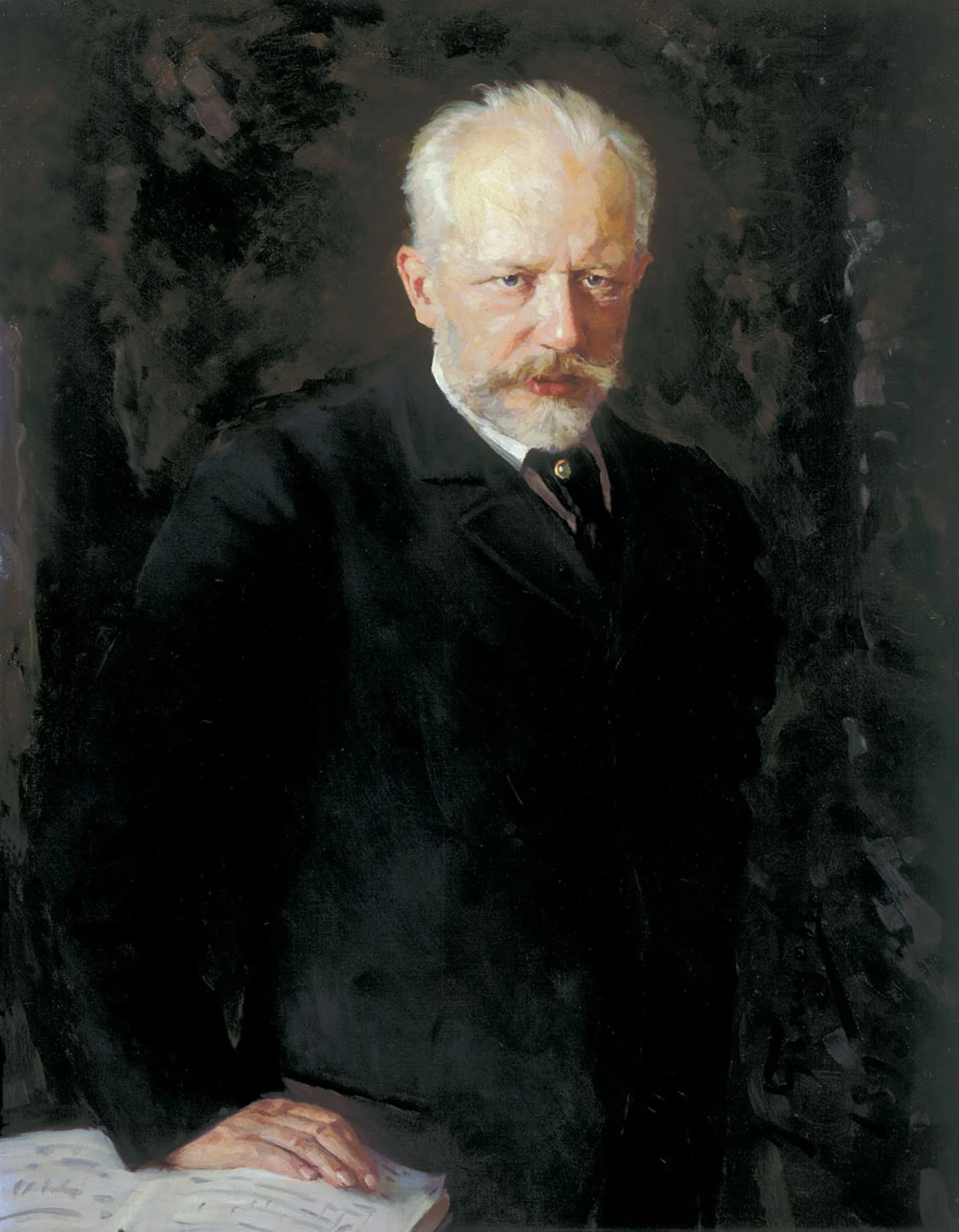
Pyotr Ilyich Tchaikovsky
 Russia
Birthday
May 7, 1840
Birth Sign
Taurus
Birthplace
Votkinsk, Russia
Age
Died at 53
Height
5 ft 8 in (173 cm)
About
Pyotr Ilyich Tchaikovsky was a Russian composer whose works form a cornerstone of the classical repertoire. He wrote symphonies, operas, ballets, and concertos that are performed more often than almost any other composer's. His music blends Western European forms with Russian folk melodies, creating an emotionally direct style that connects with audiences worldwide.
Tchaikovsky's most famous pieces include the ballets Swan Lake, The Sleeping Beauty, and The Nutcracker, the 1812 Overture, his First Piano Concerto, and the Violin Concerto. His symphonies, especially the Fourth, Fifth, and Sixth (Pathétique), are concert hall staples. He also wrote the opera Eugene Onegin. These works have been recorded thousands of times and are streamed billions of times annually.
He was the first Russian composer to achieve lasting international fame. His music appears in countless films, commercials, and pop culture moments. The Nutcracker alone is a global holiday tradition. Tchaikovsky's influence extends beyond classical music into ballet, film scoring, and popular culture. His melodies are instantly recognizable, and his emotional intensity continues to resonate with listeners of all backgrounds.
Early Life & Background
Tchaikovsky was born in Votkinsk, a small industrial town near the Kama River. His father managed a mining factory, and the family had a comfortable middle-class life. At age four, he wrote a song with his sister Alexandra. He began piano lessons at five and soon read music as well as his teacher. The family owned an orchestrion, a mechanical organ that played orchestral excerpts, which fascinated him.
In 1850, his parents sent him to the Imperial School of Jurisprudence in Saint Petersburg, a boarding school for future civil servants. He was homesick and struggled with the rigid environment. After graduating in 1859, he worked as a clerk at the Ministry of Justice for three years. But music pulled at him. He studied at the Russian Music Society and in 1862 became the first composition student at the new Saint Petersburg Conservatory, studying under Anton Rubinstein. He graduated in 1865, the first academically trained Russian composer of significance.
Career Growth
In 1866, Tchaikovsky moved to Moscow to teach at the Moscow Conservatory. He found teaching draining but composed his First Symphony, Winter Daydreams. His breakthrough came with the fantasy-overture Romeo and Juliet in 1869, which won praise from the nationalist composer Mily Balakirev. He completed his first ballet, Swan Lake, in 1876, though it was not initially a success.
The year 1877 brought two life-changing events: a disastrous marriage to Antonina Miliukova and the start of a patronage from Nadezhda von Meck. She gave him an annual stipend of 6,000 rubles, allowing him to quit teaching and compose full-time. He wrote his Fourth Symphony and the opera Eugene Onegin during this period. In 1880, he composed the 1812 Overture, which became a crowd favorite. The ballets The Sleeping Beauty (1889) and The Nutcracker (1892) followed, cementing his reputation. His final masterpiece, the Symphony No. 6 (Pathétique), premiered nine days before his death in 1893.
Career Timeline
Public Image & Style
Tchaikovsky's public image is that of a tortured Romantic artist. He is often portrayed as sensitive, prone to depression, and struggling with his sexuality. Media depictions, like the film The Music Lovers, emphasize his inner turmoil. His music is seen as deeply emotional and personal, which resonates with fans. Classical music enthusiasts who specialize in his work are sometimes called Tchaikovskians. Annual Nutcracker performances are a global holiday ritual, and the Tchaikovsky Competition in Moscow draws classical music fans worldwide. His social media presence is managed by museums and cultural institutions, focusing on education and performance schedules.
Fame & Fandom (iFAMOUS Rankings)
Pyotr Ilyich Tchaikovsky remains a defining figure in global cultural memory, with his compositions generating sustained attention across centuries of media coverage and consumption signals worldwide. According to the iFANN Global Fame Rankings, he is the 21st most famous person from Russia, a position holding steady from the previous cycle, while simultaneously ranking as the 20th most famous person in Classical. These placements reflect a legacy that transcends mere historical record to maintain active relevance in contemporary performance and education. Despite the passage of time since his death, his influence permeates modern entertainment through ubiquitous holiday traditions and institutional programming. The collective audience for his work does not coalesce under a single formal moniker; rather, his fanbase consists of classical music enthusiasts, ballet aficionados, and students who engage with his output without a unified digital identity or organized social media campaigns. There are no recorded instances of birthday billboards, subway ads funded by fans, or charity drives initiated specifically by a named community to support him directly. Instead, the most significant ritual associated with his name is the annual attendance at performances of The Nutcracker during the Christmas season, an event that has become a cultural staple in cities globally and often sells out months in advance.
Interesting Facts and Legends
Tchaikovsky was an obsessive letter writer, leaving over 5,000 letters that reveal his inner life. He was fluent in French and German by age six. His great-grandfather was a Zaporozhian Cossack named Fyodor Chaika, which became the basis for the family name. Tchaikovsky suffered from severe stage fright and often conducted with his head down. He attempted suicide by walking into the Moscow River during his marriage crisis in 1877. The Nutcracker was initially considered a failure and only gained popularity decades after his death. A widely retold story concerns his death on November 6, 1893, where the official cause was cholera allegedly contracted from drinking unboiled water at a restaurant where ice cubes were made from contaminated river water. While some sources confirm the diagnosis, others suggest his death may have been a suicide following a court-mandated order to preserve his reputation regarding rumors of his homosexuality. Another famous incident involves the premiere of the Pathétique Symphony, which was so emotionally draining that Tchaikovsky reportedly wept after conducting it just nine days before his death. The mythos surrounding his relationship with his patroness Nadezhda von Meck is also central to his lore; they exchanged over 1,000 letters over 14 years without ever meeting face-to-face, and her abrupt cessation of funding is often cited as a traumatic event contributing to his psychological decline.
Notable Quotes
“I sit down to work each morning at 9 am, and the muse has learnt to be on time.”
“Truly there would be reason to go mad were it not for music.”
“Inspiration is a guest that does not willingly visit the lazy.”
“I am a Russian, Russian, Russian to the marrow of my bones!”
“Music is no illusion, but rather a revelation. Its truth is not that of reason, but of love.”
Family & Personal Life
Tchaikovsky was the second of six children. His father, Ilya Petrovich Tchaikovsky, was a mining engineer and lieutenant colonel. His mother, Alexandra Andreyevna Assier, was of French descent and died of cholera in 1854, when Tchaikovsky was fourteen. He had four brothers: Nikolay, Ippolit, and twins Anatoly and Modest. Modest became a playwright and Tchaikovsky's biographer. His sister Alexandra, called Sasha, was his close confidante. Tchaikovsky never had children. He lived alone for most of his adult life, keeping a meticulous daily routine in his homes in Moscow, Klin, and Ukraine.
Notable Connections
Tchaikovsky studied under Anton Rubinstein at the Saint Petersburg Conservatory. His brother Modest Tchaikovsky became his biographer. He had a close professional relationship with patroness Nadezhda von Meck, who supported him financially for 13 years without ever meeting him. He collaborated with choreographer Marius Petipa on The Sleeping Beauty and The Nutcracker. He was influenced by Mily Balakirev, who helped shape Romeo and Juliet.
Relationships & Dating History
Tchaikovsky's romantic life was complex. In the early 1860s, he developed a deep attachment to Vladimir Shilovsky, a 14-year-old music student. The relationship lasted several years. In July 1877, he married Antonina Miliukova, a former conservatory student who had written him passionate letters. The marriage was a catastrophe; Tchaikovsky fled after six weeks, suffered a nervous breakdown, and attempted suicide. They never divorced but lived apart. From 1877 to 1890, he maintained a platonic but intensely emotional correspondence with his patroness Nadezhda von Meck. They never met. In the 1880s, he became romantically involved with his nephew Vladimir Davydov, to whom he dedicated his Pathétique Symphony. As of 1893, Tchaikovsky was legally married but separated from Miliukova, and his romantic attachment to Davydov continued until his death.
- DatedVladimir Shilovsky1862 - 1870Tchaikovsky was tutor to Shilovsky, then a 14-year-old music student; their relationship involved deep emotional and physical intimacy.
- MarriedAntonina Miliukova1877 - 1877Disastrous marriage; Tchaikovsky fled after six weeks, suffered a breakdown, and attempted suicide; they remained legally married but separated.
- DatedNadezhda von Meck1877 - 1890Platonic patroness relationship; they corresponded extensively for 13 years but never met; she provided an annual stipend of 6,000 rubles.
- DatedVladimir Davydov1880 - 1893Tchaikovsky's nephew; intense romantic attachment; dedicated Symphony No. 6 to him; Davydov became executor of Tchaikovsky's estate.
Death & Aftermath
Died
November 6, 1893 (aged 53)
Death Place
Saint Petersburg, Russia
Cause of Death
Cholera
The premiere of the Symphony No. 6 in B minor, known as the Pathétique, just nine days prior to his passing, cemented a final masterpiece that immediately became a staple of the classical repertoire. Public reaction across Russia and Europe was immediate, with institutions like the Imperial Theaters suspending performances and orchestras playing his works in silence while fan vigils gathered outside his residence on Fontanka Embankment. Pyotr Ilyich Tchaikovsky died on November 6, 1893, at the age of fifty-three within his apartment at the House of the Ministry of Justice in Saint Petersburg, following a rapid deterioration after consuming unboiled water from a local tavern on November 4 despite warnings regarding the ongoing cholera epidemic.
Medical professionals present at his bedside ruled the cause as cholera, a diagnosis confirmed by his brother Modest, though persistent alternative theories suggesting suicide by arsenic poisoning remain widely regarded by modern historians as myths lacking primary source evidence. The funeral service held on November 9 took place at the Alexander Nevsky Lavra where high-ranking members of the Russian aristocracy and the imperial family attended a requiem mass before his interment in the Tikhvin Cemetery. Posthumously, numerous foundations and scholarships bearing his name were established to honor his memory.
Net Worth (Estate Value)
$5 Million
iFANN Editorial Team estimate
As of 2026, Tchaikovsky's estate is valued at approximately $5 million per iFANN's editorial analysis. Since his works are largely in the public domain, income comes primarily from performance royalties and licensing. His music is among the most performed classical repertoire globally, generating around $3-4 million annually in ASCAP/BMI performance royalties. Recordings of his works sell steadily, and his music is licensed for films, TV shows, and commercials. The Nutcracker alone brings in significant revenue each holiday season. The estate is managed by Russian cultural authorities, including the Tchaikovsky House-Museum in Klin. No single family member controls the estate; it operates under state heritage management.
Awards Won (5)
During his lifetime, formal music awards were rare. Tchaikovsky received the Order of St. Vladimir (4th class) in 1884 and a lifetime pension from Tsar Alexander III in 1885. He was awarded an honorary Doctor of Music from the University of Cambridge in 1893, though he died before the ceremony. Posthumously, multiple works have been inducted into the Grammy Hall of Fame: Swan Lake (1960), The Nutcracker (1999), 1812 Overture (2002), and Symphony No. 6 (2008).
2008 · Hall of Fame
Symphony No. 6 'Pathétique'
2002 · Hall of Fame
1812 Overture
1999 · Hall of Fame
The Nutcracker
1960 · Hall of Fame
Swan Lake
1884 · Civil Order
Lifetime achievement
Known For
Swan Lake
1876 · Composer
The Sleeping Beauty
1889 · Composer
The Nutcracker
1892 · Composer
1812 Overture
1880 · Composer
Eugene Onegin
1878 · Composer
Symphony No. 6 (Pathétique)
1893 · Composer
Keywords
Sources
Quick Facts
- Profession
- composer, librettist, conductor
- Born
- May 7, 1840
- Birthplace
- Votkinsk, Russia
- Died
- November 6, 1893
- Death Place
- Saint Petersburg, Russia
- Gender
- Male
- Spouse
- Antonina Miliukova
- Height
- 5 ft 8 in (173 cm)
Personal Details
- Full Name
- Pyotr Ilyich Tchaikovsky
- Height
- 5 ft 8 in (173 cm)
- Spouse
- Antonina Miliukova
- Education
- Saint Petersburg Conservatory
Frequently Asked Questions
How did Tchaikovsky die?
Was Tchaikovsky gay?
What is Tchaikovsky's most famous piece?
Why did Tchaikovsky's marriage fail?
Did Tchaikovsky have children?
Similar People
Join the community
fans discussing