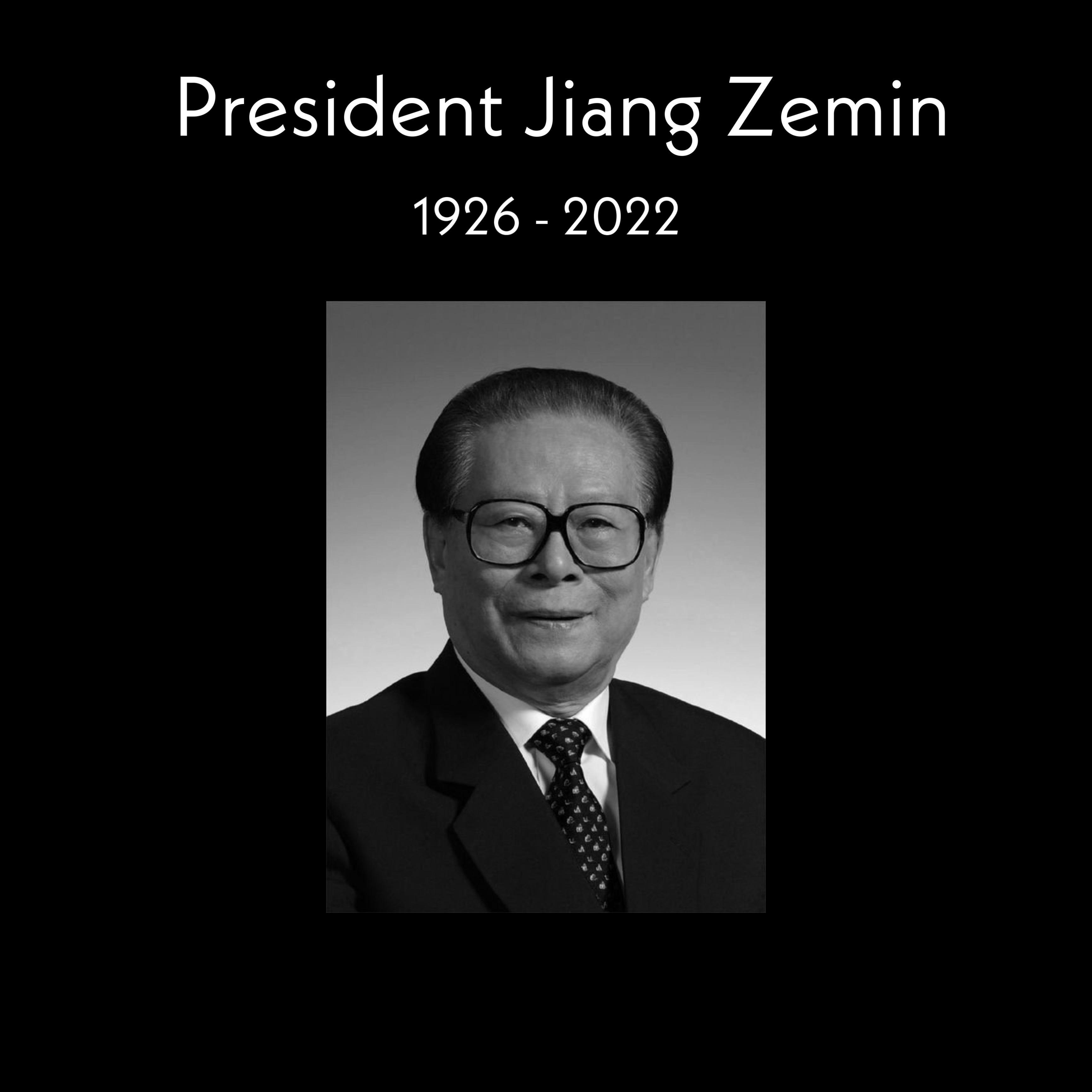
Jiang Zemin
 China
politician•electrical engineer
Also known as: Jiang Ze Min, Jiangzemin, Zemin Jiang, General Secretary Jiang Zemin, Chiang Tse-min
Birthday
August 17, 1926
Birth Sign
Leo
Birthplace
Yangzhou, Jiangsu, China
Age
Died at 96
About
Jiang Zemin was a Chinese politician and electrical engineer who served as General Secretary of the Chinese Communist Party from 1989 to 2002 and as President of China from 1993 to 2003. He was the third paramount leader of the People's Republic, holding the chairmanship of the Central Military Commission across the same period and remaining a presence in party affairs until he gave up his last formal post in 2005.
He is remembered chiefly for the economic programme pursued under his leadership: the restructuring and partial privatisation of state-owned enterprises, large-scale infrastructure building, the return of Hong Kong in 1997 and Macau in 1999, and China's accession to the World Trade Organization in 2001. He set out the Three Represents, a doctrinal adjustment that admitted private business owners into the party's base of support. His tenure also carried the legacy of the 1989 Tiananmen crackdown, which brought him to power and which he defended for the rest of his life.
Jiang died in Shanghai on 30 November 2022 at 96. The centenary of his birth on 17 August 2026 was marked in Beijing with a gathering led by Xi Jinping, a twelve-part documentary, commemorative coins and stamps, and a published selection of his foreign-policy writings, placing his memory at the centre of official discussion of China's reform era.
Early Life & Background
Jiang Zemin was born on 17 August 1926 in Yangzhou, a canal city in Jiangsu province known for its gardens and its food. His family belonged to the educated urban class of the lower Yangtze, and the household was one in which study was treated as a given. He entered university in the mid-1940s and joined the Chinese Communist Party while still a student, at a time when the party was a clandestine organisation operating inside Nationalist-held cities.
His training was technical rather than political. He studied electrical engineering, first at National Central University and then at National Chiao Tung University, and spent the 1950s in the Soviet Union, where he was assigned to the Stalin Automobile Works in Moscow. That posting made him part of a small cohort of Chinese engineers sent abroad to learn industrial methods firsthand. He later worked in Romania, helping to set up manufacturing plants, and returned to a career inside the state industrial apparatus rather than the party secretariat.
For most of the 1980s he was a mid-ranking technocrat with an engineering background and a reputation for competence rather than ideology. He served as vice minister of the Ministry of Electronics Industry and later moved to Shanghai, where he became mayor and then Communist Party secretary. Obituaries noted the oddity that a man who had managed a soap factory and was close to retirement age was still in that position when the events of 1989 abruptly changed the arithmetic of his career.
Career Growth
The Tiananmen Square crackdown of June 1989 removed Jiang's predecessors from power and, in a move that surprised observers, elevated him to General Secretary of the Chinese Communist Party. He took the chairmanship of the Central Military Commission at the same time, giving him control of the armed forces from the outset. He became President of China in 1993, completing the consolidation of the three principal offices into a single hand.
The defining work of his leadership was economic. His administration oversaw the restructuring of a large share of the state-owned enterprise sector, closed or merged thousands of loss-making plants, and allowed private enterprise a formal place in the economy. China's entry into the World Trade Organization in 2001 followed years of negotiation and reshaped the country's trade position for the next two decades. Hong Kong returned to Chinese sovereignty in 1997 and Macau in 1999, both under arrangements negotiated during his tenure.
He also gave the party a doctrinal adjustment. The Three Represents, advanced in 2000 and written into the party constitution in 2002, redefined the CCP as representing advanced productive forces, advanced culture, and the interests of the broad majority, language that opened membership to private entrepreneurs. Jiang gave up the general secretaryship in 2002, the presidency in 2003, and his last formal post, the military commission chairmanship, in 2005.
Career Timeline
Public Image & Style
Jiang's public persona was that of the gregarious technocrat. He wore heavy-framed glasses, favoured dark suits of an unremarkable cut, and carried himself with the ease of a man who had spent decades in factory offices rather than party compounds. Where his predecessor was austere and his successor was formal, Jiang was expansive. He shook hands at length, cracked jokes, and broke into song at dinners.
That looseness was read differently inside and outside China. Abroad it made him the most approachable of the paramount leaders, a figure Western correspondents could write about without straining for metaphors. At home it fed both genuine affection and a long-running vein of internet irony, with clips of his performances circulating alongside more sober footage of state occasions. The Aloha 'Oe dinner in Honolulu and the 2001 O Sole Mio duet became the shorthand for a style of leadership that later administrations did not repeat.
Official imagery settled on a more conventional register after his death, framing him in the language of contribution and continuity rather than personality. The 2026 centenary coverage leaned on portraits, documentary footage, and commemorative stamps, which is to say it leaned on the institutional Jiang rather than the singing one.
Fame & Fandom (iFAMOUS Rankings)
The fan culture around Jiang Zemin has no formal name and no official organisation, which is itself the point. It grew out of a mix of genuine nostalgia for the 1990s and a distinctly Chinese tradition of using humour to talk about politics. Fans have been called Rice Balls, a reference to a widely circulated photograph of him eating tangyuan, and sometimes Jiang the Great. Every 17 August, groups of users would flood social media with birthday tributes, a practice that recurred for years and drew periodic attention from platform regulators. The clips that sustain it are the singing ones, Aloha 'Oe and O Sole Mio above all, which fans treat as evidence of a cosmopolitan streak that later leaders did not display.
By the measures tracked in the iFANN Global Fame Rankings, his standing remains high for a man who left office two decades ago. As of the September 2026 rankings he is the 2nd most famous person in China, a placement that held steady from the previous cycle. He is also the 14th most famous person from China, again unchanged, and the 28th most famous person in East Asia, down one place from 27th. The centenary commemorations in August 2026, which included a Xi Jinping-led gathering and a twelve-part documentary, pushed interest well beyond the usual anniversary traffic.
The audience itself is unusual. It is part political memory, part meme culture, and it spans mainland users, overseas Chinese communities, and foreign observers who encountered him through the singing clips rather than through policy. The relationship between the man and his followers was never reciprocal in the way a modern celebrity's is. He gave no interviews to the fanbase, acknowledged no fandom, and died before most of its internet-era activity peaked. What he left instead was a persona elastic enough to carry both sincere respect and affectionate mockery at the same time.
Interesting Facts and Legends
His birth sign was Leo, and he was born on 17 August, a date that later became the anchor for an annual unofficial commemoration online.
Jiang spent part of the 1950s posted to the Stalin Automobile Works in Moscow, an industrial training assignment that shaped his early engineering career and his familiarity with Soviet factory methods.
The handshake he gave Tung Chee-hwa, Hong Kong's first chief executive, during the latter's turbulent tenure became one of the most replayed images of the handover period, read by different audiences as either reassurance or warning.
Among the stories fans still retell is the Hu Jintao meme, a piece of internet satire built on accounts of Jiang summoning subordinates at unusual hours. It is folklore rather than documented history, and it circulates as such.
His singing is the other great staple of the Jiang legend. The best known instance came in October 1997 at a dinner in Honolulu during a state visit to the United States, where he performed the Hawaiian folk song Aloha 'Oe and then the Italian standard O Sole Mio. He sang again at a gala in December 2001, duetting on O Sole Mio with a professional tenor.
Family & Personal Life
Jiang was married to Wang Yeping, and the couple had two sons. Beyond that outline, the record is thin. Chinese paramount leaders do not publish family details in the way Western public figures do, and no credible source documents the names of his children, their professions, or the household arrangements of his later years.
What is known of his private life comes mostly from official biographies and the occasional anecdote in memoirs of the period, and it stays at the level of generalities. Wang Yeping appeared alongside him at state functions during his years in office, including the 1997 and 1999 handover ceremonies, but she has not been a public figure in her own right.
His widow's circumstances after his death in November 2022 have not been covered in the reporting available on his estate or family. He was 96 when he died, and the marriage had lasted more than six decades.
Notable Connections
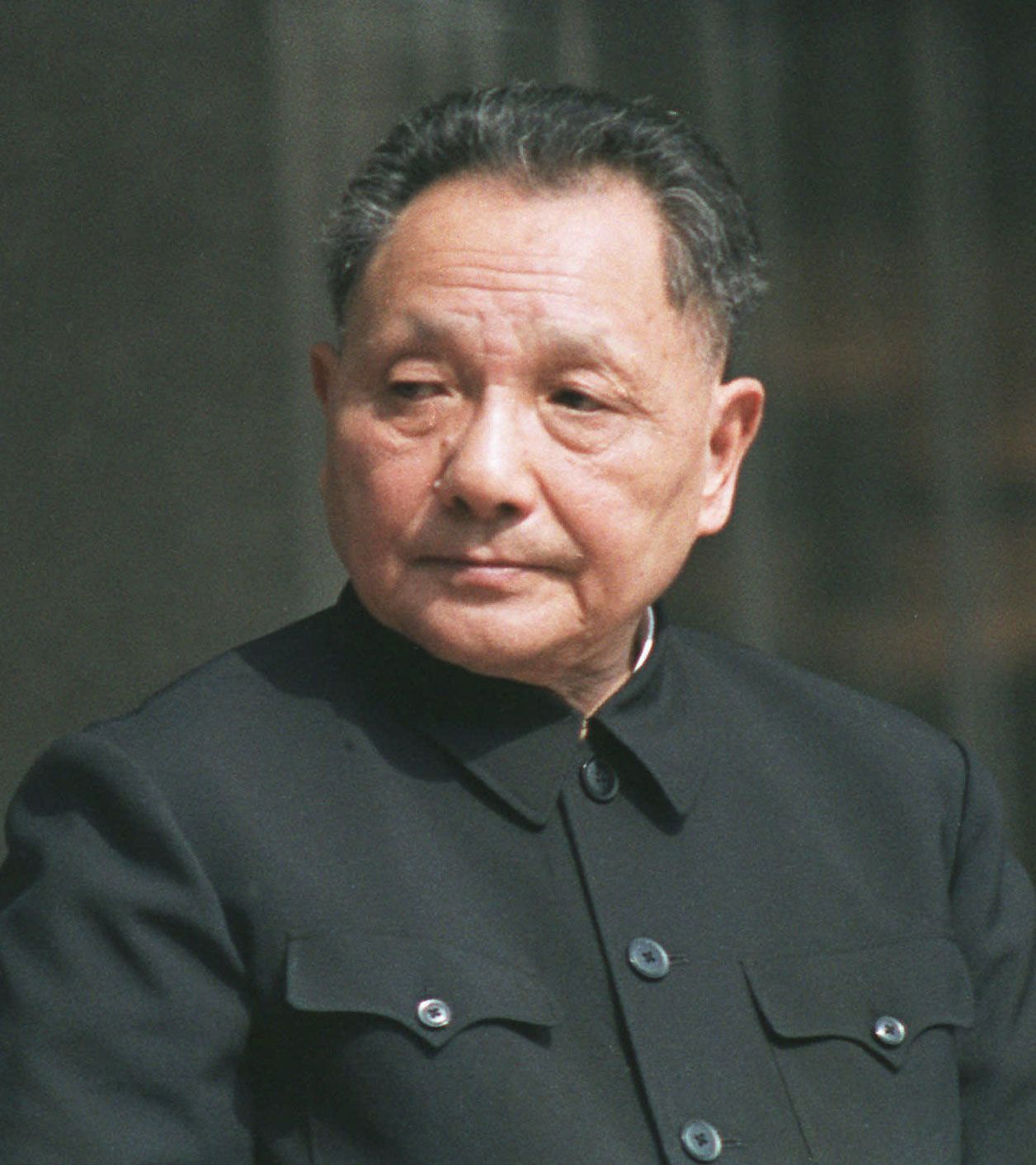
Jiang's career is inseparable from the reform-era leadership group that included premier Zhu Rongji, with whom he ran the 1990s economic programme, and from Deng Xiaoping, who endorsed his elevation in 1989. His later political legacy is bound up with Xi Jinping, whose 2026 centenary speech claimed Jiang's record for the current leadership.
Relationships & Dating History
Jiang Zemin's public romantic history consists of a single documented relationship: his marriage to Wang Yeping. The two married in the early 1950s, before his Moscow posting, and remained together until his death in November 2022, a span of roughly seven decades. No credible source records an earlier partner, a rumoured pairing, or a separation.
Wang Yeping accompanied him to state functions during his years in office, including the Hong Kong handover in 1997 and the Macau handover in 1999, but she has never been a public figure in her own right and has given no interviews about the marriage. The couple had two sons, whose names and adult lives are not documented in the available reporting.
There is no dating history to trace beyond this, and that is a feature of the political culture rather than a gap in the record. Chinese paramount leaders do not have their private lives covered in the way Western heads of state do, and no tabloid or biographical tradition exists around Jiang's personal relationships. As of his death on 30 November 2022, he was married to Wang Yeping. Her circumstances since have not been reported.
- MarriedWang Yeping1951 - 2022Married in the early 1950s and remained together until his death in November 2022; the couple had two sons.
Death & Aftermath
Died
November 30, 2022 (aged 96)
Death Place
Shanghai, China
Cause of Death
Undisclosed
Jiang Zemin died in Shanghai on 30 November 2022 at the age of 96. State media carried the announcement the same day, and it made no mention of a medical cause. A state funeral followed, conducted along the lines customary for a former paramount leader, with the flag flown at half-mast at designated sites and a memorial meeting in Beijing.
Commemoration of the death itself was deliberately restrained. The occasion that drew sustained global coverage came nearly four years later, when the centenary of his birth fell on 17 August 2026. Xi Jinping led a high-profile gathering in Beijing that morning, delivering a speech that credited Jiang with what state media rendered as indelible contributions and invoked his record to argue for party unity and continuity. The government released a twelve-part documentary series on his life in the run-up to the date, issued commemorative coins and stamps, and published a selection of his writings on foreign policy. A symposium on his legacy was held the same day, and the Chinese embassy in Malaysia organised a separate event.
Reaction abroad was less uniform. Xi's speech also endorsed the 1989 Tiananmen crackdown, a passage that drew criticism from international outlets and human rights observers. Analysts read the tributes as an attempt to fold the reform era into the current leadership's account of the party's history rather than a straightforward rehabilitation of Jiang's period. The death of former premier Zhu Rongji in 2026 added a second layer to the remembrance, with several outlets pairing the two figures as the last surviving architects of the 1990s opening. No estate disputes, foundation launches, or posthumous commercial releases connected to Jiang have been reported.
Net Worth (Estate Value)
No credible net worth figure for Jiang Zemin appears in the available reporting, and the iFANN Editorial Team does not publish an estimate for him. Chinese paramount leaders do not file public financial disclosures, do not appear on celebrity wealth trackers, and do not accumulate the kind of saleable personal brand that makes an estate valuation possible from outside. There is no documented salary record, no reported property portfolio, no endorsement income, and no posthumous commercial activity to work from.
The estate questions that normally follow a famous death do not apply here in the usual way. No posthumous book deals, licensing arrangements, merchandise programmes, or catalogue sales have been reported. The state published a selection of his foreign-policy writings around the 2026 centenary, but that is an official publication rather than a commercial estate asset, and no proceeds have been disclosed. No estate manager, executor, or family trust has been identified in any source reviewed.
What can be said is that his financial position during and after office was that of a senior Chinese official, which in practice means state-provided housing, security, transport, and medical care rather than personal wealth held in his own name. Any dollar figure for Jiang would be invention rather than research, and iFANN's editorial policy is to leave the field blank rather than manufacture one. Readers looking for a number will not find a reliable one, and the absence is itself the accurate answer.
Awards & Accolades
View 12 records, honours and achievementsKnown For
General Secretary of the Chinese Communist Party
1989 · General Secretary, 1989 to 2002
President of the People's Republic of China
1993 · President, 1993 to 2003
Three Represents
2000 · Architect of the party theory admitting private entrepreneurs
China's accession to the World Trade Organization
2001 · Paramount leader during the WTO entry negotiations
Hong Kong handover
1997 · Paramount leader at the return of Hong Kong to Chinese sovereignty
Keywords
Sources
Quick Facts
- Profession
- politician, electrical engineer
- Born
- August 17, 1926
- Birthplace
- Yangzhou, Jiangsu, China
- Died
- November 30, 2022
- Death Place
- Shanghai, China
- Age at Death
- 96
- Gender
- Male
- Spouse
- Wang Yeping
- Children
- 2 sons
- Birth Sign
- Leo
- Party Role
- General Secretary of the CCP, 1989 to 2002
- State Role
- President of China, 1993 to 2003
Personal Details
- Full Name
- Jiang Zemin
- Spouse
- Wang Yeping
- Children
- 2 sons
- Education
- National Central University; National Chiao Tung University
Frequently Asked Questions
Who was Jiang Zemin?
When and where did Jiang Zemin die?
What was Jiang Zemin's role in Tiananmen?
What is the Three Represents?
Why is Jiang Zemin in the news in 2026?
Join the community
fans discussing