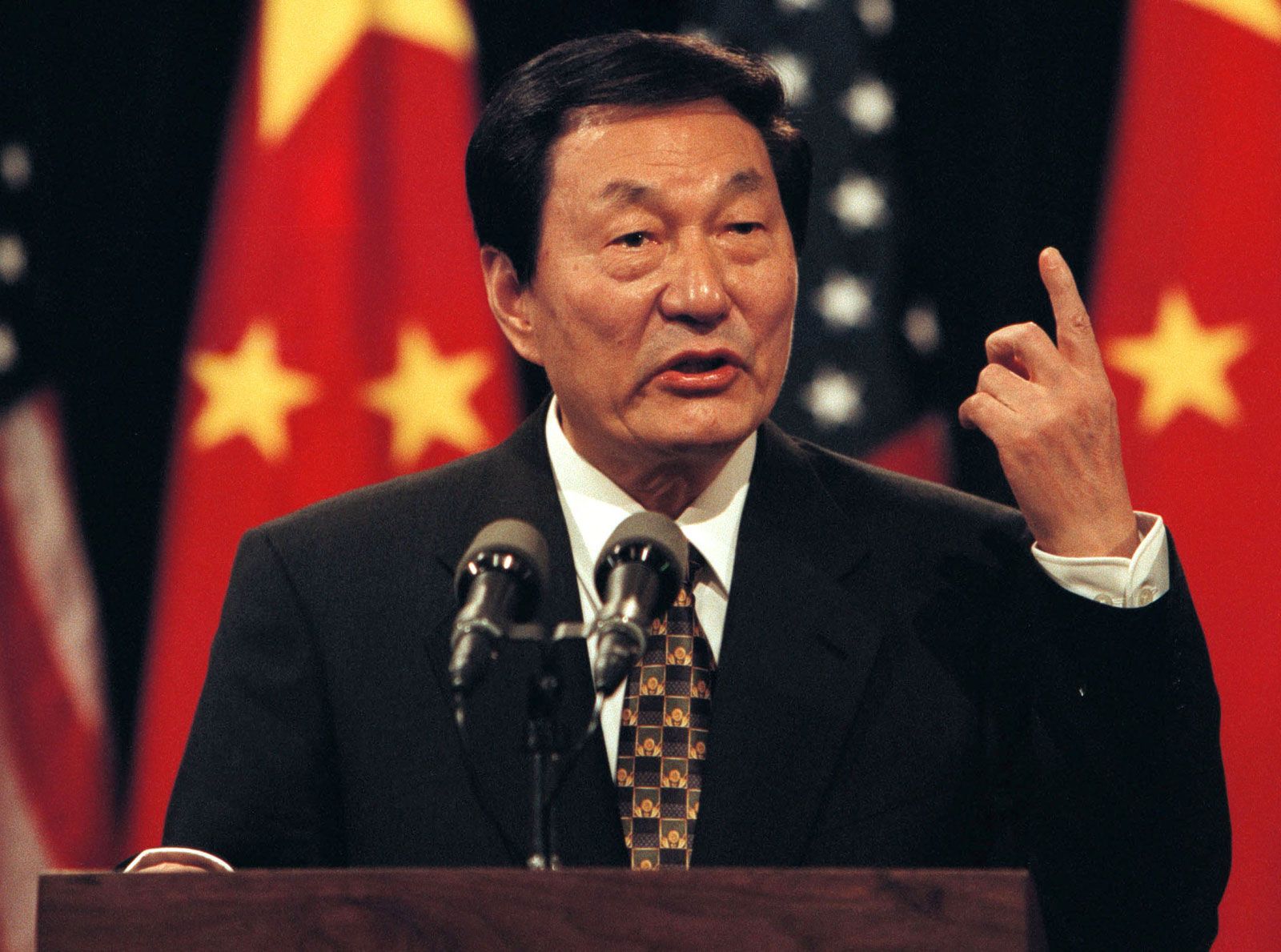
Zhu Rongji
 China
ChinaAlso known as: Economic Czar
Birthday
October 23, 1928
Birth Sign
Libra
Birthplace
Changsha, Hunan, China
Age
97 years old
About
Zhu Rongji is a Chinese retired politician who served as the premier of the State Council from 1998 to 2003. Born in Changsha, Hunan, he is widely regarded as the principal architect of China's economic reforms during the 1990s and early 2000s. A technocrat with a background in electrical engineering, Zhu earned a reputation for his blunt, decisive style and his commitment to fiscal discipline. He is credited with steering China through the Asian financial crisis, restructuring state-owned enterprises, and negotiating the country's entry into the World Trade Organization in 2001.
As of 2026, Zhu remains alive at age 97, though he has been out of public life since 2003. He is remembered as a pragmatic reformer who prioritized economic stability over political orthodoxy, and his legacy continues to influence discussions of China's economic trajectory. Despite his retirement, he has occasionally made headlines for his philanthropic donations to education.
Early Life & Background
Zhu Rongji was born on October 23, 1928, in Changsha, Hunan Province, into a family of intellectuals and landowners. His father died before his birth, and his mother passed away when he was nine, leaving him orphaned. He was raised by his uncle, Zhu Xuefang, who provided for his education and later gave him 100 pieces of silver to fund his university studies. According to family tradition, the family claimed descent from Zhu Yuanzhang, the first emperor of the Ming dynasty.
Zhu attended the Hunan First Provincial Middle School, where he first met his future wife, Lao An. He went on to Tsinghua University in Beijing, majoring in electrical engineering and graduating in 1951. During his time at Tsinghua, he served as chairman of the student union and joined the Chinese Communist Party in 1949. His early career began at the State Planning Commission, where he worked as deputy division chief. However, in 1957, during the Hundred Flowers Movement, he made a speech criticizing China's economic policies and praising pragmatic reforms. This led to his labeling as a "rightist," expulsion from the party, and years of hard labor in northeastern China, where he tended livestock and taught at technical schools.
Career Growth
Zhu Rongji's political rehabilitation came in the late 1970s under Deng Xiaoping. He worked in the State Economic Commission, where he gained a reputation as an official who "knows economics." In 1987, he was appointed deputy party secretary of Shanghai, and in 1988 he became mayor, succeeding Jiang Zemin. During his tenure, he opened the city to foreign investment and oversaw the early development of the Pudong district. In 1989, he became Shanghai's party secretary.
In 1991, Deng Xiaoping appointed him deputy premier, and by 1993 he had become first-ranked vice premier, taking charge of the People's Bank of China. He implemented policies that created a "soft landing" for China's overheated economy, curbing inflation. On March 17, 1998, he was confirmed as premier, a position he held until 2003. His tenure saw double-digit GDP growth, comprehensive reforms of state-owned enterprises, and China's accession to the WTO in 2001. He retired from public life in 2003.
Career Timeline
Public Image & Style
Zhu Rongji was known for his blunt, outspoken manner, which set him apart from many of his peers. He was described as "smart, decisive, tough, humorous, blunt, short-tempered, and quick on his feet." His uncompromising style earned him both admiration and criticism. He was more popular among the Chinese public than his predecessor Li Peng, but critics accused him of being arrogant and intolerant of dissent. His economic policies were pragmatic, and he was seen as a technocrat who prioritized results over ideology. In retirement, he has maintained a low profile, occasionally appearing at Tsinghua University events.
Fame & Fandom
The former Premier of China commands a unique form of reverence that transcends the typical structures of celebrity fandom. There is no organized fan club, no official social media following, and no specific name for his admirers; instead, his public standing is defined by widespread popular respect and a deep-seated nostalgia among citizens who recall his tenure as a period of decisive economic transformation. This sentiment manifests not in rallies or merchandise but in the enduring circulation of his blunt speeches and the continued discussion of his legacy in global media. Within this landscape of historical memory, his prominence remains statistically significant according to the iFANN Global Fame Rankings. Current data places him as the 35th most famous person in China, a position he has held steady through recent cycles, while globally he ranks as the 100th most famous person from China. These placements reflect a sustained level of attention across international news coverage and academic discourse regarding the reform era. The rankings capture the scale of his influence without requiring the constant engagement typical of pop culture icons, relying instead on the weight of his historical impact and the lasting resonance of his public persona. His status as a technocrat who navigated complex financial crises continues to generate interest long after his retirement, ensuring his name remains relevant in discussions about modern Chinese history.
Interesting Facts and Legends
Zhu Rongji's press conferences were so popular that videotapes of them became bestsellers in China. He was known for his sharp wit and rarely spoke from a script, preferring to speak extemporaneously. In his free time, he enjoys Peking Opera. Despite his political prominence, he never held a military rank or served in the armed forces. In 2013 and 2014, he donated a total of 40 million yuan (about $6.5 million) to support education in poor areas, making him China's most philanthropic retired politician. A central legend surrounding his career is his 1998 inaugural press conference where he declared he would go through a minefield or abyss to push forward reforms, a phrase that became the defining metaphor for his fearless approach to economic restructuring. Another enduring story involves his reputation as the reformer who broke the iron rice bowl, laying off tens of millions of state workers to modernize the economy, an action that cemented his image as a leader willing to endure immense hardship for the nation's future. His time as Shanghai Mayor also forms part of his origin story, depicting the technocrat who proved his competence locally before ascending to national service.
Notable Quotes
“What I can do, I have done already. What I cannot do, I will never do.”
“I am not afraid of anything except the sky falling.”
“We must be prepared for the worst and strive for the best.”
Family & Personal Life
Zhu Rongji married Lao An in 1956. Lao An, who became vice-chairman of the board of directors of China International Engineering and Consulting Corporation, attended the same schools as Zhu twice: first the Hunan First Provincial Middle School and then Tsinghua University. The couple has two children: a daughter, Zhu Yanlai, and a son, Zhu Yunlai. Some sources also mention a daughter named Li Xiaolin, who became assistant president of the Bank of China (Hong Kong). Zhu's uncle, Zhu Xuefang, played a pivotal role in his upbringing after the death of his parents.
Notable Connections
Zhu Rongji's career was closely tied to several key figures. Deng Xiaoping plucked him from relative obscurity and promoted him to high office. Jiang Zemin, whom he succeeded as mayor of Shanghai, later nominated him as premier. He served under Premier Li Peng as vice premier before succeeding him. Wen Jiabao succeeded Zhu as premier in 2003. His wife, Lao An, and his uncle, Zhu Xuefang, were also significant figures in his life.
Relationships & Dating History
Zhu Rongji has been married to Lao An since 1956. The couple met at the Hunan First Provincial Middle School and later attended Tsinghua University together. Lao An had a distinguished career as vice-chairman of the board of directors of China International Engineering and Consulting Corporation. Their marriage has lasted over six decades, and they have two children. There is no public record of any other romantic relationships. As of 2026, Zhu remains married to Lao An.
- MarriedLao An1956 - presentCurrentMet at school and married in 1956; they have two children.
Salary, Net Worth In 2026
$5 Million
iFANN Editorial Team estimate
Zhu Rongji's personal net worth is not publicly documented, as Chinese political figures typically do not disclose personal wealth. However, research by the iFANN Editorial Team puts his estimated value at $5 Million as of 2026. He has donated substantial amounts to education, including 40 million yuan in 2013 and 2014. His philanthropic efforts have been widely praised, and he remains a respected figure in China.
Awards & Accolades
Known For
Premier of China
1998-2003 · Premier
Mayor of Shanghai
1988-1991 · Mayor
China's WTO Entry
2001 · Key driver
Keywords
Sources
Quick Facts
- Profession
- politician, engineer
- Born
- October 23, 1928
- Birthplace
- Changsha, Hunan, China
- Gender
- Male
- Spouse
- Lao An
- Birth Sign
- Libra
- Education
- Tsinghua University, B.S. in Electrical Engineering, 1951
Personal Details
- Full Name
- Zhu Rongji
- Spouse
- Lao An
- Children
- Zhu Yanlai (daughter), Zhu Yunlai (son)
- Education
- Tsinghua University, B.S. in Electrical Engineering, 1951
Frequently Asked Questions
How old is Zhu Rongji?
Is Zhu Rongji still alive?
Who is Zhu Rongji's wife?
What did Zhu Rongji do for China's economy?
Does Zhu Rongji have children?
Join the community
fans discussing