“A visually ravishing space adventure that combines philosophical ambition with the excitement of old-fashioned space opera.”
A. O. Scott
The New York Times
 United States
"Humanity began on Earth. It doesn't have to end there."
User Score
39,371 votes
In the near future, Earth is dying. Blights have wiped out most crops, and massive dust storms ravage the land. Joseph Cooper, a widowed former NASA pilot turned farmer, lives with his two children and father-in-law. His young daughter Murph believes a ghost is knocking books off her shelf, but the disturbances turn out to be a message: binary coordinates leading to a secret NASA facility.
There, Professor Brand reveals that a wormhole has appeared near Saturn, leading to another galaxy with potentially habitable planets. Cooper is recruited to pilot the spacecraft Endurance on a desperate mission to find a new home for humanity. He must leave his children behind, promising Murph he will return. The crew visits three planets, each with its own dangers, and faces the crushing effects of time dilation near the black hole Gargantua. Back on Earth, Murph grows up to become a scientist working on a gravity equation that could save everyone.
The film weaves together themes of love, sacrifice, and the survival of the species. Christopher Nolan's epic combines hard science with emotional storytelling, featuring stunning visuals of space, a groundbreaking depiction of a black hole, and a haunting score by Hans Zimmer. The ensemble cast delivers powerful performances, making Interstellar a landmark in science fiction cinema.
Availability and pricing can change. Confirm on the provider's site before purchasing.
In the mid-21st century, Earth is dying. A global crop blight and constant dust storms have devastated agriculture, turning humanity into a largely agrarian society focused on survival rather than progress. Corn is among the last viable crops, and even that is failing. Governments have scaled back technology and exploration; space programs are believed to be defunct.
Joseph Cooper is a former NASA test pilot and engineer who, like everyone else, now farms corn. A widower, he lives with his 10-year-old daughter Murph, teenage son Tom, and his father-in-law Donald on a dusty Midwestern farm. Cooper is restless and bitter about humanity's retreat from innovation; he believes humans are meant to be explorers, not just caretakers of a dying world.
Murph, bright and scientifically minded, believes there is a ghost in her bedroom: books fall from her shelf in patterns, and during a heavy dust storm, strange lines of dust appear on the floor. Cooper encourages her to think scientifically rather than superstitiously. He realizes the pattern is a gravitational anomaly encoding geographic coordinates in binary. Following those coordinates, Cooper and Murph discover a secret underground NASA facility led by Professor John Brand.
Brand reveals that NASA has continued operating in secret because the public has turned against large-scale spending and fantasies like space exploration. The situation is dire: Earth will soon be uninhabitable. Brand explains that decades earlier a wormhole mysteriously appeared near Saturn, opening a pathway to another galaxy with potentially habitable planets. A prior Lazarus mission sent a dozen scientists through the wormhole to survey candidate worlds orbiting a massive black hole named Gargantua. Several of them sent back promising data from three planets.
Brand outlines two survival plans. Plan A: Solve a gravity equation that would allow NASA to lift massive space habitats off Earth, saving the existing population. Brand has been working on this theory, but lacks critical data from inside a black hole. Plan B: If Plan A fails, launch a ship carrying thousands of human embryos, to be grown and raised on a new planet, effectively restarting humanity elsewhere while those on Earth die.
Brand wants Cooper to pilot the spacecraft Endurance, leading a new mission through the wormhole to evaluate three candidate planets, each once visited by a Lazarus astronaut: Miller, Edmunds, and Mann. The crew includes Brand's daughter, Dr. Amelia Brand, physicist Romilly, geographer Doyle, and two multi-functional robots, TARS and CASE.
Cooper faces a brutal emotional choice: stay with his children on a doomed Earth, or leave on a mission that could save the species but may cost him ever seeing them again. He promises Murph he will come back, but she feels betrayed and refuses to speak to him when he departs. Their strained, interrupted relationship becomes the emotional spine of the film.
Endurance travels to Saturn and passes through the wormhole, a visually and physically intense sequence that introduces the film's grounding in relativistic physics. Once in the new galaxy, the crew must decide which planet to visit first, balancing the signal data against the massive time dilation caused by proximity to Gargantua. Near the black hole, time for the crew will pass far more slowly than on Earth; a few hours on the wrong planet could mean years or decades slipping by for Murph and Tom back home.
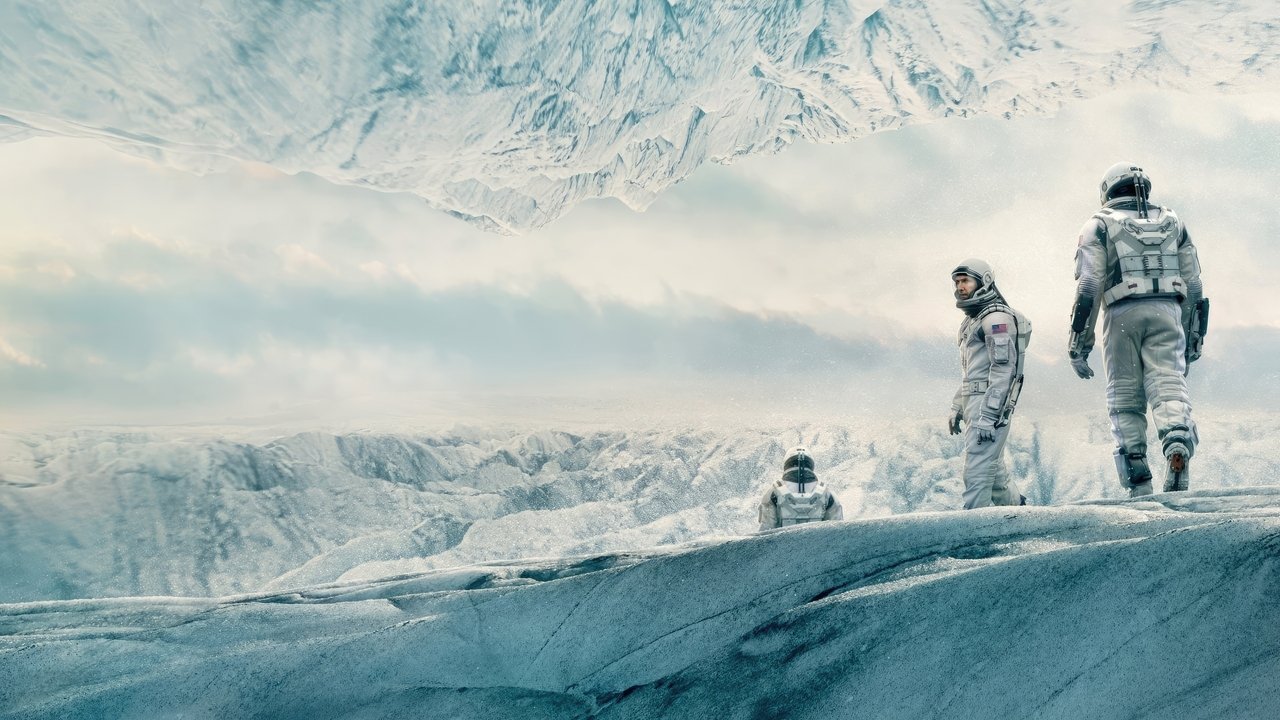
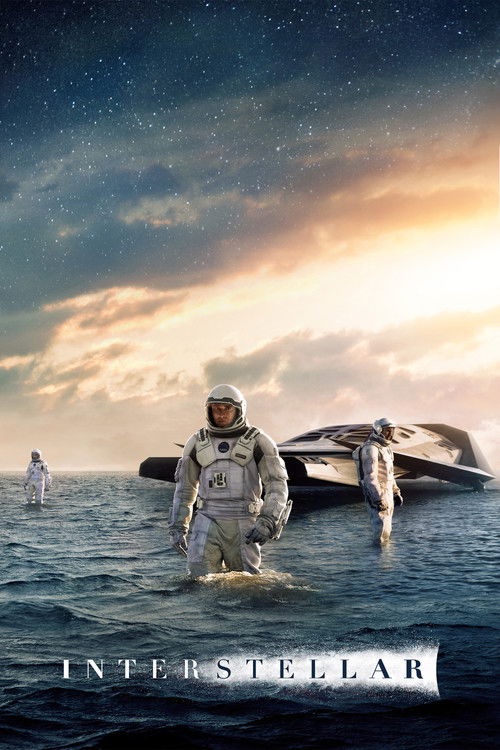
Their missions to the candidate planets deliver spectacular but perilous landscapes: one world covered in shallow ocean with towering waves, another icy and desolate, another hinted as more promising. Each planet presents both environmental threats and moral or strategic dilemmas. They must continually weigh the survival of their small crew against the fate of humanity, and choose whether to prioritize Plan A or Plan B.
Back on Earth, Murph grows into an accomplished scientist, recruited by Professor Brand to help complete the gravity equation. She works alongside researcher Getty and grapples with her unresolved anger toward her father, whom she believes abandoned her. As she investigates Brand's work, Murph begins to suspect that something has been hidden from her and from humanity about the true viability of Plan A.
The story intercuts between Cooper and the Endurance crew facing life-or-death decisions in the depths of space, pushing the boundaries of physics and human endurance, and Murph on Earth trying to solve an impossible scientific problem while confronting betrayal, grief, and hope, and deciphering what the ghost in her room really meant.
Trailer 4
:60 International Trailer
Trailer 3
Critical Consensus
Interstellar is a visually stunning and emotionally ambitious sci-fi epic that explores love, time, and human survival. While its complex narrative and heavy exposition divide critics, the film's breathtaking visuals, Hans Zimmer's score, and strong performances make it a memorable experience. It is often described as messy but magnificent.
“A visually ravishing space adventure that combines philosophical ambition with the excitement of old-fashioned space opera.”
A. O. Scott
The New York Times
“A gravely beautiful, emotionally resonant sci-fi odyssey. Its reach frequently exceeds its grasp, but there is something invigorating about a blockbuster that dares to attempt so much.”
Scott Foundas
Variety
“An exhilarating, sometimes bewildering, but always enthralling space saga with breathtaking imagery and emotional stakes.”
Todd McCarthy
The Hollywood Reporter
“The most intellectually aggressive big-budget film in years. Its emotional core anchors the complex science in something deeply human.”
James Berardinelli
ReelViews
“A mind-bending, heart-tugging cosmic spectacle where the sheer scope of Nolan's vision compensates for clunky dialogue.”
Jordan Hoffman
The Guardian
Director
Christopher Nolan
Writers
Jonathan Nolan, Christopher Nolan
Composer
Hans Zimmer
Cinematographer
Hoyte van Hoytema
Producers
Christopher Nolan, Lynda Obst, Emma Thomas
Academy Awards
Best Visual Effects: Won
American Film Institute Awards
Top 11 Films of the Year: Won
British Academy Film Awards
Best Special Visual Effects: Won
Critics' Choice Movie Awards
Best Sci-Fi/Horror Movie: Won
Dallas–Fort Worth Film Critics Association Awards
Best Musical Score: Won
Empire Awards
Best Director: Won
Empire Awards
Best Film: Won
Florida Film Critics Circle Awards
Best Cinematography: Won
Florida Film Critics Circle Awards
Best Visual Effects: Won
Georgia Film Critics Association Awards
Best Original Score: Won
International Film Music Critics Association Awards
Film Score of the Year: Won
Santa Barbara International Film Festival Awards
Variety Artisans Award – Sound Mixing and Editing: Won
Saturn Awards
Best Science Fiction Film: Won
Saturn Awards
Best Writing: Won
Saturn Awards
Best Performance by a Younger Actor: Won
Saturn Awards
Best Music: Won
Saturn Awards
Best Production Design: Won
Saturn Awards
Best Special Effects: Won
St. Louis Film Critics Association Awards
Best Visual Effects: Won
Visual Effects Society Awards
Outstanding Created Environment in a Photoreal/Live Action Feature Motion Picture: Won
Women Film Critics Circle Awards
A Woman's Right to Male Roles in Movies: Won
Join the community
fans discussing