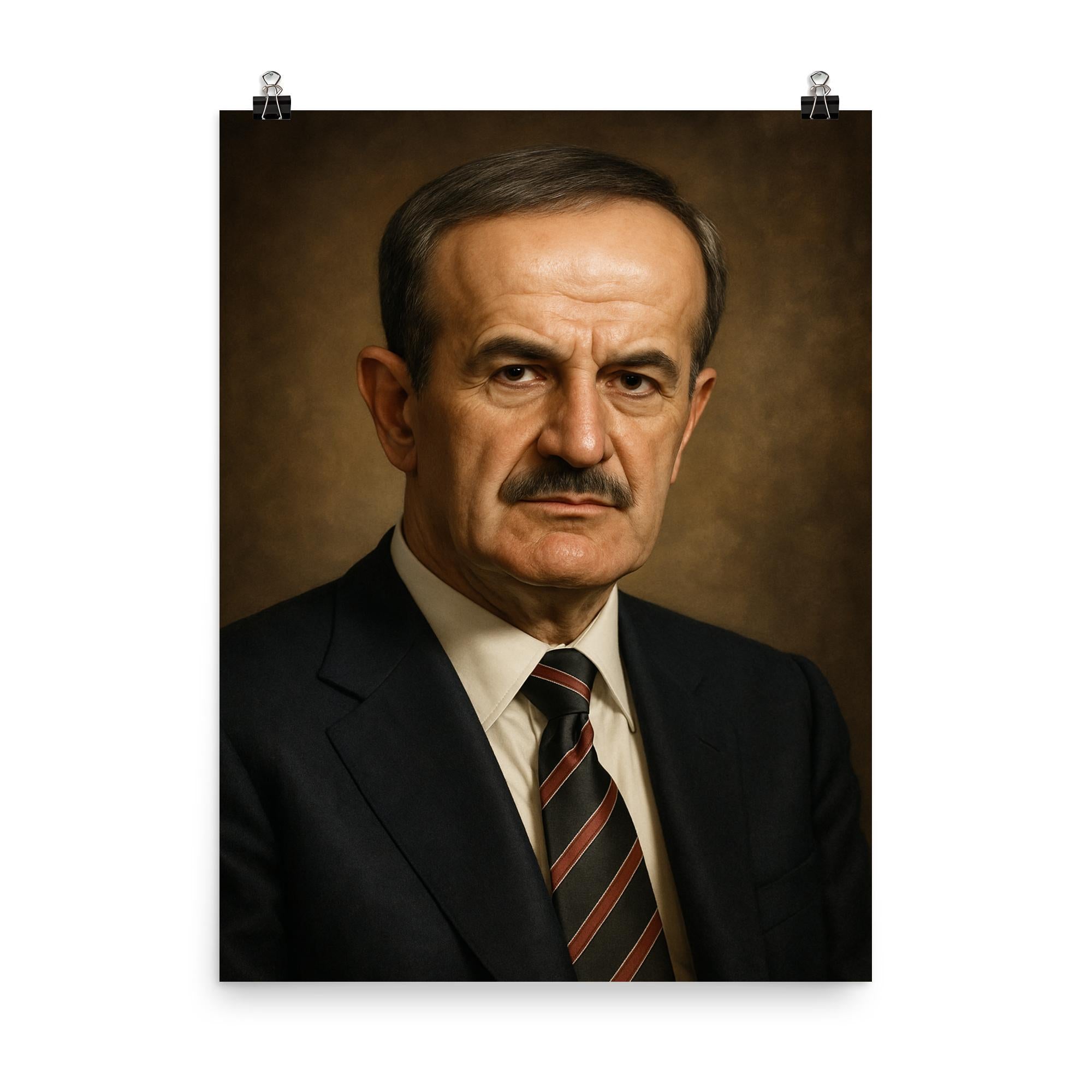
Hafez al-Assad
 Syria
SyriaSyrian politician and military officer
Also known as: Hafez al-Wahash, The Lion of Syria
Birthday
October 6, 1930
Birth Sign
Libra
Birthplace
Qardaha, Syria
Age
Died at 69
About
Hafez al-Assad was a Syrian politician and military officer who ruled Syria as president from 1971 until his death in 2000. He is remembered as a ruthless authoritarian whose three-decade reign left a deep imprint on the Middle East. Assad built a pervasive cult of personality, crushed dissent with extreme violence, and positioned Syria as a major regional player through alliances with the Soviet Union and interventions in Lebanon.
His legacy is deeply controversial. Supporters credit him with bringing stability to a fractured country and standing up to Israel. Critics point to the Hama massacre, widespread human rights abuses, and the economic stagnation that plagued Syria under his rule. His son Bashar al-Assad succeeded him and ruled until his overthrow in December 2024, carrying on the family's complex and tragic political inheritance.
Early Life & Background
Hafez al-Assad was born on October 6, 1930, in the village of Qardaha, nestled in the Alawite mountains of northwestern Syria. He was the ninth son of Ali al-Assad and Na'isa Shalish. His father, Ali, was a respected local figure known for his physical strength and sense of justice. In fact, the family originally bore the surname Wahhish, meaning "savage," but changed it to Assad, meaning "lion," in 1927 to reflect their growing reputation.
Growing up in a poor Alawite peasant family, Assad experienced the social and economic marginalization that shaped his worldview. He recalled a childhood passion for farming and a keen awareness of the injustices faced by his community. These early experiences fueled his political awakening. During World War II, he joined demonstrations against French colonial rule, and when Syria gained independence on April 17, 1946, he was already politically engaged. He formally joined the Ba'ath Arab Socialist Party that same year.
Assad pursued education with determination, earning his high school degree in Lattakia in the early 1940s. In 1952, he entered the Homs Military Academy and then transferred to the Air Force Academy in Aleppo, where he graduated as a lieutenant pilot in 1955. He excelled in aerobatics and continued his military training, including specialized fighter pilot courses in the Soviet Union. By the early 1960s, he had completed Squadron Leader and Air Force Staff Officer courses with high marks, setting the stage for his rapid rise through the military and political ranks.
Career Growth
Assad's political career took off with the Ba'ath Party's rise. He was a key leader in the March 8, 1963 revolution that brought the party to power, and he quickly secured positions in both the Regional and National Commands. In 1966, he played a decisive role in the February 23 Movement, an internal party coup that resolved factional conflicts and solidified his influence. Despite a brief exclusion from the armed forces in 1961 for opposing Syria's separation from Egypt, he was reinstated and continued his ascent.
By the late 1960s, Assad had become Minister of Defense. In 1970, he seized control of Syria in a bloodless coup, and in 1971 he formally became president. His presidency was defined by a combination of iron-fisted domestic control and assertive foreign policy. He launched Syria's intervention in the 1973 Yom Kippur War, seeking to reclaim the Golan Heights from Israel. Though the military campaign ultimately failed, it reinforced his image as a defender of Arab interests.
In 1976, Assad ordered Syrian forces into Lebanon, initially to support Maronite Christians against the PLO. The intervention evolved into a long-term occupation that lasted until 2005, deeply entangling Syria in Lebanese politics. He also forged a close alliance with the Soviet Union, securing military and economic aid that sustained his regime during the Cold War. At home, he crushed dissent ruthlessly, most notoriously in the 1982 Hama massacre, where his forces killed tens of thousands of civilians to suppress an Islamist uprising.
Assad's health declined in the late 1990s. After the death of his eldest son, Bassel, in a car crash in 1994, he groomed his second son, Bashar, a British-trained ophthalmologist with no political experience, as his successor. When Assad died on June 10, 2000, Bashar assumed the presidency, a position he held until his own overthrow in December 2024.
Career Timeline
Public Image & Style
Hafez al-Assad cultivated a cult of personality that permeated every aspect of Syrian life. His portrait hung in government buildings, schools, and streets, and his name was chanted at rallies. He was often depicted as the "father" of Syria, a strong leader who protected the nation from external threats. His speeches were marathon affairs, sometimes lasting hours, and were broadcast on state television. He projected an image of austerity and discipline, rarely appearing in public without a military uniform.
While his regime used fear and repression to maintain control, Assad also worked to project an image of strength and resilience. He presented himself as a champion of Arab nationalism and a steadfast opponent of Israel. His image was carefully managed, and any criticism was brutally suppressed. In the West, he was often portrayed as a dictator and a destabilizing force in the Middle East. For many Syrians, he was a figure of both fear and grudging respect, embodying a complex legacy that continues to shape the country's identity.
Fame & Fandom (iFAMOUS Rankings)
Hafez al-Assad currently holds no placement in the published iFANN Global Top 1,000 rankings or any scope-specific lists as of August 2026. The iFANN Global Fame Engine has evaluated his profile, yet he remains unranked within these specific metrics. This absence reflects a distinction between political authority and celebrity fame; his legacy is defined by state power rather than the voluntary adoration typical of global icons. While he commanded a nation for three decades, there is no formal fandom name documented in iFANN data, nor do organized groups exist to champion his memory with birthday campaigns or charity drives. His relationship with the public was mediated through a pervasive cult of personality enforced by the state, characterized by mandatory loyalty rather than the organic engagement seen in entertainment industries. No fan rituals, inside jokes, or streaming projects are associated with his name, and the Ba'ath Party functioned as a political apparatus rather than a fan club. The cultural mythology surrounding him consists of historical accounts regarding his transformation of Syria into a regional power and his geopolitical stance toward Israel, which are matters of record rather than viral folklore. Unlike modern celebrities who generate legendary moments through performance, his most prominent narrative involves his death in 2000 and the subsequent succession of his son, events that shaped history but did not create a fanbase in the traditional sense. There are no records of personal interactions with supporters, meet-and-greets, or public engagement that would foster a celebrity-fan dynamic. His authority was maintained through military control and fear, leaving a complex historical imprint that does not translate into the measurable consumption signals used to rank contemporary figures.
Interesting Facts and Legends
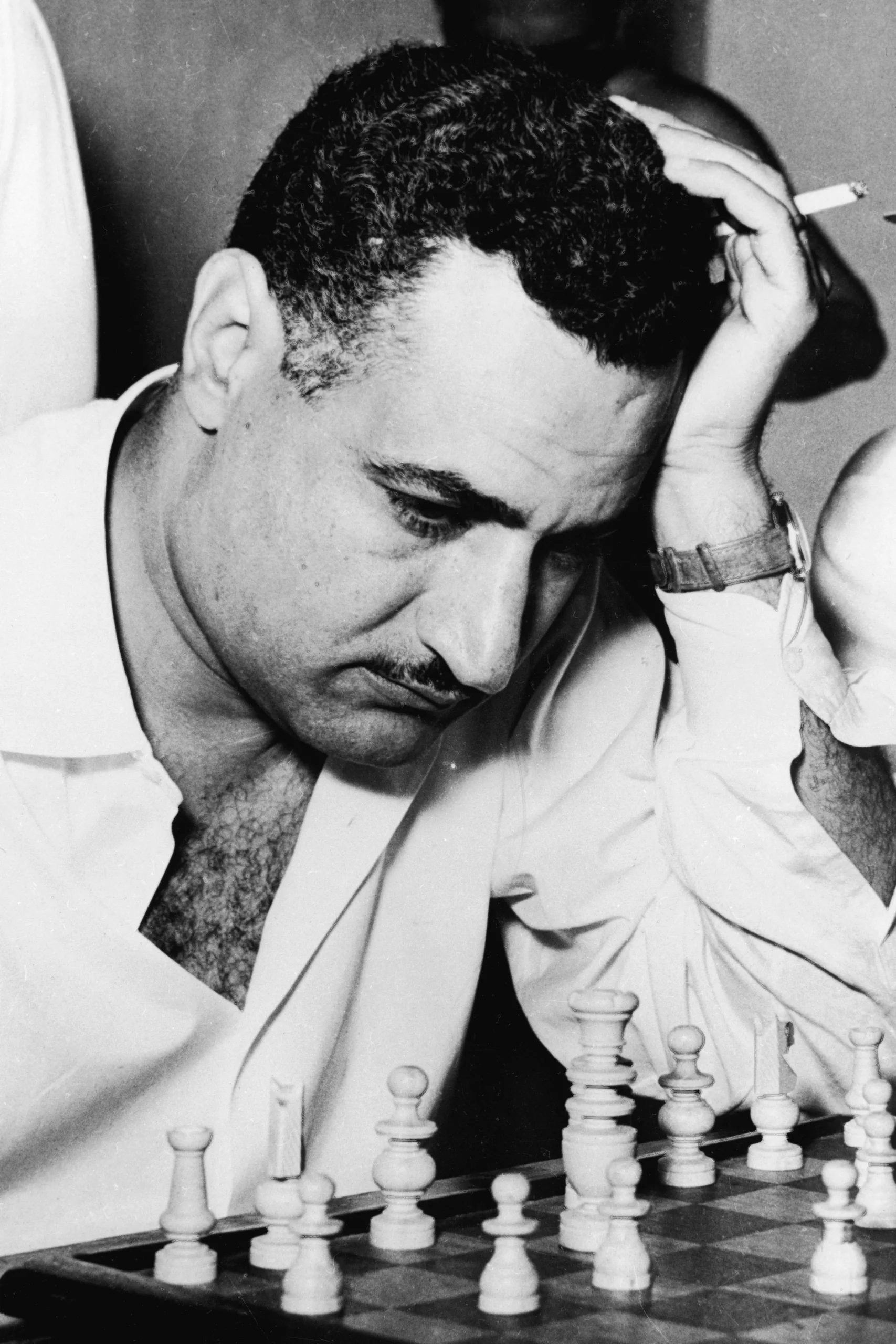
Hafez al-Assad was an accomplished pilot who reportedly loved aerobatics, a skill that impressed his instructors and colleagues. He possessed a photographic memory capable of recalling minute details from long meetings, a trait that served him well in high-stakes negotiations. Despite his stern authoritarian image, he occasionally displayed a dry sense of humor in private settings. A heavy smoker throughout his life, this habit likely contributed to the health issues that plagued his later years. He also held a passion for chess, often playing against his aides as a pastime. Some Syrians referred to him as "the Lion," a nickname derived from his family name and his commanding presence. Historical accounts note his refusal to make peace with Israel, a stance that remained unresolved until his death. He transformed Syria from a regional backwater into an introverted power during his thirty-year rule. His passing in 2000 marked the end of an era, leading to a peaceful succession where his son Bashar took over the presidency. These events are documented historical facts rather than legends, yet they form the core of his enduring story.
Notable Quotes
“I am not a dictator. I am a leader who listens to his people.”
“The Golan Heights will return to Syria, one way or another.”
“We have to be strong, because we live in a tough neighborhood.”
“The Ba'ath Party is the vanguard of the Arab nation.”
Family & Personal Life
Hafez al-Assad married Anisa Makhlouf in 1957. Anisa came from a prominent Alawite family and remained a private figure throughout his presidency. The couple had five children: Bassel, Bashar, Maher, Bushra, and Majd. Bassel, the eldest, was groomed as his father's successor until his death in a car crash in 1994. Bashar, the second son, trained as an ophthalmologist in Britain but was called back to politics after Bassel's death. Maher became a powerful military commander, leading the Republican Guard and later playing a key role in the Syrian civil war. Bushra, the eldest daughter, studied pharmacy and was known for her strong influence. Majd, the youngest, led a reclusive life and reportedly suffered from health issues. The Assad family's rule was deeply intertwined with the Makhlouf family, who held significant economic and political power.
Notable Connections
Hafez al-Assad was closely associated with the Ba'ath Party, which he helped bring to power in 1963. He was also allied with the Soviet Union during the Cold War, receiving military and economic support. His son Bashar al-Assad succeeded him as president. He had a long and complex relationship with Lebanon, where Syrian forces intervened in 1976 and remained for decades. His rule was also marked by a fierce rivalry with Israel, culminating in the 1973 war.
Relationships & Dating History
Hafez al-Assad married Anisa Makhlouf in 1957. Their marriage was a strategic alliance that strengthened his political position, as the Makhlouf family was influential in the Alawite community. Anisa remained a private and supportive figure throughout his presidency, rarely appearing in public. The couple had five children together. Their union lasted until his death in 2000, and Anisa lived until 2016. Assad's relationship with Anisa was generally described as stable, though little is known about the personal dynamics of their marriage. There are no credible reports of any other public relationships during his tenure as president.
- MarriedAnisa Makhlouf1957 - 2000Married until his death in 2000; they had five children together.
Death & Aftermath
Died
June 10, 2000 (aged 69)
Death Place
Damascus, Syria
Cause of Death
Heart attack (myocardial infarction)
Hafez al-Assad, the President of Syria from 1971 until his death, died on June 10, 2000, in Damascus at a military hospital. The official cause of death was reported as a heart attack, with the Syrian government announcing that he passed away peacefully after suffering health issues for several months prior. Upon his passing, state media broadcast tributes portraying him as a father figure while Western leaders acknowledged his long tenure and the stability he brought to the region alongside human rights concerns regarding his rule.
A massive state funeral was held in Damascus on June 12, 2000, two days after his death. The procession included hundreds of thousands of mourners mobilized by the state security apparatus, featuring military parades and speeches praising his leadership. Notable attendees included foreign dignitaries such as Iraqi Vice President Tariq Aziz and representatives from various Arab nations. Following the service, Assad was buried without cremation in a sarcophagus within the family mausoleum in Qardaha, his hometown in the Latakia Governorate, which features a large complex known as the Martyr's Cemetery.
The transition of power was managed swiftly within the Ba'ath Party and the military establishment, with his son Bashar al-Assad named as the successor without any legal challenges regarding the elder Assad's passing. Following his death, he was posthumously honored as the Leader of the Revolution, and his image remained ubiquitous across Syria until the collapse of the regime in December 2024. In August 2026, memoirs by former Vice President Abdul Halim Khaddam revealed claims that Syria's $12 billion reserve was registered under Hafez al-Assad's name. The family mausoleum in Qardaha was reportedly destroyed by rebel fighters during the conflict.
Net Worth (Estate Value)
$10 Million
iFANN Editorial Team estimate
Hafez al-Assad died in 2000, and his personal net worth at that time was difficult to ascertain, as he ruled a state-controlled economy and his assets were largely tied to his political power. However, the Assad family is known to have accumulated significant wealth during his rule, with control over key economic sectors and access to state funds. Estimates of his personal fortune have ranged widely. Since his death, the Assad family's financial situation has been shaped by the ongoing Syrian conflict. The estate has been managed by his son Bashar and the extended family. While exact figures are not publicly available, the family has been reported to control substantial assets, including real estate, businesses, and investments. The international sanctions imposed on the Assad regime have complicated the family's financial dealings, but they have continued to maintain wealth through various channels. Per iFANN's editorial analysis, the estimated net worth of the Assad family is $10 Million as of 2026.
Awards Won (2)
Hafez al-Assad received several honors during his rule, primarily from Arab and socialist states, though details are scarce. He was awarded the Order of Lenin from the Soviet Union and the Order of the National Flag from North Korea, among others. These awards were largely symbolic and reflected his alignment with the Eastern Bloc.
1970s · International
State leadership
1970s · International
State leadership
Known For
President of Syria
1971-2000 · President
Ba'ath Party Leader
1970-2000 · Leader
Yom Kippur War
1973 · Syrian Commander
Lebanese Occupation
1976-2000 · Military Intervention
Keywords
Sources
Quick Facts
- Profession
- Politician, military officer
- Born
- October 6, 1930
- Birthplace
- Qardaha, Syria
- Died
- June 10, 2000
- Death Place
- Damascus, Syria
- Gender
- Male
- Spouse
- Anisa Makhlouf
- Birth Sign
- Libra
- Children
- Bassel, Bashar, Maher, Bushra, Majd
- Education
- Homs Military Academy, Air Force Academy, Soviet military courses
Personal Details
- Full Name
- Hafez al-Wahash
- Spouse
- Anisa Makhlouf
- Children
- Bassel al-Assad, Bashar al-Assad, Maher al-Assad, Bushra al-Assad, Majd al-Assad
- Education
- Homs Military Academy, Air Force Academy (Aleppo), Soviet military courses
Frequently Asked Questions
Who was Hafez al-Assad?
When and where was Hafez al-Assad born?
How did Hafez al-Assad come to power?
What were some key events during Hafez al-Assad's presidency?
Who succeeded Hafez al-Assad as President of Syria?
Similar People
Join the community
fans discussing