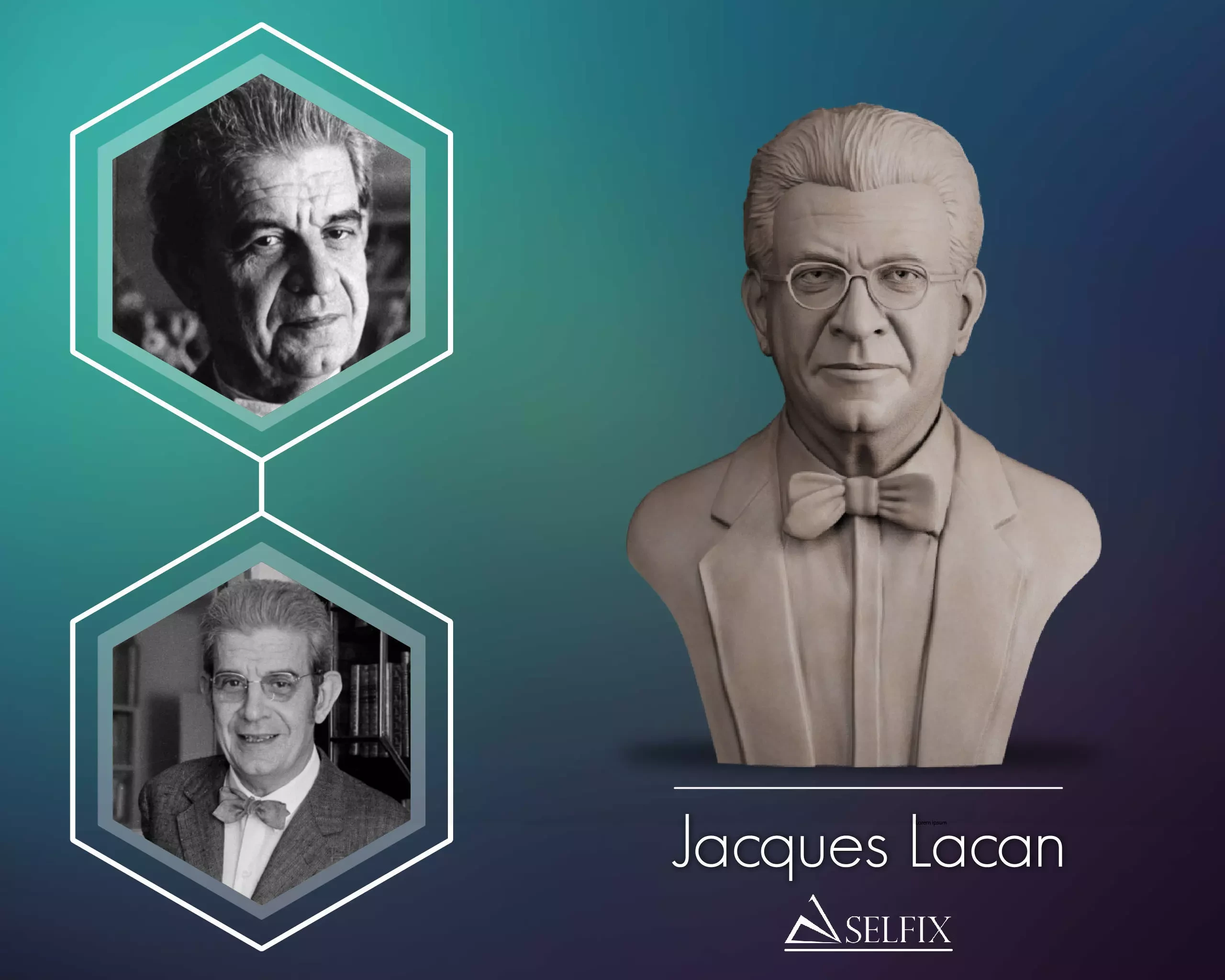
Jacques Lacan
 France
psychiatrist•psychoanalyst•translator
Birthday
+1901-04-13
Birth Sign
Aries
Birthplace
3rd arrondissement of Paris
Age
Died at 80
About
Jacques Marie Émile Lacan, born on April 13, 1901, in Paris, was a French psychoanalyst and psychiatrist whose provocative ideas reshaped the field. Often called "the most controversial psychoanalyst since Freud," Lacan delivered annual seminars in Paris from 1952 to 1980, drawing crowds of intellectuals. His collected papers, published as Écrits, and the transcripts of his seminars, released between 1953 and 1980, became foundational texts. His work influenced continental philosophy, cultural theory, post-structuralism, critical theory, feminist theory, and film theory, while also transforming psychoanalytic practice itself. Lacan engaged with the full scope of Freudian concepts, but he pushed them into new philosophical territory. He drew on structuralism in linguistics and anthropology, then added predicate logic and topology to his toolkit. This innovative approach, paired with controversial clinical practices, put him at odds with the International Psychoanalytic Association, which expelled him and his followers. Lacan responded by founding new institutions to advance his teachings, which he framed as a "return to Freud" against the mainstream adaptation of Freud's ideas to social norms. Lacan's legacy is marked by his radical reinterpretation of the unconscious, his famous mirror stage theory, and his insistence on the primacy of language in shaping desire. He died on September 9, 1981, at the age of 80, leaving behind a body of work that continues to spark debate and inspire across disciplines.
Fame & Fandom (iFAMOUS Rankings)
Jacques Lacan commands a following defined not by adoration but by rigorous, often combative intellectual engagement. His audience consists of scholars in philosophy, literature, and clinical psychoanalysis who treat his dense texts as essential tools rather than pop-culture artifacts. There is no organized fanbase with rituals or a specific name; instead, the legacy lives on through university seminars where students dissect his neologisms alongside the era's brightest minds. The relationship was never one of celebrity worship but of academic necessity, characterized by his notoriously difficult teaching style that demanded total attention. While modern social media sees quotes from him circulating among political thinkers, these interactions remain strictly within the realm of serious discourse rather than fandom spectacle. No campaigns, billboards, or charity drives funded by supporters ever emerged to celebrate his life. The iFANN Global Fame Engine has evaluated this person, but they do not currently hold a placement in the published rankings (Global Top 1,000 or a Top-100 scope list). This absence of a numeric ranking reflects the niche, specialized nature of his enduring influence rather than a lack of historical significance.
Interesting Facts and Legends
Lacan was expelled from the International Psychoanalytical Association in 1953 for advocating the 'short session,' a technique ending therapy at unpredictable moments to disrupt patient resistance. This controversial move led directly to the creation of the École Freudienne de Paris. During his annual seminars held in Paris from 1952 to 1980, crowds of intellectuals struggled to decipher his wordplay while he read dense, often incomprehensible texts. A recurring legend among scholars involves his admiration for Harpo Marx, whom Lacan cited as the ideal analyst because the silent clown spoke without words. This anecdote explains Lacan's theoretical stance on the unconscious speaking through silence. His abrasive personality frequently manifested in interruptions of students and critics, cementing his reputation as a controversial genius. While some critics label him a fraud, others view him as a visionary whose ideas continue to generate intense debate in philosophical circles today.
Death & Aftermath
Died
+1981-09-09 (aged 80)
Death Place
Paris, France
Cause of Death
Severe emphysema and other respiratory issues
Jacques Lacan, the French psychiatrist and psychoanalyst, died on September 9, 1981, at his home in Paris, France. He was 80 years old at the time of his death. While the exact medical cause of death is not explicitly detailed in the provided search results as a specific diagnosis, it is historically recorded that he suffered from severe emphysema and other respiratory issues in his final years, which contributed to his declining health. The death occurred naturally; there were no reports of foul play, suicide, or accident. His final days were spent at his residence, though specific details regarding his last public appearance prior to death are not contained within the provided text; however, it is noted that he had ceased his famous annual seminars in 1980, marking the end of his active public teaching career.
Public reaction to Lacan's death was immediate and profound within the intellectual community, particularly in France and among psychoanalytic circles. Tributes poured in from peers and institutions who recognized him as a transformative figure in Freudian interpretation. However, the provided search results do not contain specific details regarding fan vigils, chart surges, moments of silence, or memorial murals. The "surges" mentioned in the news snippets refer to ongoing scholarly interest and the publication of new books analyzing his work decades later rather than immediate post-mortem commercial sales spikes. His legacy remains a subject of intense study, with recent articles continuing to analyze his influence on philosophy and culture, indicating a sustained, long-term reverence rather than a fleeting moment of public mourning.
The funeral for Jacques Lacan was held privately shortly after his death on September 9, 1981. Specific dates, locations of burial, and notable attendees for the funeral service are not detailed in the provided search results. It is generally understood in biographical accounts that his funeral was a private affair attended by close colleagues and family, consistent with his reclusive nature in his later years. Posthumously, Jacques Lacan's estate has continued to generate significant scholarly output. His works remain widely published, and numerous foundations, seminars, and scholarships have been established in his name globally, including the École de la Cause freudienne. Recent events include symposia celebrating his seminal essay "Science and Truth" sixty years after its publication and the release of comprehensive correspondence collections like Envois.
Regarding the handling of his estate, while the specific distribution of assets or the status of his will is not detailed in the provided text, the management of his archives and the continuation of his analytic schools indicate an organized succession managed by his disciples and family.
Awards & Accolades
Keywords
Quick Facts
- Profession
- psychiatrist, psychoanalyst, translator
- Born
- +1901-04-13
- Birthplace
- 3rd arrondissement of Paris
- Died
- +1981-09-09
- Death Place
- 6th arrondissement of Paris
- Gender
- Male
- Spouse
- Sylvia Bataille, Marie-Louise Blondin
- Birth Sign
- Aries
Personal Details
- Spouse
- Sylvia Bataille, Marie-Louise Blondin
Join the community
fans discussing