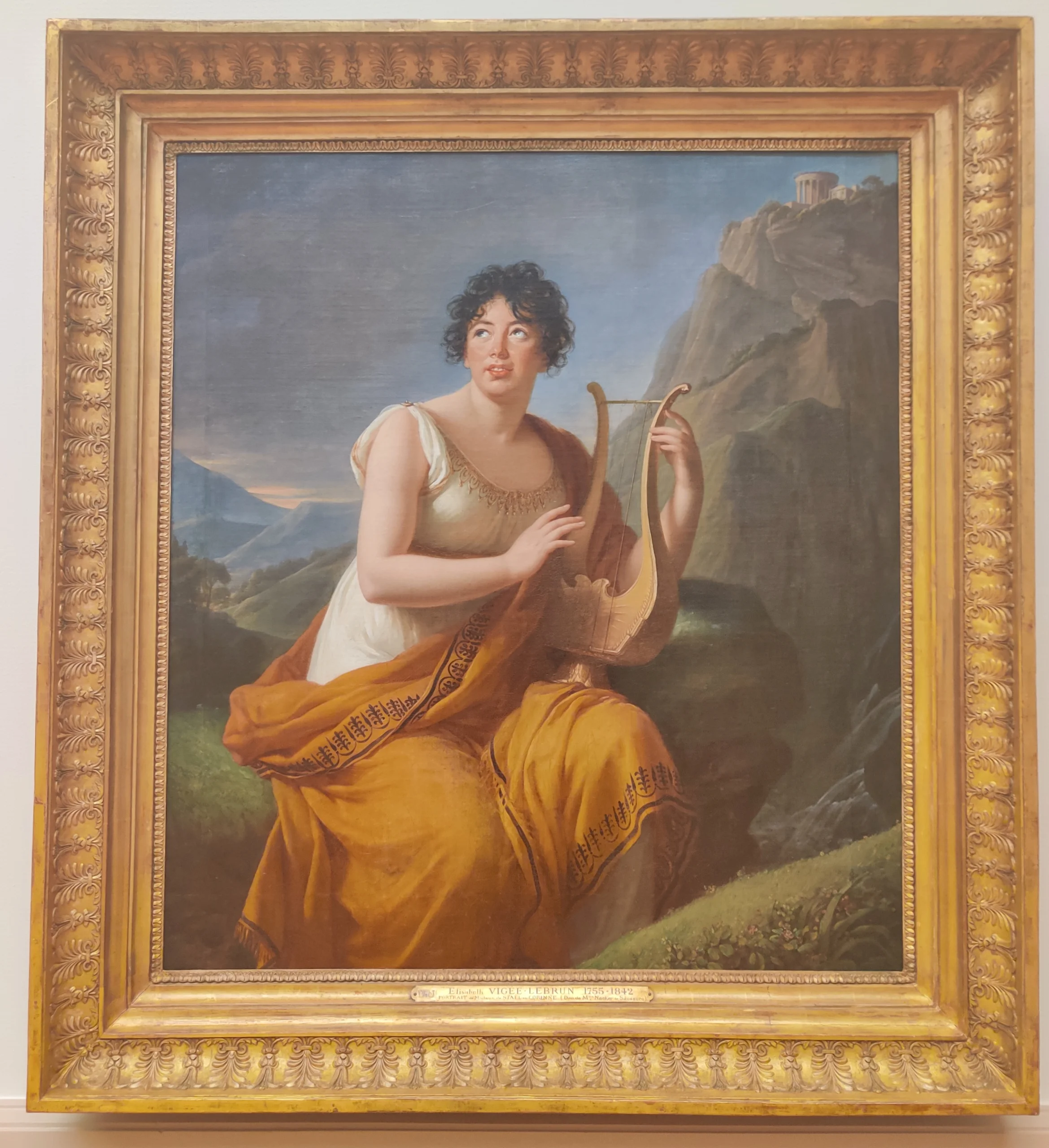
Germaine de Staël
 France
writer•salonnière•political theorist
Also known as: Madame de Staël, Madame Anne-Louise-Germaine de Staël, Anne-Louise-Germaine Necker, Mme de Staël, Anne-Louise-Germaine de Staël-Holstein
Birthday
April 22, 1766
Birth Sign
Sagittarius
Birthplace
Paris, France
Age
Died at 51
About
Anne Louise Germaine de Staël-Holstein, known universally as Madame de Staël, was a Genevan-French novelist, political theorist, and salonnière who became one of the most influential intellectuals of late 18th and early 19th-century Europe. Born on April 22, 1766, in Paris, she was the daughter of Jacques Necker, the Swiss banker and Finance Minister of France, and Suzanne Curchod, a celebrated salon hostess. From childhood, she was immersed in the highest echelons of Enlightenment thought, surrounded by figures like Voltaire and Rousseau.
Her career flourished during the French Revolution and the Napoleonic era. She hosted a famous salon in Paris that became a hub for liberal opposition and Romantic thought. When Napoleon viewed her as a dangerous influence, he banished her from the capital. She spent those years in exile at her estate in Coppet, Switzerland, where she continued to write and host the "Coppet Group," a circle of exiled intellectuals. Her major works, including Delphine, Corinne, ou l'Italie, and De l'Allemagne, championed individual freedom and helped spread Romanticism across the continent.
Madame de Staël died on July 14, 1817, at her home in Paris. She left behind a vast body of work and a legacy as a fearless advocate for liberty and a proto-feminist icon. Her life remains a testament to the power of the written word and the courage required to challenge authoritarian rule.
Early Life & Background
Born into wealth and privilege, Anne Louise Germaine Necker enjoyed an upbringing that set her apart from most women of her time. Her father, Jacques Necker, served as the Director-General of Finances for King Louis XVI, bringing the family into the center of French political life. Her mother, Suzanne Curchod, ran a renowned salon that attracted the greatest minds of the Enlightenment. This environment provided Germaine with an education that was far more rigorous than what was typical for girls of the aristocracy. She was encouraged to read widely in philosophy, history, and literature, mastering English, Italian, and German alongside French.
Although she spent some of her early years in Geneva, she returned to Paris where she began writing poetry and essays as a teenager. Unlike many of her peers, she was not confined to domestic pursuits but was expected to engage with serious intellectual debates. By the age of twenty, she had already developed a sharp intellect and a fierce independence that would define her later life. Her early writings were not yet published, but they laid the groundwork for the critical voice she would soon bring to the public sphere.
Her path to fame began not with a single breakthrough moment but with the gradual establishment of her own social and intellectual presence. In the 1780s, she started hosting her own gatherings at the Hôtel de Montmorency. These salons quickly gained a reputation for their liberal politics and open-minded discussion, attracting future luminaries like Benjamin Constant and François-René de Chateaubriand. This period of preparation allowed her to refine her ideas and build the network that would sustain her through the turbulence of the coming revolution.
Career Growth
Madame de Staël's career took off in the 1780s when she began hosting her own salon, which quickly became the epicenter of liberal opposition in Paris. Her first major publication, Lettres sur les ouvrages et le caractère de J.-J. Rousseau (1788), established her as a serious literary critic. However, her true impact came during the French Revolution and the Napoleonic era, when she used her writing to defend moderate liberalism against both Jacobin radicalism and Bonapartist authoritarianism.
In 1798, she published De la littérature considérée dans ses rapports avec les institutions sociales, a foundational text of Romanticism that argued for the connection between literature and social freedom. Two years later, she released Delphine, a novel that caused a scandal for its bold defense of female autonomy. Her most famous work, Corinne, ou l'Italie (1807), explored the conflict between artistic passion and social duty, cementing her status as a leading voice of the Romantic movement.
Napoleon, who saw her as a threat, banned her from Paris in 1803. Undeterred, she moved to her estate in Coppet, Switzerland, where she wrote De l'Allemagne (1810), a seminal work that introduced German Romantic literature and philosophy to the French public. The book was so influential that Napoleon ordered its confiscation and destruction. Despite this censorship, she maintained her influence from abroad, shaping European thought until her death in 1817.
Career Timeline
Public Image & Style
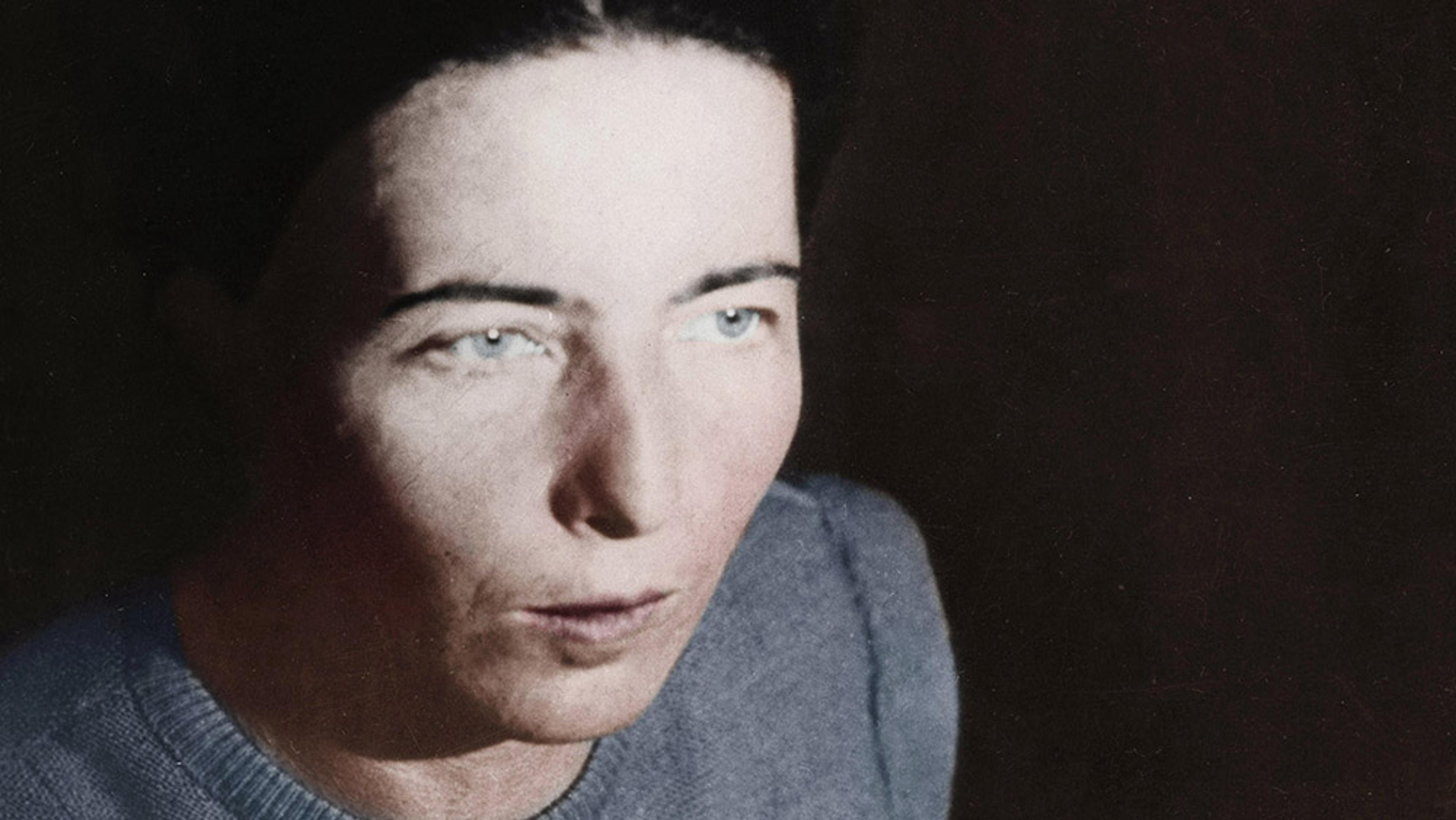
Madame de Staël is portrayed as a fearless intellectual, a proto-feminist, and a "modern woman" who defied the constraints of her time. Her image is one of sharp wit, political courage, and emotional intensity. Media portrayals emphasize her defiance of Napoleon and her role as a bridge between French and German cultures.
She is often described as having a commanding presence and a striking appearance. Contemporary accounts note her sharp features and the intensity with which she engaged in debate. Her public persona was built on the idea that a woman could be both a passionate lover and a serious political thinker.
Her legacy is that of a woman who refused to be silenced. Even when exiled by the most powerful man in Europe, she continued to write and speak out. This unwavering commitment to her principles has made her a symbol of resistance and intellectual independence.
Fame & Fandom (iFAMOUS Rankings)
As of September 2026, iFANN's Global Fame Engine has evaluated Germaine de Staël, but she does not currently hold a placement in the published rankings, whether in the Global Top 1,000 or any Top-100 scope list. Her fame is measured not by celebrity metrics but by her historical significance as a pivotal figure in European literature and political thought.
There is no formal fandom for Madame de Staël in the modern sense. Her admirers are scholars, historians, and readers of 19th-century literature who study her work in academic settings. No organized fan campaigns, rituals, or unofficial names exist. Instead, her legacy is upheld by institutions such as the ALLEA Madame de Staël Prize and the ETH Zurich funding program, which honor her as a symbol of European intellectual exchange. Contemporary engagement with her work remains scholarly and theatrical, as seen in the 2026 Washington, D.C. production of her play "The Mannequin," which signaled a resurgence of interest in her dramatic works among theater enthusiasts.
Interesting Facts and Legends
One of the most enduring legends about Madame de Staël is her feud with Napoleon, who famously declared that she taught people to think. He reportedly said, "She teaches people to think, or at least to think about things they had never thought of before," acknowledging her dangerous influence on public opinion.
Another fascinating fact is that she died on July 14, 1817, the very day Bastille Day. This date has taken on symbolic resonance given her lifelong association with revolutionary ideals and her role as a defender of liberty.
Germaine was also a multilingual genius who could write fluently in English, German, and Italian. This skill allowed her to translate and disseminate foreign literature to French audiences, playing a crucial role in bridging cultural divides in Europe.
Her play The Mannequin, written in the 1790s, was largely forgotten until its revival in Washington, D.C., in Spring 2026. The production revealed her versatility beyond novels and showed that her dramatic works still hold relevance today.
Notable Quotes
“I have always believed that the mind must be free to grow.”
“He is a great man, but he is a tyrant.”
“She thought like a man but felt like a woman.”
Family & Personal Life
Germaine was born to Jacques Necker, the Swiss banker and Finance Minister of France, and Suzanne Curchod, a celebrated salon hostess. Her parents' position brought her into contact with the most powerful minds of the Enlightenment, including Voltaire and Rousseau. Her mother's salon established the model for Germaine's own future intellectual gatherings.
She married Erik Magnus de Staël-Holstein, a Swedish diplomat, in 1786. The marriage was arranged by her father and produced three children: Albertine, Auguste, and Albert. Erik died in 1802, leaving Germaine a widow with significant debts and a young family to support.
Later in life, she formed a deep bond with Albert Jean Michel de Rocca, a young Corsican officer. They lived together at Coppet and later in Paris, providing each other with stability during her final years. Rocca survived her and continued to manage her legacy.
Notable Connections
Relationships & Dating History
Madame de Staël's personal life was as turbulent and public as her career. At age 20, in 1786, she married Erik Magnus de Staël-Holstein, a Swedish diplomat and baron. The marriage was arranged by her father and was reportedly unhappy from the start due to Erik's indifference. They had three children together: Albertine, Auguste, and Albert. Erik died of illness in 1802 at their estate in Coppet, leaving Germaine a widow with significant debts and a young family to support.
In 1794, she met the Swiss philosopher Benjamin Constant. Their passionate affair lasted thirteen years and produced a son, Louis Charles Albert Constant, known as Jules. The relationship was tumultuous, marked by Constant's infidelity and financial instability, and ended acrimoniously in 1807. Despite the breakup, they remained close intellectual companions until her death. Constant later wrote extensively about their relationship, which inspired his novel Adolphe.
After the split with Constant, Germaine formed a deep bond with Albert Jean Michel de Rocca, a young Corsican officer and former aide-de-camp to Napoleon. They lived together at Coppet and later in Paris. Their relationship was stable and supportive during her final years. Rocca survived her and continued to manage her legacy. As of 2026, she is remembered as having been widowed at the time of her death.
- MarriedErik Magnus de Staël-Holstein1786 - 1802Arranged marriage; three children; husband died of illness.
- DatedBenjamin Constant1794 - 1807Long-term partner; one son; relationship ended acrimoniously.
- DatedAlbert Jean Michel de Rocca1812 - 1817Final partner; stable relationship during her last years.
Death & Aftermath
Died
July 14, 1817 (aged 51)
Death Place
Paris, France
Cause of Death
Stroke (apoplexy)
On July 14, 1817, Anne Louise Germaine de Staël passed away at her residence in Paris. Her death marked the end of a life defined by intellectual ferocity and political defiance. She had been suffering from a chronic decline in health that was worsened by the emotional strain of her long exile under Napoleon Bonaparte. The official cause recorded was a stroke or apoplexy, though the toll of her years of displacement undoubtedly contributed to her final days.
The news of her death sent shockwaves through European intellectual circles. Tributes poured in from across the continent, with Lord Byron famously noting that she "thought like a man but felt like a woman." Her passing coincided just days after the death of Jane Austen, a coincidence that modern commentators have often highlighted as a symbolic closing of an era for female writers. Despite the private nature of her funeral, which was attended only by family and close friends, her legacy was immediately secured. She was buried in the cemetery of Saint-Philippe-du-Roule.
Posthumously, her influence only grew stronger. Her daughter Albertine inherited her manuscripts and managed the literary estate without dispute, ensuring her works remained in print throughout the 19th century. In recent decades, scholars like John Claiborne Isbell have renewed interest in her political thought, and institutions continue to honor her memory. The ALLEA Madame de Staël Prize, established to recognize contributions to European research cooperation, bears her name, and academic programs at places like ETH Zurich maintain funding dedicated to her legacy of cross-border intellectual exchange.
Net Worth (Estate Value)
$0
iFANN Editorial Team estimate
As a historical figure who died in 1817, Germaine de Staël does not have a net worth in the modern financial sense. Her estate value at the time of her death was substantial, comprising her family's wealth, real estate holdings in Coppet and Paris, and the proceeds from her books. Her daughter, Albertine, inherited her manuscripts and property without dispute.
Today, her "value" is measured in cultural capital and the ongoing revenue generated by her published works, which remain in print and are studied globally. No specific dollar figure exists for her estate now, as it was liquidated and distributed among heirs generations ago. Any net worth figures found online would be speculative or erroneous projections. The iFANN Editorial Team estimates that while she holds no current monetary fortune, her cultural legacy generates significant academic and commercial interest, particularly through university programs and theatrical revivals like the 2026 production of The Mannequin.
Awards & Accolades
View 6 records, honours and achievementsKnown For
Corinne, ou l'Italie
1807 · Author
De l'Allemagne
1810 · Author
Delphine
1802 · Author
The Mannequin
1796 · Playwright
Keywords
Sources
Quick Facts
- Profession
- writer, salonnière, diarist
- Born
- April 22, 1766
- Birthplace
- Paris, France
- Died
- July 14, 1817
- Death Place
- Paris, France
- Gender
- Female
- Spouse
- Erik Magnus de Staël-Holstein, Albert Jean Michel de Rocca
- Birth Sign
- Sagittarius
Personal Details
- Full Name
- Anne Louise Germaine Necker
- Spouse
- Erik Magnus de Staël-Holstein, Albert Jean Michel de Rocca
- Children
- Albertine, Auguste, Albert, Jules
- Education
- Self-taught; extensive reading in philosophy, history, and literature encouraged by father Jacques Necker
Frequently Asked Questions
Who was Germaine de Staël?
Why was Germaine de Staël exiled?
What is Germaine de Staël's most famous book?
Did Germaine de Staël have children?
How did Germaine de Staël die?
Similar People
Join the community
fans discussing