 France
“Kirsten Dunst is luminously portraying Marie Antoinette; a young soon-to-be queen, full of love and yet terribly flawed, a royal with nothing but her bloodline to offer France.”
IMDb User
IMDb
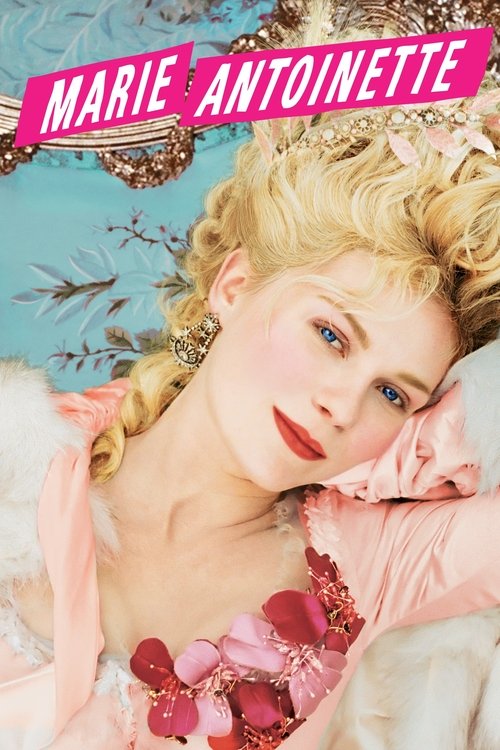
In 2006, director Sofia Coppola took a bold, unconventional approach to the historical drama with Marie Antoinette. Rather than a traditional period piece, the film presents the French queen as a teenage girl thrust into the gilded cage of Versailles. Kirsten Dunst stars as the title character, navigating the suffocating rituals of court life, an indifferent husband (Jason Schwartzman as Louis XVI), and mounting public scorn. The cast also includes Steve Coogan as the scheming Ambassador Mercy, Judy Davis as the stern Comtesse de Noailles, Rip Torn as the libertine King Louis XV, and Asia Argento as the king's mistress, Comtesse du Barry. Shot on location at the Palace of Versailles, the film had a budget of $40 million and earned just over $60 million globally. Its soundtrack, featuring modern pop and post-punk tracks, sparked debate but also defined its unique tone. With a PG-13 rating and a runtime of 2 hours and 3 minutes, the film leans into the opulence and alienation of Marie Antoinette's world, offering a sensory experience over a political lesson. Though divisive among critics, it has gained a cult following for its audacious style.
Coppola wrote the script with Dunst in mind for the lead, and the production received unprecedented access to Versailles, including the Petit Trianon and the Hameau de la Reine. Costume designer Milena Canonero won an Academy Award for her work, crafting a wardrobe that required a crew of 60 people. Shoes were designed by Manolo Blahnik, and pastries came from Ladurée. The film's anachronistic soundtrack, featuring The Cure, New Order, and Gang of Four, underscored Marie Antoinette's youthful perspective and emotional isolation, drawing both praise and criticism. Over time, the film has been re-evaluated as a feminist take on a misunderstood figure, emphasizing private experience over public events.
Availability and pricing can change. Confirm on the provider's site before purchasing.
In 1770, 14-year-old Marie Antoinette, the youngest daughter of Empress Maria Theresa of Austria, is sent to France to marry Louis-Auguste, the Dauphin, in a political alliance meant to mend years of conflict between the two nations. Arriving in a foreign land and a court steeped in rigid etiquette, the charming but naive archduchess is stripped of her familiar life and possessions, including her beloved dog, and is essentially rebranded as 'fully French' to appease the Versailles aristocracy. Her wedding to Louis-Auguste is followed by a ritualistic consummation ceremony, observed by courtiers, yet the couple struggles to consummate their marriage for a significant period, adding to the pressure on Marie Antoinette to produce an heir.
Life at Versailles is a gilded cage, filled with elaborate rituals, constant social scrutiny, and an endless cycle of parties, gambling, and extravagant fashion. Marie Antoinette finds solace in this opulent world, seeking distractions and amusements to cope with her loneliness and the distance from her husband. She clashes with Madame du Barry, the King's mistress, and navigates the complex social hierarchy, often advised by figures like Ambassador Mercy and her stern lady-in-waiting, Comtesse de Noailles. Her mother, Empress Maria Theresa, frequently sends critical letters, expressing disappointment over the lack of a male heir.
After her brother Joseph's intervention, which involves a frank conversation with Louis about their marital duties, Marie Antoinette and Louis finally consummate their marriage. She becomes pregnant, but gives birth to a daughter, further fueling her mother's discontent. Seeking an escape from the suffocating court life, Marie Antoinette finds a retreat at the Hameau de la Reine, a rustic estate on the palace grounds, where she can spend time with her children and enjoy a semblance of privacy and natural beauty. During this period, she also begins to distance herself from some of the more excessive courtly pursuits and spends more time with her family, including the birth of her son and two subsequent children.
However, France's financial situation deteriorates significantly, and the public's discontent with the monarchy, particularly with Marie Antoinette's lavish spending, grows. She becomes a symbol of the nation's woes, labeled a class traitor. The political climate intensifies, leading to the storming of the Bastille and the burgeoning French Revolution. Despite the escalating unrest, Marie Antoinette and Louis XVI choose to remain in France, eventually being taken by the masses to Paris for their trials. The film chronicles her journey from a young, impressionable princess to a queen facing the devastating consequences of political turmoil and public outrage.
Marie Antoinette (2006) Official Trailer 1
Critical Consensus
Sofia Coppola's Marie Antoinette offers a visually stunning and anachronistic take on the French queen, focusing on her personal experience of isolation and excess rather than historical accuracy. While praised for its aesthetic and Dunst's performance, the film's unconventional approach and lack of traditional narrative structure divided critics.
“Kirsten Dunst is luminously portraying Marie Antoinette; a young soon-to-be queen, full of love and yet terribly flawed, a royal with nothing but her bloodline to offer France.”
IMDb User
IMDb
“Sofia Coppola lets the queen eat frosting from a cupcake as an anachronistic French maid slides on her bubblegum pink kitten heels in the opening shot of 2006's MARIE ANTOINETTE, while Gang of Four declares one of the film's central concerns: 'the problem of leisure, what to do for pleasure.'”
Yale University Library Film Notes
Yale University Library
“If you love color, beautiful costumes and scenery, this is the film for you. Don't bother if you're looking for any kind of content; like the vacuous queen, there's no there there.”
IMDb User
IMDb
“This film spends surprisingly little time discussing politics, instead focusing on the personal life and struggles of Antoinette as she finds herself in an awkward marriage and in the middle of some large disagreements in her new nation.”
Brandon Talks Movies
Brandon Talks Movies
Kirsten Dunst
Marie Antoinette
Jason Schwartzman
Louis XVI
Steve Coogan
Ambassador Mercy
Judy Davis
Comtesse de Noailles
Rip Torn
Louis XV
Asia Argento
Comtesse du Barry
Molly Shannon
Aunt Victoire
Shirley Henderson
Aunt Sophie
Rose Byrne
Duchesse de Polignac
Mary Nighy
Princesse Lamballe
Danny Huston
Emperor Joseph
Marianne Faithfull
Maria Teresa
Director
Sofia Coppola
Writer
Sofia Coppola
Composer
Dustin O'Halloran
Cinematographer
Lance Acord
Producers
Sofia Coppola, Ross Katz
Academy Award for Best Costume Design (2007)
Best Costume Design: Won
Cannes Film Festival Palme d'Or (2006)
Palme d'Or: Nominated
Join the community
fans discussing