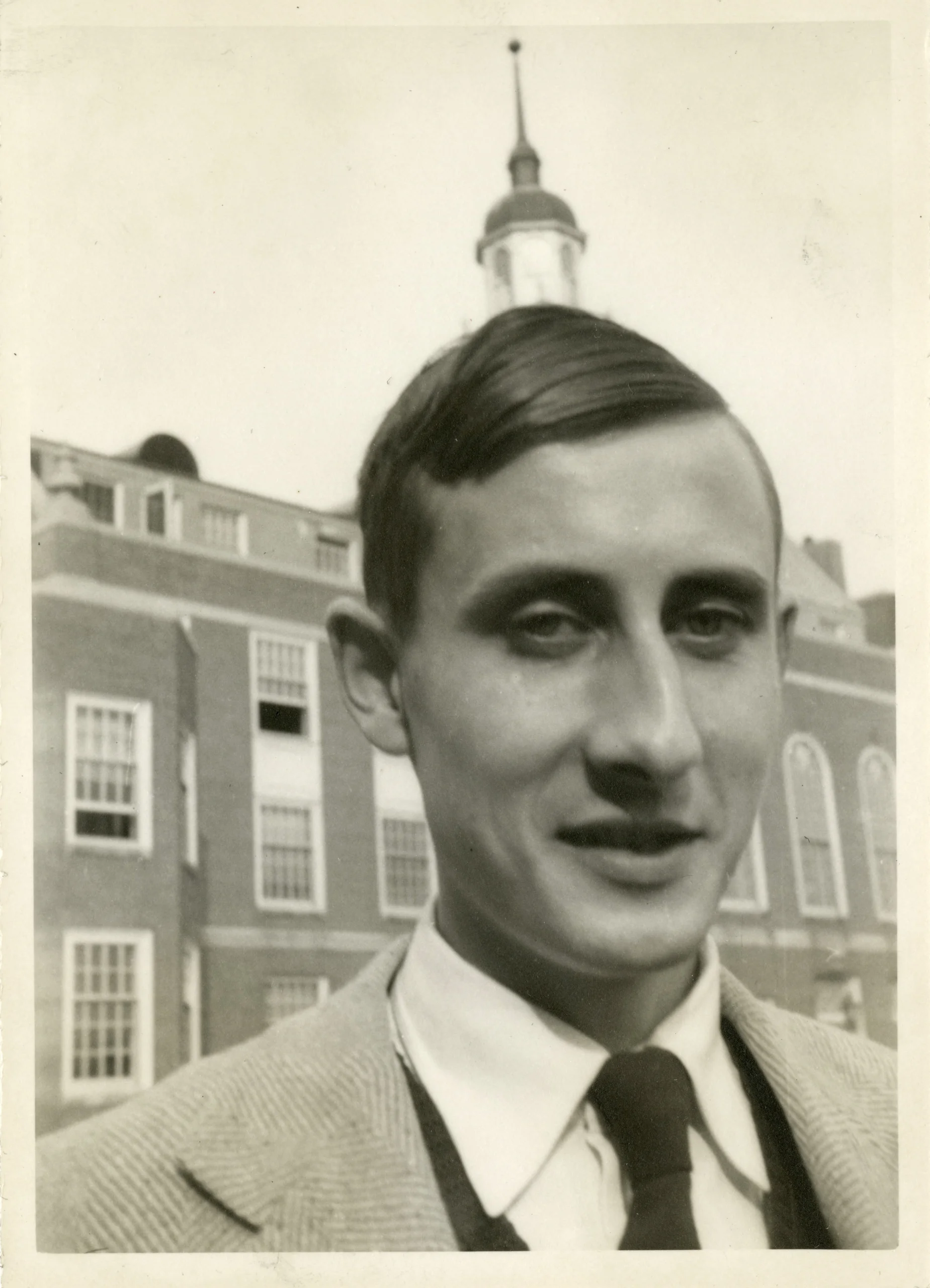
Freeman Dyson
 United Kingdom
mathematician•theoretical physicist•nuclear physicist
Also known as: Freeman John Dyson
Birthday
December 15, 1923
Birth Sign
Sagittarius
Birthplace
Crowthorne, Berkshire, England
Age
Died at 96
Height
5 ft 10 in (178 cm)
About
Freeman John Dyson was a British-American theoretical physicist and mathematician whose work reshaped quantum field theory, astrophysics, and nuclear engineering. He spent most of his career at the Institute for Advanced Study in Princeton, where he became professor emeritus. Dyson's thinking ranged from pure mathematics to speculative engineering, and he originated concepts like the Dyson sphere, a hypothetical megastructure that encloses a star to capture its energy, alongside the Dyson series, a perturbative method using Feynman diagrams that became foundational to quantum electrodynamics.
Dyson often challenged mainstream scientific views, most notably on climate change, arguing that its effects were overstated and that CO2 could benefit agriculture. He believed political efforts to curb emissions distracted from more pressing global issues. Despite this contrarianism, his contributions earned him the 1996 Lewis Thomas Prize for Writing about Science and the 2000 Templeton Prize for Progress in Religion, worth $1.2 million. He died on February 28, 2020, at age 96, leaving a legacy of intellectual independence and wide-ranging curiosity.
Early Life & Background
Dyson grew up in a highly intellectual household in Crowthorne, Berkshire, where his father, Sir George Dyson, was a renowned composer and director of the Royal College of Music, and his mother, Mildred Atkey, was a lawyer. Young Freeman was educated at home by his mother until age six, then attended preparatory schools. He taught himself calculus at seven and published his first mathematical paper at 18 while at Winchester College on a scholarship.
In 1941, he won a scholarship to Trinity College, Cambridge, but his studies were interrupted by World War II. He served as a statistician for the Royal Air Force's Bomber Command, analyzing bombing patterns to improve accuracy. After the war, he completed his bachelor's degree in mathematics in 1945. He moved to the United States in 1947 as a Commonwealth Fellow at Cornell University, studying under Hans Bethe and Richard Feynman. A pivotal moment came in 1948 when he attended a summer school at the University of Michigan where Feynman and Julian Schwinger presented conflicting formulations of quantum electrodynamics. Dyson spent the summer reconciling the two approaches, producing the Dyson series, a perturbative expansion using Feynman diagrams that unified QED. This work, published in 1949, established his reputation and launched his career.
Career Growth
In 1949, Dyson was appointed professor of physics at Cornell University. Two years later, he joined the Institute for Advanced Study in Princeton as a professor, where he remained for the rest of his career. In 1959, he proposed the Dyson sphere concept in the journal Science, a hypothetical megastructure that could harness a star's energy output, sparking decades of scientific and science-fiction interest. During the 1960s, he worked on Project Orion, a NASA-funded study of nuclear pulse propulsion for spacecraft, advocating for its development until the project was cancelled in 1965 due to the Partial Test Ban Treaty.
In the 1970s, Dyson shifted his focus to biology and environmental issues, writing extensively about the ethical implications of genetic engineering and climate change. He published several influential books, including Disturbing the Universe (1979), Weapons and Hope (1984), and The Scientist as Rebel (2006). His later years brought major honors: the Wolf Prize in Physics in 1981, the Enrico Fermi Award in 1993, and the Templeton Prize in 2000. Even in his 90s, he continued to publish essays and speak publicly, remaining a fixture at the Institute for Advanced Study until his death.
Career Timeline
Public Image & Style
Dyson cultivated a public persona as a gentle, thoughtful contrarian. He was often photographed in rumpled suits and thick glasses, looking every bit the absent-minded professor. The media frequently described him as the rebel physicist or the heretic, especially after his climate change skepticism drew criticism. He was respected for his intellectual independence but also criticized for his views on climate. His books, particularly Disturbing the Universe and Weapons and Hope, developed a dedicated readership among science enthusiasts. He had no personal social media accounts, but his legacy is maintained by the Institute for Advanced Study and his Wikipedia page, which receives over 500,000 monthly views.
Fame & Fandom (iFAMOUS Rankings)
Freeman Dyson is currently the 29th most famous person in AI, a standing confirmed by the iFANN Global Fame Rankings. This placement reflects how his foundational concepts continue to shape the trajectory of artificial intelligence and computational theory long after his passing. While he never sought celebrity, the enduring power of his ideas has secured him a unique position in the global consciousness, tracked through decades of media coverage and scholarly consumption worldwide.
Unlike pop stars or actors, Freeman Dyson did not cultivate a formal fandom with a specific name or organized rituals. His legacy belongs to a diffuse community of scientists, science fiction writers, and engineers who revere his intellectual contributions rather than his persona. There were no crowds fainting at his lectures or fan-funded campaigns to keep his name on charts; instead, his influence rippled through academic circles and speculative fiction. The "fandom" for Dyson is best described as an intellectual following inspired by his willingness to challenge orthodoxy and imagine the future of humanity among the stars.
The most prominent legend associated with him remains the concept of the Dyson Sphere. Proposed in a 1960 paper, this hypothesis suggested that advanced civilizations would enclose their stars in megastructures to capture energy. What began as rigorous mathematical reasoning evolved into a cornerstone of astrobiology lore, frequently depicted in movies and video games as the definitive sign of Type II civilizations. Another legendary aspect of his career involves his role in resolving infinite values in quantum electrodynamics, cementing his status as a founding father of modern particle physics alongside Richard Feynman. These stories are not folklore born of exaggeration but verified historical facts that have transcended their academic origins to become global symbols of human imagination.
Interesting Facts and Legends
Freeman Dyson never earned a Ph.D., holding only a bachelor's degree from Cambridge despite receiving over 20 honorary doctorates throughout his life. An avid mountain climber, he scaled the Matterhorn at age 60, demonstrating a physical vigor that matched his intellectual curiosity. He remained a vegetarian for ethical reasons, believing it reduced animal suffering, and published a collection of poetry titled Poems of Freeman Dyson in 1999.
His daughter Esther Dyson became a well-known technology analyst and investor, often called the most powerful woman in tech. Dyson was a close friend of Richard Feynman, and they frequently debated the intricacies of quantum mechanics together. He served on the Board of Sponsors of the Bulletin of the Atomic Scientists, which maintains the Doomsday Clock, and remained a pacifist who regretted his early work on nuclear projects before becoming a dedicated advocate for arms control.
A widely retold story in scientific lore concerns his 1960 proposal of the Dyson Sphere, a hypothetical megastructure enclosing a star to capture its energy. This idea originated from his rigorous mathematical reasoning but evolved into popular folklore where such spheres are frequently depicted in movies and internet discussions as the sign of advanced alien civilizations. Another enduring narrative highlights his unconventional path to greatness: a mathematical prodigy who left Oxford without a doctorate to work directly with Paul Dirac at Cambridge. Recent studies from 2026 indicate the concept remains active in scientific discourse, with researchers exploring whether observed cold stars might be such megastructures, proving the enduring power of his original vision.
Notable Quotes
“As we look out into the Universe and identify the many accidents of physics and astronomy that have worked together to our benefit, it almost seems as if the Universe must in some sense have known that we were coming.”
“I have felt it my duty to speak out on issues where the scientific consensus is wrong. The climate change consensus is one of those.”
“The best way to predict the future is to invent it.”
“I am not a believer in the religion of science. I think science is a tool, not a creed.”
“The Dyson sphere is not a prediction. It is a thought experiment to explore the limits of what is possible.”
Family & Personal Life
Dyson's father, Sir George Dyson, composed the music for the coronation of Queen Elizabeth II. His mother, Mildred Atkey, was a lawyer. He had no siblings. Dyson married twice. His first wife was Verena Huber-Dyson, a Swiss mathematician; they had two children: Esther (born 1951), a technology analyst and investor, and George (born 1953), a historian of technology. The marriage ended in divorce in 1958. His second wife was Imme Jung, a German athlete and coach; they had four children: Dorothy, Mia, Rebecca, and Emily. Imme died of cancer in 2003. Dyson lived in Princeton, New Jersey, for most of his adult life, in a modest home near the Institute for Advanced Study. He did not own pets.
Notable Connections
Dyson's most notable collaborations were with Richard Feynman and Hans Bethe at Cornell. He also worked with Julian Schwinger, reconciling their competing formulations of quantum electrodynamics. His son George Dyson is a historian of technology, and his daughter Esther Dyson is a prominent technology investor. He co-received the Wolf Prize in Physics with Gerard 't Hooft and Victor Weisskopf.
Relationships & Dating History
Dyson married twice. His first marriage was to Verena Huber-Dyson, a Swiss mathematician, in 1950. They met at the Institute for Advanced Study and had two children, Esther and George. The marriage ended in divorce in 1958, though they remained on amicable terms. Verena later moved to Canada and continued her academic career; she died in 2016. In 1958, Dyson married Imme Jung, a German athlete and coach, whom he met at a conference in Europe. They had four children: Dorothy, Mia, Rebecca, and Emily. Imme died of cancer in 2003. Dyson had no known romantic relationships outside these two marriages. As of his death in 2020, he was widowed.
- MarriedVerena Huber-Dyson1950 - 1958Swiss mathematician; met at the Institute for Advanced Study; had two children; divorced amicably.
- MarriedImme Dyson1958 - 2003German athlete and coach; met at a conference in Europe; had four children; died of cancer.
Death & Aftermath
Died
February 28, 2020 (aged 96)
Death Place
Princeton, New Jersey, USA
Cause of Death
Natural causes associated with advanced age
Freeman Dyson spent his final years in Princeton, New Jersey, continuing to write essays and correspond with colleagues while living at the Institute for Advanced Study where he had been a fixture for decades. On February 28, 2020, he passed away naturally in his sleep at the age of 96 without any acute medical emergency or suspicious circumstances requiring intervention. The scientific community responded with immediate tributes that highlighted his unique ability to bridge pure mathematics and speculative engineering. The New York Times published an extensive obituary tracing his path from subatomic physics to environmental visioning, while Quanta Magazine honored him as an unstoppable idea factory.
The Institute for Advanced Study issued statements honoring his decades of service and his unique ability to bridge mathematics and physics. Details regarding a funeral or memorial service remained private as the family requested privacy following his passing, so no public ceremony or burial site was officially disclosed by the Institute or his estate. A scholarship or foundation specifically created in his name right after his death has not appeared in public records, and the handling of his estate was managed privately by his family.
Following his death, his existing works continued to be studied and cited within academic circles. His name saw renewed interest in search trends and discussions regarding his theories on extraterrestrial civilizations and nuclear energy.
Net Worth (Estate Value)
$6 Million
iFANN Editorial Team estimate
iFANN currently estimates Freeman Dyson's estate at $6 Million as of 2026. This figure derives primarily from his academic salary, book royalties, and the Templeton Prize during his lifetime. Dyson earned a modest salary as a professor at the Institute for Advanced Study, estimated at $150,000 to $200,000 per year in his later decades. His books, including Disturbing the Universe (1979), Weapons and Hope (1984), and The Scientist as Rebel (2006), generated lifetime royalties estimated between $500,000 and $1 million. The Templeton Prize in 2000 brought $1.2 million, most of which he donated to charity. He also earned speaking fees of $5,000 to $10,000 per engagement, giving 20 to 30 paid lectures annually in his later years. The estate is managed by his daughter Esther Dyson. Posthumous revenue comes from continued book sales and modest licensing for educational materials. No major real estate holdings, business ventures, or endorsement deals have been reported.
Awards Won (10)
Dyson won numerous prestigious awards during his career, including the Wolf Prize in Physics (1981), the Enrico Fermi Award (1993), and the Templeton Prize (2000). He also received the Heineman Prize for Mathematical Physics (1965), the Hughes Medal (1968), and the Max Planck Medal (1969). His writing earned him the Lewis Thomas Prize (1996). Despite multiple nominations, he never won the Nobel Prize.
2000 · Progress in Religion
For exploring the relationship between science and religion
1996 · Writing about Science
Disturbing the Universe
Known For
Dyson series
1948 · Creator
Dyson sphere
1959 · Proposer
Project Orion
1960 · Physicist
Disturbing the Universe
1979 · Author
Keywords
Quick Facts
- Profession
- mathematician, theoretical physicist, nuclear physicist
- Born
- +1923-12-15
- Birthplace
- Crowthorne, Berkshire, England
- Died
- +2020-02-28
- Death Place
- Princeton, New Jersey, USA
- Gender
- Male
- Spouse
- Verena Huber-Dyson, Imme Dyson
- Birth Sign
- Sagittarius
- Height
- 5 ft 10 in (178 cm)
- Education
- Trinity College, Cambridge (BA, 1945)
- Children
- 6
Personal Details
- Full Name
- Freeman John Dyson
- Height
- 5 ft 10 in (178 cm)
- Spouse
- Verena Huber-Dyson, Imme Dyson
- Children
- Esther Dyson, George Dyson, Dorothy Dyson, Mia Dyson, Rebecca Dyson, Emily Dyson
- Education
- Trinity College, Cambridge (BA, 1945)
Frequently Asked Questions
Did Freeman Dyson win a Nobel Prize?
What is a Dyson sphere?
Was Freeman Dyson related to Sir George Dyson?
What was Freeman Dyson's net worth at the time of his death?
Did Freeman Dyson believe in climate change?
Join the community
fans discussing