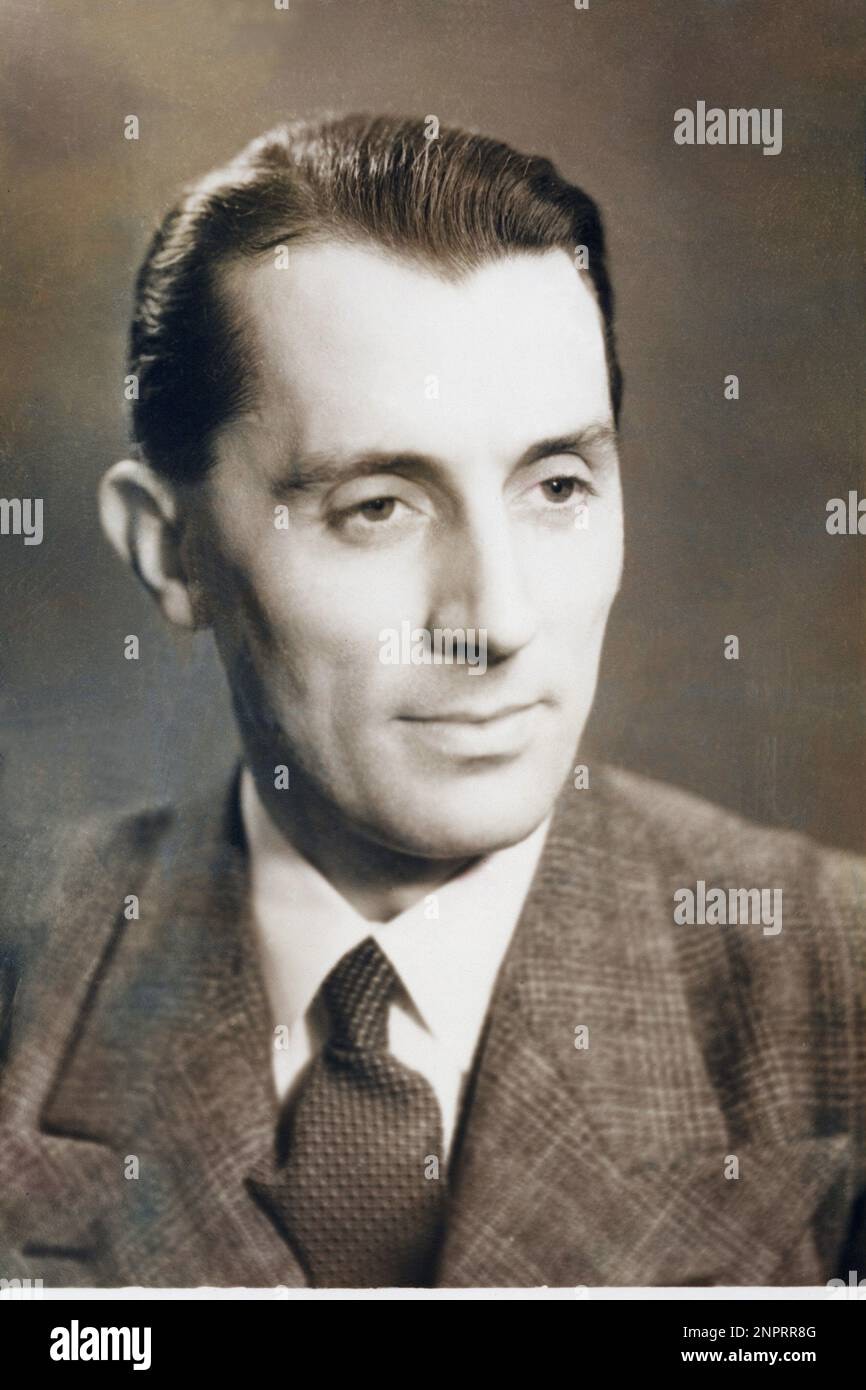
Frédéric Joliot-Curie
 France
nuclear physicist•chemist•professor
Also known as: Jean Frédéric Joliot
Birthday
March 19, 1900
Birth Sign
Pisces
Birthplace
Paris, France
Age
Died at 58
About
Frédéric Joliot-Curie was a French physicist and chemist who, with his wife Irène Joliot-Curie, discovered artificial radioactivity. For this breakthrough they shared the 1935 Nobel Prize in Chemistry, making them the second married couple to win a Nobel after Irène's parents, Marie and Pierre Curie. Today, his legacy lives on through the Joliot-Curie name in science, the research center at Orsay he helped found, and the continued influence of his work in nuclear physics. He is remembered as a scientist who combined brilliant research with a strong sense of social responsibility, opposing nuclear weapons while advancing atomic energy for peaceful uses.
Early Life & Background
Born in Paris to an Alsatian Protestant family, Frédéric Joliot showed an early talent for science. He entered the École Municipale de Physique et de Chimie Industrielles in 1919, where Pierre Curie had once taught, and graduated top of his class in 1923 as a physics engineer. His teacher Paul Langevin steered him toward fundamental research.
In December 1924, Joliot met Marie Curie and became her personal assistant at the Radium Institute. There he met her daughter Irène Curie, and they fell in love. Marie insisted he pursue further academic qualifications, so Joliot earned a second baccalaureate, a bachelor's degree, and a doctorate in 1930 with a thesis on the electrochemistry of radio-elements. He married Irène on October 4, 1926, and they adopted the joint surname Joliot-Curie.
Career Growth
In January 1934, the Joliot-Curies bombarded boron, aluminum, and magnesium with alpha particles and created new radioactive isotopes of nitrogen, phosphorus, and silicon, the first artificial radioactivity. The discovery earned them the 1935 Nobel Prize in Chemistry.
Joliot-Curie became a professor at the Collège de France in 1937. During World War II, he joined the French Resistance, using his laboratory to manufacture explosives and radio equipment. After the war, he was appointed director of the National Centre for Scientific Research (CNRS) in 1945 and became France's first High Commissioner for Atomic Energy. He supervised the construction of France's first atomic reactor in 1948. In 1955, he signed the Russell-Einstein Manifesto opposing nuclear weapons.
Career Timeline
Public Image & Style
Joliot-Curie was seen as a brilliant and dedicated scientist, deeply committed to peaceful applications of nuclear energy. His Resistance work during the war added a heroic dimension to his public persona. He was also a political figure, his membership in the Communist Party sparking controversy during the Cold War. Today he is remembered as a pioneer who balanced scientific excellence with social conscience.
Fame & Fandom (iFAMOUS Rankings)
Frédéric Joliot-Curie's enduring recognition rests on his scientific achievements and his role in the wartime resistance, rather than on any organized fan base. There is no documented fandom name, no coordinated fan community, and no fan-driven campaigns or rituals associated with him. His legacy is preserved through institutions such as the Institut Curie and the Joliot-Curie laboratory, as well as through Nobel Prize archives and historical foundations. The Picasso portrait from 1959 and the continued scholarly interest in the Curie family dynasty reflect a diffuse, institutional admiration rather than a modern fandom.
As of August 2026, iFANN's Global Fame Engine has evaluated Frédéric Joliot-Curie, but he does not currently hold a placement in the published rankings. This means he is not listed among the Global Top 1,000 most famous people, nor does he appear on any Top-100 scope list. The evaluation acknowledges his historical significance, yet his fame, while considerable, does not currently meet the threshold for a ranked position within iFANN's frameworks.
Interesting Facts and Legends
Frédéric Joliot-Curie played the piano and enjoyed landscape painting. He was an avid reader of Rudyard Kipling, and during the German occupation of France, he coordinated the production of Molotov cocktails for the Resistance. He was a commander of the Legion of Honour and received the Croix de Guerre. In 1942, he joined the French Communist Party, a decision that would later define his public life.
A widely retold story from his wartime activities involves the secret shipment of France's heavy water supply, which was smuggled to England in 1940 to prevent it from falling into German hands. Accounts describe the heavy water being hidden in containers disguised as sardine tins, though the specific details may have been embellished over time. The core event is documented and has become part of his heroic wartime legend.
Another iconic moment is the discovery of artificial radioactivity with his wife Irène in 1934, which earned them the 1935 Nobel Prize in Chemistry. This breakthrough transformed nuclear physics and led to advances in medical imaging and cancer treatment. The Nobel ceremony itself, where they followed in the footsteps of Irène's parents, Marie and Pierre Curie, holds a special place in scientific lore.
Family & Personal Life
Frédéric Joliot-Curie married Irène Curie in 1926. They had two children: Hélène, born in 1927, who became a physicist, and Pierre, born in 1932, who became a biologist. The family lived in Paris and at the Radium Institute. Irène died in 1956 from leukemia linked to radiation exposure. Frédéric never remarried.
Notable Connections
Relationships & Dating History
Frédéric Joliot met Irène Curie at the Radium Institute in 1925, where she worked alongside her mother Marie. They married on October 4, 1926, and adopted the joint surname Joliot-Curie. Their partnership was both personal and professional; they collaborated on the discovery of artificial radioactivity. Irène died of leukemia in 1956. Frédéric did not remarry, remaining devoted to her memory until his own death in 1958.
- MarriedIrène Joliot-Curie1926 - 1956Married on October 4, 1926. Collaborated on Nobel Prize-winning research. Irène died in 1956.
Death & Aftermath
Died
August 14, 1958 (aged 58)
Death Place
Paris, France
Cause of Death
Unknown
A lithograph portrait drawn by Pablo Picasso in February 1959 stands as a notable cultural artifact commemorating the intersection of two giants of the 20th century, created specifically as an homage following the scientist's passing. This posthumous tribute from a fellow icon preceded any formal state recognition, reflecting the deep respect held for Joliot-Curie among peers in both the scientific and political spheres who noted his contributions to nuclear physics and his engagement with the World Peace Council. The man known for opposing nuclear weapons while advancing atomic energy for peaceful uses passed away on August 14, 1958, in Paris, France, at the age of 58, concluding a life that had seen him serve as a professor at the Collège de France and a director of the National Centre for Scientific Research.
While his wife Irène had died in 1956 from leukemia linked to radiation exposure, Frédéric continued his work until his final days without an official hospital statement detailing the immediate circumstances or last public appearance being released. Consequently, the exact cause remains unconfirmed in public documentation, with no disputed accounts regarding foul play or accident reported in the search results. Public reaction centered on tributes from scientific and political institutions rather than commercial surges or fan vigils, acknowledging a prominent figure whose legacy extended beyond the laboratory into the realm of international peace advocacy. He was buried in the family plot consistent with Curie family tradition, though specific details regarding eulogies or attendees were not widely digitized in general biographical summaries compared to the more publicized events surrounding Marie Curie.
Posthumously, his intellectual property and estate were managed by his family, including his daughter Hélène Langevin-Joliot, who later became a nuclear physicist herself, ensuring the continuation of the family's scientific lineage.
Net Worth (Estate Value)
Awards Won (2)
Frédéric Joliot-Curie won the 1935 Nobel Prize in Chemistry jointly with Irène Joliot-Curie for discovering artificial radioactivity. He also received the Hughes Medal from the Royal Society in 1947 for his contributions to nuclear physics.
1935 · Chemistry
Discovery of artificial radioactivity
1947 · Physics
Contributions to nuclear physics
Known For
Discovery of artificial radioactivity
1934 · co-discoverer
Nobel Prize in Chemistry
1935 · laureate
Keywords
Sources
Quick Facts
- Profession
- nuclear physicist, chemist, professor
- Born
- March 19, 1900
- Birthplace
- Paris, France
- Died
- August 14, 1958
- Death Place
- Paris, France
- Gender
- Male
- Spouse
- Irène Joliot-Curie
- Birth Sign
- Pisces
Personal Details
- Full Name
- Jean Frédéric Joliot
- Spouse
- Irène Joliot-Curie
- Children
- Hélène Joliot-Curie, Pierre Joliot-Curie
- Education
- École Supérieure de Physique et de Chimie Industrielles de Paris
Frequently Asked Questions
Who was Frédéric Joliot-Curie?
What did Frédéric Joliot-Curie discover?
When did Frédéric Joliot-Curie win the Nobel Prize?
What was Frédéric Joliot-Curie's role in World War II?
What was Frédéric Joliot-Curie's net worth?
Join the community
fans discussing