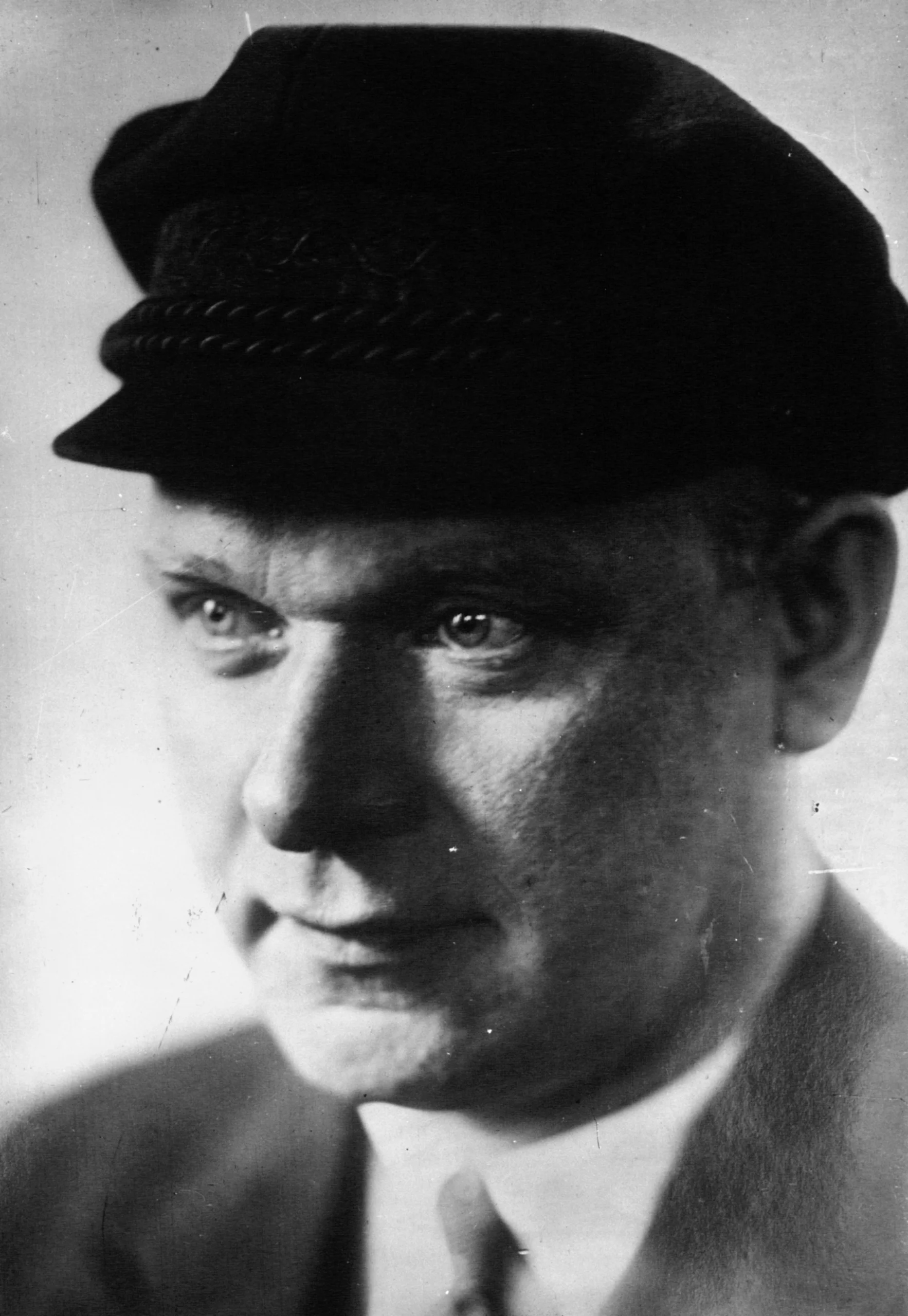
Ernst Thälmann
 Germany
politician•revolutionary•trade unionist
Also known as: Ernst Johannes Fritz Thälmann, Teddy
Birthday
April 16, 1886
Birth Sign
Aries
Birthplace
Hamburg, Germany
Age
Died at 58
About
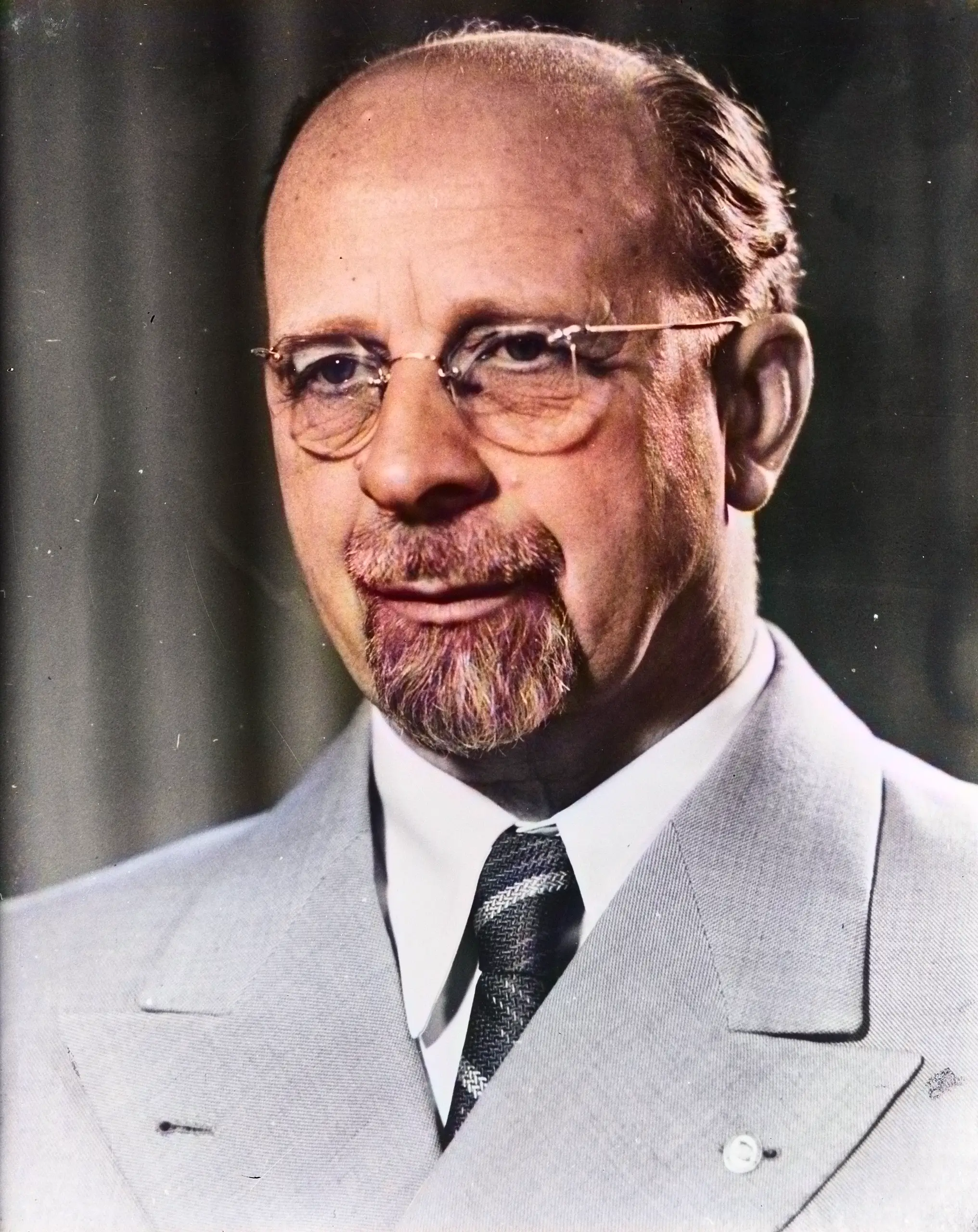
Ernst Thälmann was a German communist politician, revolutionary and trade unionist who led the Communist Party of Germany from 1925 until 1933. He was born in Hamburg on April 16, 1886, and executed at Buchenwald concentration camp on August 18, 1944, at the age of 58.
He was the most powerful communist figure of the Weimar Republic, a two-time presidential candidate and commander of the party's paramilitary wing, the Roter Frontkämpferbund. His uncompromising line against the Social Democrats, whom he branded social fascists, blocked any united anti-Nazi front, a decision historians still argue about. After Hitler took power, the Gestapo arrested him and he spent eleven years in solitary confinement before being shot on Hitler's personal orders. In East Germany he became the state's central martyr, commemorated in films, monuments, streets and youth organizations. Today his legacy lives mostly through the Buchenwald Memorial and the vast bronze monument in Berlin's Prenzlauer Berg.
Early Life & Background
Ernst Thälmann grew up in Hamburg's working-class districts, the son of a modest household where money was always tight. He and his sister worked long hours from an early age, and he trained as a dockworker and transport worker rather than attending university. The Hamburg docks in the early 1900s were a hard school in labor politics, and Thälmann learned it firsthand.
He joined the Social Democratic Party in 1903, at seventeen, and became active in the trade union movement. When World War I broke out, he was conscripted and served on the Western Front, an experience that pushed him sharply to the left. He broke with the SPD over its support for the war, joined the Independent Social Democrats, and then moved to the newly founded Communist Party of Germany. During the revolutionary upheavals of 1918 to 1923, he rose through the Hamburg party apparatus, building a reputation as a organizer who understood the mood of the docks better than the intellectuals in Berlin.
Academic work by N. LaPorte covers this period in detail, tracing what he calls the making of a German communist between 1886 and 1921. Contemporaries described Thälmann as a devoted revolutionary and a good orator with a fine instinct for workers' temper, an excellent medium for expounding theories. He was not a theorist himself. He was the kind of speaker who could hold a crowded hall, and that skill carried him from the Hamburg waterfront toward the party's national leadership.
Career Growth
Thälmann became chairman of the KPD in 1925 and held the post until 1933. Under his leadership the party grew into a mass force of hundreds of thousands of members, and he steered it toward unwavering loyalty to Moscow and Joseph Stalin. He also commanded the Roter Frontkämpferbund, the KPD's paramilitary wing, whose street fights with police and Nazi stormtroopers became a defining feature of late Weimar politics.
He ran for president twice. In the 1932 election he won 13.2 percent of the vote, against Hitler's 30.1 percent and Paul von Hindenburg's winning share. The result made him the most powerful communist in Germany, but it also exposed the cost of his strategy. His insistence on labeling the Social Democrats social fascists ruled out the united anti-Nazi front that might have changed the outcome. Historians have debated that decision ever since.
After Hitler's seizure of power in 1933, the Gestapo arrested him and he disappeared into the prison system. Stalin and Vyacheslav Molotov initially pushed for his release, but after the Molotov-Ribbentrop Pact of 1939 those efforts faded, and his party rival Walter Ulbricht refused to plead on his behalf. He was executed at Buchenwald on August 18, 1944, on Hitler's direct orders.
Career Timeline
Public Image & Style
In life, Thälmann projected the image of the docks themselves: a working man in a worker's party, not a drawing-room intellectual. He dressed plainly, spoke in plain language, and cultivated the persona of the Hamburg laborer who had read his way into revolution. The Roter Frontkämpferbund gave him a paramilitary edge, and his public appearances often carried the threat of street violence.
After 1945, East German propaganda rebuilt that image into something smoother: the flawless anti-fascist hero, the man who never wavered, the martyr whose portrait hung in every school. The DEFA films polished away the factional fights and the social fascist line, leaving a symbol rather than a politician. Since reunification, the image has split. For some Germans he is a monument to be maintained or argued over; for anti-fascists abroad he remains a shorthand for resistance. The Berlin statue, a brooding bronze head on a massive plinth, captures both readings at once.
Fame & Fandom (iFAMOUS Rankings)
Ernst Thälmann does not have a celebrity fandom in any conventional sense, and no fandom name is documented. What he has instead is an institutionalized political following: communists, anti-fascists, and former members of the Ernst Thälmann Pioneer Organisation, the East German youth group whose members wore blue neckerchiefs and recited his name as a motto. Annual commemorations on his birthday, April 16, and his death anniversary, August 18, still draw international participation. In 2023 Iran's Tudeh Party sent a message to the German Communist Party marking the occasion. The colossal monument in Berlin's Prenzlauer Berg and the Buchenwald Memorial function as pilgrimage sites for that following.
As of the September 2026 rankings, iFANN's Global Fame Engine has evaluated Thälmann but he does not currently hold a placement in the published rankings, including the Global Top 1,000 or any Top-100 scope list. His contemporary fame shows up instead in political argument: the 1932 election result, 13.2 percent against Hitler's 30.1, is invoked again and again as a cautionary tale about splitting the left vote, in a 2016 Prospect article and a 2026 Morning Star piece among others. Wikipedia readership in a recent 30-day window ran to roughly 47,000 views across languages, led by German and English, which suggests a figure remembered more by students of history than by a mass audience.
Interesting Facts and Legends
Thälmann's name reached the Caribbean. Cuba's Cayo Blanco del Sur, a small island off the southern coast, was renamed Ernst Thälmann Island as a gift from Fidel Castro to East Germany, and it is sometimes described as the last surviving piece of the GDR.
The East German pioneer organization that carried his name required members to wear a blue neckerchief and recite the motto Thälmann is my name, Thälmann is my example. For hundreds of thousands of children, that was their first political sentence.
The 1954 GDR film Ernst Thälmann: Führer seiner Klasse took the Nazi term Führer and redirected it to a working-class leader, a deliberate piece of cultural jujitsu that shaped official memory for decades.
East German Makarov pistols and other Cold War collectibles still carry his cultural imprint, and a 1952 artwork by Fritz Nolde depicted him. His Wikipedia entry exists in 26 languages, with roughly 47,000 pageviews across languages in a recent 30-day window.
Family & Personal Life
Thälmann married Rosa Koch, a fellow communist and KPD functionary who shared his political life. The couple had one daughter, Irma Thälmann, who grew up in the shadow of her father's activism and later his imprisonment. Rosa survived him by nearly two decades, dying in 1962, and Irma carried the family name through the East German years.
He left no surviving close relatives to claim his remains after his execution, a fact that shaped how the East German state handled his memory. With no widow or child able to step forward publicly in 1944, the regime's suppression of mourning went unchallenged, and the later cult of Thälmann was built almost entirely by the party rather than the family. There is no documented record of any other public romantic relationship in his life.
Notable Connections
Rosa Thälmann (wife), Irma Thälmann (daughter), Joseph Stalin and Vyacheslav Molotov (Moscow patrons who later abandoned efforts for his release), Walter Ulbricht (party rival who refused to plead for him), Adolf Hitler (ordered his execution), Lev Kerbel (monument designer), and N. LaPorte (biographer).
Relationships & Dating History
Thälmann's public personal life was short and singular. He married Rosa Koch, a fellow communist and KPD functionary, and the two built their household around party work in Hamburg and later Berlin. The couple had one daughter, Irma Thälmann, who was born during the years when Thälmann was rising through the party ranks.
There is no documented record of any other romantic relationship, public or otherwise. Sources cover only this marriage, and no affairs, separations or later partners appear in the historical record. When Thälmann was arrested by the Gestapo in 1933, Rosa was left to raise Irma and to live with the knowledge that her husband was in Nazi custody. She survived him, dying in 1962, and was married to him at the time of his death in 1944. As of 2026 there is no living partner, as Thälmann died at Buchenwald more than eighty years ago.
- MarriedRosa Thälmann1915 - 1944Fellow communist and KPD functionary; they had one daughter, Irma. The marriage ended with his execution at Buchenwald in 1944.
Death & Aftermath
Died
August 18, 1944 (aged 58)
Death Place
Buchenwald concentration camp, Thuringia, Germany
Cause of Death
Execution by firing squad
On the morning of August 18, 1944, guards at Buchenwald concentration camp took Ernst Thälmann from his cell block and shot him. He had spent more than eleven years in custody, most of it in solitary confinement, and the order came directly from Adolf Hitler. The camp sat on the Ettersberg hill above Weimar, a short drive from the city where Thälmann had once campaigned for the German presidency. He was 58.
The regime moved quickly to erase any trace of him. Mourning was banned, tributes were forbidden, and no public announcement followed the execution. Because he had no surviving close relatives to claim his remains, his body was most likely cremated at the camp. For the rest of the war, the Nazi state treated his name as something to be buried.
After 1945, the German Democratic Republic did the opposite. Thälmann became the central martyr of the East German state. His birthday and his death anniversary were marked with official ceremonies, parades and speeches, and schoolchildren across the country learned his name before almost any other. In 1954 and 1955 the DEFA studio released the two-part epic Ernst Thälmann: Sohn seiner Klasse and Ernst Thälmann: Führer seiner Klasse, which fixed his image for a generation. A colossal bronze monument designed by the Soviet sculptor Lev Kerbel went up in Berlin, and streets, squares, factories and youth organizations took his name.
Reunification changed the official story but not the physical record. In 1990 the German state formally acknowledged that his arrest and execution had been illegal, though no individual was ever successfully prosecuted for his specific killing. The Buchenwald Memorial remains an active commemorative site and a destination for anti-fascist visitors; in 2025 a German court sided with the Memorial in a dispute over its ban on the keffiyeh. The Berlin monument still stands in Prenzlauer Berg, and the 2015 book Hitler's Rival brought renewed attention to his life. Commemorations continue on both his birthday and the anniversary of his death, drawing participants from communist and anti-fascist groups abroad.
Net Worth (Estate Value)
$0
iFANN Editorial Team estimate
Ernst Thälmann left no commercial estate, and there is no documented net worth in the celebrity sense. He was a salaried party official for most of his adult life, and after his arrest in 1933 he had no income at all. His widow, Rosa, lived modestly in East Germany until her death in 1962, supported by the state rather than by any family fortune.
What exists today is a commemorative legacy, not a financial one. The DEFA films about him were state productions whose revenue belonged to the studio, the Berlin monument was publicly funded, and the many streets and institutions bearing his name generate no income for any heir. The iFANN Editorial Team's analysis of his career earnings, property and posthumous rights points to an estate value of effectively nothing, so the figure shown here is $0. There are no posthumous releases, no licensing deals, no catalog sales and no estate disputes on record. His memory is maintained by memorials and political organizations, not by money.
Awards & Accolades
View 8 records, honours and achievementsKnown For
Chairman of the Communist Party of Germany
1925 · Party leader, 1925 to 1933
1932 German presidential election
1932 · KPD presidential candidate, 13.2 percent of the vote
Roter Frontkämpferbund
1924 · Commander of the KPD paramilitary wing
Keywords
Sources
Quick Facts
- Profession
- politician, revolutionary, trade unionist
- Born
- April 16, 1886
- Birthplace
- Hamburg, Germany
- Died
- August 18, 1944
- Death Place
- Buchenwald concentration camp, Thuringia, Germany
- Cause of Death
- Execution by firing squad
- Gender
- Male
- Spouse
- Rosa Thälmann
- Children
- Irma Thälmann
- Birth Sign
- Aries
- Party
- Communist Party of Germany (KPD)
- Years as KPD Chairman
- 1925 to 1933
Personal Details
- Full Name
- Ernst Johannes Fritz Thälmann
- Spouse
- Rosa Thälmann
- Children
- Irma Thälmann
Frequently Asked Questions
Who was Ernst Thälmann?
How did Ernst Thälmann die?
Was Ernst Thälmann married?
Why is Ernst Thälmann controversial?
What is the Ernst Thälmann Monument?
Similar People
Join the community
fans discussing