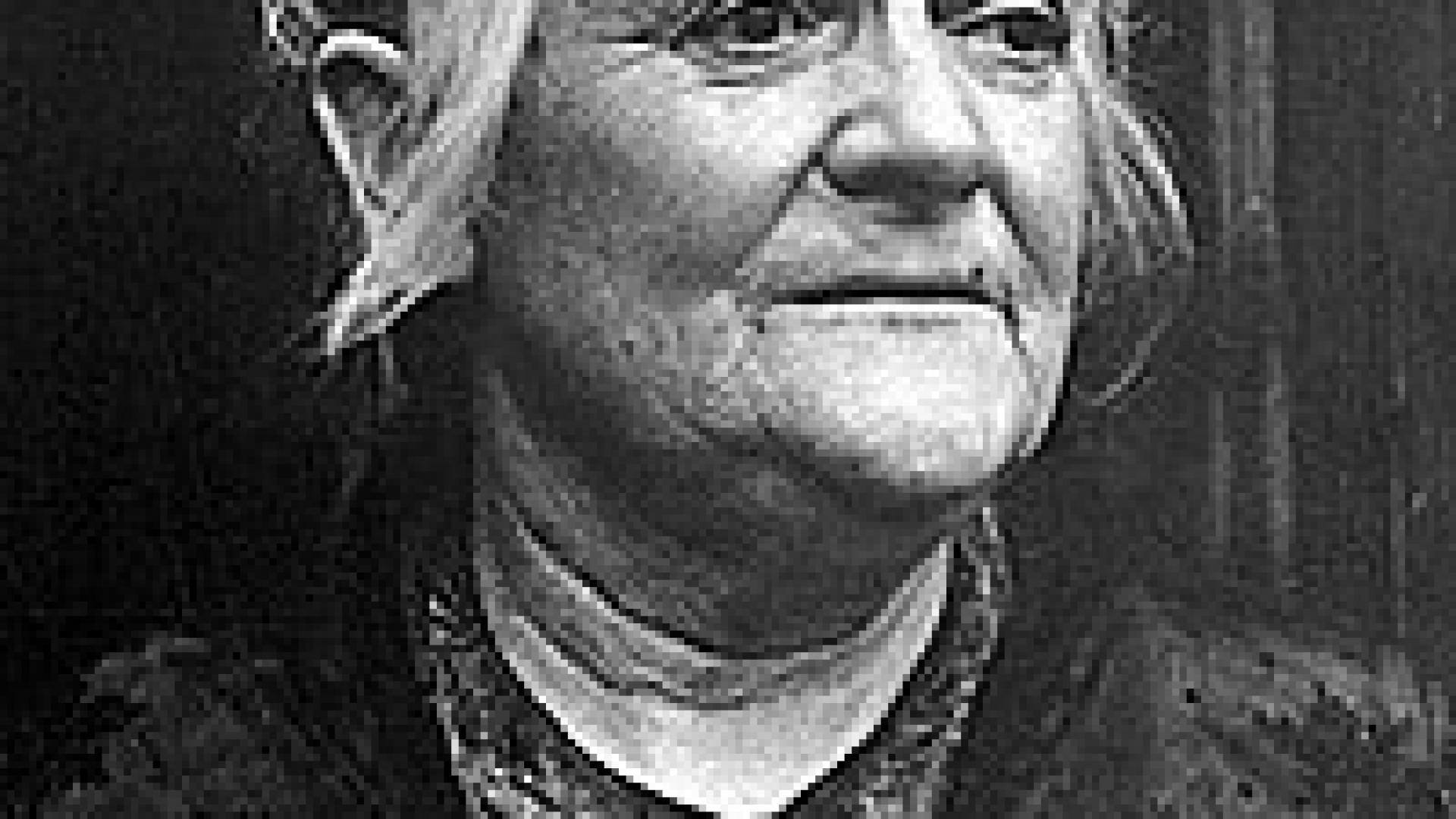
Clara Zetkin
 Germany
politician•journalist•women's rights activist
Also known as: Clara Eißner, Clara Josephine Eißner
Birthday
July 5, 1857
Birth Sign
Cancer
Birthplace
Königshain-Wiederau, Germany
Age
Died at 75
About
Clara Zetkin was a towering figure in the German labor movement, a Marxist theorist, and a foundational architect of the international women's rights movement. Born Clara Josephine Eißner on July 5, 1857, in Königshain-Wiederau, Saxony, she dedicated her life to socialism and the emancipation of women. She served as a member of the Reichstag for the Communist Party of Germany from 1920 until her death in 1933.
Zetkin is best remembered for proposing International Women's Day in 1910, an initiative that has become a globally recognized observance. Her political career spanned over five decades, during which she edited the influential newspaper Die Gleichheit and co-founded the Communist Party of Germany alongside Rosa Luxemburg and Karl Liebknecht. She died in exile in the Soviet Union on June 20, 1933, leaving behind a legacy that continues to influence feminist and socialist movements today.
Early Life & Background
Clara Zetkin was born into a modest family in a small Saxon village. Her father, Christian Wilhelm Eißner, worked as a schoolmaster, while her mother, Friederike Ryssel, came from a family of weavers. Raised in a rural environment, she attended local schools before moving to Leipzig in 1875 to complete her teacher training. Although she qualified as an educator, her time in the university city exposed her to radical political ideas that quickly overshadowed her teaching ambitions.
By the late 1870s, Zetkin had abandoned the classroom to immerse herself in the burgeoning socialist movement. She joined the Social Democratic Party of Germany (SPD) and began organizing workers despite the anti-socialist laws enacted by Chancellor Otto von Bismarck. These repressive measures forced many socialists into exile or underground activities, but Zetkin used this period to deepen her study of Marxist theory and build connections with fellow activists. Her early years were characterized by intense intellectual development and a refusal to compromise on her political convictions, setting the stage for her future leadership roles.
Her personal life also took shape during these formative years. In 1878, she married Georg Friedrich Zündel, a Russian revolutionary journalist. They met while both were involved in socialist circles, though their marriage would eventually face strain due to political differences and personal challenges. This period of exile and organization laid the groundwork for her transition from a young teacher to a seasoned political strategist who would soon reshape the landscape of women's rights activism.
Career Growth
Zetkin's political ascent began in earnest after she joined the SPD in 1878. By the 1880s, she had moved to Switzerland due to Bismarck's anti-socialist laws, where she met Ossip Zetkin, who became her lifelong partner. In 1892, she was appointed editor of Die Gleichheit (Equality), the SPD's weekly newspaper for women. Under her leadership, the publication became a powerful voice for working-class women, advocating for equal pay, maternity leave, and suffrage. She held this position until 1917, shaping the discourse around gender and class for nearly three decades.
In 1907, Zetkin became secretary of the International Socialist Women's Conference, using these platforms to unify socialist women across borders. At the Second International Socialist Women's Conference in Copenhagen in 1910, she proposed the establishment of an International Women's Day to promote women's rights and universal suffrage. This proposal marked a turning point in her career and in global history.
When World War I broke out, Zetkin opposed the war and the SPD's support for war credits, leading to her expulsion from the party in 1917. She joined the Independent Social Democratic Party and later the Spartacist League. In 1918, she co-founded the Communist Party of Germany (KPD) with Rosa Luxemburg and Karl Liebknecht. From 1920 to 1933, she served as a member of the Reichstag representing the KPD. As the "Elder President" of the Reichstag, she symbolized seniority and authority within the assembly. Despite being seriously ill, she delivered a fiery speech denouncing fascism in 1932. Following Hitler's rise to power, she lost her seat and was forced into exile in the Soviet Union, where she remained until her death.
Career Timeline
Public Image & Style
Zetkin is portrayed as a stern, intellectual, and uncompromising revolutionary. Her aesthetic is associated with early 20th-century socialist imagery: simple clothing, severe hairstyles, and a serious expression. Media portrayals emphasize her role as a strategist and theorist rather than a charismatic performer. She was known for her sharp intellect and fiery speeches, which made her a natural leader within the socialist movement.
Her public image was that of a disciplined organizer who prioritized collective action over individual glory. She maintained a reputation for integrity and consistency in her political views, even when they led to conflict with party leadership. This unwavering commitment to her principles earned her respect among allies and fear among opponents.
Fame & Fandom
Clara Zetkin's following is not that of a celebrity fanbase but of a political and intellectual legacy. There is no formal fandom name; her admirers are found among Marxist scholars, women's rights activists, and left-wing organizations that treat her as a foundational figure. The Rosa Luxemburg Foundation and the Marxists Internet Archive preserve her work, while annual International Women's Day commemorations keep her memory alive. Her proposal for International Women's Day in 1910 remains her most enduring contribution, and her prescient warnings against fascism are still studied.
Despite this sustained ideological influence, iFANN's Global Fame Engine has evaluated Clara Zetkin but she currently holds no placement in the published rankings, neither in the Global Top 1,000 nor in any Top-100 scope list. Her fame, while significant in specific political and historical circles, has not translated into the broad, measurable recognition that the rankings capture. This is a neutral statement of fact, not a judgment on her historical importance.
Her legacy is carried forward through institutional channels rather than fan-driven projects. The Rosa Luxemburg Foundation actively promotes her intellectual heritage, and the Marxists Internet Archive serves as a digital repository. Media outlets periodically feature her, particularly around International Women's Day, and her role in founding that day has even appeared as a trivia question on the Indian game show Kaun Banega Crorepati, indicating a reach into mainstream popular culture. Yet, no formal fan rituals or inside jokes exist; the closest are the political observances each March 8.
Interesting Facts and Legends
Before entering full-time politics, Zetkin trained as a teacher but left the profession to join the socialist movement. She spent significant time in exile in Switzerland and Paris, where she networked with other European socialists and developed her theoretical framework. Her 1923 speech on fascism is considered remarkably accurate, predicting the class nature of the Nazi movement years before Hitler's rise to power.
The obituary in the Manchester Guardian coined the title "grandmother of communism," which stuck and became part of her legendary status. Despite her frail health, she traveled from Moscow to Berlin in 1932 to open the newly elected Reichstag as its Elder President, delivering a powerful speech denouncing fascism. This act of courage is widely retold in left-wing circles as a defining moment of resistance against the rising Nazi threat.
Her writings on the intersection of class and gender, particularly in works discussing women and Marxism, remain foundational texts for socialist feminism. The Rosa Luxemburg Foundation continues to highlight her analysis, which remains relevant to contemporary discussions on inequality and political struggle.
Notable Quotes
“The liberation of women is a necessary condition for the liberation of the working class.”
“We must not allow the struggle for women's rights to become a separate struggle, detached from the general class struggle.”
“The bourgeoisie can only win the war if it succeeds in dividing the working class.”
Family & Personal Life
Clara Zetkin was born to Christian Wilhelm Eißner, a schoolmaster, and Friederike Ryssel, the daughter of a weaver. She had two sons, Maximilian Zetkin and Konstantin Zetkin, both of whom became prominent figures in the communist movement. Maximilian worked closely with his mother in the KPD, while Konstantin pursued a career as a poet and translator.
Her personal relationships were deeply intertwined with her political life. She was first married to Georg Friedrich Zündel from 1878 until their separation in 1889. Later, she formed a lifelong partnership with Ossip Zetkin, a Russian-Jewish revolutionary, starting in 1881. They lived together for over 50 years until Ossip's death in 1926. Their relationship was a model of revolutionary solidarity, though they never formally remarried after her separation from Zündel.
Notable Connections
Relationships & Dating History
Clara Zetkin's romantic history is well-documented, centered around two long-term partners who were also her political comrades. Her first marriage was to Georg Friedrich Zündel, a Russian revolutionary and journalist whom she met while in exile in Switzerland. They married in 1878, but the relationship was strained by political differences and Zündel's alcoholism. They separated in 1889, though they never legally divorced. They had no children together. The separation was amicable politically but personal tragedy for Zetkin, who focused increasingly on her political work.
In 1881, Zetkin met Ossip Zetkin, a Russian-Jewish revolutionary, in Switzerland. He became her lifelong partner and the father of her two sons. They lived together for over 50 years, though they never formally remarried after her separation from Zündel. Ossip died in 1926. Their partnership was a model of revolutionary solidarity. Their sons, Maximilian and Konstantin, both became prominent figures in the communist movement. Maximilian worked closely with his mother in the KPD, while Konstantin was a poet and translator. Zetkin remained widowed following Ossip's death until her own passing in 1933.
- MarriedGeorg Friedrich Zündel1878 - 1889Married in Switzerland; separated due to political differences and alcoholism; no children.
- MarriedOssip Zetkin1881 - 1926Lifelong partner and co-revolutionary; father of her two sons; died in 1926.
Death & Aftermath
Died
June 20, 1933 (aged 75)
Death Place
Arkhangelskoye, Soviet Union
Cause of Death
Natural causes related to old age
Clara Zetkin spent her final years in exile after the Nazi regime seized power in Germany and stripped her of her seat in the Reichstag. She died on June 20, 1933, at the age of 75 in Arkhangelskoye near Moscow, where she had been living since fleeing persecution. Her death resulted from natural causes linked to failing health and advanced age, ending a life defined by decades of revolutionary activism.
Immediate tributes poured in from socialist and communist circles worldwide, honoring her as a foundational figure in the international labor movement. The Manchester Guardian described her as the "grandmother of communism," a title that reflected her stature among peers. While mainstream German media remained silent or hostile due to Nazi censorship, underground networks organized memorial gatherings for the deceased leader.
In the decades following her death, particularly within the German Democratic Republic (East Germany), Zetkin was elevated to the status of a national hero. The state established the Clara-Zetkin Medal in 1954 to honor achievements in science, culture, and women's rights. Numerous streets, schools, and public institutions across East Germany and other socialist nations were named in her memory. Her legacy remains institutionalized through organizations like the Rosa Luxemburg Foundation, which continues to promote her writings and political philosophy. The United Nations officially recognized her 1910 proposal when proclaiming International Women's Day in 1975, cementing her role in global history without requiring commercial estate management.
Net Worth (Estate Value)
$0
iFANN Editorial Team estimate
Clara Zetkin passed away in 1933, so she has no current net worth. As a politician and activist, she did not accumulate personal wealth through commercial ventures. Her estate value is not recorded in financial terms but is estimated to be negligible, as she lived frugally and dedicated her resources to the movement. Posthumous earnings from royalties, licensing, or estates are non-existent in the modern sense, as her works are largely in the public domain and managed by archives rather than commercial estates. Any "net worth" figures found online are speculative or erroneous, likely conflating her with modern figures.
Awards & Accolades
View 3 records, honours and achievementsKnown For
International Women's Day
1910 · Founder
Communist Party of Germany
1918 · Co-founder
Die Gleichheit
1892 · Editor
Keywords
Sources
Quick Facts
- Profession
- politician, journalist, women's rights activist
- Born
- July 5, 1857
- Birthplace
- Königshain-Wiederau
- Died
- June 20, 1933
- Death Place
- Arkhangelskoye
- Gender
- Female
- Spouse
- Ossip Zetkin, Georg Friedrich Zundel
- Birth Sign
- Cancer
Personal Details
- Full Name
- Clara Josephine Eißner
- Spouse
- Ossip Zetkin, Georg Friedrich Zündel
- Children
- Maximilian Zetkin, Konstantin Zetkin
- Education
- Teacher training, Leipzig
Frequently Asked Questions
Who founded International Women's Day?
When did Clara Zetkin die?
What was Clara Zetkin's main contribution?
Was Clara Zetkin married?
Why is Clara Zetkin famous today?
Similar People
Join the community
fans discussing