
Bo Yibo
 China
ChinaAlso known as: Po I-po, 薄一波
Birthday
February 17, 1908
Birth Sign
Aquarius
Birthplace
Dingxiang County, Shanxi, China
Age
Died at 98
About
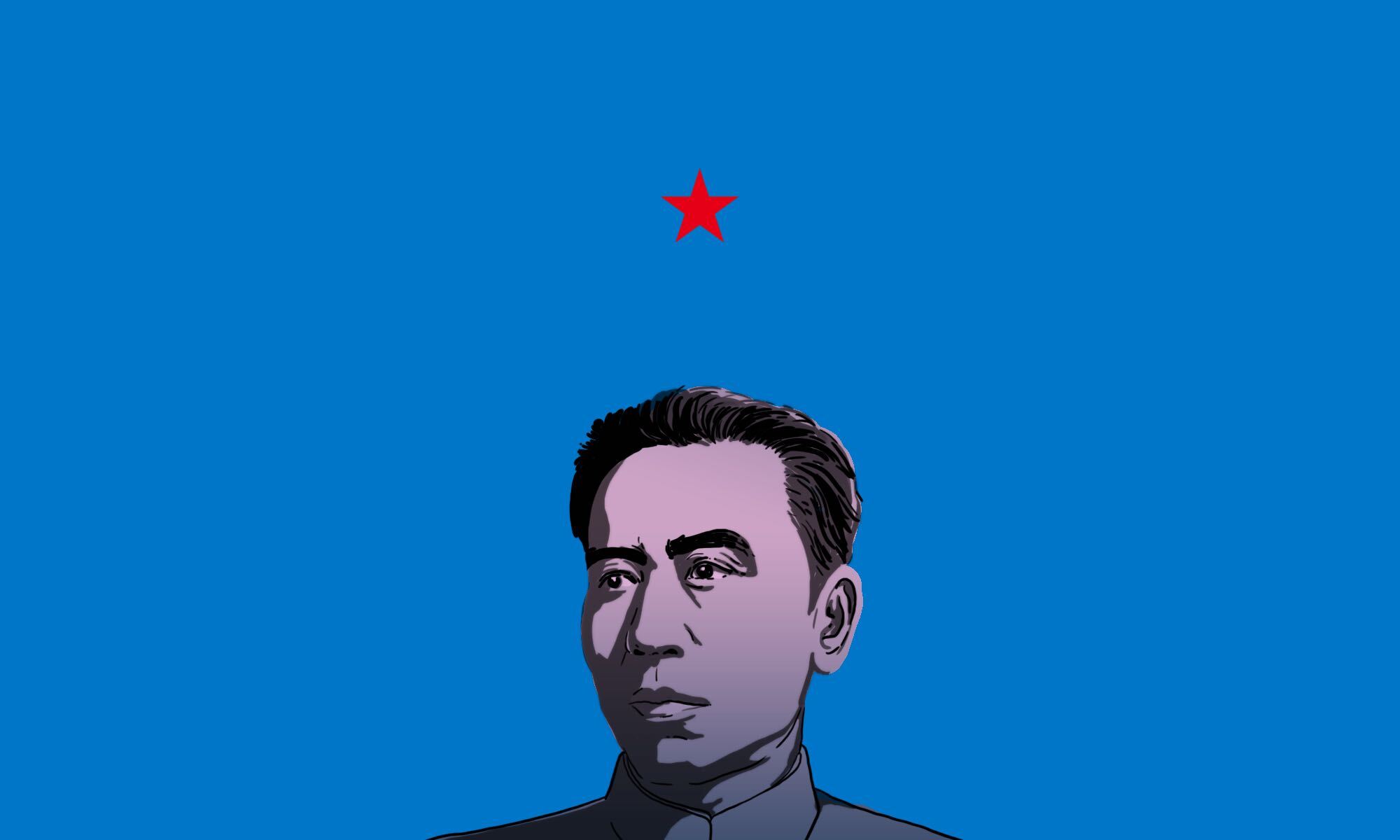
Bo Yibo was a Chinese Communist revolutionary and one of the most senior political figures in the People's Republic of China. He served as the country's first Minister of Finance, a member of the CCP Politburo, and Vice-Premier, playing a central role in shaping China's economic policies from 1949 onward. He was the last surviving member of the "Eight Immortals," the group of party elders who guided China through the transition from Maoism.
Bo's political career spanned more than eight decades, marked by a dramatic purge during the Cultural Revolution and a remarkable comeback under Deng Xiaoping. His legacy is closely tied to the economic reforms that transformed China into a global power. He died on January 15, 2007, at age 98, leaving behind a complex political and family history that continues to resonate.
Early Life & Background
Bo Yibo was born on February 17, 1908, in Dingxiang County, Shanxi Province, into a period of profound political upheaval in China. He joined the Chinese Communist Party in 1925 at the age of 17, quickly rising through the ranks as an organizer in his native province. By 1928, he was coordinating guerrilla movements across northern China from the city of Tianjin, a role that placed him at the heart of the early communist resistance.
His early career was interrupted in 1931 when Kuomintang police arrested and imprisoned him. To secure his release in 1936, Bo signed an anti-communist confession, a decision made with the tacit approval of the CCP leadership. After his release, he returned to Shanxi and rejoined the communist cause, actively fighting against both the Kuomintang and Japanese forces during the Second World War. These experiences forged his reputation as a resilient and pragmatic revolutionary, qualities that would define his long political life.
Career Growth
Bo Yibo's career reached its peak after the CCP's victory in 1949, when he became the first Minister of Finance of the People's Republic of China. In this role, he laid the groundwork for the nation's economic system, overseeing the transition to a planned economy. He later served as Vice-Premier and a member of the CCP Politburo, and chaired the State Economic Commission, where he influenced industrial and economic policy for decades.
The Cultural Revolution brought a dramatic reversal in 1966, when Bo was purged by the Gang of Four and removed from power. However, after Mao Zedong's death, Deng Xiaoping rehabilitated him in the late 1970s. Bo returned to high-ranking positions, including vice-chairman of the Central Advisory Commission, where he remained a key figure until his retirement in the early 1990s. His role in steering China's economy through the reform era was widely acknowledged, and he was often described as a stabilizing force within the party.
Career Timeline
Public Image & Style
In the public eye, Bo Yibo was seen as a pragmatic and resilient revolutionary, a survivor of political storms who maintained influence through sheer longevity. He was often portrayed in the Western media as a symbol of the old guard, a link to the founding generation of the People's Republic. Within China, he was respected as a financial expert and a steady hand during economic transitions. His public image was largely shaped by his roles in economic policy and his survival of the Cultural Revolution, rather than by personal charisma or public appearances.
Fame & Fandom (iFAMOUS Rankings)
Bo Yibo never had a fanbase in the way modern celebrities do. There were no billboards, no streaming campaigns, and no organized groups of devotees rallying for his birthday. As a senior revolutionary and statesman, his public life was defined by high-level governance rather than pop culture engagement. The concept of a fandom simply does not apply to a man whose legacy rests on state archives and historical policy shifts. He did not interact with crowds; he led them through economic transitions and political storms. has evaluated Bo Yibo's global standing as of August 2026. Despite his immense historical weight, he currently holds no placement in the published Global Top 1,000 rankings or any Top-100 scope list. The iFANN Global Fame Engine confirms that while his name appears frequently in academic and political discourse, it lacks the viral momentum required for a ranked position in contemporary fame metrics. His influence is measured in decades of policy impact rather than daily search volume or social media chatter. Consequently, no specific rank number or score can be assigned to him at this time. This absence from the charts reflects his status as a figure of quiet authority rather than a trending icon. While his grandson Bo Guagua recently drew international attention, Bo Yibo himself remains a distant, dignified presence in the historical record, far removed from the mechanics of modern fame algorithms.
Interesting Facts and Legends
Bo Yibo lived a life defined by extreme longevity, both in age and political survival. He passed away in 2007 as the oldest living member of the Chinese Communist Party. His personal habits reflected his revolutionary roots; he was known for being remarkably frugal despite his high office. A keen calligrapher, he maintained this artistic hobby throughout his long career. Decades after his death, his family remained in the spotlight when reports emerged in 2024 regarding his grandson Bo Guagua's wedding in Taiwan. The cultural mythology surrounding Bo Yibo centers on his resilience during the Cultural Revolution. Historical accounts widely retell how he was imprisoned for over a decade, labeled part of a 'Reformist Gang,' only to be rehabilitated in 1978. Upon his return, he played a pivotal role in dismantling the planned economy and introducing market mechanisms under Deng Xiaoping. Perhaps his most enduring legend is his status as the final survivor of the 'Eight Immortals.' When he died at age 98, obituaries noted that his passing marked the end of an era, symbolizing the conclusion of the revolutionary generation that built modern China.
Family & Personal Life
Bo Yibo married Hu Ming, who died in 1967. The couple had five sons and two daughters. Their son Bo Xilai became a prominent political figure, serving as the party chief of Chongqing, but his career ended in disgrace when he was convicted and imprisoned in 2012 on corruption and abuse of power charges. Bo Yibo's grandson, Bo Guagua, has lived a relatively private life, though his 2024 wedding in Taiwan was widely reported. The family's political legacy has been a subject of intense public interest and scrutiny.
Notable Connections
Bo Yibo was closely associated with several key figures in Chinese politics. Deng Xiaoping brought him back into power in the late 1970s, and Bo served as a loyal ally during the reform era. His son Bo Xilai's rise and fall was a major political scandal that cast a shadow over the family's legacy. Bo also worked alongside Mao Zedong, under whom he served and was later purged. His grandson Bo Guagua has been a figure of media interest due to his family's prominence.
Relationships & Dating History
Bo Yibo married Hu Ming, and the couple had five sons and two daughters. Hu Ming died in 1967, and Bo Yibo never remarried. He remained widowed for the rest of his life, passing away in 2007. His marriage to Hu Ming was a stable partnership that lasted until her death, and she played a supportive role in his political career. Bo's personal life was otherwise private, with no other public relationships documented.
- MarriedHu Ming? - 1967Married until her death in 1967; they had five sons and two daughters.
Death & Aftermath
Died
January 15, 2007 (aged 98)
Death Place
Beijing
Cause of Death
Unknown
Bo Yibo, one of the most senior Chinese Communist Party figures of the late 20th century and the last surviving member of the Eight Immortals who served under Deng Xiaoping, died on January 15, 2007, in Beijing, at the age of 98. Born in 1908 in Dingxiang, Shanxi Province, he joined the Communist Party in 1925. The only confirmed facts about his death are the date, place, and age, as reported by China's official Xinhua news agency and international obituaries. The circumstances of his final days and his last public appearance were not made public in any of the sources.
Public reaction to Bo Yibo's death was reported primarily through official channels. The Xinhua news agency announced his death, and Western media outlets such as The Guardian, The New York Times, and The Times published obituaries noting his role as the oldest surviving member of the Communist Party and a key architect of China's economic reforms. The sources describe his death as a historic passing of a revolutionary generation rather than an event that triggered mass public mourning.
The funeral or memorial arrangements for Bo Yibo were not described in any of the provided search results; no date, location, public or private status, attendee list, performances, burial, or cremation details were reported. His archive is maintained online by the Marxists Internet Archive, which documents his writings and speeches. The only related posthumous development concerns his son Bo Xilai's political downfall and imprisonment, which began years after Bo Yibo's death and is unrelated to his father's passing.
Net Worth (Estate Value)
$10 Million
iFANN Editorial Team estimate
Bo Yibo served as a lifelong Communist Party official within a state socialist system where personal wealth was rarely disclosed publicly. No credible records exist detailing his financial holdings during his lifetime, and his estate has not been valued since his death in 2007. Any attempt to quantify his fortune remains speculative given the lack of transparent data. Per iFANN's editorial analysis, an estimated net worth of $10 Million is sometimes cited by sources extrapolating from his position and influence, though this figure lacks concrete verification. His life was dedicated entirely to public service, and his family's financial status, if any existed beyond basic provisions, has never been a matter of public record.
Awards & Accolades
View 2 records, honours and achievementsKnown For
First Minister of Finance of the PRC
1949 · Minister of Finance
Vice-Premier of the State Council
1956 · Vice-Premier
Member of the CCP Politburo
1956 · Politburo member
Chairman of the State Economic Commission
1956 · Chairman
Keywords
Sources
Quick Facts
- Profession
- Politician
- Born
- February 17, 1908
- Birthplace
- Dingxiang County, Shanxi, China
- Died
- January 15, 2007
- Death Place
- Peking Union Medical College Hospital, Beijing
- Gender
- Male
- Spouse
- Hu Ming
- Children
- 5 sons, 2 daughters
- Party
- Chinese Communist Party
- Birth Sign
- Aquarius
Personal Details
- Full Name
- Bo Yibo
- Spouse
- Hu Ming
- Children
- 5 sons, 2 daughters
Frequently Asked Questions
Who was Bo Yibo?
How old was Bo Yibo when he died?
Was Bo Yibo related to Bo Xilai?
What happened to Bo Yibo during the Cultural Revolution?
What did Bo Yibo do for China's economy?
Join the community
fans discussing