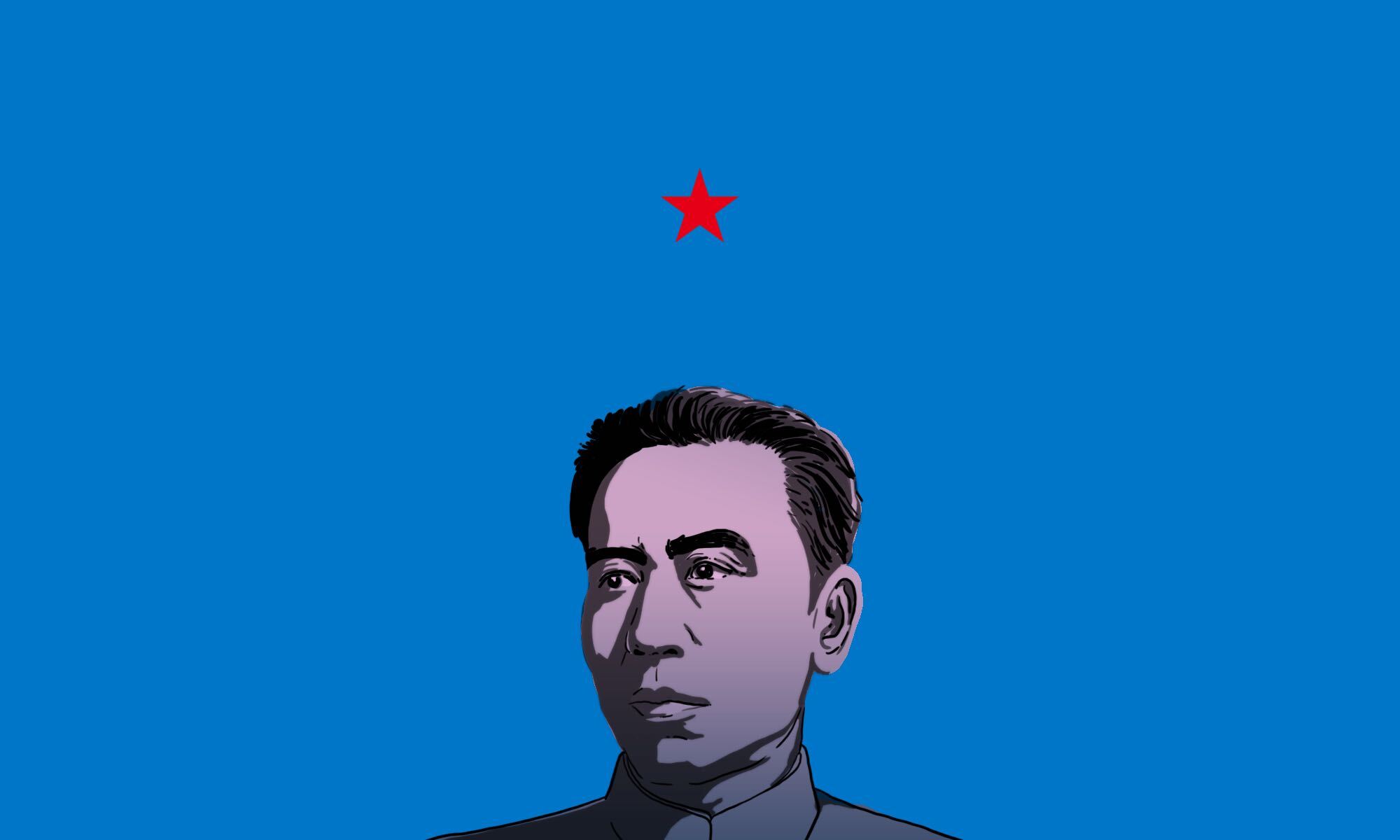
Liu Shaoqi
 China
ChinaAlso known as: Shaoqi Liu, Liu Shao-ch'i
Birthday
November 24, 1898
Birth Sign
Sagittarius
Birthplace
Ningxiang City, Hunan Province, China
Age
Died at 70
About
Liu Shaoqi was a prominent Chinese revolutionary, trade unionist, and statesman who served as the second-ranking figure in the Chinese Communist Party and the second Chairman of the People's Republic of China. Born into a prosperous peasant family in Ningxiang, Hunan, he dedicated his life to the labor movement and the eventual establishment of the communist state. His career trajectory placed him directly alongside Mao Zedong, where he was once publicly identified as the chosen successor before their relationship deteriorated. During his tenure as head of state from 1959 to 1968, Liu focused heavily on economic reconstruction and pragmatic policy adjustments following the disastrous Great Leap Forward. He organized significant efforts to stabilize the nation's economy and improve agricultural output. Despite his high office and early promise as Mao's heir, his political fortunes collapsed during the Cultural Revolution. He was purged, subjected to public humiliation, and died in detention in 1969. His legacy was officially rehabilitated in 1980, restoring his reputation as a key architect of the revolution.
Early Life & Background
Liu Shaoqi entered the world on November 24, 1898, in Ningxiang County, Hunan Province, within a family that possessed sufficient wealth to provide him with a classical education. This background gave him access to traditional learning before he turned toward modern revolutionary ideas. As a young man, he moved to Changsha to attend school, where he became increasingly involved in student activism and the growing labor movement. His early years were defined by a shift from traditional scholarship to active political organizing. In the early 1920s, Liu traveled to the Soviet Union as part of a work-study program, specifically studying in Moscow. This experience proved pivotal, immersing him in Marxist theory and training him in the tactics of revolutionary organization. Upon returning to China, he threw himself into the labor movement with vigor. He quickly rose to prominence as one of the party's most capable organizers of urban workers. His leadership was instrumental in major events like the May Thirtieth Movement of 1925 and the great strikes of the decade. By the late 1920s, he had established himself as the CCP's foremost trade unionist and labor theorist, laying the groundwork for his future rise to the highest levels of power.
Career Growth
Liu Shaoqi's ascent within the Chinese Communist Party accelerated during the Chinese Civil War and the Second Sino-Japanese War. He served as Party Secretary in North China and led the Central Plains Bureau, playing a critical role in the resistance against Japanese occupation. After the founding of the People's Republic of China in 1949, he assumed the position of vice chairman of the Central People's Government. In 1954, he was elected chairman of the Standing Committee of the National People's Congress, solidifying his status as a top leader. A defining moment came in 1959 when Liu succeeded Mao Zedong as Chairman of the People's Republic of China, becoming the head of state. He held this prestigious office until 1968. During this period, particularly after the economic crisis triggered by the Great Leap Forward, Liu took a leading role in economic reconstruction. He convened the Seven Thousand Cadres Conference in 1962 to address the famine and restore order. His pragmatic approach earned him widespread support among officials and the public, and he was publicly named Mao's successor in 1961. However, his policies eventually clashed with Mao's radical vision, setting the stage for his downfall.
Career Timeline
Public Image & Style
Liu Shaoqi is remembered as a pragmatic and capable administrator who prioritized economic stability over ideological purity. His public persona was that of a steady hand during turbulent times, often contrasting with the more radical impulses of his contemporaries. Media portrayals of him during his lifetime emphasized his dedication to the working class and his organizational skills. After his rehabilitation, the official narrative shifted to celebrate him as a victim of political intrigue and a loyal servant of the revolution. Today, he is viewed as a complex figure whose life story serves as a cautionary tale about the dangers of internal party struggles. A 2014 documentary highlighted his military accomplishments, marking a shift in how his specific contributions were emphasized in modern media coverage.
Fame & Fandom (iFAMOUS Rankings)
According to the iFANN Global Fame Rankings, Liu Shaoqi holds the position of the 100th most famous person in China, a ranking that has dipped slightly from the 98th spot in the previous cycle. Within the specific scope of national origin, he is ranked as the 30th most famous person from China, maintaining a consistent position among the nation's historical figures. These placements reflect a sustained level of attention tracked through media coverage and consumption signals worldwide, ensuring his legacy endures beyond immediate political shifts. The data confirms his status as a significant historical entity rather than a transient celebrity. Despite his enduring presence in historical records and official commemorations, there is no formal name documented for any fanbase associated with him. Research indicates that while his life story inspires study and reflection, it has not generated an organized community with a specific moniker or ritualistic practices. The audience engaging with his history does so through academic and political channels rather than a unified fandom culture. His hometown in Hunan remains a popular destination for those seeking to engage with his historical legacy.
Interesting Facts and Legends
Historical records indicate that Liu Shaoqi was once explicitly named as Mao Zedong's successor in 1961, a designation that highlighted his immense standing within the party hierarchy before their paths diverged. His fall from grace was absolute; during the Cultural Revolution, he was branded a "capitalist roader" and subjected to brutal public denunciations, including being paraded and physically assaulted by Red Guards. A widely circulated photograph from 1967 captures him at one such rally, marking a stark contrast to his earlier image as a dignified leader. Following his death, his Selected Works were published in multiple volumes by Foreign Languages Press in 1991. In November 2018, on the 120th anniversary of his birth, President Xi Jinping publicly saluted Liu's high morality and firm belief in communism, signaling a renewed appreciation for his contributions. A 2025 feature by CGTN further highlighted his hometown as a continuing hub for red tourism.
Notable Quotes
“The people are the masters of the country.”
“We must rely on the masses and learn from them.”
Family & Personal Life
Liu Shaoqi was married twice during his lifetime. His first wife was Xie Fei, who passed away in 1941. He later married Wang Guangmei in 1948. Wang was a prominent figure in her own right, known for her intelligence and involvement in social work. The couple had several children, including Liu Yuan, who became a general, and Liu Ting. After Liu's death and subsequent rehabilitation, his family worked diligently to preserve his legacy. They maintained memorial halls in his hometown and issued public statements honoring his memory. These memorial sites have since become centers for red tourism, drawing visitors interested in revolutionary history. His family members continued to issue public statements to ensure his contributions remained recognized in official historical narratives.
Notable Connections
Mao Zedong, Deng Xiaoping, Wang Guangmei, Zhou Enlai.
Relationships & Dating History
Liu Shaoqi was married twice during his lifetime. His first marriage was to Xie Fei, who died in 1941. Following her death, he married Wang Guangmei in 1948. Wang was a prominent intellectual and social worker who played a significant role in his life. Their marriage lasted until Liu's death in 1969. Wang Guangmei survived his persecution and imprisonment, attending his memorial service in 1980 after her own release. The couple had several children, including Liu Yuan and Liu Ting. There are no other widely documented romantic relationships outside of these two marriages. Wang's survival and attendance at the 1980 ceremony underscored her resilience during the darkest periods of their lives.
- MarriedXie Fei1921 - 1941First wife; died in 1941.
- MarriedWang Guangmei1948 - 1969Second wife; survived his persecution and attended his 1980 memorial.
Death & Aftermath
Died
November 12, 1969 (aged 70)
Death Place
Kaifeng, Henan Province, China
Cause of Death
Reported complications from pneumonia (unconfirmed)
The final days of Liu Shaoqi were marked by isolation and severe physical decline. Stripped of all official positions in October 1968 during the height of the Cultural Revolution, he was held under house arrest in Kaifeng, Henan Province. He died on November 12, 1969, at the age of 70, while still detained. The Chinese authorities never officially disclosed the precise cause of death, though historical accounts widely attribute his passing to complications from pneumonia exacerbated by the harsh conditions of his confinement and the denial of proper medical care. No formal funeral took place immediately following his death. His body was reportedly cremated in secret, and his ashes were stored under a false name until the political climate shifted decades later. The rehabilitation process began in earnest after the end of the Cultural Revolution. On May 17, 1980, a national memorial service was held in the Great Hall of the People in Beijing. Deng Xiaoping delivered the eulogy, formally overturning the 1968 verdict that had branded Liu a traitor and capitalist roader. His widow, Wang Guangmei, attended the ceremony after her own release from imprisonment. Following this restoration of honor, Liu's ashes were interred with full party honors. His legacy continued to be preserved through the publication of his Selected Works and the establishment of memorial sites in his hometown, which have since become centers for red tourism.
Net Worth (Estate Value)
$0
iFANN Editorial Team estimate
As a lifelong communist revolutionary and state official who died in detention in 1969, Liu Shaoqi had no personal fortune comparable to celebrity net worth. No credible source reports a specific financial figure for his estate. His estate in the modern sense consists of his historical legacy, the memorial sites maintained in his name, and the publications of his works. The financial value of his legacy is measured in cultural capital and historical significance rather than liquid assets or investment portfolios. There are no known personal bank accounts or private investments attributed to him outside of his official government salary during his service.
Awards Won (2)
Liu Shaoqi received numerous honors during his lifetime for his contributions to the revolution and the state. He was awarded the Order of Lenin by the Soviet Union in 1949. Posthumously, he received the title of "Great Proletarian Revolutionary" and was honored with a state funeral upon his rehabilitation in 1980. His Selected Works were recognized as a significant contribution to Marxist literature.
1949 · International Honor
Contributions to the Chinese Revolution
1980 · Posthumous Honor
Legacy Rehabilitation
Known For
Chairman of the People's Republic of China
1959 · Head of State
Vice Chairman of the Central People's Government
1949 · Political Leader
Keywords
Sources
Quick Facts
- Profession
- politician, trade unionist
- Born
- November 24, 1898
- Birthplace
- Ningxiang City, Hunan Province
- Died
- November 12, 1969
- Death Place
- Kaifeng, Henan Province
- Gender
- Male
- Spouse
- Wang Guangmei, Xie Fei
- Birth Sign
- Sagittarius
Personal Details
- Full Name
- Liu Shaoqi
- Spouse
- Wang Guangmei, Xie Fei
- Children
- Liu Yuan, Liu Ting
- Education
- Work-study program in the Soviet Union; Classical education in Changsha
Frequently Asked Questions
Who was Liu Shaoqi?
How did Liu Shaoqi die?
Why was Liu Shaoqi purged?
When was Liu Shaoqi rehabilitated?
Who was Liu Shaoqi's wife?
Join the community
fans discussing