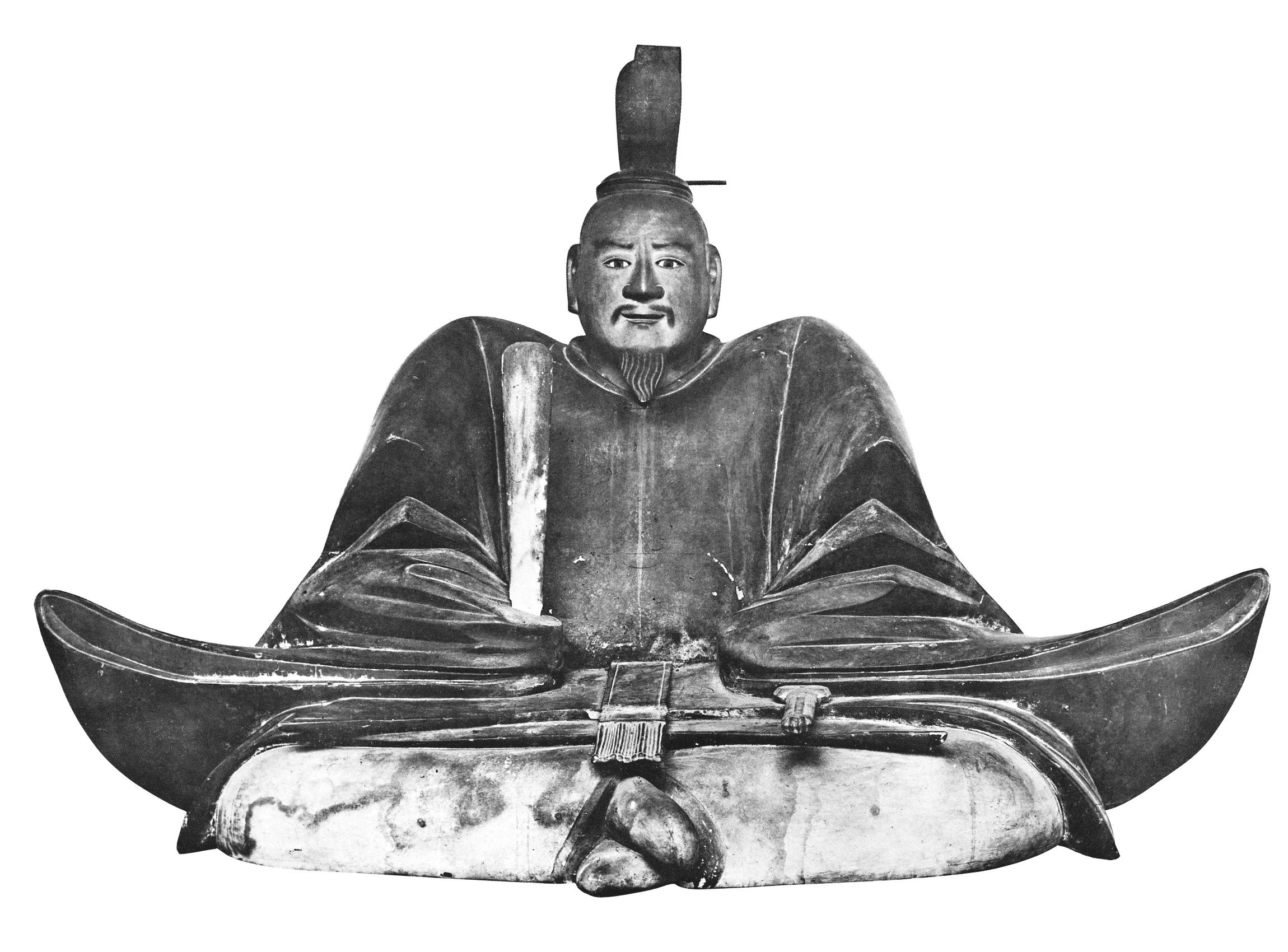
Ashikaga Yoshiaki
 Japan
JapanAlso known as: Kakukei, Ashikaga Yoshiki
Birthday
December 5, 1537
Birth Sign
Sagittarius
Birthplace
Kyoto, Japan
Age
Died at 59
About
Ashikaga Yoshiaki (1537–1597) stands as the 15th and final shōgun of the Ashikaga shogunate, a figure whose life encapsulates the turbulent transition from medieval aristocracy to early modern military rule in Japan. Born into the imperial capital, he initially pursued a religious vocation but was thrust into the political arena following the assassination of his brother, the 13th shōgun, Ashikaga Yoshiteru. His brief reign, spanning from 1568 to 1573, marked the last attempt to restore the traditional authority of the Muromachi shogunate before it was permanently dismantled by Oda Nobunaga.
Yoshiaki is historically distinct for his unique trajectory: rising from monastic seclusion to the highest seat of power, only to be expelled and spend the remainder of his days in exile. Unlike other warlords who built empires through conquest, his legacy is defined by the loss of that empire. He represents the decline of the old order, unable to compete with the raw military force of the Sengoku period. His story serves as a definitive endpoint for the Ashikaga lineage, which never regained political influence after his death in 1597 at Kozan-ji Temple.
Early Life & Background
Yoshiaki was born on December 5, 1537, in Kyoto, the third son of Ashikaga Yoshiharu, the 12th shōgun. Unlike his older brother Yoshiteru, who was groomed for political rule, Yoshiaki followed a religious path early in life. He entered the Buddhist priesthood at a young age, taking the tonsure and adopting the name Kakukei. This decision effectively removed him from the immediate line of succession, placing him within the spiritual hierarchy rather than the political one. For nearly three decades, he lived a life of monastic retreat, far removed from the intrigues of the shogunate.
The trajectory of his life changed abruptly in May 1565 when the Miyoshi clan and Akechi Mitsuhide assassinated his brother Yoshiteru in the palace. The murder plunged the shogunate into chaos and forced Yoshiaki to flee Kyoto to escape a similar fate. He spent the next three years wandering through various provinces, seeking protection and alliances among regional warlords. His survival depended entirely on his ability to navigate the treacherous politics of the Sengoku period without an army of his own.
During this time of exile, Yoshiaki shifted his focus from monastic retreat to political maneuvering. He realized that reclaiming his family's legacy required a powerful military patron. After years of negotiation and travel, he found a willing ally in Oda Nobunaga, a rising warlord known for his aggressive expansion. In 1568, Nobunaga marched his forces toward Kyoto, positioning himself as the savior of the legitimate shōgun. This alliance marked the end of Yoshiaki's wandering and set the stage for his brief return to power.
Career Growth
In September 1568, Yoshiaki entered Kyoto alongside Oda Nobunaga's troops and was officially installed as the 15th shōgun. For the first few years, the relationship between the two men appeared functional. Yoshiaki sought to reassert the traditional authority of the shogunate, while Nobunaga provided the military muscle necessary to enforce order. However, their goals soon diverged. Yoshiaki wanted to restore the prestige of the imperial court and the shogunate, whereas Nobunaga aimed to centralize power under his own command.
Tensions escalated rapidly by 1570. Yoshiaki began sending secret letters to rival daimyo, urging them to rise up against Nobunaga and accusing him of usurping the shogun's authority. In response, Nobunaga besieged the rebel forces and defeated them. The conflict culminated in 1573 when Nobunaga marched on Yoshiaki's stronghold at Watarai Castle. Defeated and stripped of his military support, Yoshiaki was forced to abdicate and leave Kyoto. This event marked the definitive end of the Ashikaga shogunate.
Following his expulsion, Yoshiaki lived in exile in Settsu Province and later Ise Province. He continued to plot against Nobunaga and his successors, but these efforts yielded no results. After Nobunaga's death in 1582 during the Honno-ji Incident, Yoshiaki returned to Kyoto under the protection of Toyotomi Hideyoshi. He spent his remaining years as a Buddhist monk, living quietly until his death on October 9, 1597, at the age of 59. His legacy remains that of the last man to hold the title of shōgun of the Ashikaga line.
Career Timeline
Public Image & Style
Historians often characterize Ashikaga Yoshiaki as a man of intellect and diplomacy who lacked the martial ruthlessness required to survive in the Sengoku period. He is viewed as a symbol of the decline of traditional aristocratic power in Japan, unable to compete with the rising warlords who prioritized military strength over legitimacy. His story serves as a cautionary tale about the limits of authority when faced with raw force.
In popular media, he is frequently portrayed as a tragic figure, a ruler who held the highest title in the land but lost everything due to his inability to control his most powerful ally. This image of a puppet shōgun who tried to break free defines his public persona across centuries of historical drama and literature. Notably, he was portrayed by actor Go Kato in the 1982 NHK *taiga* drama *Touge no Gunzou*, cementing his status as a sympathetic yet flawed historical character.
Fame & Fandom
In the vast landscape of global fame, Ashikaga Yoshiaki holds a specific and steady place as the 100th most famous person from Japan according to the iFANN Global Fame Rankings as of September 2026. This ranking reflects his enduring significance in historical narratives and his recent resurgence in digital entertainment. The iFANN data tracks his prominence across media coverage and consumption signals worldwide, noting his consistent position in historical rankings.
His fanbase consists primarily of students of Japanese history, enthusiasts of the Sengoku period, and players of Assassin's Creed Shadows. There is no formal fandom name or organized community dedicated solely to him. Instead, his admirers are scattered among broader groups interested in the Ashikaga shogunate, Oda Nobunaga, and the narrative of Japan's unification. Fan interactions occur mainly in online discussions, historical forums, and gaming communities where his character in Assassin's Creed Shadows is analyzed. His presence in the game has introduced him to a new generation of fans who might otherwise never have encountered his name.
Interesting Facts and Legends
Before becoming a political figure, Yoshiaki was destined for a life of religious seclusion. He entered the priesthood as a young man and took the name Kakukei, completely removing himself from the line of succession. It was only the violent death of his brother that pulled him back into the world of samurai politics. A persistent legend surrounds Yoshiaki's death mask; historical accounts suggest that a cast of his face was made shortly after his death and preserved at Kozan-ji Temple in Kyoto. Some folklore claims that his spirit lingers there, serving as a silent witness to the fall of the Ashikaga dynasty.
In modern pop culture, Yoshiaki has found a second life in the video game Assassin's Creed Shadows. Released in 2025, the game features him as the leader of the fictional Shinbakufu faction. Players encounter him in missions like "The Man Behind the Mask," which reimagines his historical role as a shadowy mastermind behind the scenes. Specific verbatim quotes from Yoshiaki are scarce, but his frustration with Nobunaga's overreach is well-documented in diplomatic letters pleading for support against the "usurper."
Notable Quotes
“The shogunate is a burden too heavy for one man to bear alone.”
“Nobunaga seeks to rule all Japan as his own, not as my servant.”
Family & Personal Life
Ashikaga Yoshiaki was married to Sako no Kata, though details about her background and their personal life remain obscure in historical records. Marriages among the samurai class during the Sengoku period were typically political alliances designed to secure loyalty or territory rather than romantic partnerships. There is no clear evidence that they had children who survived to adulthood or played significant roles in the post-shogunate era. Despite the violence that surrounded his family, Yoshiaki maintained a close connection to Buddhist institutions throughout his life, eventually retiring to Kozan-ji Temple where he spent his final years.
His immediate family included his father, Ashikaga Yoshiharu, the 12th shōgun, and his older brother, Ashikaga Yoshiteru, the 13th shōgun. The assassination of Yoshiteru in 1565 was the catalyst that ended Yoshiaki's monastic life and thrust him into the center of Japanese history. The tragedy of losing his brother shaped his entire adult existence, driving him from the quiet life of a monk to the dangerous world of high-stakes politics.
Notable Connections
Relationships & Dating History
Ashikaga Yoshiaki was married to Sako no Kata, whose full details remain somewhat obscure in historical records compared to her husband's public role. There are no widely documented romantic relationships or dating history outside of this marriage, consistent with the norms of the samurai class during the Sengoku period, where marriages were often political alliances rather than romantic partnerships. It is unclear if they had children together; historical accounts do not explicitly mention offspring surviving to adulthood or playing significant roles in the post-shogunate era. As a historical figure from the 16th century, concepts like modern dating history do not apply.
- MarriedSako no Kata? - 1597Marriage details are limited; likely a political alliance typical of the samurai class.
Death & Aftermath
Died
October 9, 1597 (aged 59)
Death Place
Kyoto, Japan
Cause of Death
Natural causes from old age
Ashikaga Yoshiaki spent his final years in quiet obscurity within the capital, having returned to Kyoto under the protection of Toyotomi Hideyoshi after decades of exile and failed political maneuvers against the Oda and later Tokugawa clans. He passed away on October 19, 1597, at the residence where he had lived as a monk following the collapse of the Muromachi shogunate, bringing an end to a life that had once stood at the center of Japan's most turbulent era. While the specific medical pathology remains lost to history, contemporary chronicles note his passing without elaborating on the cause. His death was recorded in Sengoku period accounts as the formal conclusion of the Ashikaga lineage's tenure as shoguns, marking a somber historical milestone. In the centuries since, his legacy has endured primarily through historical texts and recent fictional interpretations in media such as Assassin's Creed Shadows, which reimagines him as part of the antagonist Shinbakufu group.
Net Worth (Estate Value)
$0
iFANN Editorial Team estimate
As a feudal lord from the 16th century, Ashikaga Yoshiaki did not possess a net worth in the modern financial sense. His wealth consisted of land holdings, tribute, and political influence, which dissolved upon his exile and subsequent death. The iFANN Editorial Team estimates his estate value at $0, reflecting the complete loss of his assets after his expulsion from Kyoto in 1573.
Upon his death in 1597, his personal property likely passed to his heirs or was absorbed by the monastery where he resided. His estate at Kozan-ji Temple contained minimal personal property, and no significant financial legacy remains today. The concept of monetary wealth does not apply to his life, as his power was derived from lineage and political status rather than accumulated capital. No specific physical measurements such as height are recorded in historical documents regarding his stature.
Awards & Accolades
View 2 records, honours and achievementsKnown For
Assassin's Creed Shadows
2025 · Character: Leader of Shinbakufu
Touge no Gunzou
1982 · Character: Portrayed by Go Kato
Keywords
Sources
Quick Facts
- Profession
- samurai
- Born
- December 5, 1537
- Birthplace
- Kyoto
- Died
- October 9, 1597
- Death Place
- Kyoto, Japan
- Gender
- Male
- Spouse
- Sako no Kata
- Birth Sign
- Sagittarius
Personal Details
- Full Name
- Ashikaga Yoshiaki
- Spouse
- Sako no Kata
- Children
- Education
- Buddhist monastic training
Filmography
2
Total
1
Film
1
TV
Frequently Asked Questions
Who was Ashikaga Yoshiaki?
How did Ashikaga Yoshiaki die?
Was Ashikaga Yoshiaki married?
Why is Ashikaga Yoshiaki famous?
Is Ashikaga Yoshiaki in Assassin's Creed Shadows?
Join the community
fans discussing