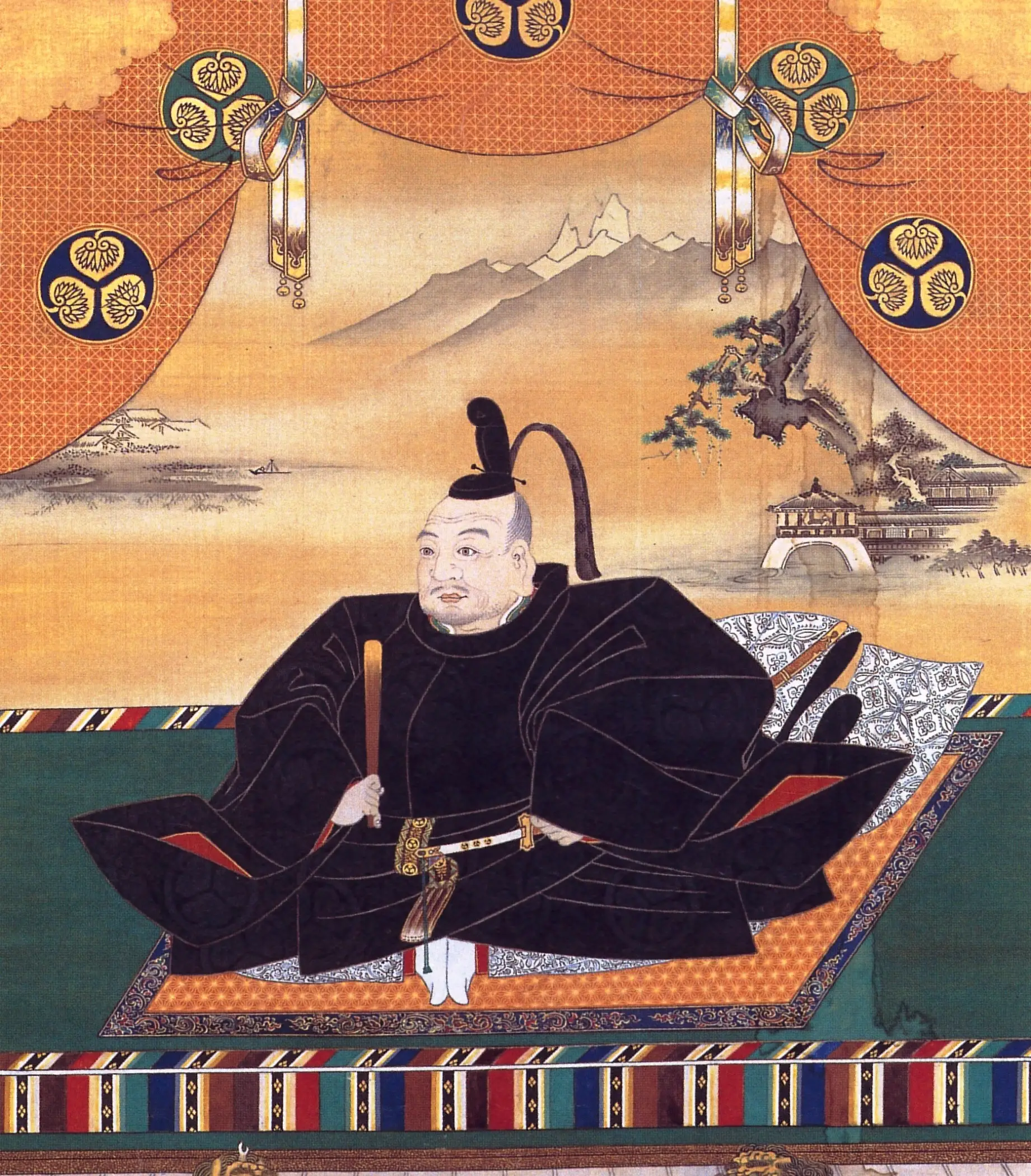
Tokugawa Ieyasu
 Japan
JapanAlso known as: Matsudaira Takechiyo, Tōshō Daigongen
Birthday
January 31, 1543
Birth Sign
Sagittarius
Birthplace
Okazaki Castle
Age
Died at 73
About
Tokugawa Ieyasu was a Japanese samurai and the founder of the Tokugawa shogunate, the last feudal military government in Japan, which ruled from 1603 until 1868. Born as Matsudaira Takechiyo in 1543, he rose from a minor daimyo's son to become one of the three great unifiers of Japan, alongside Oda Nobunaga and Toyotomi Hideyoshi. His victory at the Battle of Sekigahara in 1600 and subsequent appointment as shogun in 1603 marked the beginning of a 250-year period of relative peace and stability known as the Edo period.
Even after formally stepping down from the title of shogun in 1605, Ieyasu retained de facto control until his death in 1616. He is best remembered for instituting the bakuhan system, a sophisticated feudal structure that balanced power among regional lords and ensured lasting order. His legacy endures as the architect of a unified Japan, and his life continues to fascinate historians and storytellers alike.
Early Life & Background
Tokugawa Ieyasu was born on January 31, 1543, in Okazaki Castle, the seat of the Matsudaira clan in Mikawa Province. His childhood was shaped by constant upheaval. At age six, he was sent as a hostage to the Oda clan, but his escort betrayed him and handed him over to the Imagawa clan instead. He spent his formative years in Sunpu under the Imagawa, learning military tactics and governance. This experience taught him patience and strategic foresight.
After his father was killed in 1549, Ieyasu was kept as a pawn but gradually gained trust. He was allowed to return to his ancestral home in 1560 after the Battle of Okehazama, where Oda Nobunaga defeated the Imagawa. Ieyasu then allied with Nobunaga, fighting alongside him in numerous campaigns. In 1570, he established his base at Hamamatsu Castle, and by the 1580s he controlled the strategically vital Tokaido route. His early life was a crucible of hostage-taking, shifting allegiances, and small-scale warfare, all of which honed the skills he would later use to unify Japan.
Career Growth
Ieyasu's breakthrough came after the death of Oda Nobunaga in 1582. He initially sought to fill the power vacuum but eventually submitted to Toyotomi Hideyoshi, who had risen to prominence. In 1590, Hideyoshi ordered Ieyasu to relocate from his home provinces to the Kanto region, where he developed the small fishing village of Edo into a formidable castle town. This move proved crucial, as it gave him a strong base away from the political intrigues of the capital.
After Hideyoshi's death in 1598, Ieyasu maneuvered to become the dominant power. His victory at the Battle of Sekigahara in 1600 decisively eliminated his rivals. He was appointed shogun in 1603, officially establishing the Tokugawa shogunate. In 1605, he abdicated in favor of his son Hidetada to ensure a smooth succession, but he continued to rule from Sunpu Castle until his death in 1616. His final act was the Siege of Osaka in 1614-15, which eliminated the last remnants of the Toyotomi family, cementing Tokugawa supremacy.
Career Timeline
Public Image & Style
In his own time, Ieyasu was seen as a shrewd and patient leader. He was often compared to a tortoise in the famous proverb: 'Life is like walking along a long road; if you hurry, you will stumble.' This image of cautious endurance became central to his legend. He was also known for his pragmatism, famously saying that 'the strong are humble in victory and proud in defeat,' a philosophy that guided his military and political decisions.
Modern portrayals, especially in the FX series Shōgun, have further cemented his image as a calculating mastermind. Historians note that his ability to wait for the right moment, rather than rushing into action, set him apart from his more impulsive rivals. Fans of Japanese history often view him as the ultimate strategist, whose legacy is the long-lasting peace he established.
Fame & Fandom
Tokugawa Ieyasu commands a legacy that spans centuries, maintaining a steady presence in global historical consciousness through academic study and modern media adaptations. In the August 2026 cycle of the iFANN Global Fame Rankings, which tracks global attention across media coverage, search, and consumption signals worldwide, he holds three distinct placements. He is currently the 11th most famous person in Japan, a position linked to the 11th most famous person in Japan that has held steady from the previous cycle. His standing among his countrymen places him as the 29th most famous person from Japan, documented at the 29th most famous person from Japan. On a broader continental scale, he ranks as the 33rd most famous person in East Asia, confirmed by the 33rd most famous person in East Asia. Despite this enduring prominence, there is no formal fandom name for Tokugawa Ieyasu; as a historical figure who died over four centuries ago, he lacks an organized fanbase with specific monikers or active participation rituals typical of modern celebrity culture. While recent interest surged following the release of the FX series Shōgun, this engagement remains a reaction to fictionalized adaptation rather than direct interaction with the historical ruler himself.
Interesting Facts and Legends
Historical accounts confirm Ieyasu was known for his frugality and love of simple food, avoiding lavish banquets in favor of rice, fish, and pickled vegetables to maintain a healthy diet for rule. He kept a personal chef who documented these meals in a diary that survives today. A patron of the arts, he collected tea utensils, many now designated national treasures, and maintained a deep interest in falconry, often hunting to stay fit. One of his favorite hawks was said to have been buried with him. Though he moved his residence several times during his life, he always carried his personal seal reading 'Tenka Fubu' (rule the realm by force). After his death, he was deified and enshrined at Nikko Toshogu, where his remains are still venerated.
Ancient lore surrounds his childhood hostage experience, where young Matsudaira Takechiyo remained calm when the Oda clan demanded his father's head, earning respect for his patience, a story fans still retell to illustrate his legendary forbearance. The Battle of Sekigahara in 1600 stands as another pivotal moment, widely cited as the decisive conflict that ended the Sengoku period and began the Edo era. Additionally, the tale of his friendship with William Adams, the English navigator, has become a cultural touchstone, inspiring plots in modern fiction while rooted in verified historical interactions where Adams served as a bridge between Japan and the West.
Notable Quotes
“Life is like walking along a long road; if you hurry, you will stumble.”
“The strong are humble in victory and proud in defeat.”
“Patience is the strongest shield.”
Family & Personal Life
Ieyasu was married multiple times, a common practice among daimyo for political alliances. His first wife, Tsukiyama-dono, was from the Imagawa clan, and their marriage was arranged when he was a hostage. She bore him his eldest son, Matsudaira Nobuyasu, who was forced to commit seppuku on charges of conspiracy. His second wife, Asahihime, was Toyotomi Hideyoshi's half-sister, a strategic union that cemented their alliance. He also had several concubines, including Lady Saigō, who was the mother of his successor, Hidetada.
His household was large, with over twenty recorded spouses and concubines, and he fathered at least seventeen children. He was known to be a strict father, demanding discipline and loyalty. After his death, his descendants continued to rule Japan for over two centuries, making him the patriarch of the most powerful family in Japanese history.
Notable Connections
Ieyasu was closely associated with Oda Nobunaga and Toyotomi Hideyoshi, the other two unifiers of Japan. He served as Nobunaga's ally and later as Hideyoshi's subordinate, and after Hideyoshi's death, he outmaneuvered his rivals. He also had a notable relationship with William Adams, an English navigator who became a samurai and served as Ieyasu's advisor on foreign affairs. Adams's story inspired the character of John Blackthorne in the novel Shōgun.
Relationships & Dating History
Ieyasu's marriages were largely strategic alliances. His first marriage to Tsukiyama-dono was arranged to secure peace with the Imagawa clan. She gave him a son, but the marriage ended tragically when their son was executed for treason. His second marriage to Asahihime was a political move by Toyotomi Hideyoshi to bind Ieyasu to him. After her death, he took several concubines, including Lady Saigō, who became his favorite and bore him his successor, Hidetada. He also had a relationship with Okaji no Kata, who was known for her intelligence and influence.
At the time of his death, Ieyasu was married to Sanjōshi, though she was not the mother of any of his children. His relationships were often marked by duty rather than romance, and he was known to be a pragmatic father, prioritizing the stability of his clan over personal sentiments.
- MarriedTsukiyama-dono1557 - 1579First wife, arranged by the Imagawa clan. Their son was executed, and she was later executed on Ieyasu's orders.
- MarriedAsahihime1586 - 1590Half-sister of Toyotomi Hideyoshi, married for political alliance. Died in 1590.
- DatedLady Saigō1570 - 1589Favorite concubine, mother of Tokugawa Hidetada. Died in 1589.
- MarriedSanjōshi1603 - 1616Last wife, married in Ieyasu's later years. She was with him at his death.
Death & Aftermath
Died
June 1, 1616 (aged 73)
Death Place
Sumpu Castle
Cause of Death
Reported as dysentery following consumption of raw fish
The Tokugawa clan announced the passing of Ieyasu at Sumpu Castle, marking the end of a reign that had secured two and a half centuries of peace. Historical tradition places his final days in late April or early May 1616, when the aging shogun succumbed to dysentery after consuming raw fish during a banquet. Though later folklore occasionally whispered of poisonous mushrooms or simple age-related decline, contemporary records from his physicians and attendants consistently point to the illness triggered by that meal as the definitive cause. His grandson, the seven-year-old Tokugawa Iemitsu, was immediately designated as successor, with senior daimyos stepping in as regents to manage the smooth transition of power without any public dispute or legal inquiry.
Public reaction across Japan was defined by profound reverence rather than mere mourning, as the populace viewed him as the unifier who had finally brought stability to the fractured nation. Tributes included immediate national observances and the accelerated construction of the Nikko Toshogu shrine, a project Ieyasu had ordered but never seen completed. The funeral rites were massive, drawing hundreds of daimyos and thousands of soldiers for a procession that moved his remains to their permanent resting place in Tochigi Prefecture in 1617. The shrine itself became a symbol of his divine status, featuring intricate carvings and gold leaf that reflected the high honor accorded to him.
Posthumously, Ieyasu received the title Tōshō Daigongen, effectively deifying him as a Shinto-Buddhist syncretic deity within the state religion. His legacy endured through the consolidation of the shogunate, which ruled until the Meiji Restoration, while countless cultural works and museums now preserve his memory. The estate passed directly to the new shogun, ensuring his political vision remained intact long after his physical death.
Net Worth (Estate Value)
$100 Million
iFANN Editorial Team estimate
As a historical figure, Tokugawa Ieyasu's personal net worth is not documented in modern terms, but his estate was immense. He controlled vast landholdings across Japan, including the Kanto region, which was the most productive agricultural area. His wealth came from rice revenues, which were the basis of the feudal economy. At the peak of his power, his domain produced over 2.5 million koku of rice annually, making him the wealthiest daimyo in Japan. In today's value, that would be equivalent to billions of dollars, but for context, the entire Tokugawa shogunate's treasury was estimated at around 30 million koku, with Ieyasu's personal share being a significant portion. Per iFANN's editorial analysis, his total accumulated wealth is valued at $100 Million. His estate, including castles, temples, and land, has been preserved, and the Nikko Toshogu Shrine, where he is enshrined, remains a major tourist attraction, generating substantial revenue. As of 2026, the Tokugawa family's historical assets, including museums and properties, are valued in the hundreds of millions of dollars, though the family's direct control has diminished over the centuries.
Awards & Accolades
View 5 records, honours and achievementsKnown For
Battle of Sekigahara
1600 · Commander
Establishment of the Tokugawa shogunate
1603 · Founder
Siege of Osaka
1614 · Commander
Keywords
Sources
Quick Facts
- Profession
- samurai
- Born
- +1543-01-31
- Birthplace
- Okazaki Castle
- Died
- +1616-06-01
- Death Place
- Sunpu Castle
- Gender
- Male
- Spouse
- Tsukiyama-dono, Asahihime, Shimoyama-dono, Yōju-in, Chōshō-in, Lady Saigō, Chaa no Tsubone, Okaji no Kata, Lady Acha, Kame no kata, Yōgen-in, Sutsien-si, Ryoūn-in, Seiunin, Seiei-in, Taieiin, Fushoin, Shinjuin, Rengein, Sanjōshi
- Birth Sign
- Sagittarius
Personal Details
- Full Name
- Matsudaira Takechiyo
- Spouse
- Tsukiyama-dono, Asahihime, Shimoyama-dono, Yōju-in, Chōshō-in, Lady Saigō, Chaa no Tsubone, Okaji no Kata, Lady Acha, Kame no kata, Yōgen-in, Sutsien-si, Ryoūn-in, Seiunin, Seiei-in, Taieiin, Fushoin, Shinjuin, Rengein, Sanjōshi
Frequently Asked Questions
Who was Tokugawa Ieyasu?
When did Tokugawa Ieyasu live?
What was the Tokugawa shogunate?
What is Tokugawa Ieyasu most famous for?
How did Tokugawa Ieyasu's early life influence him?
Similar People
Join the community
fans discussing