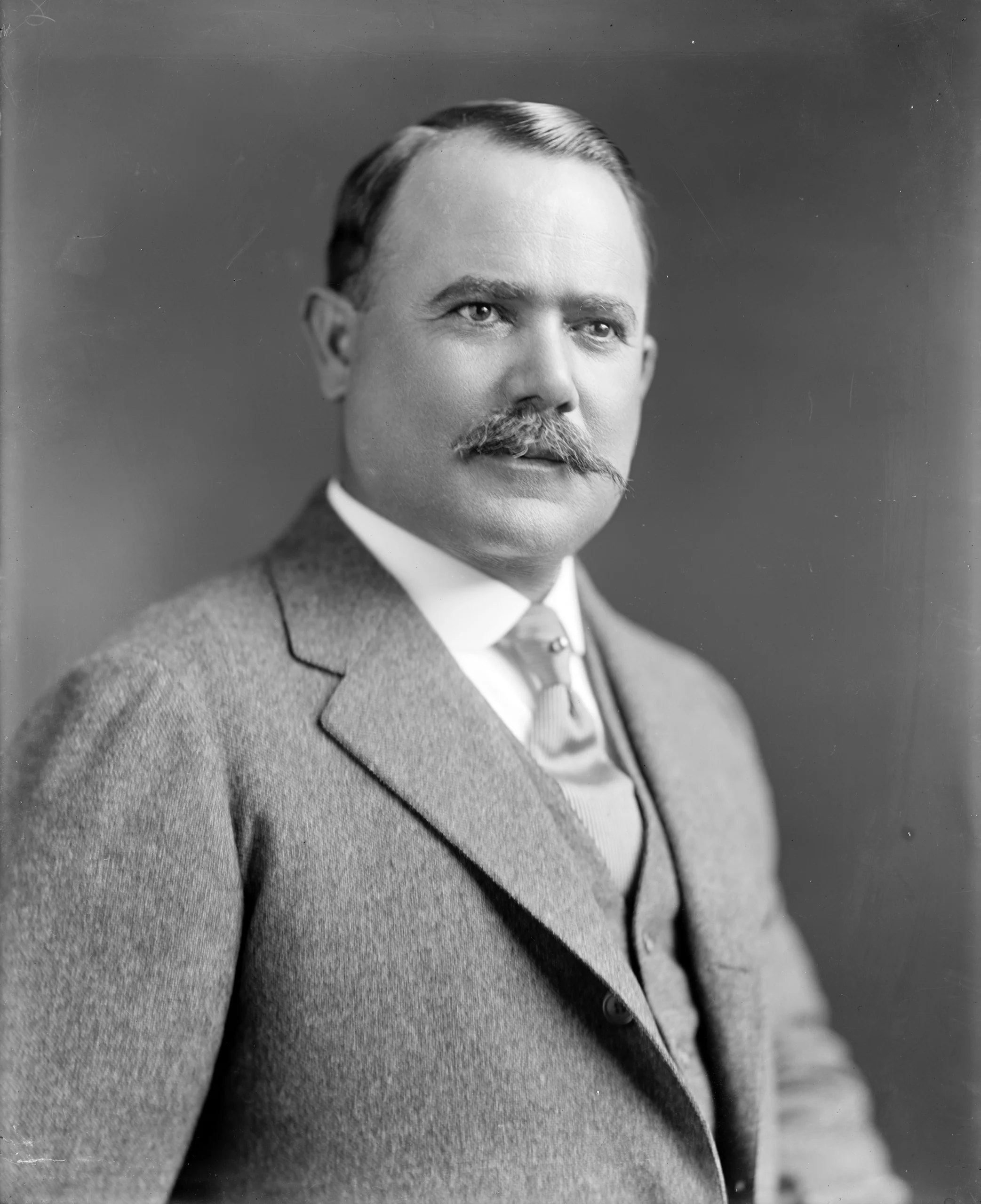
Álvaro Obregón
 Mexico
Also known as: Alvaro Obregon, President Obregon, El Caudillo Indefectible
Birthday
February 19, 1880
Birth Sign
Sagittarius
Birthplace
Navojoa, Sonora, Mexico
Age
Died at 48
About
Álvaro Obregón Salido was a Mexican general, inventor, and politician who served as the 46th President of Mexico from 1920 to 1924. Born on February 19, 1880, in Navojoa, Sonora, he emerged as one of the most decisive figures of the Mexican Revolution. His career transformed him from a modest agricultural worker into the "Undefeated Caudillo" of the revolution, a title earned through his military victories against Pancho Villa and Emiliano Zapata. Despite losing his right arm during the Battle of Celaya in 1915, he continued to lead troops and later governed the nation, implementing significant educational and labor reforms. His presidency marked a transition from revolutionary chaos to institutional stability, laying the groundwork for the modern Mexican state.
Obregón's leadership style combined military pragmatism with political foresight, allowing him to navigate the fractious landscape of post-revolutionary Mexico. He focused on consolidating the gains of the revolution, distributing land to peasants, and establishing institutions like the National Polytechnic Institute. Although he lost his right arm, he adapted to his disability with remarkable resilience, learning to write and eat with his left hand. This physical sacrifice became a symbol of his dedication to the cause, cementing his status as a national hero before his untimely death. He is remembered today as a foundational figure who stabilized Mexico after decades of civil war, earning rankings among the top 70 most famous figures in Latin America and securing his place in the Rotonda de las Personas Ilustres alongside other national heroes.
Early Life & Background
Álvaro Obregón Salido entered the world on February 19, 1880, in the town of Navojoa, located in the state of Sonora, Mexico. He was the son of José María Obregón and María Salido, a couple whose lives were rooted in the rural agriculture that defined the region. Unlike many of his contemporaries who attended formal schools, Obregón received only limited education, yet he possessed a sharp intelligence and a strategic mind that would serve him well later in life. His early years were spent working as a farmhand, tending to crops and livestock in the arid landscapes of northern Mexico.
As a young man, Obregón expanded his horizons beyond the fields, taking up work as a steamboat pilot on the Yaqui River. This role required navigation skills and a keen understanding of the local geography, further honing his practical abilities. Before entering politics, he demonstrated an inventive spirit by patenting a device for removing stones from wheat fields and improving irrigation techniques for agriculture in Sonora. At the age of 20, he began his political ascent by joining the Maderista movement in 1910, supporting Francisco I. Madero's call to overthrow the dictatorship of Porfirio Díaz. Before his rise to national fame, he demonstrated his organizational skills by being elected municipal president of Navojoa in 1913, a position that showcased his local influence and ability to manage community affairs.
Career Growth
Obregón's path to power was forged in the crucible of the Mexican Revolution. In February 1913, following the coup d'état that installed Victoriano Huerta, Obregón aligned with Governor Venustiano Carranza and the Constitutionalist Army. He quickly rose through the ranks, becoming one of the most effective generals in the fight against Huerta. By 1914, he had secured control over northwestern Mexico. After Huerta's defeat, the revolution fractured, leading to a civil war between the Constitutionalist faction (led by Carranza) and the forces of Pancho Villa and Emiliano Zapata.
In 1915, Obregón achieved his defining military victory at the Battle of Celaya against Pancho Villa's Division of the North. During this battle, he was shot in the right arm, which had to be amputated above the elbow. This injury did not diminish his reputation; instead, it cemented his image as a resilient leader. He went on to defeat Villa's remaining forces and played a crucial role in the fall of Zapata's movement. In 1920, Obregón led the Plan of Agua Prieta, a revolt that ousted President Venustiano Carranza, paving the way for his own election. He was inaugurated as President on December 1, 1920, serving until November 30, 1924. As president, Obregón focused on consolidating the revolution's gains. He implemented the agrarian reform policies outlined in the 1917 Constitution, distributed land to peasants, and established the National Polytechnic Institute. His administration is noted for restoring order and establishing the foundations of the post-revolutionary state.
Career Timeline
Public Image & Style
Obregón is portrayed in media and history books as a pragmatic, resilient, and visionary leader. His image is one of strength and adaptability, symbolized by his ability to lead a nation while physically disabled. The media often highlights his transition from a farmer to a general to a president, emphasizing his rise from humble beginnings. His legacy is viewed with respect and reverence, representing the triumph of the revolution and the birth of modern Mexico. He is frequently cited in academic circles as a model of leadership who balanced military might with diplomatic necessity, ensuring Mexico's reintegration into the global economy despite internal instability.
Fame & Fandom
According to the iFANN Global Fame Rankings, Obregón holds specific standing among figures of his era and origin. He is currently the 51st most famous person in Mexico, a position holding steady from the previous cycle. Within the broader scope of his birthplace, he ranks as the 76th most famous person from Mexico, a rank that has seen slight fluctuation. On a continental level, he stands as the 69th most famous person in Latin America, a placement that reflects his enduring status as a pivotal historical figure rather than a celebrity in the modern sense. These placements reflect a legacy sustained by historical necessity rather than modern celebrity culture. While the iFANN system captures this data, it is important to note that Obregón does not possess a formal fandom name. His audience consists of historians, political scientists, students, and descendants of those who lived through the Mexican Revolution, rather than an organized group of enthusiasts with a designated title or social media following.
Interesting Facts and Legends
Obregón earned the nickname "El Caudillo Indefectible" (The Undefeated Leader) because he never lost a military engagement during the revolution, despite being outnumbered and facing formidable opponents like Villa. Before entering politics, he was an inventor who patented a device for removing stones from wheat fields and improved irrigation techniques for agriculture in Sonora. After losing his right arm, he mastered using his left hand for everything, including eating with utensils, writing, and even handling firearms, which impressed his soldiers and enemies alike. His administration faced the devastating 1918 Spanish flu pandemic, and he worked to reintegrate Mexico into the global economy once the crisis subsided. He was running for re-election in 1928 when he was assassinated, which violated the constitutional prohibition on immediate consecutive terms, a move that sparked controversy and unrest.
Notable Quotes
“We must build a new Mexico on the ruins of the old.”
“Education is the only means to transform the country.”
Family & Personal Life
Álvaro Obregón was married twice, though his primary and enduring union was with María Amparo Ruiz de Vidaurri, whom he wed in 1904. The couple had several children together, including Álvaro Obregón Jr. and María del Carmen Obregón. María Amparo accompanied him during his final days and was present at his assassination in 1928. She managed his estate after his death and preserved his legacy until her own passing. There are no widely documented public romantic relationships prior to or outside of these marriages in credible historical records; Obregón's personal life was largely kept private compared to his public military and political roles. He remained married to María Amparo until his death in 1928.
Notable Connections
Venustiano Carranza, Pancho Villa, Emiliano Zapata, Plutarco Elías Calles, José de León Toral, María Amparo Ruiz de Vidaurri.
Relationships & Dating History
Álvaro Obregón was married twice, though his primary and enduring union was with María Amparo Ruiz de Vidaurri, whom he wed in 1904. The couple had several children together, including Álvaro Obregón Jr. and María del Carmen Obregón. María Amparo accompanied him during his final days and was present at his assassination in 1928. She managed his estate after his death and preserved his legacy until her own passing. There are no widely documented public romantic relationships prior to or outside of these marriages in credible historical records; Obregón's personal life was largely kept private compared to his public military and political roles. He remained married to María Amparo until his death in 1928.
- MarriedMaría Amparo Ruiz de Vidaurri1904 - 1928His first and only long-term partner; she survived him and managed his estate.
Death & Aftermath
Died
July 17, 1928 (aged 48)
Death Place
San Ángel, Mexico City
Cause of Death
Gunshot wounds to the abdomen
On the evening of July 17, 1928, Álvaro Obregón sat at a dinner table in his residence known as La Bombonera within the San Ángel neighborhood of Mexico City. While dining with his wife María Amparo Ruiz de Vidaurri and several guests including General Jesús Guajardo, he was approached by José de León Toral, a young man claiming religious grievances against the president's anti-clerical policies. Three shots fired from a Colt revolver struck Obregón in the abdomen and grazed his hand, causing him to collapse before being rushed to the nearby Hospital de San Ángel where surgeons could not stop the internal bleeding. He died approximately two hours after the shooting, having reportedly shouted that he had been killed.
The immediate police investigation identified Toral as the sole perpetrator, who confessed at the scene and was subsequently tried for murder. Despite defense arguments regarding insanity stemming from religious delusions, an inquest found Toral guilty and sentenced him to death, leading to his execution by firing squad on January 11, 1929. Public reaction across Mexico and internationally included deep mourning and tributes from peers, with President Plutarco Elías Calles declaring a national day of mourning. Vigils were held in major cities where citizens gathered to honor the former leader, and the event spurred a surge in revolutionary literature and art dedicated to his memory. A massive state funeral took place on July 21, 1928, moving from the National Palace to the Panteón Civil de Dolores before thousands of mourners, military leaders, and foreign dignitaries.
Following the interment, Obregón was eventually laid to rest in the Rotonda de las Personas Ilustres alongside other national heroes. His legacy continued through the establishment of the Fundación Álvaro Obregón in 1929 to support educational projects and a scholarship program for rural students. His widow managed his estate and preserved his historical legacy while the borough of Álvaro Obregón in Mexico City was named in his permanent honor. The assassination triggered immediate political instability and contributed to the onset of the Cristero War, a conflict between the Mexican government and Catholic rebels.
Net Worth (Estate Value)
$0
iFANN Editorial Team estimate
As a historical figure, Obregón does not have a net worth in the modern sense. However, his estate and legacy have enduring value. Following his death, his widow, María Amparo Ruiz de Vidaurri, managed his estate. The specific financial value of his personal assets at the time of death is not recorded in modern databases. The "wealth" of Obregón lies in his historical impact. The Fundación Álvaro Obregón, established in 1929, continues to operate, providing scholarships and educational support, representing a lasting financial and social investment in his name. There are no commercial posthumous releases or licensing deals associated with Obregón in the same way as modern celebrities. His legacy is preserved through historical publications, documentaries, and the naming of public institutions.
Awards & Accolades
View 10 records, honours and achievementsKnown For
President of Mexico
1920 · 46th President
Mexican Revolution
1915 · General
Keywords
Sources
Quick Facts
- Profession
- politician, military personnel
- Born
- February 19, 1880
- Birthplace
- Navojoa, Sonora, Mexico
- Died
- July 17, 1928
- Death Place
- San Ángel, Mexico City
- Gender
- Male
- Birth Sign
- Sagittarius
Personal Details
- Full Name
- Álvaro Obregón Salido
- Spouse
- María Amparo Ruiz de Vidaurri
- Children
- Álvaro Obregón Jr., María del Carmen Obregón
- Education
- Limited formal schooling; self-educated
Frequently Asked Questions
Who was Álvaro Obregón?
How did Álvaro Obregón die?
What happened to Álvaro Obregón's arm?
Was Álvaro Obregón married?
Why is the Álvaro Obregón borough named after him?
Similar People
Join the community
fans discussing