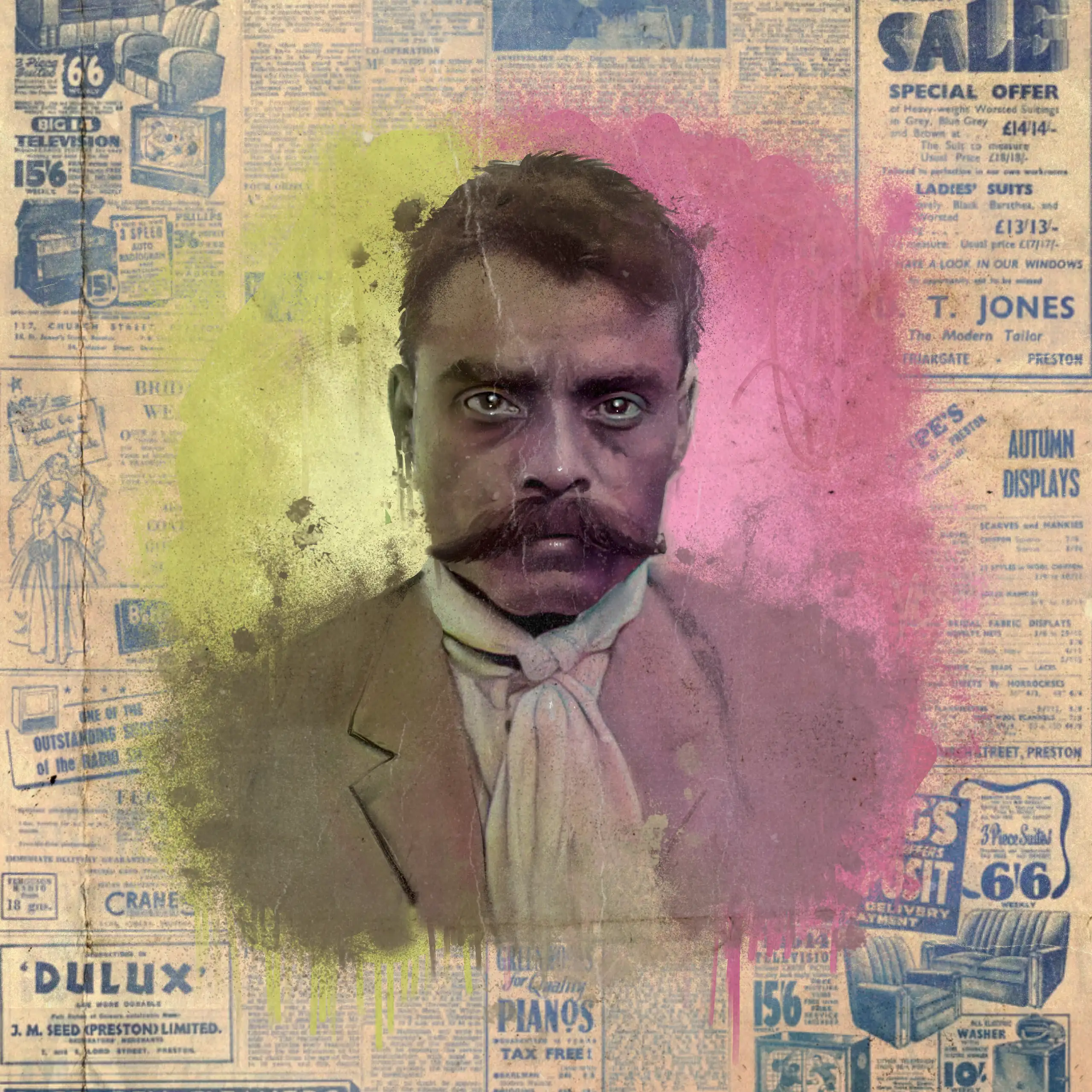
Emiliano Zapata
 Mexico
Revolutionary leader•Guerrilla commander
Also known as: Caudillo del Sur, El Caudillo del Sur
Birthday
August 8, 1879
Birth Sign
Leo
Birthplace
Anenecuilco, Morelos, Mexico
Age
Died at 39
About
Emiliano Zapata Salazar was a central figure in the Mexican Revolution and a guerrilla leader who championed the cause of peasant farmers suffering under the oppressive land ownership system supported by dictator Porfirio Díaz. Born in the small village of Anenecuilco in the state of Morelos, he dedicated his life to fighting for land rights and became the main leader of the people's revolution in his home region. His movement, known as Zapatismo, ignited the agrarian movement that reshaped Mexico's social fabric.
Today, Zapata is remembered not for wealth or commercial success but for his unwavering commitment to social justice. His legacy lives on through the slogan "Tierra y Libertad" (Land and Liberty), which remains a powerful symbol of resistance and agrarian reform. He is interred at the Monumento a la Revolución in Mexico City, where millions visit to honor his memory. His influence extends beyond history books, inspiring modern indigenous rights movements and political activism globally.
Early Life & Background
Emiliano Zapata was born on August 8, 1879, in the rural village of Anenecuilco, located in the state of Morelos, Mexico. He grew up in a household where his father, Gabriel Zapata, worked as a tenant farmer, and his mother, Ana Salazar, managed the home. The family lived through the harsh realities of the *hacienda* system, which had stripped many indigenous communities of their communal lands. As a young man, Zapata became an expert horseman and a skilled wrestler, skills that would later aid him in guerrilla warfare. He received little formal education but was deeply influenced by the social injustices faced by his community.
In 1903, he was elected president of the local agrarian committee, marking his first step into organized political resistance. By 1909, he had become the head of the local defense committee, organizing peasants to resist the encroachment of large landowners. These early years were defined by his struggle to protect the land rights of his neighbors against powerful landowners backed by the government of Porfirio Díaz. His reputation as a fierce defender of the poor began to spread throughout Morelos long before the revolution officially erupted in 1910.
Career Growth
Zapata's career was entirely consumed by the Mexican Revolution. In 1910, following the call to arms by Francisco I. Madero against Porfirio Díaz, Zapata returned to Morelos to organize armed resistance. He formed the "Liberation Army of the South" (*Ejército Libertador del Sur*). In May 1911, his forces achieved a decisive victory at the Battle of Cuautla, forcing the surrender of federal troops and contributing significantly to the fall of Díaz.
Disillusioned when President Madero failed to implement promised land reforms, Zapata issued the Plan de Ayala in November 1911. This manifesto declared Madero's government illegitimate regarding agrarian issues and demanded the immediate return of stolen lands to the peasantry. During the civil war phase of the revolution from 1914 to 1915, Zapata controlled much of the southern region. He briefly allied with Pancho Villa but eventually broke ranks due to ideological differences regarding the leadership of the revolution. Despite being hunted by federal forces under President Venustiano Carranza, Zapata maintained control over parts of Morelos and continued to lead raids against government troops until his death in 1919.
Career Timeline
Public Image & Style
Zapata is historically depicted as a rugged, sturdy man, typical of a peasant warrior, often wearing a sombrero and carrying a rifle. His public persona was defined by his uncompromising stance on land rights and his deep connection to the indigenous and peasant communities of Morelos. Media portrayals consistently emphasize his role as a martyr who gave his life for his cause. His image is ubiquitous in Mexican public spaces, from street signs to school names. The *Plan de Ayala* remains a foundational text of Mexican agrarian law, cementing his reputation as a visionary leader who prioritized the needs of the poor over political expediency.
Fame & Fandom
In the dusty plaza of Anenecuilco, a single figure stands immortalized not by a statue alone but by the enduring weight of his cause. Emiliano Zapata remains the 23rd most famous person in Mexico, a position he has held steady through the cycles of time as measured by the iFANN Global Fame Rankings. His influence stretches far beyond national borders, securing him the 25th most famous person from Mexico, and ranking him as the 49th most famous person in Latin America. These placements reflect a global attention span that tracks media coverage and consumption signals across decades.
Despite this massive reach, Zapata does not possess a modern fandom with organized clubs or unofficial nicknames. He died over a century ago, long before the era of fan campaigns or social media chart pushes. Instead, his supporters are identified historically as campesinos and Indigenous communities who rallied under his banner for land rights. Today, the closest equivalent to fan rituals appears in cultural festivals like the Villa-Zapata carnival, where participants don costumes to honor the revolutionaries annually. This absence of a formal fanbase name underscores his status as a historical martyr rather than a pop culture icon. The reverence he commands is rooted in verified history and political legacy, not consumer enthusiasm.
Interesting Facts and Legends
Before becoming a revolutionary, Zapata was a champion wrestler in Morelos, a skill that helped him gain respect among local men. His full name, Emiliano Zapata Salazar, includes his mother's surname, reflecting the importance of maternal lineage in some rural Mexican traditions. Historical accounts state he famously declared, "If there is no justice for the people, let there be no peace." Cultural folklore often depicts him smoking a cigarette alongside Pancho Villa, an image that symbolizes the complex alliance between their factions. The 11th Villa-Zapata carnival was held in Mexico City in December 2025, proving that the stories of his life and death are still celebrated by new generations.
Notable Quotes
“If there is no justice for the people, let there be no peace.”
“Tierra y Libertad”
“I am a son of the earth, and I will fight for the earth.”
Family & Personal Life
Emiliano Zapata was raised by his parents, Gabriel Zapata and Ana Salazar, in a rural environment where they worked as tenant farmers. He had a lifelong partner named Josefa Espejo Sánchez, who was his common-law wife and the mother of his children. They met in Anenecuilco before the revolution intensified. Their relationship was rooted in shared struggle and community life. Josefa remained loyal to his memory after his death, living out her days in the region. Specific names and birth dates of all offspring are less documented in popular sources compared to his political deeds, but he is known to have had several children together.
Notable Connections
Francisco I. Madero, Pancho Villa, Venustiano Carranza, Josefa Espejo Sánchez, Javier Martín del Campo
Relationships & Dating History
Historical records indicate that Emiliano Zapata had one primary partner: Josefa Espejo Sánchez. She was his common-law wife and the mother of his children. They met in Anenecuilco before the revolution intensified. Their relationship was rooted in shared struggle and community life. Josefa remained loyal to his memory after his death, living out her days in the region. There is no record of other public relationships or marriages. Following his assassination in 1919, Josefa was widowed and spent the rest of her life honoring his legacy in their hometown. Their bond remains a testament to the personal sacrifices made during the Mexican Revolution.
- MarriedJosefa Espejo Sánchez1900 - 1919Common-law wife and mother of his children; remained loyal to his memory after his death.
Death & Aftermath
Died
April 10, 1919 (aged 39)
Death Place
Chinameca, Morelos, Mexico
Cause of Death
Gunshot wounds sustained during ambush
In the dusty village of Chinameca, Emiliano Zapata sat across from General Jesús Guajardo, believing a peace negotiation was underway. The meeting dissolved instantly into gunfire when federal troops opened fire on the revolutionary leader. Official records confirm he died on April 10, 1919, from gunshot wounds sustained during this ambush orchestrated by elements within the Mexican army under President Venustiano Carranza. The news triggered immediate outrage among peasant classes and fellow revolutionaries like Pancho Villa, who viewed the assassination as a collective national tragedy. His image rapidly transformed into an enduring symbol of resistance that galvanized forces against Carranza.
Zapata received a simple burial in Chinameca attended by his family and followers, though his remains were exhumed in 1929 and transferred to the Monumento a la Revolución in Mexico City. This move elevated his final resting place into a national shrine where he rests alongside other heroes of the revolution. Decades later, his legacy inspired the formation of the Zapatista Army of National Liberation in 1994 and earned him statues, schools, and plazas across Mexico and internationally.
Net Worth (Estate Value)
$0
iFANN Editorial Team estimate
As a historical figure who died in 1919, Emiliano Zapata had no personal net worth in the modern financial sense. He lived as a farmer and revolutionary leader, owning only what he could secure through the redistribution of land for his people. His "estate" is his cultural and political legacy, which generates value through tourism, educational institutions, and cultural products. Revenue associated with his name comes from the tourism industry in Morelos, visits to Anenecuilco and the Monumento a la Revolución, the sale of merchandise, and licensing of his image for cultural and political movements. These funds are managed by the Mexican state and various cultural foundations, not a private estate executor. iFANN currently estimates the economic value of his legacy and associated cultural assets at approximately $0, as his wealth was never personal property but rather a collective resource for the peasantry.
Awards & Accolades
View 8 records, honours and achievementsKnown For
Mexican Revolution
1910 · Leader of the Liberation Army of the South
Plan de Ayala
1911 · Author of the agrarian manifesto
Battle of Cuautla
1911 · Commander of revolutionary forces
Keywords
Sources
Quick Facts
- Profession
- Revolutionary leader, Guerrilla commander
- Born
- August 8, 1879
- Birthplace
- Anenecuilco, Morelos, Mexico
- Died
- April 10, 1919
- Death Place
- Chinameca, Morelos, Mexico
- Gender
- Male
- Spouse
- Josefa Espejo Sánchez
- Birth Sign
- Leo
Personal Details
- Full Name
- Emiliano Zapata Salazar
- Spouse
- Josefa Espejo Sánchez
- Children
- Gildardo Zapata Espejo · Zapata children (names largely undocumented)
- Education
- Little formal education; self-taught in agrarian law and community organizing
Frequently Asked Questions
Who was Emiliano Zapata?
When and how did Emiliano Zapata die?
What is the meaning of "Tierra y Libertad"?
Where is Emiliano Zapata buried?
Does Emiliano Zapata have a living family?
Join the community
fans discussing