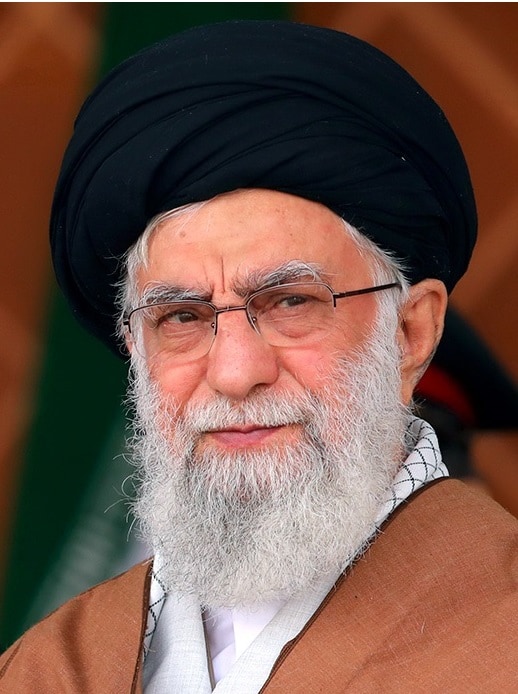
Ali Khamenei
 Iran
IranIslamic jurist•politician•translator
Also known as: Sayyed Ali Hosseini Khamaneh
Birthday
April 19, 1939
Birth Sign
Aries
Birthplace
Mashhad, Khorasan Province, Iran
Age
Died at 86
Height
5 ft 8 in (173 cm)
About
Ali Khamenei was an Iranian Shia cleric and politician who served as Iran's second supreme leader from 1989 until his death in 2026. He is known for his three-decade-long tenure as the country's ultimate authority, transforming Iran into a regional power and solidifying its stance against Israel and Western influence. During his leadership, Iran supported nuclear development for civilian use and backed Shia Islamist movements and allies across the Middle East, forming the 'Axis of Resistance'. Khamenei was the commander-in-chief of the armed forces and head of the Islamic Revolutionary Guard Corps (IRGC), shaping it into an instrument of control and regional influence. His rule was characterized by economic privatization, consolidation of power, and was punctuated by significant domestic protests and international conflicts, notably culminating in his assassination in 2026. His legacy continues to shape Iran's political and religious landscape.
Early Life & Background
Seyyed Ali Hosseini Khamenei was born on April 19, 1939, in Mashhad, Khorasan Province, Iran . He was the sixth of eight children in a deeply religious household. His father, Javad Khamenei, was a Shia cleric of Azerbaijani Turk descent, while his mother, Khadijeh Mirdamadi, hailed from an ethnic Persian clerical family. The family's lineage traced back to Sayyid Hossein Tafreshi, a descendant of the Aftasi Sayyids, who in turn traced their ancestry to Sultan ul-Ulama Ahmad, a grandchild of the fourth Shia Imam, Ali al-Sajjad. In keeping with tradition, male family members who joined the Shia clergy, like his father, wore black turbans as a symbol of their belonging to the Prophet's family. Despite their distinguished lineage, the family lived modestly in a one-room home with a basement, often subsisting on basic staples like bread, dates, and raisins.
Khamenei's formal education began at the tender age of four with Quranic studies at a Maktab. He later completed his primary education at the first Islamic school in Mashhad. Opting for a theological path rather than conventional high school, he enrolled in the Hawza in Mashhad to pursue religious studies. Beyond his seminary curriculum, Khamenei developed a keen interest in a diverse range of subjects, including mathematics, geography, history, poetry, and literature. His highly educated mother, proficient in religion, history, literature, and poetry, played a significant role in nurturing these interests, teaching him Persian history and art. In 1958, at the age of nineteen, he moved to Qom, the esteemed center of Iran's theological community, to further his advanced theological training. There, he studied under prominent scholars such as Sheikh Hashem Qazvini and Ayatollah Milani, and notably attended classes taught by Ruhollah Khomeini. His pursuit of religious scholarship also took him to Najaf, Iraq, for additional studies.
It was in the early 1960s that Khamenei's path shifted from purely academic pursuits to active political engagement, marking his entry into the burgeoning movement led by his mentor, Ruhollah Khomeini, against the rule of Shah Mohammad Reza Pahlavi. His fervent opposition to the Shah's regime quickly drew the attention of the authorities. Beginning in 1963, he faced arrest six times by SAVAK, the Shah's secret police, for his involvement in organizing protests and distributing anti-regime literature. These actions resulted in periods of exile to remote areas of southeastern Iran, solidifying his commitment to the revolutionary cause.
Career Growth
Following the 1979 Iranian Revolution, Khamenei became a member of the Revolutionary Council and a trusted confidant of Khomeini. He served as Iran's third president from 1981 to 1989, a two-term presidency dominated by the Iran-Iraq War. During this period, he strengthened ties with the Islamic Revolutionary Guard Corps. After Khomeini's death on June 3, 1989, the Assembly of Experts named Khamenei interim leader. In August 1989, after constitutional amendments removed the requirement that the supreme leader be a marja, the Assembly formally elected him as Iran's second supreme leader. Over 36 years, he shaped the IRGC into an instrument of control and regional influence. His foreign policy supported the Axis of Resistance in Syria, Iraq, Yemen, and Gaza, as well as Russia in Ukraine. In 2015, Iran agreed to the JCPOA nuclear deal, but the US withdrew in 2018 and reimposed sanctions. The 2020 US assassination of Qassem Soleimani prompted Khamenei to oversee retaliation. A wave of protests over rising prices began in December 2025, peaking in January 2026, with more than 3,000 reported deaths. On February 28, 2026, Khamenei was assassinated during a conflict with Israel and the US. The Assembly of Experts elected his son Mojtaba Khamenei as successor. Khamenei was awarded the Islamic Republic of Iran's Order of Fath for leadership during the Iran-Iraq War, the Order of Nasr, and the Order of Khorram. He held honorary doctorates from Iranian universities. He appeared on Forbes World's Most Powerful People, TIME 100 Most Influential People, and Foreign Policy's Top 100 Global Thinkers. He was featured on covers of TIME Magazine, The Atlantic, Al-Monitor, and Al Jazeera.
Career Timeline
Public Image & Style
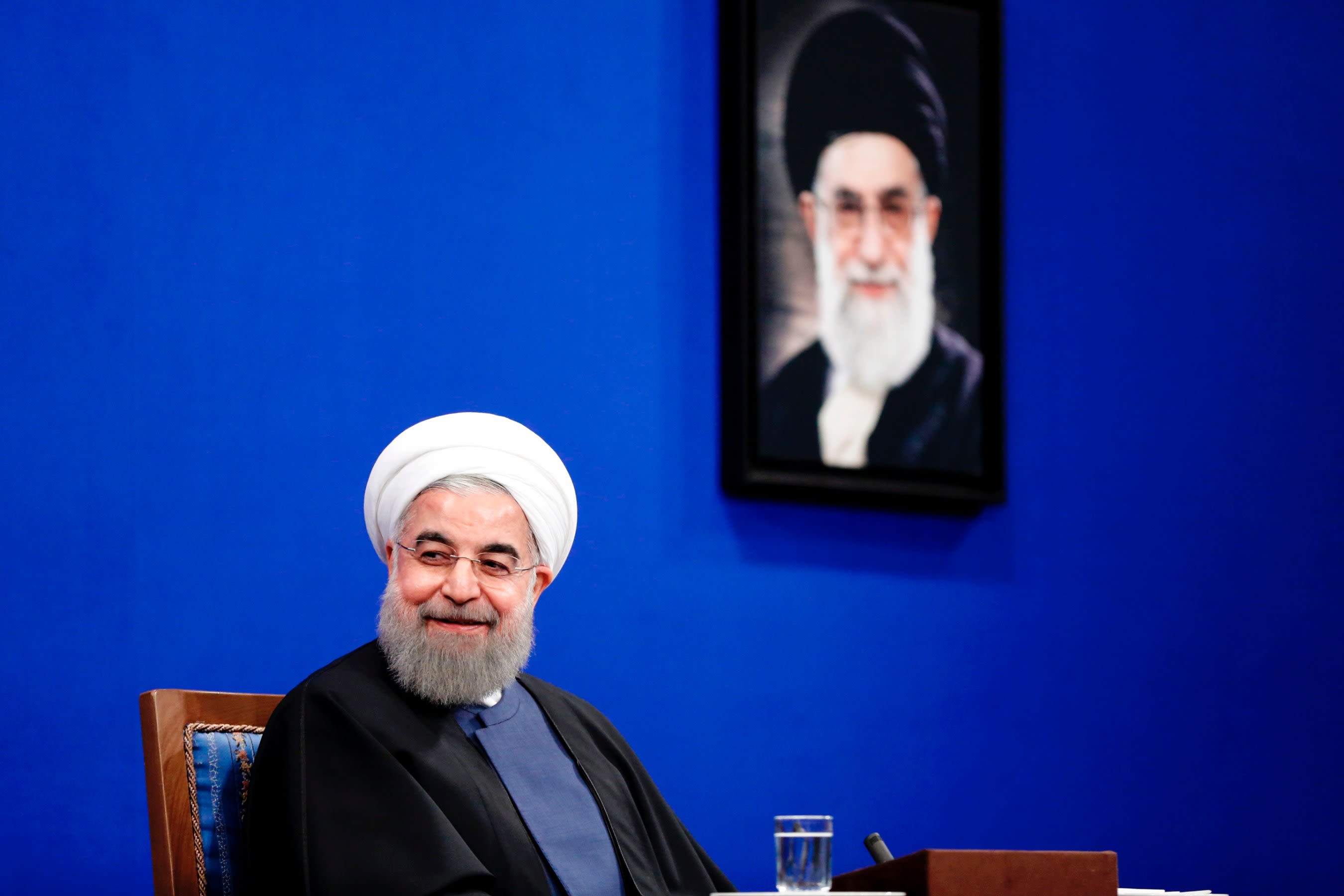
Khamenei was typically seen wearing a black turban, signifying descent from the Prophet Muhammad, a long dark cloak, and spectacles. To supporters, he was the steadfast defender of Iran's sovereignty. To critics, he symbolized an uncompromising political system resistant to reform. Western media often portrayed him as a hardline authoritarian figure. His official communications were formal, religious, and political, delivered through speeches and written statements. In Iran, his portraits are displayed at public events and religious ceremonies, and large mourning processions followed his death. His social media presence included accounts on Instagram, X, Facebook, and YouTube, managed by staff and focused on political messaging. His height was approximately 5 feet 8 inches (173 cm). He was listed in Forbes World's Most Powerful People and TIME 100 Most Influential People. His birthday was marked by some supporters.
Fame & Fandom (iFAMOUS Rankings)
Supporters of Ali Khamenei did not organize as a traditional fandom with a formal name, but rather functioned as a vast, institutionalized political base rooted in religious devotion and state loyalty. This audience engaged in mandatory rituals such as Friday prayers and public displays of his portrait, viewing his leadership as a divine mandate that protected Iran from foreign aggression. His legacy is defined by this enduring influence rather than voluntary fan campaigns or social media trends, with the Basij militia serving as the primary vehicle for mobilizing this support structure.
The scope of his global recognition remains substantial even in the years following his death in February 2026. According to the iFANN Global Fame Rankings, he holds the position of the 1st most famous person from Iran, a standing that has remained steady since the previous cycle. Within his home country, he is recognized as the 2nd most famous person in Iran, reflecting his status as the architect of the nation's resistance ideology. On a regional scale, he ranks as the 7th most famous person in Middle East, underscoring his pivotal role in shaping geopolitical dynamics across the region.
His influence extends into the broader category of political figures, where he is listed as the 25th most famous person in Politics. Globally, the archives place him at the 148th most famous person in the world, a rank that has held firm through multiple assessment periods. These placements reflect a lifetime of commanding attention through speeches, written statements, and the sheer weight of his authority over Iran's military and religious institutions.
Interesting Facts and Legends
Ali Khamenei's right arm was permanently paralyzed following a 1981 assassination attempt involving a bomb concealed within a tape recorder. He never completed high school, choosing instead to pursue advanced religious seminary education. His family name originates from the village of Khamaneh in East Azerbaijan province, where he described an impoverished childhood defined by bread and raisins for supper in a single-room dwelling. Lineage records trace his ancestry back to the fourth Shia Imam, Ali al-Sajjad. Two of his brothers also entered the clergy, including Hadi Khamenei, who served as a newspaper editor. Khamenei maintained a lifelong appreciation for poetry and literature, with his mother instructing him in Persian history and art. He initially harbored doubts about his qualifications to serve as supreme leader, prompting a constitutional amendment to permit a mid-ranking cleric to assume the post. A central legend surrounding his legacy involves his survival of an early strike during the Iran-Iraq War, which killed his father and left him injured, cementing his image as a survivor of martyrdom. His death in February 2026 triggered immediate geopolitical shifts, with reports describing intense grief and defiance at his state funeral in Tehran. The subsequent months saw factions competing over military direction, highlighting the weight of his role as the architect of Iran's resistance ideology.
Notable Quotes
“The Islamic Revolution is a divine, spiritual phenomenon that cannot be measured by material standards.”
“The Zionist regime is a cancerous tumor that must be removed from the region.”
“We do not seek nuclear weapons. Nuclear weapons are against Islamic principles.”
“America cannot do a damn thing against Iran.”
“The Iranian nation has proven that it will not bow to pressure and bullying.”
Family & Personal Life
Khamenei's father, Javad Khamenei, was a Shia cleric and mujtahid born in Najaf, Iraq, of ethnic Azerbaijani Turk descent. His mother, Khadijeh Mirdamadi, was an ethnic Persian from Yazd from a clerical family. He had two brothers who are also clerics, including Hadi Khamenei, a newspaper editor. His elder sister Fatemeh Hosseini Khamenei died in 2015 aged 89. Khamenei married Mansoureh Khojaste Bagherzadeh; they had several children, including Mojtaba Khamenei, born in 1969, who succeeded him as supreme leader. The family lived in a one-room home during his childhood, subsisting on bread, dates, and raisins. His ancestor lineage traces back to the fourth Shia Imam, Ali al-Sajjad. His father was born in Najaf, Iraq, and was a recognized mujtahid. Khamenei was the second son among eight children.
Notable Connections
Khamenei was a student and close confidant of Ruhollah Khomeini, the founder of the Islamic Republic. He worked closely with Qassem Soleimani, commander of the Quds Force, and oversaw the presidencies of Mahmoud Ahmadinejad, Hassan Rouhani, Ebrahim Raisi, and Masoud Pezeshkian. His son Mojtaba Khamenei succeeded him as supreme leader. His younger brother Hadi Khamenei is a newspaper editor and cleric.
Relationships & Dating History
Khamenei was married to Mansoureh Khojaste Bagherzadeh, his only known spouse. Details of their meeting are not widely publicized. They had several children together, including Mojtaba Khamenei, born in 1969, who succeeded his father as supreme leader. The marriage lasted until Khamenei's death on February 28, 2026. As of 2026, his wife survived him.
- MarriedMansoureh Khojaste Bagherzadeh? - 2026Only known spouse; marriage ended with Khamenei's death.
Death & Aftermath
Died
February 28, 2026 (aged 86)
Death Place
Tehran, Iran
Cause of Death
U.S. and Israeli airstrike assassination
The Office of the Supreme Leader announced on February 28, 2026, that Ali Khamenei had passed away in Tehran at the age of 86. Official Iranian narratives framed the event as a martyrdom resulting from foreign aggression, specifically citing United States and Israeli airstrikes as the cause of his death. This account stands in contrast to earlier biographical expectations of natural causes, establishing the incident as an act of war rather than illness. The reaction within Iran and among allied militias was characterized by massive funeral processions, with Faleh al-Fayyadh of the Popular Mobilization Units describing the ceremonies in Iraq as a moment that revived consciences.
While some later claims suggested secret peace talks occurred before the attack, the official state response focused on consolidating power through the Islamic Revolutionary Guard Corps. A military junta structure emerged to replace traditional clerical rule, with Mojtaba Khamenei installed as the new Supreme Leader to oversee the transition. The estate and leadership were transferred immediately to the successor, who began appointing loyalists to key positions amidst ongoing regional tensions.
Net Worth (Estate Value)
$4 Billion
iFANN Editorial Team estimate
The financial standing of Ali Khamenei has long been a subject of speculation, with estimates varying widely across different analyses. While the Supreme Leader's office controlled assets worth tens of billions of dollars through various foundations and state-owned enterprises, his personal wealth was reported as more modest. Research by the iFANN Editorial Team puts Ali Khamenei's net worth at $4 Billion. Reuters investigations suggested the office controlled an economic empire worth approximately $95 billion through Setad, a charitable foundation that expanded into a massive conglomerate. Western government estimates put Setad's assets in the tens of billions. Independent analysts estimated Khamenei's personal wealth between $1 and $4 billion, though these figures are disputed. As of 2026, his estate, managed by his family and the Office of the Supreme Leader, continues to earn revenue through Setad and other state-controlled entities. His son Mojtaba Khamenei, who succeeded him as supreme leader, now oversees these assets. Wealth sources included control over Setad with holdings in oil, gas, telecommunications, finance, real estate, and agriculture; control over bonyads; state budget allocations; and real estate holdings. No known personal endorsement deals or business ventures outside state-controlled entities existed.
Awards Won (3)
Khamenei received several state honors from the Islamic Republic of Iran, including the Order of Fath for leadership during the Iran-Iraq War, the Order of Nasr for military and political achievements, and the Order of Khorram for service to the Islamic Revolution. He also received honorary doctorates from Iranian universities. He did not participate in Western entertainment industry award systems.
State Honor
Leadership during Iran-Iraq War
State Honor
Military and political achievements
Known For
Supreme Leader of Iran
1989-2026 · Second Supreme Leader
President of Iran
1981-1989 · Third President
Keywords
Sources
Quick Facts
- Profession
- Islamic jurist, politician, translator
- Born
- +1939-04-19
- Birthplace
- Mashhad
- Died
- +2026-02-28
- Death Place
- Tehran
- Gender
- Male
- Spouse
- Mansoureh Khojaste Bagherzadeh
- Birth Sign
- Aries
Personal Details
- Full Name
- Seyyed Ali Hosseini Khamenei
- Height
- 5 ft 8 in (173 cm)
- Spouse
- Mansoureh Khojaste Bagherzadeh
- Children
- Mojtaba Khamenei (born 1969) and others
- Education
- Hawza in Mashhad; advanced theological training in Qom and Najaf; student of Ruhollah Khomeini
Frequently Asked Questions
How old was Ali Khamenei when he died?
Who is Ali Khamenei's successor?
What was Ali Khamenei's net worth?
How many children did Ali Khamenei have?
What happened to Ali Khamenei?
Similar People

Join the community
fans discussing