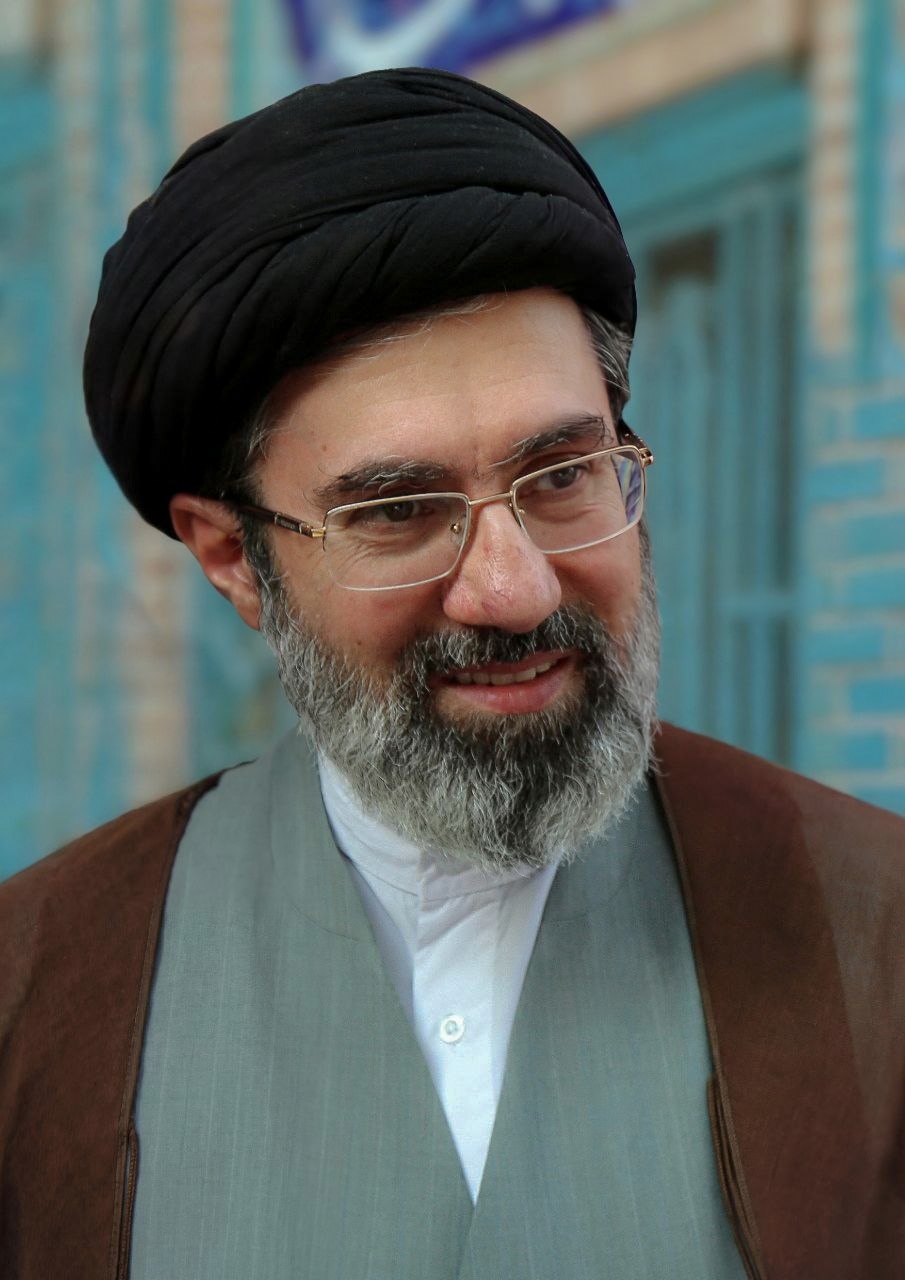
Mojtaba Khamenei
 Iran
Cleric•Islamic jurist•politician
Birthday
September 8, 1969
Birth Sign
Virgo
Birthplace
Mashhad, Iran
Age
57 years old
About
Mojtaba Khamenei is an Iranian cleric and politician who became the third Supreme Leader of Iran in March 2026. The second son of longtime Supreme Leader Ali Khamenei, he spent decades as a shadowy power broker within the Office of the Supreme Leader before ascending to the highest office in the Islamic Republic. His rise marked a historic and controversial moment: the first dynastic succession in a system that theoretically selects its leader by religious merit. Unlike his father, who gave frequent public speeches, Mojtaba Khamenei has never held elected office, granted an interview, or delivered a public address. His appointment came during a period of acute national crisis following his father's death in the 2026 Iran War. Analysts describe him as more hardline and more deeply connected to the Islamic Revolutionary Guard Corps than his predecessor. His leadership is widely seen as consequential for Iran's future direction and for regional stability. He now controls a military at war and a stockpile of highly enriched uranium that could be weaponized.
Early Life & Background
Born into a clerical family in Mashhad on September 8, 1969, Mojtaba Khamenei grew up during the final years of the Shah's rule. His father, Ali Khamenei, was a young activist working to overthrow the monarchy. In winter 1975, SAVAK agents raided the family home and arrested his father for the sixth time; his eldest brother Mostafa witnessed their father being beaten. The children were told their father was going on vacation, but Ali later insisted on telling them the truth. After the 1979 Islamic Revolution, the family moved to Tehran, where his father rose from deputy defense minister to president and finally Supreme Leader in 1989. Mojtaba attended the religious Alavi School for his secondary education. At age 17, he joined the Islamic Revolutionary Guard Corps in 1987 and served in the Iran-Iraq War with the Habib ibn Mazahir Battalion. In 1989, he began clerical studies in Tehran under his father and Mahmoud Hashemi Shahroudi. Ten years later, at age 30, he moved to Qom to pursue formal seminary training, an unusually late start for a cleric. He studied under Ayatollah Mohammad-Taqi Mesbah Yazdi, known for his radical views, as well as Ayatollah Lotfollah Safi Golpayegani and Ayatollah Sayyed Mohsen Kharrazi. He later joined the Qom Seminary as a theology teacher.
Career Growth
Mojtaba Khamenei's career moved from soldier to gatekeeper to Supreme Leader. In 2008, his father appointed him Vakil, or representative of the Supreme Leader, a role that made him an aide-de-camp, confidant, and power broker. The following year, he took control of the Basij paramilitary militia and was identified as a key figure overseeing the crackdown on the Green Movement protests. Over the next 17 years, he operated as the principal gatekeeper to his father, with WikiLeaks cables referring to him as the power behind the robes. He never held elected office, gave a public speech, or granted an interview. On February 28, 2026, his father was killed in U.S.-Israeli strikes. Eight days later, on March 8, the Assembly of Experts appointed Mojtaba Khamenei as Iran's third Supreme Leader. The succession was criticized as dynastic and for his lack of pre-eminence among Shi'i jurists. He inherited a country at war, a military in the field, and a stockpile of enriched uranium that could be weaponized.
Career Timeline
Public Image & Style
Mojtaba Khamenei is one of the most secretive high-ranking figures in Iranian politics. He rarely appears in public, has never given a speech or interview, and only a handful of photographs exist. Media outlets describe him as an enigmatic and shadowy figure, the power behind the robes. His black turban and brown robe are standard clerical attire, but his low profile and lack of public persona set him apart from his father. Supporters within Iran's system view him as a loyal protector of the revolution; critics see him as the embodiment of dynastic corruption. His official social media accounts are managed by staff and contain no personal voice. He does not have a fan culture in the Western sense; his constituency is political and religious loyalists.
Fame & Fandom (iFAMOUS Rankings)
The concept of a fanbase in the traditional sense does not apply to Mojtaba Khamenei, as his influence stems from state authority rather than popular culture. He commands no organized fan campaigns, birthday billboards, or social media movements; his relationship with the public is defined by the dynamics of ruler and subject rather than idol and devotee. The narrative surrounding him is one of political survival and dynastic succession, notably following the death of his father in March 2026 and subsequent rumors regarding his own health which were dispelled by rare video releases. Despite this lack of cultural fandom, his global profile remains significant within specific metrics of fame. According to the iFANN Global Fame Rankings, he holds the position of the 409th most famous person in the world, a placement holding steady from the previous cycle. Within his nation of origin, he ranks as the 69th most famous person in Iran, also maintaining his standing. His prominence among figures from his home country places him at the 2nd most famous person from Iran. In the specific category of religious leadership, he is identified as the 6th most famous person in Religious Leaders. These placements reflect a unique form of attention driven by geopolitical tension and historical succession rather than entertainment consumption, tracking global attention across media coverage and political signals worldwide.
Interesting Facts and Legends
Mojtaba Khamenei was named after Navvab Safavi, a radical Shia cleric whom his father credited with kindling the fire of revolutionary Islam in his heart. Despite years in the religious system, he does not hold a traditional religious rank and did not wear clerical clothing until age 30, considered very late to begin seminary studies. U.S. diplomatic cables alleged he tapped his own father's phone, and he served in the Iran-Iraq War with a battalion whose members later ascended to powerful intelligence positions. No verified photograph of him smiling is known to exist in the public domain. His role was compared to that of Ahmad Khomeini during his father's rule. Following the death of his father, rumors regarding his health status circulated widely before state media released a brief video confirming his condition. Shortly after assuming office, he initiated a rapid reshuffle of Iran's national security leadership, appointing former IRGC commander Mohsen Rezaei to head the top national security body. This move was characterized by analysts as a strategic shift toward a confrontational approach against the U.S. and Israel, marking a distinct era of military policy under his command. A notable legend involves an incident where reports claimed an Israeli missile strike wounded him, fueling a narrative of survival that contrasted with the regime's efforts to present a "Fortress Iran" through hardline consolidation.
Family & Personal Life
Mojtaba Khamenei is the second child of Ali Khamenei and Mansoureh Khojasteh Bagherzadeh. His elder brother Mostafa is a cleric and businessman; younger brothers Masoud and Meysam and sisters Boshra and Hoda maintain low public profiles. His paternal grandfather, Javad Khamenei, was a Twelver Shia cleric and scholar. He is married to Zahra Haddad-Adel, daughter of Gholam-Ali Haddad-Adel, a former Speaker of the Iranian Parliament. The marriage represents a political alliance between two influential conservative families. No information about children is publicly available. The family lives within the Supreme Leader's compound in Tehran, a heavily secured complex.
Notable Connections
Mojtaba Khamenei is closely associated with his father, Ali Khamenei, the second Supreme Leader of Iran, and with his teachers Mahmoud Hashemi Shahroudi and Ayatollah Mohammad-Taqi Mesbah Yazdi. His wife's father, Gholam-Ali Haddad-Adel, is a prominent conservative politician. He maintains deep institutional ties to the Islamic Revolutionary Guard Corps and the Basij militia.
Relationships & Dating History
Mojtaba Khamenei's personal relationships are not a subject of public discourse in Iran due to his clerical and political position. Only one relationship is confirmed: he is married to Zahra Haddad-Adel, daughter of former Parliament Speaker Gholam-Ali Haddad-Adel. No details about how they met, their courtship, or children are available in credible sources. As of 2026, he remains married to Zahra Haddad-Adel.
- MarriedZahra Haddad-AdelCurrentDaughter of former Parliament Speaker Gholam-Ali Haddad-Adel; marriage represents a political alliance between conservative families.
Salary, Net Worth In 2026
No specific net worth figure for Mojtaba Khamenei is publicly available. Iran's leadership finances are opaque, with assets often held through intermediaries. A 2026 Bloomberg investigation reported that his holdings include high-value real estate in London and Dubai, as well as interests in shipping, banking, and hospitality assets in Europe, structured through layered corporate entities. As Supreme Leader, he controls access to Iran's bonyads, state-linked foundations that control billions of dollars in assets inherited from the Shah era. His family has access to these vast resources. No salary is publicly disclosed. The lack of transparent financial reporting makes any estimate speculative.
Awards & Accolades
Known For
Supreme Leader of Iran
2026 · Head of State
Vakil of the Supreme Leader
2008 · Representative and Gatekeeper
Keywords
Sources
Quick Facts
- Profession
- Cleric, Islamic jurist, politician
- Born
- September 8, 1969
- Birthplace
- Mashhad, Iran
- Gender
- Male
- Spouse
- Zahra Haddad-Adel
- Birth Sign
- Virgo
Personal Details
- Full Name
- Mojtaba Hosseini Khamenei
- Spouse
- Zahra Haddad-Adel
- Education
- Alavi School, Tehran; Qom Seminary
Frequently Asked Questions
Is Mojtaba Khamenei the new Supreme Leader of Iran?
How old is Mojtaba Khamenei?
Who is Mojtaba Khamenei's wife?
What is Mojtaba Khamenei's net worth?
Did Mojtaba Khamenei serve in the Iran-Iraq War?
Social Media
Similar People
Join the community
fans discussing