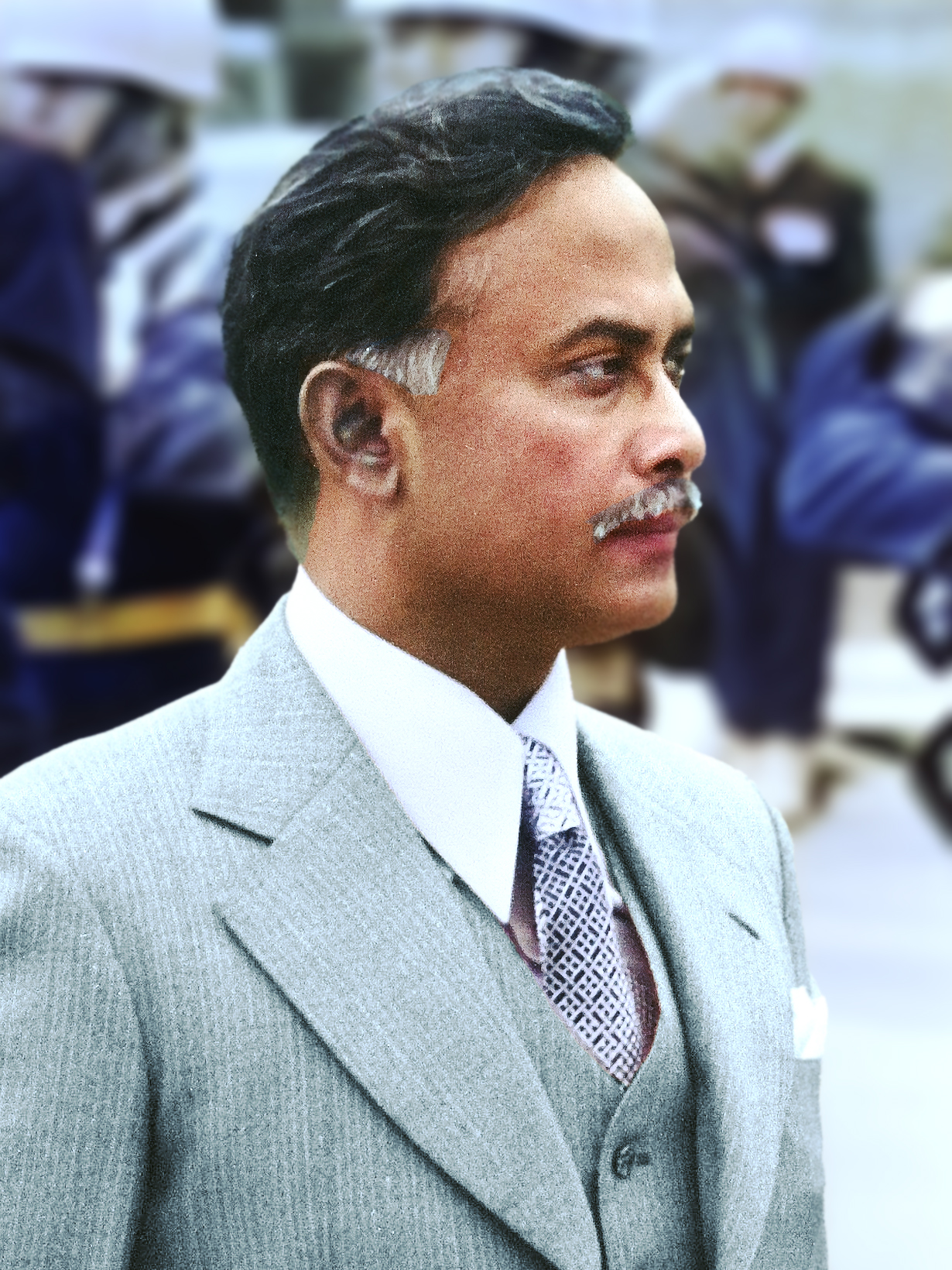
Ziaur Rahman
 Bangladesh
politician•military personnel•researcher
Birthday
+1936-01-19
Birth Sign
Capricorn
Birthplace
Bogura District
Age
Died at 45
About
Born in Bogura District on January 19, 1936, Ziaur Rahman rose from a military background to become a pivotal figure in Bangladesh's history. He was a soldier, a researcher, and ultimately, the sixth president of the nation, serving from 1977 until his untimely death on May 30, 1981. His journey through the military and political landscape shaped the course of the young nation, leaving a complex but undeniable legacy. Rahman's early military career saw him serve in the Pakistan Army, earning the Hilal-e-Jurrat for his actions during the Second Kashmir War. However, his most significant military contribution came during Bangladesh's 1971 Liberation War. As a commander, he famously broadcast the declaration of independence from Chittagong on March 27, 1971, earning him the moniker "Announcer of the Liberation." Following the war, he ascended through the ranks of the Bangladesh Army, eventually becoming its Chief of Staff. Amidst the political turmoil of 1975, he emerged as a key leader, taking de facto power and later assuming the presidency. As president, Ziaur Rahman implemented pragmatic policies aimed at economic recovery and national unity. He championed economic liberalization, initiated large-scale agricultural programs, and fostered civic nationalism. His administration also reinstated multi-party politics and freedoms of the press and speech, moving away from the previous one-party system. He played a role in the formation of the South Asian Association for Regional Cooperation (SAARC) and reoriented Bangladesh's foreign policy. Despite facing numerous coup attempts, which led to a reputation for being strict, his government's focus on economic development and a move towards Islamization resonated with many citizens. He founded the Bangladesh Nationalist Party (BNP) in 1978, which continues to be a major political force. Ziaur Rahman's life was cut short by an assassination during an attempted coup in Chittagong on May 30, 1981, at the age of 45. His tenure as president, though brief, was marked by significant efforts to stabilize and rebuild the nation. While some critics point to his suppression of opposition, many credit him with ending post-liberation disorder and laying the groundwork for economic progress. His widow, Khaleda Zia, carried on his political legacy, leading the BNP and serving multiple terms as prime minister.
Fame & Fandom
Ziaur Rahman commands a devoted following that functions less as an entertainment fandom and more as a structured political base, primarily anchored by the Bangladesh Nationalist Party he established. His supporters, often identified as Ziaurists or BNP workers, maintain his legacy through annual commemorations of his death anniversary and sustained political mobilization rather than viral social media campaigns or fan-funded projects. There is no formal name for this collective; the group operates through party infrastructure and state-sponsored memorials dedicated to the martyred president. Within this sphere, the narrative of his life serves as a foundational myth, centering on his role in the nation's liberation and the tragic circumstances of his assassination.
His enduring prominence extends beyond domestic politics into global recognition metrics. According to the iFANN Global Fame Rankings, which track attention across diverse media channels worldwide, Ziaur Rahman holds significant standing among historical figures. He is currently ranked as the 4th most famous person from Bangladesh, a position he has held steady since the previous assessment cycle. This placement reflects a consistent level of international awareness regarding his pivotal role in South Asian history. The ranking data confirms his status as a figure whose influence remains relevant decades after his passing, distinguishing him from contemporaries who have faded from public memory.
Interesting Facts and Legends
The declaration of independence broadcast over Chittagong Radio on March 27, 1971, stands as a verified historical event where Major Ziaur Rahman became the first public face of the Liberation War. While historical debates occasionally arise regarding the precise timing of the announcement compared to other leaders, the BBC record of his speech remains an undisputed fact that cemented his heroic status. Another defining chapter involves his decisive crackdown on military dissent following the 1975 assassinations; supporters recount that he executed approximately 900 soldiers involved in mutinies to restore discipline, though the specific count varies in different accounts.
The mystery surrounding his assassination on May 30, 1981, continues to generate new developments nearly half a century later. In July 2026, investigators arrested a fugitive linked to the removal of the president's body, while retired army majors faced scheduled trials under military law for their alleged roles in the conspiracy. These ongoing legal proceedings keep the story of his martyrdom alive, transforming the event from a static historical tragedy into a living narrative of unresolved justice that fuels the devotion of his followers.
Death & Aftermath
Died
+1981-05-30 (aged 45)
Death Place
Chittagong, Bangladesh
Cause of Death
Assassination by gunshot wounds
On the evening of May 30, 1981, Ziaur Rahman stood at a podium in Kalurghat Stadium within Chittagong to address a gathering commemorating the fifth anniversary of his accession to power. Immediately following this final public appearance, soldiers from the 2nd East Bengal Regiment opened fire on him as he moved toward his vehicle, inflicting gunshot wounds to the chest and head that proved fatal before he could reach the Combined Military Hospital. The official cause of death was recorded as assassination by gunshot wounds based on immediate police investigation and medical examination, though historical accounts have occasionally suggested broader conspiratorial elements without judicial confirmation. A military tribunal swiftly tried six individuals for the murder, resulting in their execution by hanging on June 12, 1981, while subsequent decades saw political attempts to reopen the case for alleged masterminds remain unproven in court.
The nation observed a moment of silence with flags flown at half-mast, and tributes arrived from international leaders including the United Nations Secretary-General and heads of state from India, Pakistan, China, and the United States. Spontaneous vigils occurred across Bangladesh, and the event galvanized support for the Bangladesh Nationalist Party, which established May 30th as Shaheed Ziaur Rahman Day. His funeral took place the following day in Dhaka, drawing hundreds of thousands of mourners for a procession that concluded with burial at the Mazar-e-Ziaur Rahman in Dhanmondi adjacent to his family home. Posthumously, he was awarded the title of Shaheed.
Awards & Accolades
Keywords
Quick Facts
- Profession
- politician, military personnel, researcher
- Born
- +1936-01-19
- Birthplace
- Bogura District
- Died
- +1981-05-30
- Death Place
- Chittagong
- Gender
- Male
- Spouse
- Khaleda Zia
- Birth Sign
- Capricorn
Personal Details
- Spouse
- Khaleda Zia
Join the community
fans discussing