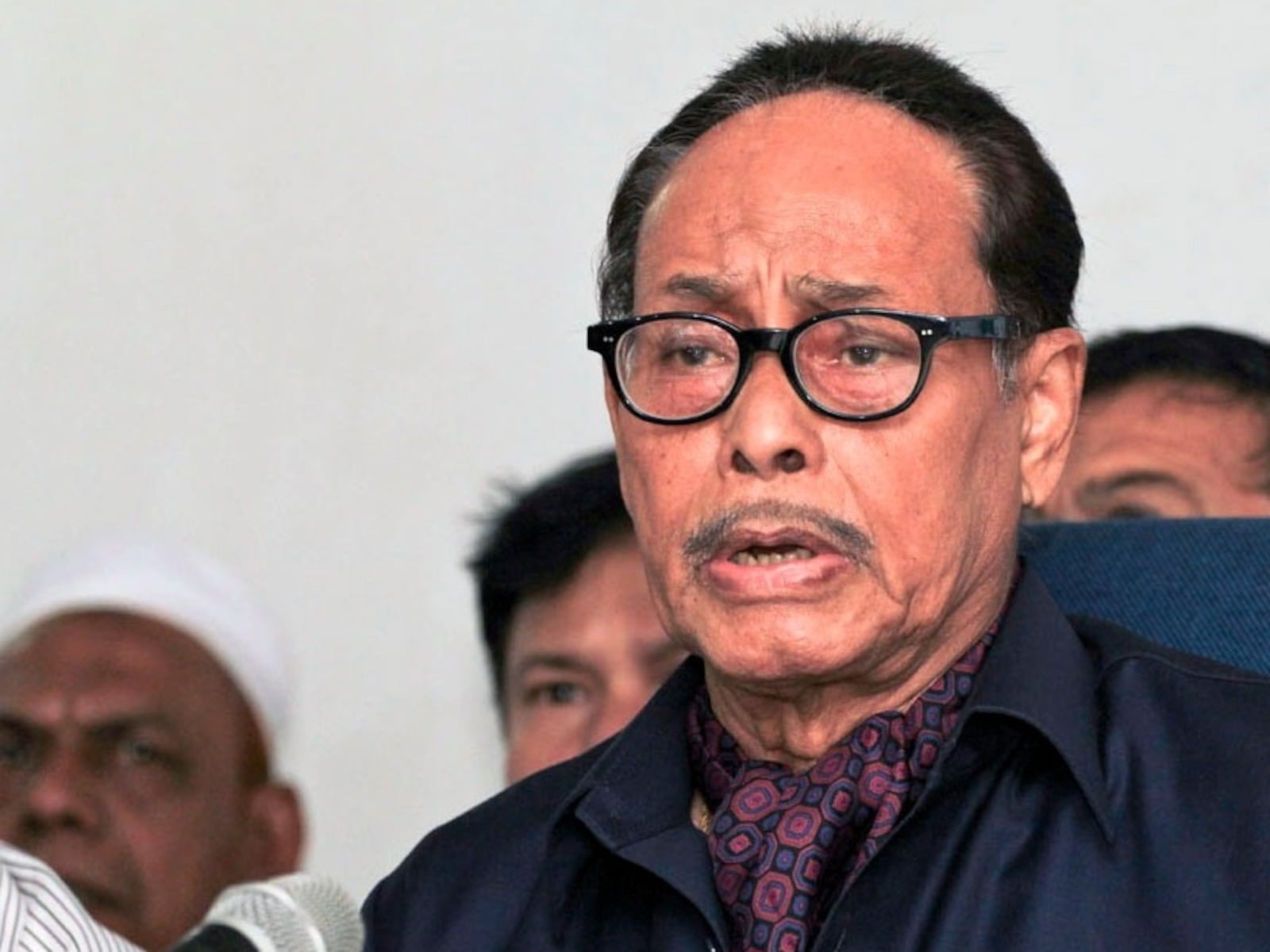
Hussain Muhammad Ershad
 Bangladesh
Also known as: General H.M. Ershad, Hussain Muhammad Ershad
Birthday
February 1, 1930
Birth Sign
Aquarius
Birthplace
Dinhata, British India (now West Bengal, India)
Age
Died at 89
About
Hussain Muhammad Ershad was a Bangladeshi military officer and politician who served as the seventh President of Bangladesh from 1983 to 1990. Born on February 1, 1930, in Dinhata, he seized power through a bloodless coup on March 24, 1982, imposing martial law and ruling until his resignation in December 1990 following mass protests. He died on July 14, 2019, at the age of 89 in Dhaka, Bangladesh. Ershad formally declared himself president in 1983 after serving as Chief Martial Law Administrator. His tenure saw significant infrastructure development and the controversial designation of Islam as the state religion in 1988. His time in office remains the longest for any male leader in Bangladesh's history.
Early Life & Background
Hussain Muhammad Ershad was born on February 1, 1930, in the village of Harirampur in the Gaibandha district of Rangpur, then part of the Rajshahi Division in British India. His birth name was Hussain Muhammad Ershad. He completed his early education locally before moving to Dhaka for higher studies. He graduated from the University of Dhaka in 1950 with a degree in arts. In 1952, he was commissioned into the Pakistan Army after completing training at the Pakistan Military Academy in Kakul. His early career was shaped by the partition of India and the subsequent political landscape of Pakistan. After joining the army, he rose through the ranks, serving in various capacities including in the Indo-Pakistani War of 1965 and the Bangladesh Liberation War of 1971. During the liberation war, he was stationed in East Pakistan (now Bangladesh) and eventually defected to the Mukti Bahini (freedom fighters) after the Pakistani surrender, though his exact role during the war remains a subject of historical debate. Following independence, he continued his service in the newly formed Bangladesh Army, rising to the rank of Lieutenant General. His transition from military to politics began in earnest after the assassination of President Ziaur Rahman in 1981, when he became the Chief of Army Staff and subsequently staged the coup in 1982. This period marked the end of his military career and the beginning of his political dominance.
Career Growth
On March 24, 1982, Ershad staged a bloodless coup, assuming power as Chief Martial Law Administrator (CMLA). He formally declared himself President of Bangladesh in December 1983. In 1986, he won the presidential election, which was widely considered disputed, and founded the Jatiya Party. That same year, he oversaw the adoption of the Eighth Amendment to the Constitution, which designated Islam as the state religion. His presidency concluded following a massive popular uprising led by student groups and opposition parties in December 1990, ending seven years of martial law. Despite losing the presidency, Ershad remained a powerful figure in Bangladeshi politics. From 1991 until his death, he served as a Member of Parliament for the Rangpur-3 constituency, winning re-election in the 1996, 2001, 2008, and 2014 general elections. His tenure as head of government was the longest for any male leader in Bangladesh's history, and his administration is credited with significant improvements in rural infrastructure, including road networks and electrification.
Career Timeline
Public Image & Style
Ershad is portrayed in media as a polarizing figure: a military dictator who brought stability and infrastructure but at the cost of democracy and human rights. His image is one of a powerful, sometimes ruthless leader who ultimately fell to the will of the people. He was known for his theatrical style of governance, often using grandiose rhetoric and public appearances to project strength. His legacy is defined by the contrast between his infrastructure achievements and the suspension of democratic processes during his seven-year rule.
Fame & Fandom (iFAMOUS Rankings)
According to the August 2026 data from the iFANN Global Fame Rankings, Hussain Muhammad Ershad holds the position of the 71st most famous person in Bangladesh, a standing that has held steady since the previous cycle. This placement reflects a legacy defined less by celebrity adoration and more by the sheer magnitude of his political disruption. His story anchors a specific era of South Asian authoritarianism, ensuring his visibility persists long after the ink dried on his resignation papers.
Despite this enduring recognition, Ershad does not command a fandom in the traditional sense. There is no organized fanbase, no rituals, and no collective chants echoing his name like those for modern entertainers or pop icons. The public relationship he forged was one of conflict rather than devotion. He was toppled by a historic student-led movement known as the Anti-Authoritarian Movement, an event that cemented his image as a deposed dictator rather than a beloved figure. While his family faces legal scrutiny in recent years, these events do not generate a new wave of supporters. Instead, the world remembers him as the man who ruled through martial law and lost it to the streets.
Interesting Facts and Legends
Hussain Muhammad Ershad's name "Ershad" means "guidance" or "direction" in Arabic. Despite his authoritarian rule, his administration is credited with significant improvements in rural infrastructure, including road networks and electrification. He played a crucial role as a "kingmaker" in Bangladeshi politics after his fall from power, influencing elections and forming coalitions for decades. The most iconic moment defining his legend is the 1990 Mass Uprising, where students and political parties mobilized to overthrow his regime after seven years of martial law. Recent legal developments involving his family, such as the 2026 sentencing of his ex-wife Bidisha Ershad for fraud related to a flat sale case, serve as contemporary footnotes to his storied but controversial life.
Notable Quotes
“I am not a dictator; I am a soldier who took responsibility.”
“Democracy is not a luxury; it is a necessity.”
Family & Personal Life
Ershad was married twice. His first wife was Rowshan Ershad, with whom he had several children, including Tanvir Ershad and Tahmina Ershad. Rowshan Ershad remained a prominent figure in Bangladeshi politics and social work. She passed away prior to Hussain's death. His second wife was Bidisha Siddique, a former actress and model, whom he married later in life. Their marriage ended in separation and divorce. As of 2026, Bidisha Siddique has been involved in significant legal troubles, including being arrested and jailed in a fraud case related to a flat sale transaction from 2008.
Notable Connections
Rowshan Ershad, Bidisha Siddique, Ziaur Rahman, Khaleda Zia, Sheikh Hasina, Tanvir Ershad, Tahmina Ershad.
Relationships & Dating History
Hussain Muhammad Ershad was married twice. His first wife was Rowshan Ershad, with whom he had several children. They were married during his presidency and early post-presidency. Rowshan Ershad remained a prominent figure in Bangladeshi politics and social work. She passed away prior to Hussain's death, leaving him widowed. The couple had multiple children together, including Tanvir Ershad and Tahmina Ershad.
His second wife was Bidisha Siddique, a former actress and model, whom he married later in life. Their relationship was highly publicized due to her background and their shared political activities. However, their marriage ended in separation and divorce. As of 2026, she is referred to as his ex-wife. Bidisha Siddique has been involved in significant legal troubles, including being arrested and jailed in a fraud case related to a flat sale transaction from 2008. At the time of his death, Ershad was widowed and separated from his second wife.
- MarriedRowshan ErshadFirst wife; predeceased him; had multiple children.
- DivorcedBidisha SiddiqueSecond wife; former actress; divorced; involved in 2026 fraud case.
Death & Aftermath
Died
July 14, 2019 (aged 89)
Death Place
Dhaka, Bangladesh
Cause of Death
Age-related health complications
Hussain Muhammad Ershad passed away on July 14, 2019, at the Combined Military Hospital in Dhaka. He was 89 years old at the time of his death. The hospital issued an official statement confirming that he died after a prolonged illness linked to age-related health issues. No autopsy was publicly released, and the cause was determined by medical staff based on his long-standing conditions. Tributes poured in from political peers and international media outlets, reflecting a complex legacy that spanned decades of South Asian history.
The former president's final days were spent receiving treatment surrounded by family and close associates. A low-key private ceremony marked his burial in the family graveyard in Savar, near Dhaka. The event was attended by family members, Jatiya Party allies, and political friends, but it lacked the grand state funeral spectacles seen during his rule or the massive protests that once defined his era. The gathering focused on the immediate family and the historical weight of his departure rather than public performances.
Posthumous developments quickly shifted focus to legal entanglements involving his second wife, Bidisha Siddique. She faced arrest and jailing over fraud cases related to the misappropriation of funds from 2008, keeping the family's financial affairs in the public eye. These proceedings concerned her personal liabilities rather than the circumstances of Ershad's natural passing, ensuring no legal disputes arose regarding the cause or timing of his death.
Net Worth (Estate Value)
$5 Million
iFANN Editorial Team estimate
iFANN Editorial Team estimates Hussain Muhammad Ershad's estate value at approximately $5 million as of 2026. This figure reflects the assets held at the time of his death in 2019, derived from his military career salary, presidential allowances, and business ventures. Specific figures for his personal net worth are not consistently reported in credible financial databases as they would be for living celebrities. However, given his position as a military dictator and president, he accumulated significant wealth through official salaries, allowances, and potential unofficial means. The estate value is difficult to quantify precisely due to the passage of time and legal disputes involving his family. Recent legal context includes the 2026 fraud case involving his ex-wife Bidisha, highlighting that the family retains assets such as real estate that are subject to legal scrutiny.
Awards Won (3)
Ershad received various commendations during his service in the Pakistan Army and Bangladesh Army. As President, he conferred national awards upon others. He himself received the highest civilian honors of Bangladesh, though specific names of awards won by him are not prominently listed in standard biographical summaries compared to his political titles.
1991
2008
Known For
President of Bangladesh
1983 · Political Leader
Chief Martial Law Administrator
1982 · Military Ruler
Keywords
Sources
Quick Facts
- Profession
- politician, military officer
- Born
- February 1, 1930
- Birthplace
- Dinhata
- Died
- July 14, 2019
- Death Place
- Dhaka
- Gender
- Male
- Spouse
- Rowshan Ershad, Bidisha Siddique
- Birth Sign
- Aquarius
Personal Details
- Full Name
- Hussain Muhammad Ershad
- Spouse
- Rowshan Ershad (deceased), Bidisha Siddique (divorced)
- Children
- Tanvir Ershad, Tahmina Ershad, and others
- Education
- University of Dhaka (B.A., 1950); Pakistan Military Academy (1952)
Frequently Asked Questions
How did Hussain Muhammad Ershad die?
What was Hussain Muhammad Ershad's role in Bangladesh's history?
Who was Hussain Muhammad Ershad's wife?
Did Hussain Muhammad Ershad have children?
Why was Hussain Muhammad Ershad forced to resign?
Similar People
Join the community
fans discussing