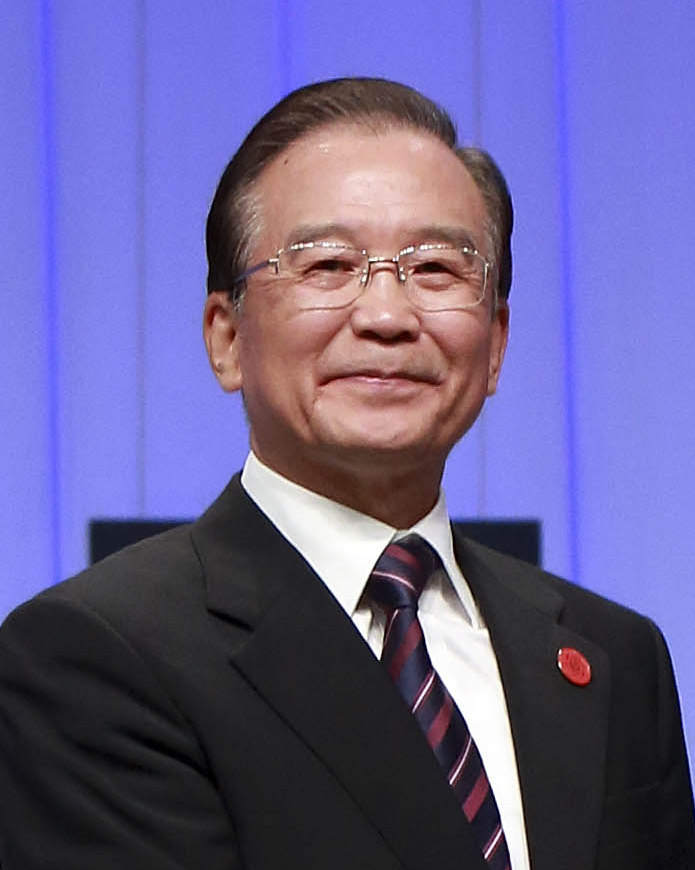
Wen Jiabao
 China
ChinaAlso known as: Wen Jiabao, 溫家寶, Wen Jiabao
Birthday
September 15, 1942
Birth Sign
Virgo
Birthplace
Tianjin, China
Age
83 years old
About
Wen Jiabao is a retired Chinese politician who served as the Premier of China from 2003 to 2013. Born in Tianjin in 1942, he rose through the ranks of the Chinese Communist Party to become the country's top government official, known for his focus on rural development and his hands-on response to national crises.
As premier, Wen oversaw a period of rapid economic growth, steering China through the 2008 global financial crisis with a massive stimulus package. His tenure also included the response to the 2008 Sichuan earthquake, where his on-the-ground presence earned him a reputation as a compassionate leader. He left office in 2013, succeeded by Li Keqiang.
Wen's public image was that of a humble, approachable official, often seen in simple attire and meeting ordinary citizens. He was also known for his speeches referencing his own difficult childhood, which resonated with many Chinese people. His legacy, however, is complicated by reports of his family's hidden wealth, which he later expressed regret over.
Early Life & Background
Wen Jiabao was born on September 15, 1942, in the Beichen District of Tianjin, China. His father was a schoolteacher, and the family lived in poverty. His childhood was marked by the turmoil of the Sino-Japanese War and the Chinese Civil War. During the war, his family's home and school were burned down, and his grandfather was shot. These experiences shaped his worldview and later informed his political rhetoric.
Despite the hardships, Wen excelled academically. He attended Nankai High School, the same school that China's first premier, Zhou Enlai, had attended. After graduating, he went on to study at the Beijing Institute of Geology, where he earned a graduate degree in structural geology in 1968. He also studied at the China University of Geosciences, obtaining both bachelor's and master's degrees.
After completing his education, Wen began his career in 1968 as a technician and political instructor at the Gansu Provincial Geological Bureau. He spent over a decade in Gansu, working in geological exploration and rising through the ranks. His work there caught the attention of party leaders, leading to his transfer to the Ministry of Geology and Mineral Resources in 1982.
Career Growth
Wen Jiabao's rise to the top of Chinese politics was steady and methodical. In 1985, he was appointed deputy director of the General Office of the CCP Central Committee, and a year later, he became its director, a position he held until 1992. This role placed him in close proximity to several party general secretaries, including Hu Yaobang, Zhao Ziyang, Jiang Zemin, and Hu Jintao, and allowed him to navigate the complex political landscape of the era.
In 1998, Wen was appointed Vice Premier, with a portfolio that included agriculture, finance, and environmental policy. He became the third-ranking member of the Politburo Standing Committee in 2002, and in March 2003, he succeeded Zhu Rongji as Premier. His tenure was marked by a focus on rebalancing the economy, reducing the tax burden on farmers, and increasing investment in rural infrastructure.
Wen's leadership was tested by several major crises. During the 2003 SARS epidemic, he took a visible role in managing the outbreak. In 2008, he visited the epicenter of the Sichuan earthquake within hours, a moment that became iconic. Later that year, as the global financial crisis hit, his government launched a 4 trillion yuan stimulus package. He served two full terms and stepped down in 2013.
Career Timeline
Public Image & Style
Wen Jiabao cultivated a public image as a 'man of the people.' He was known for his simple attire, often appearing in a worn green jacket, and for his willingness to meet with ordinary citizens. His response to the 2008 Sichuan earthquake, where he visited the disaster zone and comforted survivors, solidified his reputation as a compassionate leader.
In the media, Wen was often portrayed as a proponent of political reform within the Chinese Communist Party, though his actual record was more cautious. He was seen as a contrast to some of his predecessors, with a more approachable and emotional style. His speeches frequently referenced his own difficult childhood, which helped him connect with many Chinese people.
However, his image was tarnished by reports of his family's hidden wealth, which contradicted his humble persona. Despite this, he remained popular among many Chinese citizens, who appreciated his efforts to address rural poverty and improve social welfare.
Fame & Fandom
Wen Jiabao commands a unique space in global recognition, bridging the gap between historical statesmanship and enduring public memory without the trappings of traditional celebrity culture. Unlike pop icons who rely on fan clubs or viral moments, his audience consists of citizens and observers who track political legacies and governance styles. There is no formal fandom name for his supporters; instead, his following is defined by a shared appreciation for his tenure as Premier and the specific narratives surrounding his leadership style. While he lacks the chaotic adoration seen in entertainment sectors, his presence remains significant enough to secure a spot among the world's most notable figures. This distinction places him firmly within the iFANN Global Fame Rankings, where his influence is measured against a broad spectrum of global attention. He is currently ranked as the 28th most famous person in China, a position that reflects his deep resonance within the nation. Furthermore, across all origins, he holds the standing of the 86th most famous person from China. These placements highlight how his legacy continues to be studied and remembered decades after leaving office, cementing his status through consistent historical relevance rather than fleeting trends.
Interesting Facts and Legends
Long before his retirement, Wen Jiabao cultivated an image of simplicity that became legendary. He was an avid reader who frequently quoted classical Chinese poetry during official speeches and held a deep passion for geology, the subject he studied at university. A devoted player of the Chinese game Go, he often cited 'The Romance of the Three Kingdoms' as his favorite book. His daily habits reinforced this down-to-earth persona; he famously wore a worn green jacket that became a symbol of his humility and carried his own water bottle to high-level meetings. One story people still retell involves his response to the 2008 Sichuan earthquake. Rather than issuing statements from Beijing, he traveled directly to the disaster zone, inspecting damaged schools and comforting survivors with a visible compassion that defined his public image. Another chapter of his lore involves the economic challenges he navigated, including steering China through the 2008 global financial crisis with a massive stimulus package. In later years, a darker narrative emerged regarding allegations of family wealth, which stands in stark contrast to his personal lifestyle of modesty. These events, both the compassionate visits and the controversies, form the core of his post-retirement mythology.
Notable Quotes
“I spent my childhood mostly in the smoke and fire of war. I was not as fortunate as you as a child.”
“Focus on economic development and work sincerely to serve the interests of the people.”
“Failing to persuade my children not to do business is a significant mistake of mine. It's my biggest regret in life.”
Family & Personal Life
Wen Jiabao has been married to Zhang Peili, and together they have two children. His wife has largely stayed out of the public eye, but reports have suggested that she and other relatives controlled assets worth at least $2.7 billion during his premiership. These reports, which surfaced in 2012, were a source of controversy and later led Wen to express regret over his children's business activities.
Wen's family background was humble. His father was a schoolteacher, and the family experienced poverty during his childhood. He has spoken about the hardships his family faced during the war, including the burning of their home and the death of his grandfather. These experiences instilled in him a deep empathy for ordinary people, which he often referenced in his public addresses.
Notable Connections
Wen Jiabao worked closely with several key figures in the Chinese Communist Party. He served alongside General Secretary Hu Jintao, and his predecessor as premier was Zhu Rongji. He was succeeded by Li Keqiang. Earlier in his career, he worked under party general secretaries Hu Yaobang, Zhao Ziyang, and Jiang Zemin.
Relationships & Dating History
Wen Jiabao has been married to Zhang Peili for most of his adult life. The couple has two children together. Zhang Peili has largely remained out of the public eye, and little is known about their personal relationship. They are still married as of 2026.
There have been no public reports of any other significant relationships in Wen's life. His marriage appears to have been stable and private, with his wife occasionally appearing at official functions. The couple's children have also stayed mostly out of the spotlight, though their business dealings have been a source of controversy.
- MarriedZhang Peili1968 - presentCurrentWen's wife, with whom he has two children.
Salary, Net Worth In 2026
$1.5 Million
iFANN Editorial Team estimate
While Wen Jiabao's official salary as a government official was modest, reports have suggested that his family accumulated significant wealth during his time in office. In 2012, the New York Times reported that his relatives, including his wife, controlled assets worth at least $2.7 billion. These reports were never fully confirmed, but they cast a shadow over his legacy. In 2016, Wen expressed regret over his children's business activities in China, calling it his biggest regret. Per iFANN's editorial analysis, the retired leader's current net worth is estimated to be around $1.5 Million, a figure consistent with a pension and savings as of 2026. However, the true extent of his family's wealth remains unclear.
Awards Won (2)
Wen Jiabao did not receive traditional entertainment or arts awards, as his career was in politics. However, he was honored with several honorary degrees and other distinctions in recognition of his leadership and public service. In 2003, he received an honorary doctorate from Harvard University, and in 2012, he was named one of the 100 most influential people by TIME magazine.
2003 · Honorary Degree
Harvard University
2012 · Influence
TIME Magazine
Known For
Premier of China
2003-2013 · Premier
Response to 2008 Sichuan earthquake
2008 · Leader
Economic stimulus during global financial crisis
2008-2009 · Architect
Keywords
Sources
Quick Facts
- Profession
- politician, geologist, economist
- Born
- +1942-09-15
- Birthplace
- Tianjin
- Gender
- Male
- Spouse
- Zhang Peili
- Birth Sign
- Virgo
Personal Details
- Full Name
- Wen Jiabao
- Spouse
- Zhang Peili
- Children
- 2
- Education
- Beijing Institute of Geology (graduate degree in structural geology, 1968); China University of Geosciences (bachelor's and master's degrees)
Frequently Asked Questions
Who is Wen Jiabao?
What is Wen Jiabao's net worth in 2026?
Is Wen Jiabao still alive in 2026?
What is Wen Jiabao best known for?
How did Wen Jiabao respond to the 2008 Sichuan earthquake?
Join the community
fans discussing