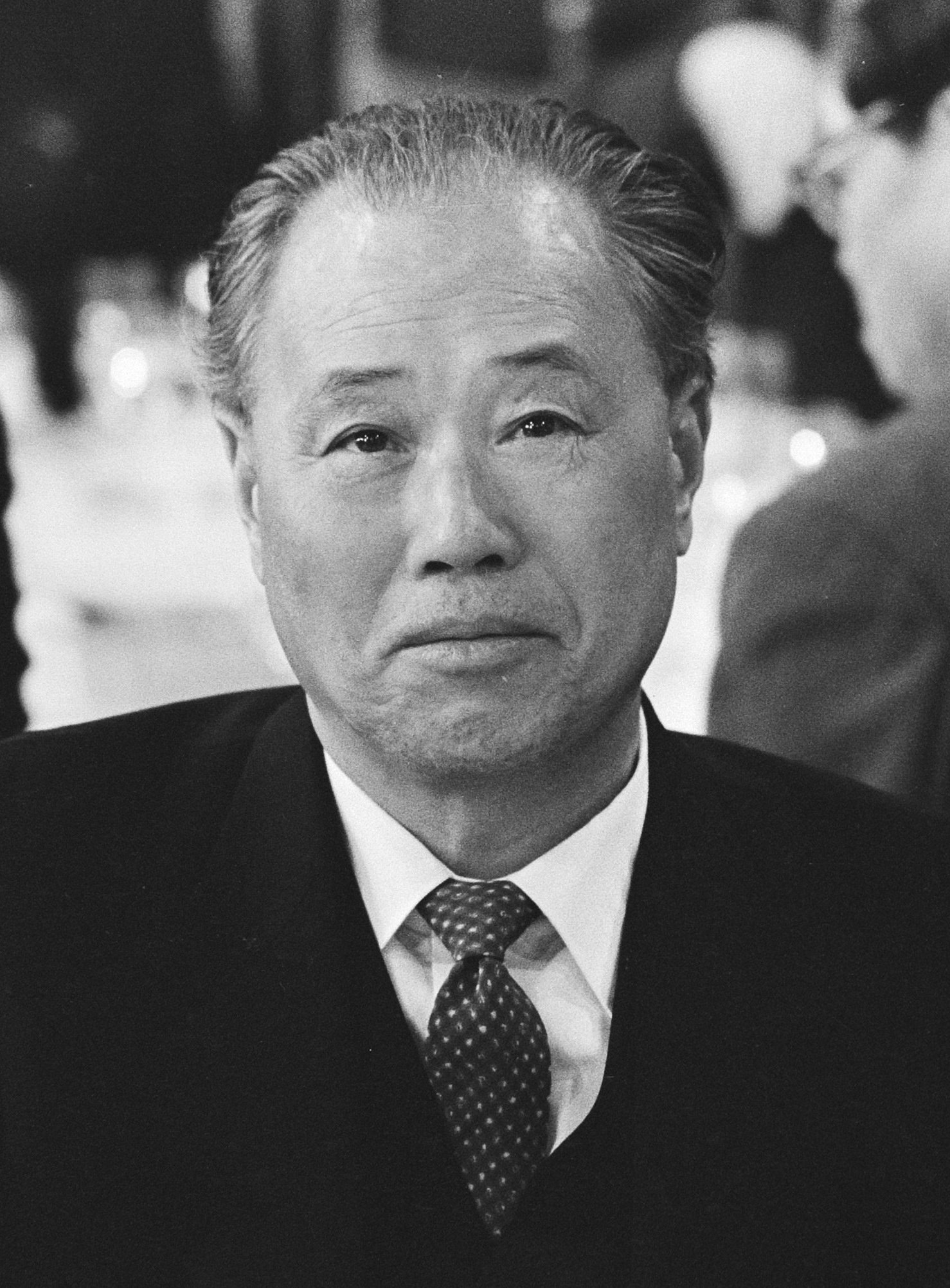
Zhao Ziyang
 China
ChinaBirthday
+1919-10-17
Birth Sign
Libra
Birthplace
Hua County
Age
Died at 85
About
Born in Hua County on October 17, 1919, Zhao Ziyang became a prominent figure in Chinese politics. His career, which spanned decades, saw him rise through the ranks of the Chinese Communist Party (CCP). Zhao played a significant role in shaping China's economic policies, particularly during the reform era. Zhao's political journey began in earnest when he joined the CCP in February 1938. He held various leadership positions during the tumultuous years of the Second Sino-Japanese War and the Chinese Civil War. Following the establishment of the People's Republic of China, he continued to climb, serving in key roles within the Guangdong Provincial Committee. His early career was interrupted by the Cultural Revolution, during which he faced persecution and political exile. After his rehabilitation, Zhao's influence grew, leading to appointments in regions like Inner Mongolia and Sichuan, and eventually to national prominence. He is perhaps best known for his work as premier of China from 1980 to 1987 and later as the general secretary of the CCP from 1987 to 1989. Zhao was a strong advocate for market-oriented economic reforms, pushing for the privatization of state-owned enterprises and advocating for a clearer separation between the party and the state. His efforts aimed to streamline bureaucracy and combat corruption. However, his political career took a sharp turn when he supported the student-led protests in Tiananmen Square in 1989. This stance led to his downfall, and he was subsequently placed under house arrest for the remainder of his life. Zhao Ziyang died on January 17, 2005, at the age of 85, his later years marked by a quiet opposition to the party's direction. His secret memoirs, published posthumously in 2009, offered a rare glimpse into his thoughts and experiences, though details remain censored within China.
Fame & Fandom
Zhao Ziyang's public legacy, unlike that of entertainers or athletes, has not generated a formal fanbase with a recognized name. His supporters, scattered and often silent during his lifetime, have no organized fandom, no coordinated campaigns, and no shared rituals in the manner of celebrity culture. The admiration he inspires is expressed through historical remembrance and political reflection rather than fan projects.
In the context of global fame, Zhao Ziyang holds a notable position. According to the iFANN Global Fame Rankings, he is currently the 38th most famous person in China, down from 36th in the previous cycle. On a global scale, his fame extends beyond national borders, and he is also recognized as the 66th most famous person from China, a ranking that has remained steady. These placements reflect his enduring recognition in the public consciousness, tracked across a wide array of media and cultural signals worldwide.
Interesting Facts and Legends
Zhao Ziyang's life was marked by moments that have become part of political lore. His most iconic act occurred when he visited hunger-striking students in Tiananmen Square and, with tears, told them, "We came too late." This moment, captured on video, has been widely shared and recounted as a symbol of his empathy and his opposition to the use of force. Another significant event was his 1987 interview with NBC's Meet the Press, his first with American media, which remains a notable archival piece. After his purge, he spent years under house arrest, during which he secretly recorded memoirs that were later smuggled out and published in 2009, offering his personal account of the Tiananmen events. His death in 2005 was followed by a 14-year delay before his burial, which finally took place in 2019 in a low-key ceremony attended by family, marking the end of a long and contentious period.
Death & Aftermath
Died
+2005-01-17 (aged 85)
Death Place
Beijing, China
Cause of Death
Unknown
Zhao Ziyang spent his final years in strict isolation within Beijing, having been removed from public life and placed under house arrest following his political purge in 1989. On January 17, 2005, he passed away at the age of eighty-five while residing in the capital city, though official sources never disclosed the specific medical cause or circumstances surrounding his end. Public reaction within China remained muted due to government censorship, yet family members and friends gathered in a small courtyard in Beijing to pay their respects privately. The aftermath of his passing was marked by a significant delay in formal recognition.
Although he died in early 2005, his remains were not laid to rest until October 18, 2019, nearly fifteen years later during a low-key ceremony held on the outskirts of Beijing. This burial took place roughly a century after his birth and coincided with the publication of his memoirs in May 2009, which contained denunciations of the 1989 events and praise for Western-style democracy. Internationally, Zhao was remembered as a reformist leader who had sympathized with student-led movements.
Awards & Accolades
Keywords
Quick Facts
- Profession
- politician
- Born
- +1919-10-17
- Birthplace
- Hua County
- Died
- +2005-01-17
- Death Place
- Beijing
- Gender
- Male
- Spouse
- Liang Boqi
- Birth Sign
- Libra
Personal Details
- Spouse
- Liang Boqi
Join the community
fans discussing