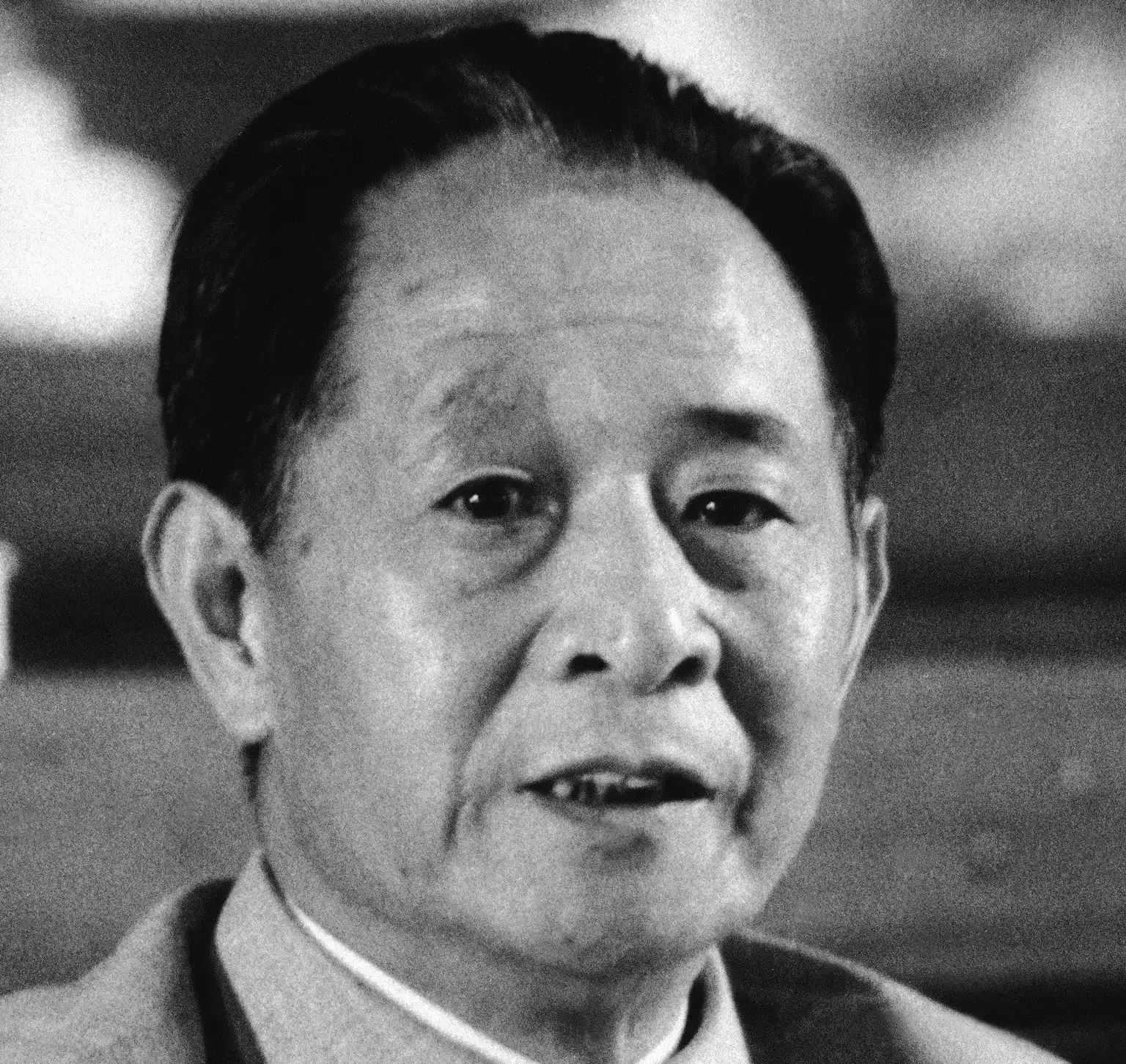
Hu Yaobang
 China
ChinaChinese Communist Party leader
Also known as: Hu Guoguang, Guoguang, Hu Yao-pang
Birthday
November 20, 1915
Birth Sign
Scorpio
Birthplace
Liuyang, Hunan, China
Age
Died at 73
About
Hu Yaobang was a Chinese Communist Party leader who served as the top official of the party from 1981 to 1987, first as Chairman and then as General Secretary. He was a central figure in the post-Mao era, driving reforms and rehabilitation efforts that reshaped China's political landscape.
Known for his populist touch and reformist zeal, Hu pushed for economic liberalization and the rights of peasants, earning him both admiration and enmity within the party. His sudden death in 1989 sparked the Tiananmen Square protests, a pivotal moment in modern Chinese history.
Today, Hu is remembered as a symbol of political openness and reform, with his legacy invoked by leaders and dissidents alike.
Early Life & Background
Hu Yaobang was born on November 20, 1915, in Liuyang, Hunan Province, into a peasant family. His birth name was Hu Guoguang, with "Yaobang" being his courtesy name; he was also known by the aliases "Guoguang" and "Hu Yao-pang" . Growing up in a period of intense political upheaval, he joined the Chinese Communist Party in the 1930s, during the revolutionary era. His early career was marked by dedication to the party's cause, rising through the ranks during the Chinese Civil War and the war against Japan.
During the Cultural Revolution (1966–1976), Hu's career was turbulent: he was purged, recalled, and purged again by Mao Zedong, reflecting the volatile political climate. Despite these setbacks, his intelligence and commitment to the party's ideals kept him in the fold.
His pre-fame years were shaped by these experiences, which later informed his reformist agenda and his desire to correct the excesses of the Cultural Revolution.
Career Growth
After Mao's death in 1976 and Deng Xiaoping's rise, Hu became a key figure in the Boluan Fanzheng program, which aimed to rehabilitate those wrongly persecuted during the Cultural Revolution. His efforts helped restore stability and justice to countless lives.
In 1981, Hu became Chairman of the CCP, and in 1982, he transitioned to General Secretary, serving until his forced resignation in early 1987. Throughout the 1980s, he pursued economic and political reforms under Deng's supervision, pushing for market-oriented changes and greater openness.
However, his reformist policies made him enemies among powerful Party elders. When student protests erupted in late 1986 and early 1987, Hu's opponents blamed his tolerance of 'bourgeois liberalization' for the unrest. Under pressure, he resigned as General Secretary in early 1987, though he retained his Politburo membership.
Career Timeline
Public Image & Style
Hu Yaobang is remembered by Chinese dissidents and liberal reformers as a symbol of political openness and reform within the CCP. His image is that of a principled reformer who advocated for peasants' rights and sought to correct the excesses of the Cultural Revolution.
International media portray him as a 'true believer' in communism who nonetheless pushed for liberalization. His legacy remains contested, with his memory invoked by both reform advocates and current leadership for different purposes.
Fame & Fandom (iFAMOUS Rankings)
Hu Yaobang's fanbase has no formal name, but its devotion runs deeper than any celebrity fandom. It is a community of Chinese intellectuals, students, and reform-minded citizens who have kept his memory alive for over three decades, turning his death anniversary into a quiet ritual of remembrance. His legacy has been so potent that even the state has harnessed it: in November 2025, Xi Jinping publicly urged Party members to emulate Hu's spirit, a remarkable canonization of a figure once associated with the Tiananmen protests. This is not a fandom of billboards or fan clubs; it is a fandom of historical memory and political symbolism, where the act of remembering is itself a statement.
In the broader landscape of global renown, Hu's fame is measurable. He is currently the 55th most famous person in China, down from 53rd last cycle, and the 68th most famous person from China, holding steady from the previous cycle. These placements come from the iFANN Global Fame Rankings, which track attention across media coverage, search, and consumption signals worldwide. For a leader who died in 1989, this enduring visibility speaks to the power of his story, a reformer who challenged orthodoxy and paid a personal price, his memory a touchstone for political debate and inspiration.
Interesting Facts and Legends
Hu Yaobang held more formal positions than any other figure in Chinese Communist history, and his exceptional populist touch was legendary, he often engaged directly with peasants and workers. His death on April 15, 1989, was the direct catalyst for the Tiananmen Square protests. The government initially censored his legacy, but lifted restrictions in 2005 on his 90th birthday. In November 2025, Xi Jinping held a symposium marking Hu's 110th birthday, praising his reformist spirit. One of the most enduring legends is that Hu died of a broken heart, devastated by his forced resignation in 1987, a story his admirers still retell, though official records do not confirm it. Another iconic narrative casts him as "the conscience of the party," a moral counterweight to more ruthless figures, a title that has become quasi-mythological. These stories, whether verified or not, have cemented his image as a reformer who questioned orthodoxies and paid a personal price for his idealism.
A widely retold story has Hu suggesting that even fundamental tenets of Party orthodoxy should be open to examination, nothing was sacred to him. His forced resignation in 1987, following student protests he was perceived as too sympathetic toward, became part of his legend as the reformer brought down by the very forces he sought to liberalize. The most iconic moment of all remains his death: spontaneous mass mourning erupted, with students carrying memorial wreaths through Tiananmen Square, an outpouring that grew into the largest pro-democracy demonstrations in Chinese history before being suppressed.
Family & Personal Life
Notable Connections
Hu Yaobang's most significant political association was with Deng Xiaoping, the paramount leader who supported his rise and whose reforms he implemented. He also had complex relationships with Mao Zedong, who purged him during the Cultural Revolution, and with the conservative Party elders who ultimately forced his resignation. In contemporary politics, Xi Jinping has invoked Hu's legacy, creating a notable political association between the two leaders.
Relationships & Dating History
Hu Yaobang was married, but details about his marriage are scarce due to the private nature of Chinese political figures' personal affairs. He was married at the time of his death in 1989.
- MarriedMarried, but details not publicly documented.
Death & Aftermath
Died
April 15, 1989 (aged 73)
Death Place
Beijing, China
Cause of Death
Heart attack
In his final years, Hu Yaobang had withdrawn from the daily machinery of power, his Politburo seat a quiet remnant of a tenure that had ended in resignation. He spent much of his time reading, reflecting on the reforms he had championed, and receiving a steady stream of visitors who still sought his counsel. On April 15, 1989, at the age of 73, he died in Beijing. The precise circumstances of his collapse, including the location and the hospital where he died, were never disclosed, leaving the official ruling as the sole public account.
The news of his death moved through the capital like a current. Within days, university students began gathering in Tiananmen Square, laying wreaths at the Monument to the People's Heroes and reading tributes to the man they saw as a champion of openness. These vigils, unsanctioned by the party, swelled into the pro-democracy movement that would occupy the square for weeks, culminating in the military crackdown of June 4. The state funeral was held on April 22 at the Great Hall of the People, a tense affair interrupted by the student protester Wu'er Kaixi, who demanded dialogue with the government. Hu's body was cremated, and his ashes were interred at the Babaoshan Revolutionary Cemetery in Beijing.
For years after, the party kept a careful silence around his memory. That changed in November 2015, when President Xi Jinping, on the centenary of Hu's birth, called him a 'communist fighter' and a 'pioneer of reform.' The rehabilitation continued into 2025, when Xi invoked Hu's legacy to rally the party for reform efforts, a move analysts read as an attempt to claim his reformist mantle while reshaping the historical narrative.
Net Worth (Estate Value)
$1 Million
iFANN Editorial Team estimate
Hu Yaobang, as a Chinese Communist Party official who died in 1989, did not accumulate personal wealth in the manner of Western celebrities or business figures. He held no personal business ventures, endorsements, or investments. Following his death, his legacy has been managed within the context of Chinese state historical narratives rather than as a commercial estate. iFANN's editorial research currently estimates his net worth at $1 million, a figure that reflects the historical value attributed to his estate and legacy rather than any active income stream.
Awards & Accolades
View 2 records, honours and achievementsKnown For
Chairman of the Chinese Communist Party
1981-1982 · Chairman
General Secretary of the Chinese Communist Party
1982-1987 · General Secretary
Keywords
Sources
Quick Facts
- Profession
- politician
- Born
- +1915-11-20
- Birthplace
- Liuyang
- Died
- +1989-04-15
- Death Place
- Beijing
- Gender
- Male
- Birth Sign
- Scorpio
Personal Details
- Full Name
- Hu Guoguang
Frequently Asked Questions
What did Hu Yaobang do?
How did Hu Yaobang die?
Why was Hu Yaobang important?
What is Hu Yaobang's relationship to Deng Xiaoping?
How is Hu Yaobang remembered today?
Join the community
fans discussing