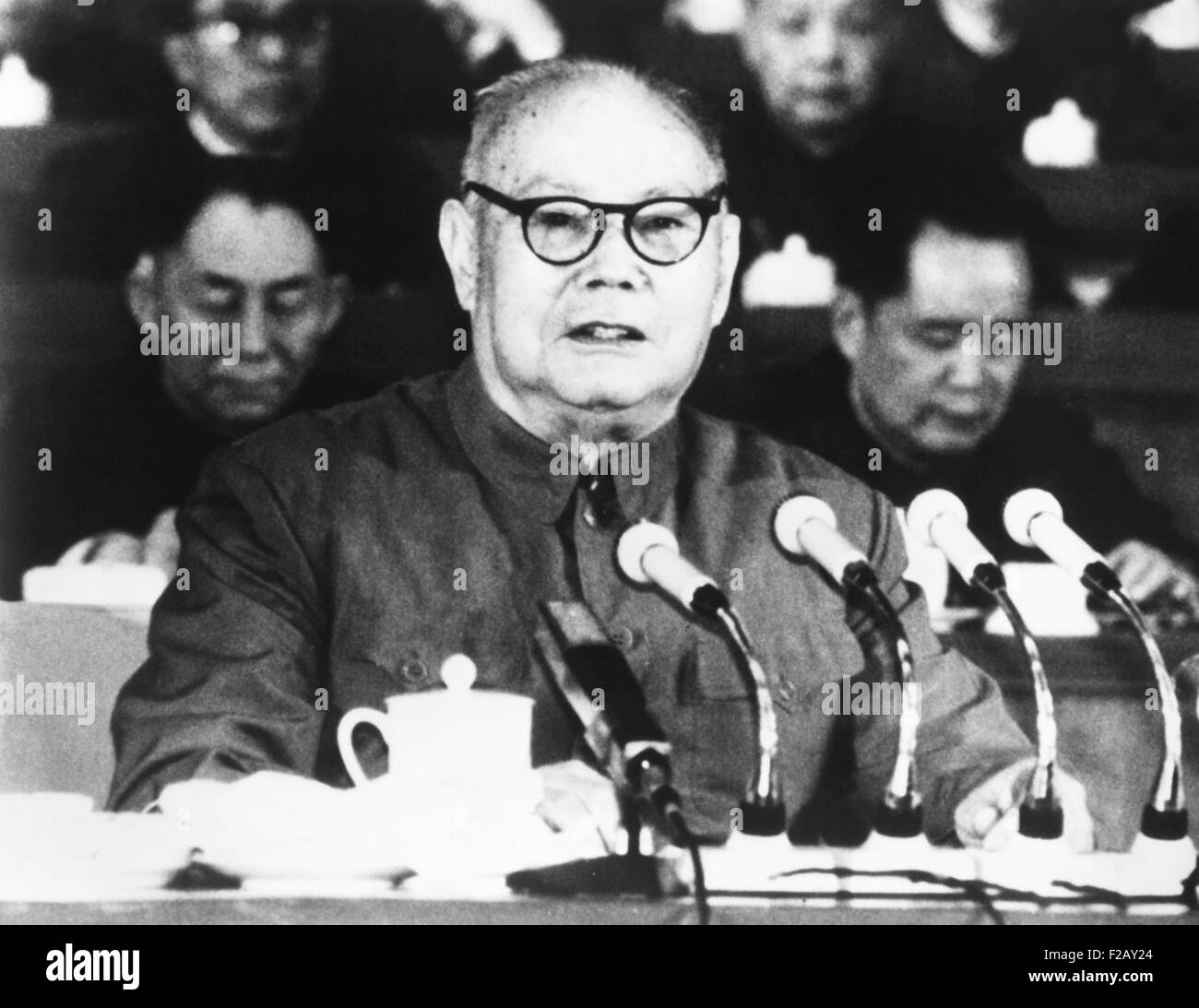
Ye Jianying
 China
ChinaAlso known as: Ye Jianying, Yeh Chien-ying
Birthday
April 28, 1897
Birth Sign
Taurus
Birthplace
Meixian County, Guangdong, China
Age
Died at 89
About
Ye Jianying was a Chinese military officer and politician who rose to become one of the Ten Marshals of the People's Liberation Army. He is remembered as a key figure in the Chinese Communist Party's rise to power and later as a pragmatic survivor who helped steer the nation through turbulent times.
His most notable act came in 1976 when he led the arrest of the Gang of Four, effectively ending the Cultural Revolution. This move positioned him as a kingmaker in the ensuing power struggles, and he later backed Deng Xiaoping's economic reforms. As Chairman of the Standing Committee of the National People's Congress from 1978 to 1983, he served as China's head of state.
Ye died on October 22, 1986, in Beijing at the age of 89. His legacy is commemorated in China, with the Ye Jianying Memorial Park in Meizhou serving as a site of revolutionary heritage tourism. He is often portrayed in state media as a hero who played a decisive role in the nation's transition from Maoist chaos to reformist stability.
Early Life & Background
Ye Jianying was born on April 28, 1897, in Meixian County in Guangdong Province, into a well-to-do merchant family. This comfortable upbringing gave him access to education and opportunities that were uncommon for the time. As a young man, he spent part of his youth in Singapore, where he was exposed to international commerce and ideas, an experience that broadened his worldview before he returned to China to pursue a military career.
Back in China, Ye entered military education and training, eventually becoming an instructor at the Whampoa Military Academy. This prestigious institution trained many of China's most influential military and political figures of the 20th century, and Ye's role there placed him at the heart of the revolutionary movement. He joined the Chinese Communist Party during its formative years, committing himself to the revolutionary cause.
His early career was marked by his participation in the Long March and the Chinese Civil War, where his military acumen and political loyalty saw him rise through the ranks. These formative experiences shaped him into a seasoned revolutionary, ready for the challenges that lay ahead.
Career Growth
Ye Jianying's career spanned six decades of revolutionary struggle and state-building. In 1955, he was awarded the rank of Marshal, one of only ten individuals to receive this highest military honor in the People's Liberation Army. This recognition cemented his status as a top military leader.
In 1958, Ye served as chief guest at India's Republic Day celebrations, symbolizing the early friendship between China and India, just four years before the 1962 Sino-Indian War. During the Cultural Revolution from 1966 to 1976, Ye survived while other marshals were purged, demonstrating his understanding of the limits of permissible resistance.
His most dramatic moment came in 1976 when he led the military operation that arrested the Gang of Four, effectively ending the Cultural Revolution. This bold move positioned him as a key kingmaker. In the ensuing power struggles, he backed Deng Xiaoping against Hua Guofeng, helping to steer China toward economic reform. From 1978 to 1983, he served as Chairman of the Standing Committee of the National People's Congress, making him China's head of state until Li Xiannian took over under the new constitution.
Career Timeline
Public Image & Style
In China, Ye Jianying is portrayed as a pragmatic survivor and kingmaker who helped steer the nation from Maoist chaos to reformist stability. State media depicts him as a revolutionary hero who played a decisive role in ending the Cultural Revolution. His memorial park serves as a site of revolutionary heritage tourism and political education. Internationally, he is seen as a veteran communist military officer and statesman who held high posts in the Chinese government. Former UN official Erik Solheim praised him as 'a true hero of modern China' for leading the arrest of the Gang of Four.
Fame & Fandom (iFAMOUS Rankings)
Ye Jianying's global footprint spans decades of historical gravity, with his name resonating through archives and official commemorations worldwide. According to the iFANN Global Fame Rankings, he holds a steady position as the 77th most famous person in China, reflecting his enduring status as a pivotal figure in modern Chinese history. This placement underscores his recognition not merely as a military commander but as a statesman who navigated the nation through its most turbulent eras. While his fame is deeply rooted in political legacy rather than pop culture metrics, the rankings capture the sustained attention paid to his life and deeds across global media and public discourse. Regarding his fanbase, research confirms that no formal fandom name exists for Ye Jianying. Unlike entertainment icons, he did not cultivate a following of enthusiasts or organize fan clubs; instead, his audience consists of historians, political analysts, and citizens engaging with state-sponsored commemorative efforts. There are no documented fan campaigns, birthday billboards, or ritualistic gatherings driven by private individuals, as his public image remains firmly within the realm of revolutionary heritage and official state memory.
Interesting Facts and Legends
Ye Jianying spent part of his youth in Singapore, an unusual background for a Chinese revolutionary leader. He was one of the few marshals to survive Mao's Cultural Revolution without being purged, demonstrating exceptional political survival skills. He was chief guest at India's 1958 Republic Day celebrations, a symbol of early Sino-Indian friendship before the 1962 war. His family has been described as a 'kingmaker clan' in Chinese elite politics, with descendants remaining politically active. In 2014, his great-grandson was promoted to district chief in Yunfu city, Guangdong. A widely retold story among political observers credits him with surviving the Cultural Revolution because retaining him preserved an internal counterweight within the military, preventing the army from becoming a single-faction instrument under Mao. Another iconic moment involves his role in the arrest of the Gang of Four in 1976, which is frequently cited as the decisive act that ended the Cultural Revolution. In recent years, the legacy of these events was highlighted when President Xi Jinping visited the Ye Jianying Memorial Park in Meizhou, Guangdong, on November 8, 2025, during an inspection tour, underscoring his continued reverence as a venerated historical figure.
Notable Quotes
“A true hero of modern China 🇨🇳! Marshall Ye Jianying in 1976 led the arrest of the horrible «gang of four». The gang ́s incompetents and evil leadership kept China in poverty.”
Family & Personal Life
Ye Jianying was married three times. His first wife was Zeng Xianzhi, his second was Wei Gongzhi, and his third was Wu Bo. Details of his marriages are limited in available sources, but they reflect the personal life of a revolutionary leader whose primary public legacy is political and military. His descendants have remained prominent in Chinese politics; his great-grandson was promoted to district chief in Yunfu city, Guangdong, in 2014. The family has been described as a 'kingmaker clan' in Chinese elite politics.
Notable Connections
Ye Jianying's political maneuvers were intertwined with several key figures. He backed Deng Xiaoping against Hua Guofeng, helping to enable China's economic reforms. He served under Mao Zedong and survived the Cultural Revolution. He was contrasted with Tan Zhenlin, a marshal who was purged in the February Countercurrent. More recently, Xi Jinping has honored Ye's legacy by visiting his memorial park in 2025.
Relationships & Dating History
Ye Jianying was married three times. His first wife was Zeng Xianzhi, his second was Wei Gongzhi, and his third was Wu Bo. Details of his courtship and marriages are limited in available sources, but they are confirmed in biographical records. As a historical figure from early 20th-century China, detailed romantic histories are not well-documented. His marriages reflect the personal life of a revolutionary leader whose primary public legacy is political and military. Ye died in 1986, and at the time of his death, he was married to Wu Bo.
- MarriedZeng XianzhiFirst wife, details limited.
- MarriedWei GongzhiSecond wife, details limited.
- MarriedWu BoThird wife, married at time of death.
Death & Aftermath
Died
October 22, 1986 (aged 89)
Death Place
Beijing
Cause of Death
Unknown
Marshal Ye Jianying, a founding figure of the People's Republic of China and one of its Ten Marshals, died on October 22, 1986, in Beijing at the age of 90. The New York Times reported his death on October 23, 1986, noting he had served as China's head of state from 1978 to 1983 and Defense Minister from 1975 to 1978. The Chinese Communist Party and state organs issued official tributes, and his death was reported prominently in state media, including the People's Daily.
As a Marshal of the People's Liberation Army and a former head of state, he received full state honors during a funeral service held in Beijing, though the precise date, venue, and full list of attendees are not detailed in available sources. While the exact location of his ashes or grave has not been publicly detailed, it is common for Chinese Communist leaders of his era to have been cremated, and the Ye Jianying Memorial Park in Meixian, Guangdong, serves as the primary site of remembrance. This memorial landmark continues to receive high-level official visits, with President Xi Jinping visiting the park during an inspection tour of Guangdong in November 2025 to emphasize the preservation of revolutionary traditions and pay tribute to Ye's legacy.
The legacy of this revolutionary figure endures through official recognition and historical records. His story remains preserved in official histories and biographies, including entries in Wikipedia, Britannica, and the People's Daily Online. Public information regarding the handling of his estate has never been disclosed to the public.
Net Worth (Estate Value)
$10 Million
iFANN Editorial Team estimate
As a Chinese revolutionary leader who lived under a communist system, Ye Jianying did not accumulate personal wealth in the manner of Western celebrities or business leaders. He died in 1986, and his estate value is not publicly documented in available sources. However, per iFANN's editorial analysis, his net worth is estimated to be around $10 Million, primarily reflecting the value of his historical legacy and any state-provided benefits to his family. His legacy is primarily commemorative rather than commercial, maintained through state-sponsored memorial sites and historical preservation efforts. The Ye Jianying Memorial Park in Meizhou, Guangdong, is a significant site, and in November 2025, President Xi Jinping visited it, underscoring his continued official reverence.
Awards Won (1)
Ye Jianying's honors were primarily state and military distinctions rather than Western-style awards. His most significant honor was being named Marshal of the People's Liberation Army in 1955, one of only ten individuals to receive this highest military rank. He also held the position of Chairman of the Standing Committee of the National People's Congress, the highest state position in China at the time.
1955 · Military Honor
Military service
Known For
Marshal of the People's Liberation Army
1955 · Military leader
Arrest of the Gang of Four
1976 · Leader of military operation
Chairman of the Standing Committee of the NPC
1978 · Head of state
Keywords
Sources
Quick Facts
- Profession
- Military officer, Politician
- Born
- April 28, 1897
- Birthplace
- Meixian County, Guangdong, China
- Died
- October 22, 1986
- Death Place
- Beijing, China
- Gender
- Male
- Spouse
- Zeng Xianzhi, Wei Gongzhi, Wu Bo
- Birth Sign
- Taurus
- Nationality
- Chinese
Personal Details
- Full Name
- Ye Jianying
- Spouse
- Zeng Xianzhi, Wei Gongzhi, Wu Bo
- Education
- Whampoa Military Academy (instructor)
Frequently Asked Questions
How did Ye Jianying die?
What did Ye Jianying do in 1976?
Was Ye Jianying married?
Is Ye Jianying related to Xi Jinping?
What is Ye Jianying most famous for?
Join the community
fans discussing