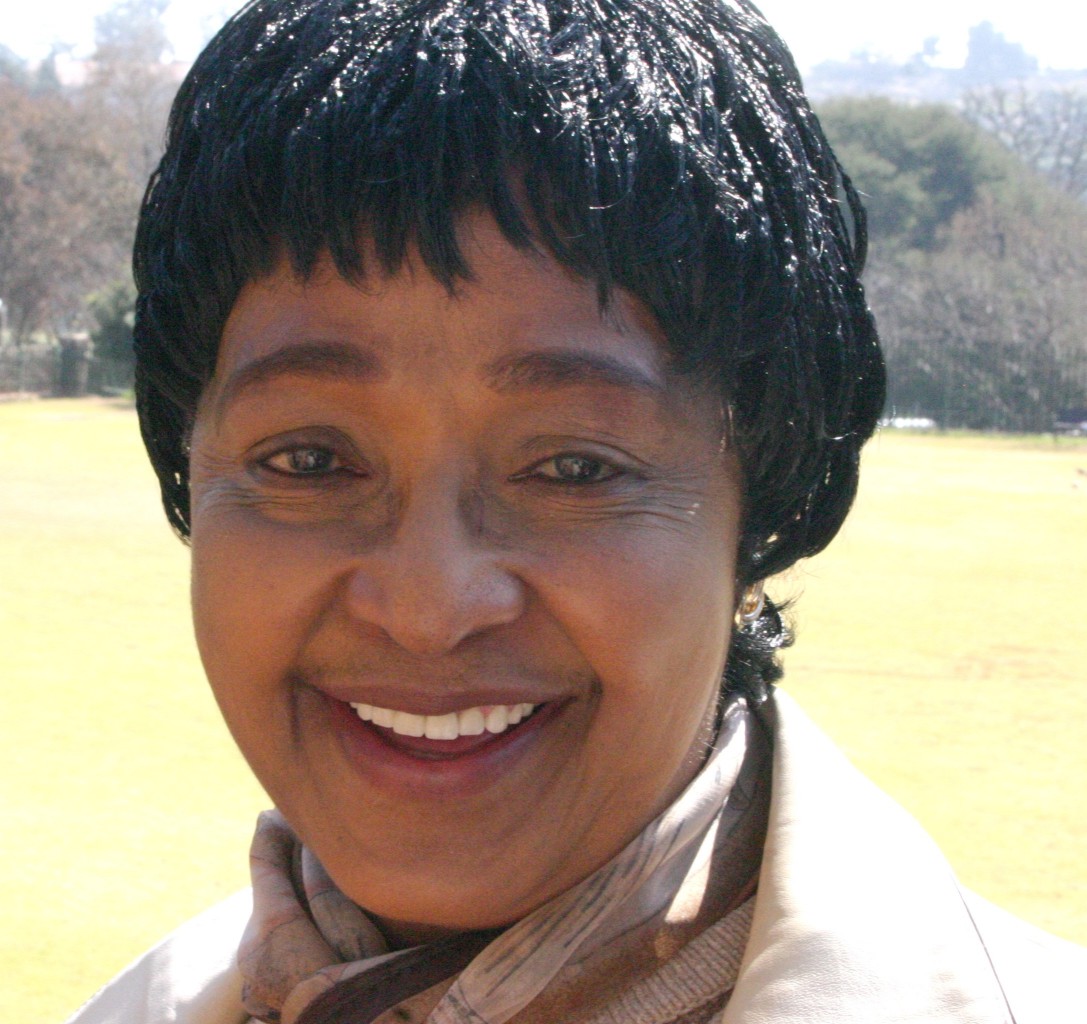
Winnie Madikizela-Mandela
 South Africa
Birthday
+1936-09-26
Birth Sign
Sagittarius
Birthplace
Bizana
Age
Died at 81
About
Winnie Madikizela-Mandela, born Nomzamo Winifred Zanyiwe Madikizela on 26 September 1936 in Bizana, South Africa, was a politician, anti-apartheid activist, and the second wife of Nelson Mandela. Known to supporters as the "Mother of the Nation," she served as a Member of Parliament from 1994 to 2003 and again from 2009 until her death in 2018. She also held the post of deputy minister of arts and culture from 1994 to 1996. A lifelong member of the African National Congress (ANC), she sat on its National Executive Committee and led its Women's League. Her political journey was marked by fierce resistance to apartheid, personal sacrifice, and later, controversy that tested her legacy. After training as a social worker, Madikizela-Mandela married Nelson Mandela in Johannesburg in 1958. The couple had two children and remained married for 38 years, though much of that time was spent apart. When Nelson was imprisoned in 1963 following the Rivonia Trial, she became his public face during his 27 years behind bars. She rose to prominence in the domestic anti-apartheid movement, enduring detention, torture, banning orders, and banishment to a rural town, including months in solitary confinement. Her resilience made her a symbol of resistance, but the 1980s brought a darker chapter. Her security detail, the Mandela United Football Club, was implicated in kidnappings, torture, and murder, including the killing of 14-year-old Stompie Seipei. The Truth and Reconciliation Commission later held her "politically and morally accountable" for these abuses, and she endorsed the practice of necklacing suspected informers. Her home in Soweto was burned down by residents during this period. Nelson Mandela's release from prison in 1990 led to their separation in 1992 and divorce in 1996, though she remained active in the ANC. She served in the post-apartheid government until dismissed amid corruption allegations, and in 2003 she was convicted of theft and fraud, temporarily withdrawing from politics. She returned to public life, serving as an MP again from 2009 until her death on 2 April 2018, at age 81. Her life inspired the biography Winnie Mandela: A Life by Anné Mariè du Preez Bezdrob, published in 2003. Madikizela-Mandela's story is one of immense courage and profound contradictions, leaving an enduring mark on South Africa's history.
Fame & Fandom
Winnie Madikizela-Mandela commanded a following that defied the commercial machinery of pop culture. Her supporters were not organized by streaming numbers or ticket sales but forged in the fires of shared struggle and political resistance. There is no formal name for this collective; they are simply the South African public, activists, and adherents who revere her as a symbol of defiance rather than a celebrity to be consumed. While modern fandoms erect billboards and launch ad campaigns, her legacy was sustained through solitary vigils in Soweto, speeches that mobilized crowds, and the enduring myth of a woman waiting years for her husband's release. This devotion survived decades of controversy, from the Stompie Seipei allegations to later legal battles, evolving into a complex relationship where reverence and revulsion often coexisted. The 2026 Netflix documentary *The Trials of Winnie Mandela* sparked a fresh wave of attention, prompting a new generation to reconsider the duality of her life without creating a structured fanbase around it. Her global standing reflects this unique trajectory. She is currently the 12th most famous person in South Africa, having risen significantly from her previous position. On a continental scale, she holds the spot of the 42nd most famous person in Africa, marking her entry into the top tier of regional figures this cycle. Globally recognized for her origins, she remains the 28th most famous person from South Africa. These placements within the iFANN Global Fame Rankings track her influence across media coverage and consumption signals worldwide, confirming her status as a historical titan whose impact transcends borders.
Interesting Facts and Legends
Winnie Madikizela-Mandela earned the title "Mother of the Nation" during the 1960s and 1970s while Nelson Mandela was imprisoned, becoming a fierce symbol of defiance who led protests and sustained the movement. A pivotal moment in her folklore involves the 1989 incident surrounding the death of Stompie Moeketsi Seipei. While the Truth and Reconciliation Commission found her organizationally responsible for the abduction and assault, the specific nature of her direct physical involvement remains a subject of intense debate and popular retelling. Some accounts suggest she ordered the attack, while others claim ignorance, turning the event into a polarizing legend that shifted her image from revered icon to divisive figure. Her nickname "Ma Winnie" serves as a cultural touchstone denoting her maternal role and sacrifice, immortalizing her solitary vigil outside her home in Soweto as a beacon of hope. Following her death in 2018, granddaughters have revealed untold stories of her private life, humanizing her beyond caricatures. The 2026 release of the Netflix series *The Trials of Winnie Mandela* has further reignited these discussions, bringing her nuanced history to a global audience.
Death & Aftermath
Died
+2018-04-02 (aged 81)
Death Place
Johannesburg, Gauteng, South Africa
Cause of Death
Complications from diabetes and heart failure
Thousands gathered at Orlando Stadium in Soweto on April 7, 2018, to honor a figure who had defined South Africa's struggle against apartheid, while her burial in Bizana marked the quiet end of a life that had never lacked for attention. Winnie Madikizela-Mandela passed away two days prior at a private hospital in Johannesburg, concluding a long illness that had kept her largely out of public view during her final months. Her family and the African National Congress confirmed the cause as complications from diabetes and heart failure, a peaceful passing. The reaction to her death was a complex tapestry of reverence and enduring controversy, reflecting the polarizing nature of her legacy within the nation. President Jacob Zuma declared a state funeral, and vigils erupted across the country, particularly in Soweto where she had lived for decades.
While global chart surges did not occur, interest in her biography and historical role spiked immediately, with book sales rising and memorial murals appearing in various townships, some serving as sites of protest given the criticisms of her actions during the apartheid era. In the years following her death, her story has been revisited through cultural productions like the Netflix documentary series "The Trials of Winnie Mandela" and the stage play "Nomzamo." Her grandchildren have actively produced content to present a nuanced view of her life, countering narratives that focused solely on her controversies.
Awards & Accolades
Keywords
Quick Facts
- Profession
- politician
- Born
- +1936-09-26
- Birthplace
- Bizana
- Died
- +2018-04-02
- Death Place
- Johannesburg
- Gender
- Female
- Spouse
- Nelson Mandela
- Birth Sign
- Sagittarius
Personal Details
- Spouse
- Nelson Mandela
Join the community
fans discussing