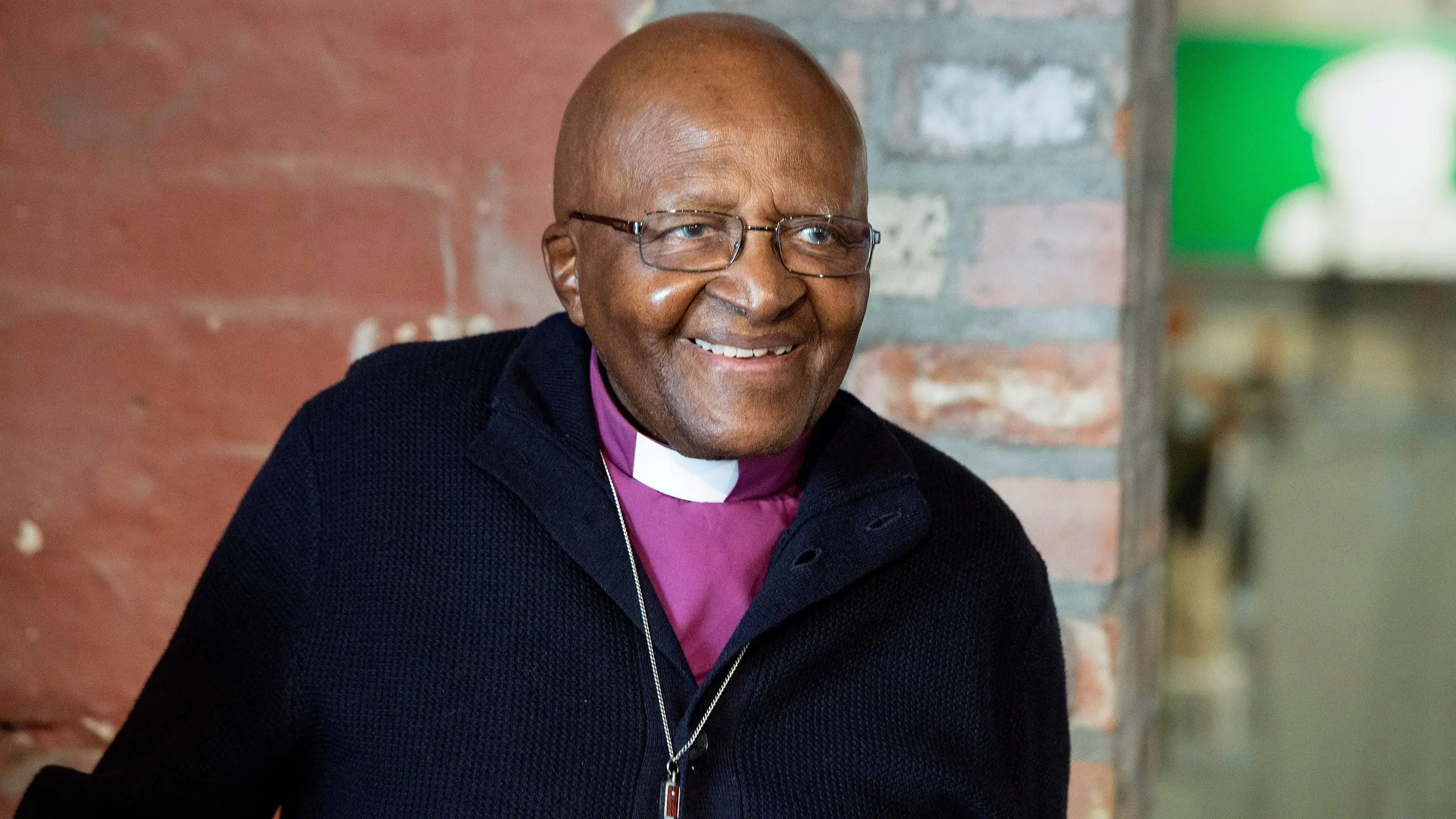
Desmond Tutu
 South Africa
Anglican priest•human rights defender•non-fiction writer
Also known as: Archbishop Desmond Tutu, Desmond Mpilo Tutu
Birthday
October 7, 1931
Birth Sign
Libra
Birthplace
Munsieville, Transvaal, South Africa
Age
Died at 90
Height
5 ft 9 in (175 cm)
About
Desmond Mpilo Tutu was a South African Anglican bishop, theologian, and tireless human rights activist who became a global icon for his leadership in the fight against apartheid. Born on October 7, 1931, in Munsieville, he rose to prominence as the first Black African Archbishop of Cape Town. His unwavering commitment to non-violence and reconciliation earned him the Nobel Peace Prize in 1984. Tutu used his platform to champion social justice, LGBTQ+ rights, and anti-corruption efforts long after his official retirement.
His career spanned decades of activism, theological writing, and public service. He chaired the Truth and Reconciliation Commission following the end of apartheid, advocating for forgiveness over retribution. Even in his later years, Tutu remained a vocal critic of injustice, speaking out on issues ranging from the Iraq War to climate change. He died on December 26, 2021, leaving behind a legacy defined by compassion, humor, and an unshakeable belief in the inherent dignity of every human being.
Early Life & Background
Desmond Tutu was born into a family where education and faith were paramount, though they faced significant financial hardship due to the systemic poverty enforced by apartheid laws. His father, Firestone Ezekiel Tutu, worked as a school principal and teacher, while his mother, Georgia, managed the household. As the third of four children, Desmond grew up in Munsieville and later moved to Johannesburg, where he experienced the harsh realities of racial segregation firsthand. He attended segregated schools with scarce resources but excelled academically, known for his wit and intelligence at Johannesburg Bantu High School.
Initially, Tutu dreamed of becoming a medical doctor, a path that would have allowed him to serve his community directly. However, the apartheid regime barred Black students from studying medicine in South Africa at the time. Forced to abandon this dream, he pivoted to teaching, earning a Bachelor of Arts from the University of the Witwatersrand in 1954 and a Diploma in Teaching from the University of Pretoria. In 1960, feeling a divine calling to the priesthood, he enrolled at St. Bede's College in Johannesburg. He was ordained as an Anglican priest that same year, becoming one of the first black South Africans to be ordained in the church.
Before achieving global fame, Tutu taught at various schools and served as a chaplain. A pivotal moment occurred when he traveled to London in 1962 to study theology at King's College London, where he earned a Master of Theology degree in 1966. This period exposed him to broader theological perspectives and solidified his commitment to social justice. Upon returning to South Africa, he held several academic and ecclesiastical posts, including Dean of St. Mary's Cathedral in Johannesburg. His early career was defined by quiet resistance; he spoke out against the pass laws and the removal of Black people from white areas, often facing harassment and detention by the apartheid security police.
Career Growth
Tutu's career accelerated in the 1970s as he took on increasingly visible roles opposing apartheid. In 1975, he became the first black dean of St. Mary's Cathedral in Johannesburg. By 1978, he was appointed General Secretary of the South African Council of Churches (SACC), a position he held until 1985. In this role, he coordinated the church's response to apartheid, advocating for non-violent protest and international economic sanctions against the South African government. He frequently spoke out against the regime, leading to his arrest and brief imprisonment in 1983.
His breakthrough to global prominence came in 1984 when he was awarded the Nobel Peace Prize for his efforts in resolving and ending apartheid through non-violent means. He was the first black African to receive the award. The prize money was used to establish the Desmond Tutu Trust to support students denied education under apartheid laws. In 1985, Tutu was appointed Bishop of Johannesburg, and in 1986, he became the first Black Archbishop of Cape Town, a position he held until his retirement in 1996. As Archbishop, he championed the ordination of women as priests and deacons, a progressive move within the Anglican Communion at the time.
Following the dismantling of apartheid, President Nelson Mandela appointed him Chair of the Truth and Reconciliation Commission (TRC) in 1995. The TRC was a groundbreaking body designed to investigate human rights abuses committed during the apartheid era. Tutu's leadership of the TRC, characterized by his emphasis on forgiveness and restorative justice rather than retribution, brought him renewed global acclaim. After retiring from the church in 1996 and stepping down from the TRC in 2002, Tutu remained an active public figure. He co-founded The Elders in 2007, a group of independent global leaders working together to resolve conflicts and promote human rights. He continued to speak out on issues such as gay rights, climate change, and corruption in South Africa, often drawing sharp criticism from conservative factions but maintaining his moral authority.
Career Timeline
Public Image & Style
Desmond Tutu is portrayed as a man of immense compassion, wisdom, and moral courage. His signature style included his clerical collar and his infectious laugh. Media coverage consistently highlights his role as a peacemaker and his unwavering belief in forgiveness. His voice is often described as warm, authoritative, and deeply spiritual. He was known for his ability to use humor to defuse tense situations and for his unyielding stance on human rights, even when it meant criticizing powerful figures or governments.
Fame & Fandom
Desmond Tutu did not cultivate a commercial fanbase, nor do his admirers operate under a formal moniker such as "Tutists" or similar; his supporters were historically defined as activists, religious congregants, and citizens inspired by his theology of Ubuntu rather than celebrity enthusiasts. While no organized chart-pushing campaigns or fan rituals exist, the posthumous stewardship of his legacy is managed by the Desmond & Leah Tutu Legacy Foundation, which continues to preserve his teachings through interfaith education and documentary projects like Sam Pollard's 2026 film Tutu. In the realm of global recognition, however, his standing remains formidable according to the iFANN Global Fame Rankings. Desmond Tutu is currently the 18th most famous person in South Africa, a position he has held steady since the previous cycle. Furthermore, he ranks as the 17th most famous person in Religious Leaders. These placements reflect a sustained global attention that tracks media coverage, search activity, and cultural consumption signals worldwide. The absence of a pop-culture fandom name does not diminish the weight of these metrics, which measure influence across decades of moral leadership rather than fleeting trends.
Interesting Facts and Legends
Desmond Tutu coined the term "Rainbow Nation" to describe a post-apartheid South Africa where all races could coexist in harmony, a concept that became central to the nation's identity. He was known for his humor and ability to diffuse tension, often joking with prison guards during his detentions. He initially wanted to be a doctor but was barred from studying medicine due to his race. He was a close friend of Nelson Mandela and played a crucial role in his release and the transition to democracy. He was a vocal supporter of LGBTQ+ rights within the Anglican Church, despite controversy. A widely retold story involves his ability to use humor to cope with and disarm his oppressors.
Notable Quotes
“Forgiving is not forgetting; it's remembering and choosing not to live with the past in a way that hurts you.”
“My humanity is bound up in yours, for we can only be human together.”
“Without forgiveness, there is no future.”
“I am free because I forgive.”
Family & Personal Life
Desmond Tutu was married to Nomalizo Leah Tutu (née Verwey) on April 13, 1955. Their relationship spanned over six decades until his death. They met while they were both students at the University of the Witwatersrand; Leah was a student nurse, and Desmond was a teacher. They had four children: Trevor, Thabo, Mpho, and Kwanda. Trevor Tutu followed in his father's footsteps as an Anglican priest and author. Thabo Tutu is a businessman and philanthropist. Mpho Tutu-Papalioha is a writer and theologian who has been instrumental in preserving her father's legacy. Kwanda Tutu is a musician and artist. The couple was known for their strong partnership and shared commitment to social justice.
Notable Connections
Relationships & Dating History
Desmond Tutu was married to Nomalizo Leah Tutu (née Verwey) on April 13, 1955. Their relationship spanned over six decades until his death. They met while they were both students at the University of the Witwatersrand; Leah was a student nurse, and Desmond was a teacher. They had four children: Trevor, Thabo, Mpho, and Kwanda. The couple was known for their strong partnership and shared commitment to social justice. There are no public records of other romantic relationships or marriages prior to or concurrent with his marriage to Leah. They remained married until his death in 2021.
- MarriedNomalizo Leah Tutu1955 - 2021Met at university; lifelong partners with four children.
Death & Aftermath
Died
December 26, 2021 (aged 90)
Death Place
Rondebosch, Cape Town, South Africa
Cause of Death
Complications from prostate cancer
Desmond Mpilo Tutu passed away in his home in Rondebosch, Cape Town, on December 26, 2021, after a prolonged period of declining health marked by recurrent infections stemming from prostate cancer. Global reaction was swift and extensive, with South African President Cyril Ramaphosa declaring a period of national mourning while the United Nations and the Vatican issued statements honoring his legacy as a moral compass for the Rainbow Nation. Spontaneous vigils gathered outside his home and at St. Mary's Cathedral. A major public memorial service took place on January 5, 2022, at St. Mary's Cathedral in Cape Town, attended by thousands of mourners including Archbishop Justin Welby and dignitaries from around the world.
Although Nelson Mandela's widow Graça Machel could not attend due to her own health issues, she sent a message of tribute, and the ceremony featured performances by the South African choir alongside readings from scripture and Tutu's writings. Following the public event, Tutu was laid to rest in a private burial at the All Saints Church cemetery in Rondebosch near the site of his death, adhering to his wish for an intimate final resting place. Posthumous recognition has continued through various initiatives, including a documentary titled Tutu that offers an unfiltered look at the last two decades of his life and the expansion of the Desmond Tutu Programme to End Global Hunger.
Net Worth (Estate Value)
$3 Million
iFANN Editorial Team estimate
As a religious leader and activist, Desmond Tutu did not accumulate wealth in the manner of a commercial celebrity. His income came from speaking engagements, book royalties, and his position as Archbishop. Estimates of his net worth vary, but generally reflect modest personal assets compared to entertainment figures. Research by the iFANN Editorial Team puts his estate value at around $3 million, derived primarily from book sales and speaking fees, with much reinvested in charity. His estate is managed by the Desmond & Leah Tutu Legacy Foundation.
Income sources included books like No Future Without Forgiveness and The Rainbow People of God. Speaking fees for global lectures contributed significantly to his earnings. Real estate included a home in Rondebosch, Cape Town, which was his residence until his death. Posthumous earnings come from book sales, licensing of his image, and the documentary Tutu (2026). The estate is managed by the Desmond & Leah Tutu Legacy Foundation.
Awards Won (124)
Desmond Tutu received numerous awards throughout his life, including the Nobel Peace Prize in 1984, the Order of Meritorious Service in South Africa, and the Presidential Medal of Freedom in 2009. He also won the Jawaharlal Nehru Award for International Understanding, the Martin Luther King Jr. Nonviolent Peace Prize, and the Templeton Prize. He received over 30 honorary degrees from universities worldwide, including Oxford, Cambridge, Harvard, and Yale.
2006
1984 · Peace
Opposition to Apartheid
1984
Known For
Tutu
2026 · Subject
The Rainbow People of God
1999 · Author
No Future Without Forgiveness
1999 · Author
Keywords
Sources
Quick Facts
- Profession
- Anglican priest, human rights defender, non-fiction writer
- Born
- October 7, 1931
- Birthplace
- Munsieville
- Died
- December 26, 2021
- Death Place
- Cape Town
- Gender
- Male
- Spouse
- Nomalizo Leah Tutu
- Birth Sign
- Libra
Personal Details
- Full Name
- Desmond Mpilo Tutu
- Height
- 5 ft 9 in (175 cm)
- Spouse
- Nomalizo Leah Tutu
- Children
- Trevor Tutu · Thabo Tutu · Mpho Tutu-Papalioha · Kwanda Tutu
- Education
- University of the Witwatersrand; King's College London; St. Bede's College
Filmography
12
Total
3
Film
9
TV
Frequently Asked Questions
Who was Desmond Tutu?
How did Desmond Tutu die?
What was Desmond Tutu's net worth?
Did Desmond Tutu have any children?
What is the 'Rainbow Nation'?
Join the community
fans discussing