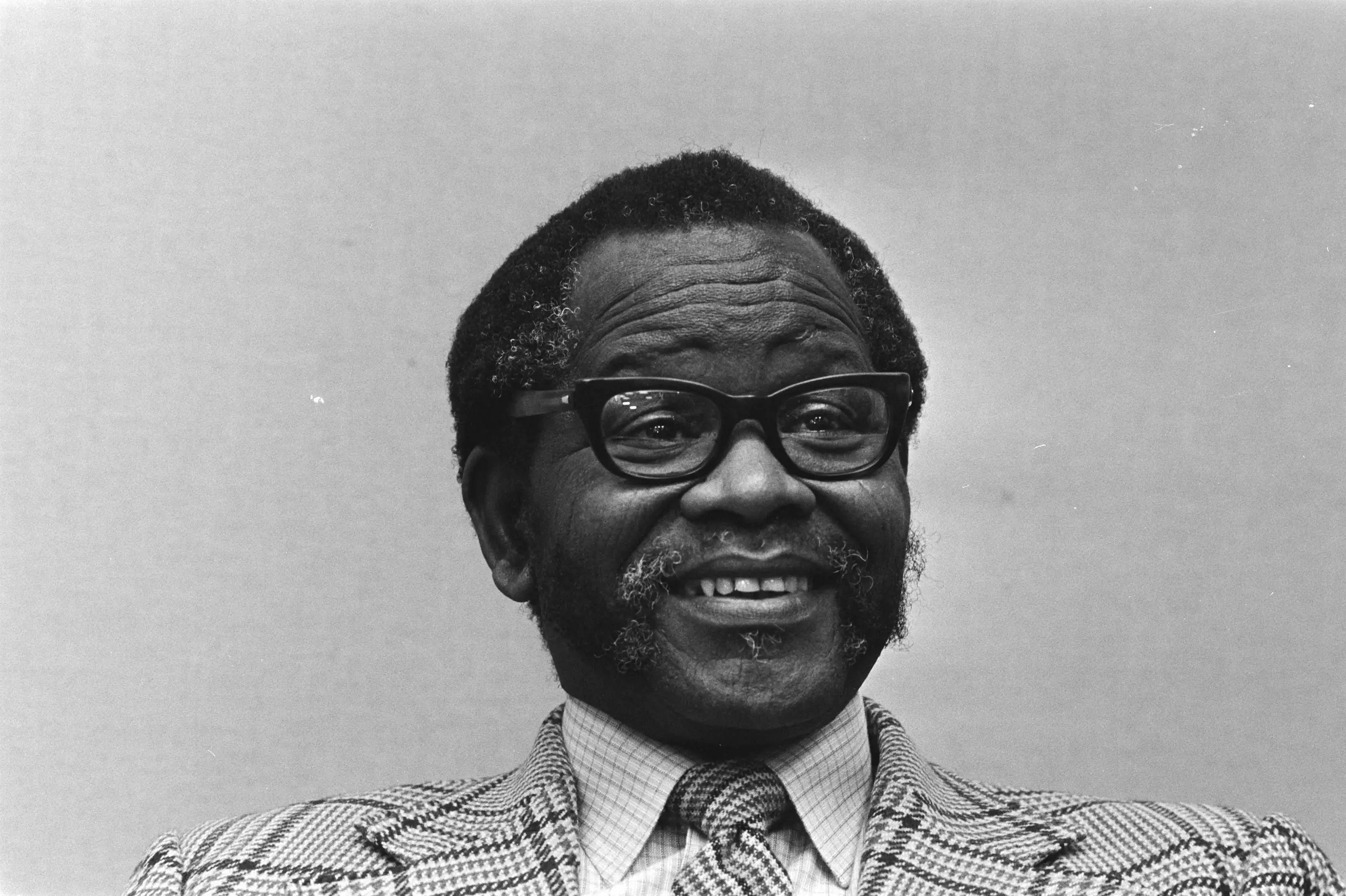
Oliver Tambo
 South Africa
Also known as: O.R. Tambo, Oliver Reginald Kaizana Tambo, OR Tambo, Moses of a Nation in Exile
Birthday
October 27, 1917
Birth Sign
Sagittarius
Birthplace
Nkantolo, near Bizana, Eastern Cape, South Africa
Age
Died at 75
About
Oliver Reginald Kaizana Tambo (1917–1993) was a South African anti-apartheid politician, lawyer, and revolutionary who served as the President of the African National Congress (ANC) from 1967 to 1991. Often referred to as the 'Moses of a nation in exile,' he led the ANC during its most critical decades of struggle against apartheid while in exile, establishing its international presence and diplomatic networks. His leadership transformed the organization into a global force capable of challenging the apartheid regime.
Tambo is remembered as a unifier and a bridge-builder who maintained the ANC's cohesion during thirty years of displacement. He returned to South Africa in 1990 after the ban on the ANC was lifted, celebrated by massive crowds as a symbol of hope and liberation. His death in 1993 marked the end of an era, but his legacy continues to inspire generations of activists and leaders in South Africa and beyond.
Early Life & Background
Oliver Tambo was born on October 27, 1917, in the village of Nkantolo, also known as Kantilla, near Bizana in the Eastern Cape. He grew up in a rural setting that deeply influenced his political consciousness. His father, John Tambo, was a teacher and a member of the Methodist Church, while his mother, Jane, managed the household. Tambo attended the local mission school before moving on to the Lovedale Institute, a prestigious missionary school in the Eastern Cape. There, he excelled academically and developed a strong sense of social justice.
In the 1930s, Tambo enrolled at the University of Fort Hare, where he earned a Bachelor of Arts degree in science. It was at Fort Hare that he became involved in student activism, joining the Young Men's Christian Association and participating in protests against university policies. After graduating, he worked as a teacher at various schools, including the Bantu Education system, which he later criticized for its inferior quality. In 1948, he joined the ANC Youth League (ANCYL), which he helped transform into a mass movement advocating for radical change.
The pivotal moment in his pre-fame career occurred in 1952 when he co-founded South Africa's first black-owned law firm, Mandela and Tambo, alongside Nelson Mandela. The firm provided legal aid to victims of apartheid laws, offering a crucial lifeline to those oppressed by the regime. His leadership in the Defiance Campaign of 1952 further solidified his role as a key figure in the liberation movement. By the late 1950s, Tambo had emerged as a central strategist within the ANC, preparing the ground for the organization's eventual exile.
Career Growth
Tambo's career success is defined by his leadership during the ANC's exile period. After the Sharpeville Massacre in 1960, the ANC was banned, and Tambo went into exile to build international opposition to apartheid. He established the ANC's external headquarters first in Dar es Salaam, Tanzania, and later in Lusaka, Zambia, where it operated for approximately 30 years. Under his leadership, the ANC gained global support, and his diplomatic efforts were instrumental in the movement's eventual legalization.
In 1967, Tambo was elected President of the ANC, a position he held until 1991. During this time, he traveled extensively, meeting with world leaders and securing support from the United Nations, the Soviet Union, and various African nations. He played a key role in the formation of Umkhonto we Sizwe, the armed wing of the ANC, and coordinated international sanctions against the apartheid government.
Tambo returned to South Africa in 1990, after the ban on the ANC was lifted, and was celebrated as a unifier. His return drew massive spontaneous crowds and symbolized the end of a long exile. He stepped down as ANC President in 1991, handing over the reins to Nelson Mandela. Despite stepping down, Tambo remained a respected elder statesman until his death in 1993. His contributions to the struggle against apartheid are widely recognized as foundational to South Africa's democratic transition.
Career Timeline
Public Image & Style
Oliver Tambo's public image is characterized by his dignified presence and eloquent speaking style. Media portrays him as a key architect of South Africa's liberation, with a focus on his diplomatic efforts and commitment to unity. His content and tone were centered on the fight against oppression and the pursuit of freedom. He was seen as a statesman and a bridge-builder, capable of uniting diverse factions within the anti-apartheid movement. His reputation for integrity and dedication made him a revered figure both within South Africa and internationally.
Fame & Fandom (iFAMOUS Rankings)
Oliver Tambo commands a reverence that transcends the mechanics of celebrity worship, as his legacy is anchored in political history rather than pop-culture fandom. There exists no organized fan club or specific moniker for his supporters; the public engagement with his memory manifests through state-sanctioned remembrance and institutional endurance rather than digital campaigns or meet-and-greets. This distinction places him in a unique category where the audience is defined by national identity rather than shared enthusiasm for an entertainer. Within this framework of historical stature, his global standing remains substantial according to the iFANN Global Fame Rankings. He holds the position of the 48th most famous person in South Africa, a placement holding steady from the previous cycle. His prominence extends beyond national borders, ranking as the 75th most famous person from South Africa globally, a placement holding steady from the previous cycle. In the broader African context, he sits at 66th most famous person in Africa, down from 65th last cycle. These metrics reflect a sustained influence across media coverage and consumption signals worldwide, validating his status as a figure whose impact persists long after his death.
Interesting Facts and Legends
Oliver Tambo served as President of the African National Congress from 1967 until 1991, guiding the organization during decades of exile following its banning in 1960. He is widely known by the title 'Moses of a nation in exile,' a designation referencing his leadership in establishing the ANC's external headquarters first in Dar es Salaam and later at Oliver Tambo House in Lusaka, Zambia, which operated as the primary base for approximately 30 years. A defining moment in his biography occurred upon his return to South Africa in 1990, just prior to the unbanning of the ANC, where his re-entry drew massive spontaneous crowds and symbolized the end of a long exile. He died on April 24, 1993, from a stroke, days before the assassination of Chris Hani, a timing that cemented his status as a martyr figure whose life ended as the final phase of liberation began. His legacy endures physically through OR Tambo International Airport in Johannesburg, which continues to serve as a major hub for international travel and significant national events.
Notable Quotes
“The struggle is my life. It will continue until freedom is won.”
“Apartheid is a crime against humanity.”
Family & Personal Life
Oliver Tambo was married to Adelaide Tambo, a fellow anti-apartheid activist. They had no children together. Adelaide Tambo was also a prominent figure in the struggle, serving as a member of the ANC Women's League and the Federation of South African Women. Their marriage was both a personal and political partnership, with Adelaide often accompanying Oliver in his diplomatic missions. There are no widely documented romantic relationships outside of this marriage, and no evidence of other public flings or engagements. As of 2026, Oliver Tambo remains deceased, having passed away on 24 April 1993.
Notable Connections
Nelson Mandela, Walter Sisulu, Adelaide Tambo, F.W. de Klerk, Chris Hani.
Relationships & Dating History
Oliver Tambo was married to Adelaide Tambo, a fellow anti-apartheid activist. Their marriage was both a personal and political partnership, with Adelaide often accompanying Oliver in his diplomatic missions. There are no widely documented romantic relationships outside of this marriage, and no evidence of other public flings or engagements. As of 2026, Oliver Tambo remains deceased, having passed away on 24 April 1993.
- MarriedAdelaide Tambo1942 - 1993Married fellow anti-apartheid activist; no children together.
Death & Aftermath
Died
April 24, 1993 (aged 75)
Death Place
London, United Kingdom
Cause of Death
Stroke
Oliver Reginald Kaizana Tambo died on April 24, 1993, in a London hospital after suffering a stroke. He had been living in exile since 1960 and serving as the President-in-exile of the African National Congress (ANC). His death occurred just days after the assassination of Chris Hani on April 10, 1993, a timing that intensified the nation's grief and sense of loss. Nelson Mandela, then President of the ANC, issued statements mourning the loss of the 'elder statesman' of the movement. Vigils were held at the ANC headquarters in Lusaka, Zambia, and in London, where thousands gathered to pay their respects.
A state funeral was held in South Africa later, attended by thousands of mourners. The funeral procession traveled from London to South Africa, marking a solemn return for the leader who had spent decades abroad. Nelson Mandela delivered the eulogy, praising Tambo's unwavering commitment to the cause. Other notable figures included F.W. de Klerk. Traditional Xhosa rituals were performed to honor his passing. The most immediate tribute was the renaming of Johannesburg International Airport to OR Tambo International Airport shortly after his death, a decision formalized in 1994 following the transition to democracy. A mural and various memorials were erected in his honor across the country, including the 'Oliver Tambo House' in Lusaka, which served as the primary base for the ANC during its exile.
The anniversary of his death became a significant date for commemorating the struggle against apartheid. Oliver Tambo was buried in Kantilla, Bizana, Eastern Cape, South Africa, in a private family burial initially followed by public commemoration. He was posthumously awarded the Order of Luthuli, one of South Africa's highest honors. The Nobel Peace Prize was often cited in discussions of his legacy, though he never received it personally. The Oliver Tambo Foundation was established to continue his work in education and human rights. Numerous books and documentaries have been produced about his life, including The Life and Times of Oliver Tambo. The University of Cape Town hosts the Oliver Tambo Moot Court in his honor. The handling of his personal estate remains largely private, with assets managed through the Oliver Tambo Foundation and family trusts.
Net Worth (Estate Value)
$0
iFANN Editorial Team estimate
As a political leader and activist, Oliver Tambo did not accumulate significant personal wealth. His assets were primarily managed through family trusts and the Oliver Tambo Foundation, which focuses on education and human rights. The iFANN Editorial Team notes that his estate value is negligible compared to modern celebrities, reflecting his lifelong dedication to public service rather than personal gain. Posthumous earnings from licensing, book sales, and foundation activities contribute to the ongoing legacy of his work, but these funds are directed toward charitable causes rather than personal accumulation.
Awards Won (1)
Oliver Tambo received numerous honours and distinctions posthumously. He was awarded the Order of Luthuli, one of South Africa's highest honors, for his contributions to the struggle against apartheid. The Oliver Tambo International Airport in Johannesburg, renamed in his honor shortly after his death, stands as a testament to his legacy. Additionally, the University of Cape Town hosts the Oliver Tambo Moot Court in his honor, and the Oliver Tambo Foundation continues his work in education and human rights.
1993 · National Honour
Contribution to the struggle against apartheid
Known For
President of the African National Congress
1967 · Political Leader
Anti-Apartheid Activist
1960 · Revolutionary
Lawyer
1952 · Legal Practitioner
Keywords
Sources
Quick Facts
- Profession
- politician, lawyer
- Born
- October 27, 1917
- Birthplace
- Nkantolo, near Bizana, Eastern Cape
- Died
- April 24, 1993
- Death Place
- London, United Kingdom
- Gender
- Male
- Spouse
- Adelaide Tambo
- Birth Sign
- Sagittarius
Personal Details
- Full Name
- Oliver Reginald Kaizana Tambo
- Spouse
- Adelaide Tambo
- Children
- Education
- University of Fort Hare; University of the Witwatersrand
Frequently Asked Questions
Who was Oliver Tambo?
When did Oliver Tambo die?
What was Oliver Tambo's main contribution?
Is there an airport named after Oliver Tambo?
Did Oliver Tambo have children?
Join the community
fans discussing