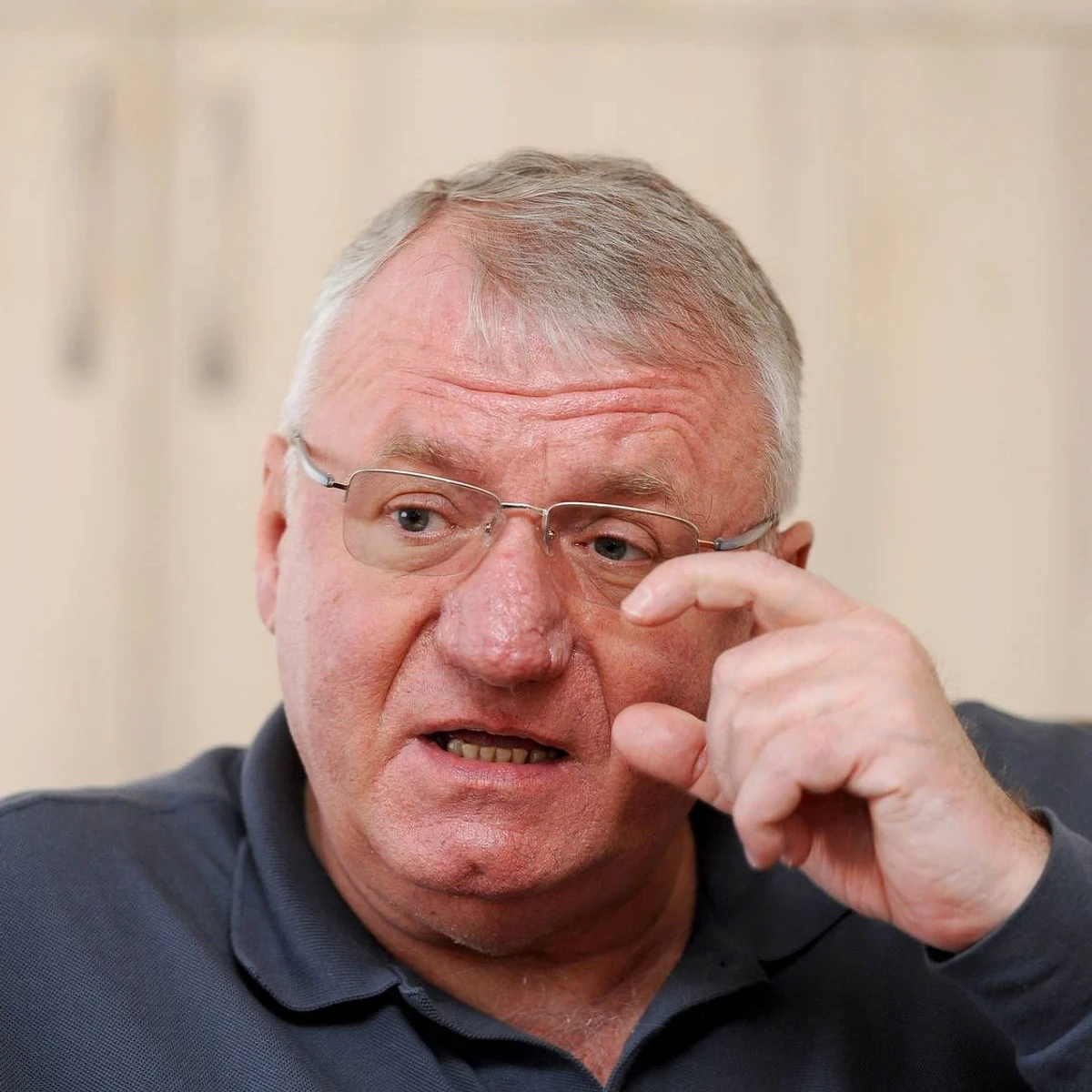
Vojislav Šešelj
 Serbia
politician•university teacher•military personnel
Also known as: Vojvoda, Dr Vojislav Šešelj
Birthday
October 11, 1954
Birth Sign
Libra
Birthplace
Sarajevo
Age
72 years old
About
Vojislav Šešelj is a prominent Serbian politician, university teacher, and former military figure, renowned for founding and leading the far-right Serbian Radical Party (SRS) since its inception in 1990. His political career, spanning over three decades, has been characterized by his unwavering ultranationalist rhetoric and a complex, often contentious, relationship with international legal bodies, particularly the International Criminal Tribunal for the former Yugoslavia (ICTY). He held the significant position of deputy prime minister of Serbia from 1998 to 2000, a period marked by political upheaval.
Šešelj remains a deeply polarizing figure in Serbian and international politics. Supporters often perceive him as a staunch patriot who fiercely defended Serbian interests during times of national crisis, while critics unequivocally point to his inflammatory wartime rhetoric and his extensive legal entanglements as evidence of his role in perpetuating conflict and intolerance. Despite a lengthy trial and subsequent acquittal of major war crimes charges, his legacy continues to be debated. As of May 21, 2026, he remains an active participant in public life and a sitting member of parliament, continuing to lead the SRS.
Early Life & Background
Born in Sarajevo on October 11, 1954, Vojislav Šešelj's early life unfolded in socialist Yugoslavia. He pursued higher education with dedication, ultimately earning a doctorate in law and embarking on a career as a university teacher. His initial political leanings were influenced by the prevailing communist ideology, but he gradually evolved towards a fervent Serbian nationalism. This shift led to his imprisonment in the late 1980s for his nationalist activities, which included organizing protests and disseminating inflammatory publications.
Upon his release, Šešelj relocated to Belgrade, where he emerged as a vocal proponent of the concept of a Greater Serbia. His political trajectory accelerated dramatically in 1990 when he co-founded the Serbian Radical Party (SRS). The party rapidly gained a significant following among Serbs who felt disenfranchised and threatened by the impending dissolution of Yugoslavia. His political ascent was meteoric; he was elected to the Serbian parliament in June 1991, quickly becoming recognized for his impassioned oratory and his readiness to engage in military action. During the tumultuous conflicts of the 1990s, including the Croatian War of Independence and the Bosnian War, Šešelj volunteered as a military commander, leading paramilitary units that faced accusations of severe atrocities.
Career Growth
Vojislav Šešelj's political career reached a pivotal point with the co-founding of the Serbian Radical Party (SRS) in 1990. The party experienced rapid growth, establishing itself as the largest opposition force in Serbia by the mid-1990s. His national prominence was further solidified when he served as deputy prime minister of Serbia from 1998 to 2000. However, his international notoriety surged following his indictment by the International Criminal Tribunal for the former Yugoslavia (ICTY) in January 2003. The charges encompassed grave allegations of war crimes and crimes against humanity, linked to his alleged involvement in a joint criminal enterprise aimed at the permanent removal of non-Serbs from large swathes of Croatia and Bosnia and Herzegovina.
Šešelj voluntarily surrendered to the ICTY in February 2003, commencing a protracted legal battle that spanned over a decade, during which he was held in detention in The Hague. He controversially chose to represent himself during the trial, frequently leveraging the courtroom as a platform for his nationalist pronouncements and engaging in numerous clashes with the court. His legal proceedings also included a period of hunger strike protesting his detention. He was eventually allowed to return to Serbia for medical treatment in late 2014. On March 31, 2016, a landmark decision saw Šešelj acquitted of all nine war crimes charges by the ICTY Trial Chamber, a verdict that generated significant controversy and widespread protest. Despite this acquittal, on October 28, 2019, he was convicted of contempt of the Tribunal and sentenced to two years' imprisonment. Further legal entanglements continued, with a first-instance conviction on January 29, 2026, for violating the honor and reputation of journalist Nataša Miljanović Zubac. On May 21, 2026, concerns were raised about Serbian authorities allegedly ignoring a Hague court monitor regarding a contempt of court case against Šešelj.
Career Timeline
Public Image & Style
Vojislav Šešelj is widely recognized as a leading figure of Serbian ultranationalism, a label frequently applied by international media. His public persona is defined by a confrontational and often provocative communication style, coupled with a pronounced willingness to challenge international institutions and norms. His supporters champion him as a resolute defender of Serbian sovereignty and national interests, particularly during periods of perceived external threat. Conversely, his critics often portray him as a symbol of ethnic intolerance and a figure whose rhetoric fueled violence during the Yugoslav wars. He commands a dedicated following among a segment of the Serbian nationalist population, though his influence within the broader Serbian political landscape has seen a decline in recent years.
Fame & Fandom (iFAMOUS Rankings)
Vojislav Šešelj commands a devoted political base rather than a traditional fandom. His supporters are not gathered for concerts or birthday tributes but are united by a rigid alignment with the Serbian Radical Party's ultranationalist ideology. There is no official name for this collective, no fan clubs organizing charity drives, and no viral rituals surrounding his appearances. The dynamic is strictly political; his audience identifies through shared nationalist sentiment and loyalty to a figure who has spent decades challenging international norms. While pop culture icons often rely on stage antics or viral moments to build legend, Šešelj's mythology is forged in the courtroom and the parliament. His most defining narrative involves a complex legal saga that oscillated between acquittal and conviction, creating a polarized legacy where he is viewed either as a martyr for sovereignty or a symbol of ethnic persecution. This intense division ensures his visibility remains high, driven by controversy rather than celebrity worship. Despite the absence of a fanbase in the entertainment sense, his global footprint remains significant due to the sheer scale of media coverage his trials generated. According to the iFANN Global Fame Rankings, Vojislav Šešelj is currently the 23rd most famous person from Serbia, a position holding steady from the previous cycle.
Interesting Facts and Legends
Beyond his political activities, Vojislav Šešelj holds a doctorate in law and has contributed academically as a university teacher at the University of Belgrade. He is a prolific author, having published numerous books and articles focusing on politics, history, and nationalist ideology. He is also known for his distinctive personal style, often seen wearing a traditional Serbian šajkača cap. In 2015, he garnered attention by undertaking a hunger strike lasting several weeks to protest his detention conditions at The Hague. Šešelj has been involved in notable public disputes and rivalries with other prominent Serbian politicians throughout his career, including Vuk Drašković. The ICTY appeal judgment related to his case was scheduled for April 11, 2018. A defining moment in his public lore occurred on March 31, 2016, when the International Criminal Tribunal for the former Yugoslavia acquitted him of all charges of crimes against humanity and war crimes, a verdict his supporters celebrated as a victory while critics condemned it as a triumph for ethnic cleansing advocates. However, this legal victory was short-lived. In April 2018, a different chamber of the UN court sentenced him to 10 years in prison specifically for the persecution of Croats during the Balkan wars, creating a complex legacy of acquittal followed by conviction that continues to fuel debate today.
Family & Personal Life
Vojislav Šešelj is married to Jadranka Šešelj, who has provided steadfast support throughout his extensive legal battles and political career. The couple has two children, a son and a daughter. While the family generally maintains a low public profile, Jadranka has occasionally appeared alongside him at significant court proceedings. They reside together in Belgrade.
Notable Connections
Jadranka Šešelj (spouse), Slobodan Milošević (political ally), Vuk Drašković (political rival), Serbian Radical Party (founded by Šešelj).
Relationships & Dating History
Vojislav Šešelj married Jadranka Šešelj in the 1980s. Their union has endured through his extensive political career and periods of imprisonment. There are no publicly documented significant romantic relationships outside of his marriage. As of 2026, he remains married to Jadranka Šešelj.
- MarriedJadranka Šešelj1985 - presentCurrentMarried since the 1980s; has supported him through his legal battles.
Salary, Net Worth In 2026
$5 Million
iFANN Editorial Team estimate
iFANN currently estimates Vojislav Šešelj's financial standing at $5 Million as of 2026. His primary sources of income stem from his long-standing political career, including his parliamentary salary and his leadership role within the Serbian Radical Party. Additional revenue has been generated through royalties from his published books and occasional speaking engagements. His assets include a family home located in Belgrade. Throughout his public life, Šešelj has not been associated with ostentatious wealth, and his financial situation has typically been described as relatively modest when compared to some of his political contemporaries in Serbia. While his extensive legal battles have undoubtedly incurred substantial costs, he has reportedly benefited from financial support provided by party donors. His overall net worth has demonstrated relative stability across the years.
Awards & Accolades
Known For
Founder of the Serbian Radical Party
1990 · Founder and President
Deputy Prime Minister of Serbia
1998 · Deputy Prime Minister
ICTY War Crimes Trial
2003 · Defendant
Keywords
Sources
Quick Facts
- Profession
- politician, university teacher, military personnel
- Born
- October 11, 1954
- Birthplace
- Sarajevo
- Gender
- Male
- Spouse
- Jadranka Šešelj
- Birth Sign
- Libra
- Political Party
- Serbian Radical Party (SRS)
- Position Held
- Deputy Prime Minister of Serbia (1998-2000)
Personal Details
- Spouse
- Jadranka Šešelj
Frequently Asked Questions
Who is Vojislav Šešelj?
What was Vojislav Šešelj accused of?
Was Vojislav Šešelj convicted of war crimes?
What is Vojislav Šešelj's current political status?
When was Vojislav Šešelj born?
Join the community
fans discussing