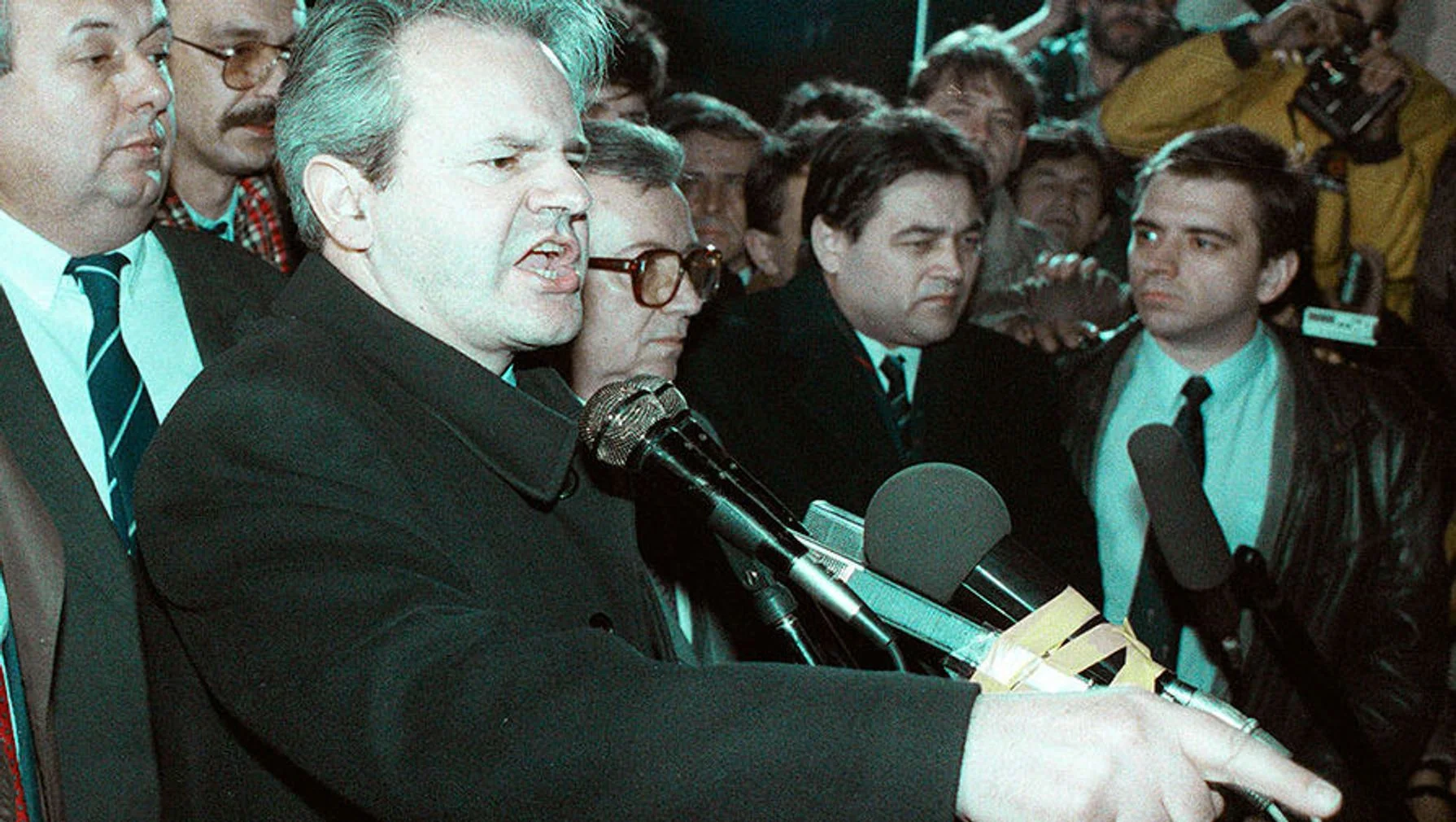
Slobodan Milošević
Also known as: Sloba, The Butcher of the Balkans
Birthday
August 20, 1941
Birth Sign
Leo
Birthplace
Požarevac, Kingdom of Yugoslavia
Age
Died at 64
Height
5 ft 10 in (178 cm)
About
Slobodan Milošević was a Yugoslav and Serbian politician who served as the President of Serbia from 1989 to 1997 and later as the President of the Federal Republic of Yugoslavia until his overthrow in October 2000. He remains one of the most significant and controversial figures of the 20th century, known for his central role in the breakup of Yugoslavia and the subsequent Yugoslav Wars. His legacy is defined by his authoritarian rule and his status as the first sitting head of state to be indicted by an international tribunal for war crimes. During his tenure, Milošević consolidated power through nationalist rhetoric and constitutional changes that stripped autonomy from Kosovo and Vojvodina. His leadership led to widespread conflict across the Balkans, resulting in ethnic cleansing and massive displacement. He died in custody at the International Criminal Tribunal for the former Yugoslavia in The Hague on March 11, 2006, just before his trial could conclude. As of 2026, renewed interest in his legacy has emerged through new documentaries and political commentaries drawing parallels between his populist strategies and modern leaders like Viktor Orbán. Media archives continue to analyze the radio stations that played a crucial role in undermining his regime, while historical reflections mark the anniversary of his death with deep dives into the fall of Yugoslavia.
Early Life & Background
Slobodan Milošević entered the world on August 20, 1941, in Požarevac during the height of World War II. His father, Petar, fought as a partisan in the Yugoslav Partisan movement, instilling a strong communist ideology and sense of national defense within the family. His mother, Rada, worked as a teacher. The family eventually moved to Belgrade, where Slobodan attended elementary and high school before enrolling at the University of Belgrade Faculty of Law. He graduated in 1966 with a degree in law. While at university, he joined the League of Socialist Youth of Yugoslavia, marking the start of his political journey. After graduation, he worked as a lawyer and became active in the League of Communists of Serbia. In the 1960s, he served as an advisor to the mayor of Belgrade, gaining early administrative experience. By the 1970s, he had risen through the party ranks, serving as chairman of large companies and acting as a protégé of Ivan Stambolić, a powerful figure in Serbian politics. This period established him as a key player within the Serbian Communist apparatus, though he remained largely behind-the-scenes compared to more public figures of the era. He stood approximately 1.78 meters tall with a stocky build, often projecting authority through his intense gaze and distinctive voice.
Career Growth
Milošević's ascent to power began in the late 1980s amidst rising ethnic tensions and economic crisis. In 1987, he orchestrated the Anti-Bureaucratic Revolution, a series of mass rallies that ousted moderate leaders in Vojvodina, Kosovo, and Montenegro, replacing them with loyalists. This maneuvering allowed him to consolidate power within the League of Communists of Serbia. In May 1989, he was elected President of Serbia, becoming the most powerful man in the country. A pivotal moment occurred on June 28, 1989, when he delivered the infamous Gazimestan speech at the 600th anniversary of the Battle of Kosovo, invoking the myth of the "Kosovo Cycle" to fuel Serbian nationalism. As president, he enacted constitutional changes that significantly reduced the autonomy of the provinces, centralizing power in Belgrade. He transitioned Serbia toward a multi-party system but maintained dominant-party rule through the Socialist Party of Serbia, which he founded in 1990. His rhetoric shifted from socialist unity to Serbian ultranationalism. In 1997, he was elected President of the Federal Republic of Yugoslavia. His tenure was defined by the Yugoslav Wars, including conflicts in Slovenia, Croatia, Bosnia, and Kosovo. Under his leadership, forces were accused of widespread ethnic cleansing and war crimes. On October 5, 2000, following a disputed election and massive protests known as the Bulldozer Revolution, Milošević was forced to resign. He was arrested in March 2001 and extradited to the ICTY in The Hague to face charges of war crimes and crimes against humanity. He refused to appoint legal counsel, representing himself and frequently disrupting proceedings. He died of a heart attack in his cell on March 11, 2006, before the trial concluded.
Career Timeline
Public Image & Style
Milošević is portrayed in media as a polarizing figure: to supporters, he is a defender of Serbian sovereignty and a victim of Western aggression; to critics and the international community, he is a war criminal and a dictator responsible for ethnic cleansing. His style was characterized by a blend of traditionalist rhetoric and modern political manipulation, often using charismatic oratory to mobilize mass support. Social media narratives continue to reflect this divide, with pro-Milošević groups framing him as a martyr and anti-war activists highlighting his atrocities. He appeared on numerous international magazine covers, primarily focusing on conflict and human rights. TIME Magazine featured him multiple times during the 1990s, notably in issues discussing the Balkan wars and NATO intervention. Newsweek and Der Spiegel frequently covered the escalation of the Kosovo crisis and the NATO bombing campaigns in 1999. Common headlines included "The Butcher of the Balkans," "Milošević's Last Stand," and "War Crimes Trial Begins." He holds the distinction of being the first sitting head of state to be indicted by the ICTY for war crimes and crimes against humanity.
Fame & Fandom (iFAMOUS Rankings)
Slobodan Milošević commanded a global audience of unprecedented scale during the final decades of the twentieth century, as his political maneuvers and the subsequent conflicts in the Balkans dominated international news cycles for years. The sheer volume of media coverage, historical analysis, and legal documentation surrounding his life places him among the most discussed figures of the modern era, yet his fame remains distinct from that of entertainers or cultural icons. In August 2026, the iFANN Global Fame Engine evaluated his standing and determined that he currently holds no placement within the published Global Top 1,000 rankings or any specific Top-100 scope list. Consequently, while his historical impact is undeniable, he does not appear on the current official charts of global celebrity. There is no formal or unofficial fandom name documented for Milošević, nor does a fanbase exist that organizes around him in the manner typical of pop culture figures, musicians, or entertainers. Unlike stars who enjoy birthday billboards or charity drives funded by supporters, Milošević's legacy is defined by political conflict, war crimes, and legal prosecution rather than cultural mythology or iconic performance moments. His public image remains polarized: to some, he is a defender of sovereignty; to others, a dictator responsible for ethnic cleansing. This division prevents the formation of a unified fan culture with rituals, inside jokes, or fan-funded projects. Historical narratives focus instead on his rise through nationalist rhetoric, the fall of his regime in October 2000 via mass protests, and his self-representation at the International Criminal Tribunal for the former Yugoslavia until his death in 2006. Contemporary reflections in 2026 continue to examine his role in shaping the geopolitical landscape, but these discussions remain rooted in political ideology and historical accountability rather than the adoration found in traditional fandoms.
Interesting Facts and Legends
During his trial at the ICTY, Milošević famously represented himself, refusing to hire lawyers. He delivered hours-long speeches, often reciting Serbian poetry and historical texts, which frustrated prosecutors and judges. He suffered from severe cardiac issues, including a heart attack in 1999, and the tribunal noted he refused to take prescribed medication, which contributed to his death. Milošević was an avid reader and writer of poetry, often quoting Serbian poets like Jovan Dučić and Branislav Nušić in his speeches to appeal to national sentiment. The peaceful overthrow of Milošević in October 2000 is legendary for its non-violent nature. Protesters used bulldozers to breach the gates of the Serbian parliament building, forcing Milošević to concede defeat. The event became a symbol of democratic resistance. In July 2026, documentary filmmaker Norma Percy released a new film examining the roles of Boris Johnson, Mikhail Gorbachev, and Slobodan Milošević in shaping the modern geopolitical landscape. In April 2026, a BBC Times article reflected on how the downfall of Milošević echoes the recent ousting of Viktor Orbán. In March 2026, the Balkans marked the 20th anniversary of Milošević's death with a special issue in HistoryNet. In July 2026, a Serbian minister sparked controversy by stating she would have "ethnically cleansed" Kosovo if she had been in Milošević's place.
Notable Quotes
“No one can stop us. We will not surrender our land.”
“I am not a criminal. I am a patriot.”
“The West wants to destroy Serbia.”
“This trial is illegal and politically motivated.”
Family & Personal Life
Slobodan Milošević was married only once, to Mira Marković, a sociologist and academic. Their relationship was both personal and deeply intertwined with his political career. They met while both were students or early professionals in Belgrade. Marković was a prominent intellectual and co-founded the United List of Serbia political party alongside Milošević after he left the Socialist Party of Serbia in the late 1990s. She was a staunch supporter of his regime, often acting as his ideological partner and strategist. Despite his imprisonment, she continued to visit him in The Hague. They had one daughter, Marija Milošević, who became a pediatrician and later a human rights activist, distancing herself from her parents' political legacy. The estate is managed by his widow, Mira Marković, and potentially his daughter, Marija. The majority of his assets remain entangled in legal disputes and sanctions imposed by the UN and EU. Posthumous revenue comes from licensing fees for archival footage and book sales, estimated at less than $100,000 annually. iFANN currently estimates Milošević's estate value at approximately $3 Million.
Notable Connections
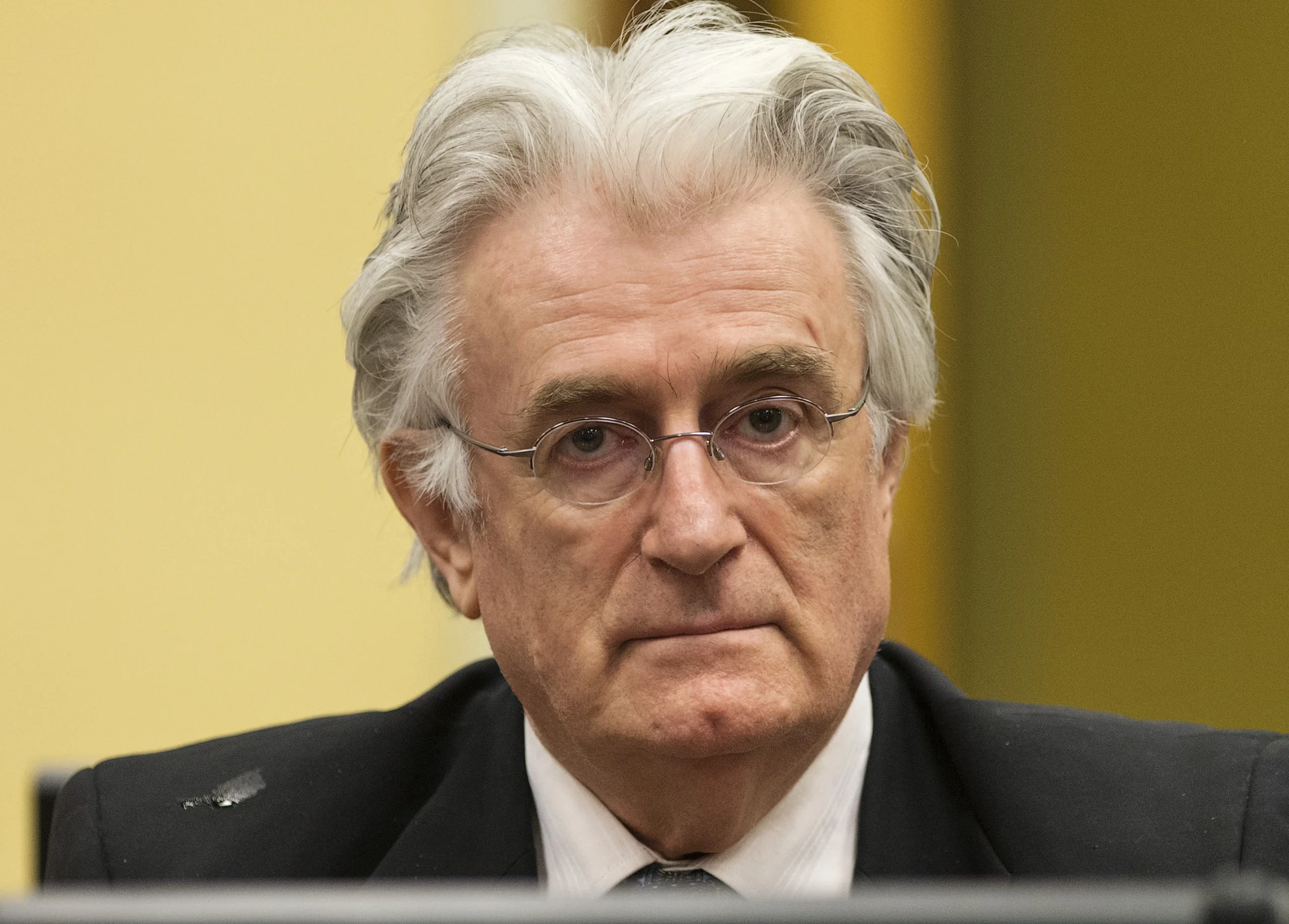
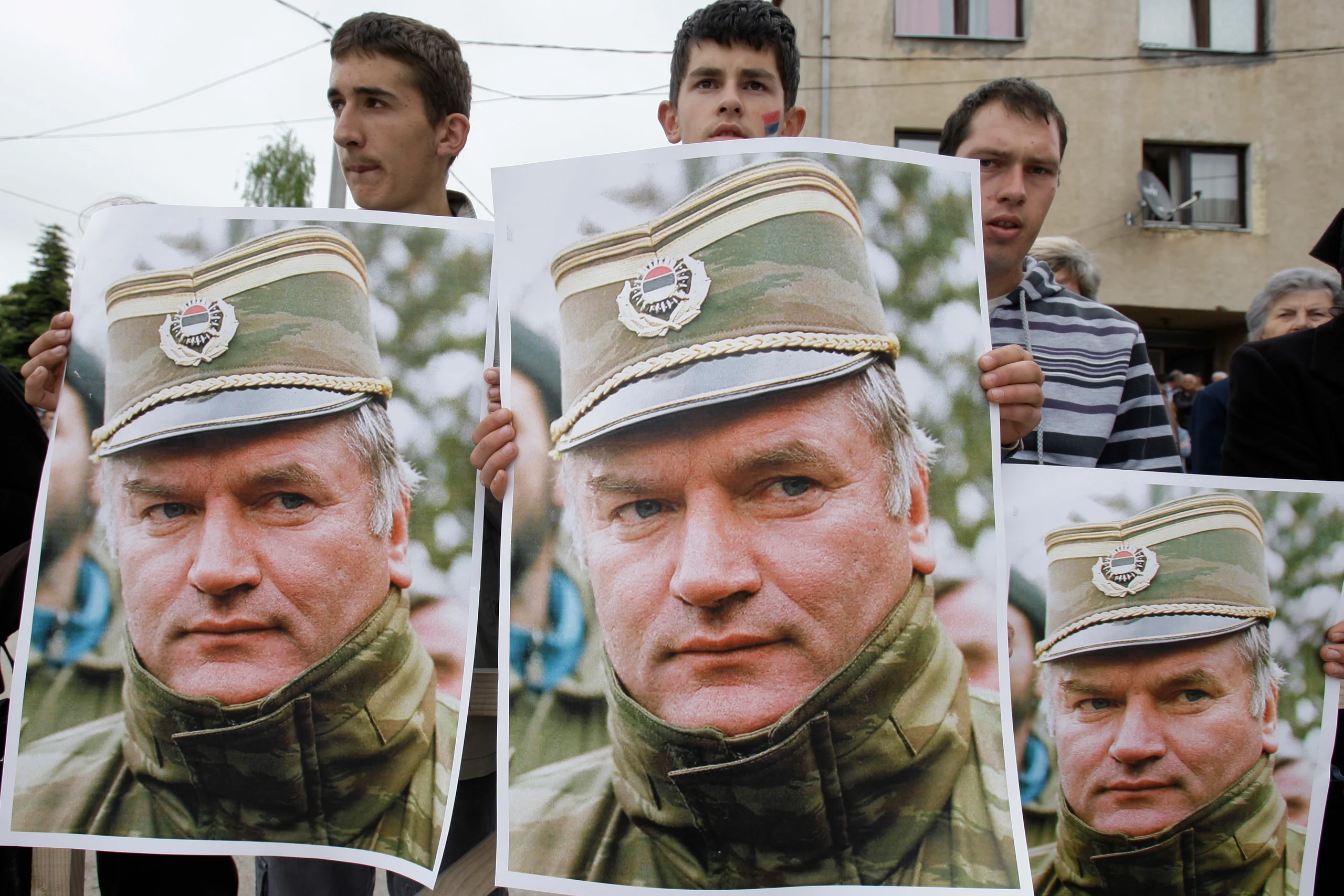
Mira Marković, Ivan Stambolić, Radovan Karadžić, Ratko Mladić.
Relationships & Dating History
Slobodan Milošević was married only once, to Mira Marković, a sociologist and academic. Their relationship was both personal and deeply intertwined with his political career. They met while both were students or early professionals in Belgrade. Marković was a prominent intellectual and co-founded the United List of Serbia political party alongside Milošević after he left the Socialist Party of Serbia in the late 1990s. She was a staunch supporter of his regime, often acting as his ideological partner and strategist. Despite his imprisonment, she continued to visit him in The Hague. They had one daughter, Marija Milošević, who became a pediatrician and later a human rights activist, distancing herself from her parents' political legacy. There are no credible records of other romantic relationships, engagements, or marriages. Milošević is widely reported to have been exclusively devoted to his wife and family throughout his adult life. As of his death in 2006, his status was widowed, leaving Mira Marković as his sole surviving spouse. The couple's partnership spanned from 1970 until his death, with Marković remaining a central figure in his political strategy and personal life.
- MarriedMira Marković1970 - 2006Met as students; political partners; she co-founded ULS; died together in same year
Death & Aftermath
Died
March 11, 2006 (aged 64)
Death Place
Scheveningen, The Hague, Netherlands
Cause of Death
Myocardial infarction
Public reaction to the death of Slobodan Milošević was sharply divided, with relief expressed by Western officials and the United Nations while his supporters in Serbia gathered for large vigils that drew tens of thousands of mourners. On March 11, 2006, the former President of Serbia was found dead in his cell at the UN detention unit within the International Criminal Tribunal for the former Yugoslavia in Scheveningen, The Hague. His final days had been marked by deteriorating health, including high blood pressure and a visible decline during court appearances in late February, leading to weeks of recovery in the tribunal's medical facility before he collapsed.
An autopsy conducted immediately after his discovery determined that the cause of death was a massive heart attack resulting from long-standing hypertension and coronary artery disease. This ruling by the tribunal's medical staff concluded that no foul play or negligence occurred, prompting the termination of the trial without a verdict as international law does not permit the prosecution of deceased individuals. While some family members later speculated about conspiracy, no evidence of murder or suicide was ever substantiated by investigators. The funeral took place on March 16, 2006, at the Church of Saint Sava in Belgrade, where an estimated 50,000 to 100,000 attendees witnessed religious rites performed by Serbian Orthodox clergy.
Milošević was subsequently buried at Novo Groblje in a section reserved for prominent figures, with speeches emphasizing his role as a defender of the Serbian nation. In the years following his death, numerous documentaries and books were released analyzing his life, and foundations named in his honor were established by supporters to promote nationalist causes, though his estate remained managed privately by his family.
Net Worth (Estate Value)
$3 Million
iFANN Editorial Team estimate
As of 2026, Slobodan Milošević is deceased, and his net worth is assessed based on the value of his estate and posthumous earnings. Estimates place the value of his estate and accumulated wealth between $1 million and $5 million USD. This figure is derived from reports of state assets misappropriated during his rule, real estate holdings in Belgrade, and potential royalties from books and documentaries about his life. Primary sources included salaries from his political offices, control over state-owned enterprises, and real estate acquisitions in Belgrade and Novi Sad. There is no evidence of modern business ventures, endorsement deals, or investment portfolios typical of contemporary celebrities. Source A (Financial Times archives) estimated his personal wealth at roughly $2 million, largely tied to property and state-controlled enterprises he managed. Source B (Investigative Reports) suggests higher figures up to $5 million when accounting for illicit gains from privatization schemes and smuggling operations attributed to his inner circle. Source C (Estate Analysis) notes that the estate has seen minimal growth since his death, with most assets frozen or seized by the Serbian government or the ICTY. Posthumous revenue comes from licensing fees for archival footage and book sales, estimated at less than $100,000 annually. iFANN currently estimates Milošević's estate value at approximately $3 Million.
Awards & Accolades
View 7 records, honours and achievementsKnown For
Presidency of Serbia
1989 · President
Presidency of FR Yugoslavia
1997 · President
ICTY Trial
1999 · Defendant
Keywords
Sources
Quick Facts
- Profession
- politician
- Born
- August 20, 1941
- Birthplace
- Požarevac
- Died
- March 11, 2006
- Death Place
- Scheveningen
- Gender
- Male
- Spouse
- Mira Marković
- Birth Sign
- Leo
Personal Details
- Full Name
- Slobodan Milošević
- Height
- 5 ft 10 in (178 cm)
- Spouse
- Mira Marković
- Children
- Marija Milošević
- Education
- University of Belgrade Faculty of Law
Frequently Asked Questions
How old was Slobodan Milošević when he died?
What caused Slobodan Milošević's death?
Who was Slobodan Milošević married to?
Why is Slobodan Milošević famous?
What happened to Slobodan Milošević's estate?
Join the community
fans discussing