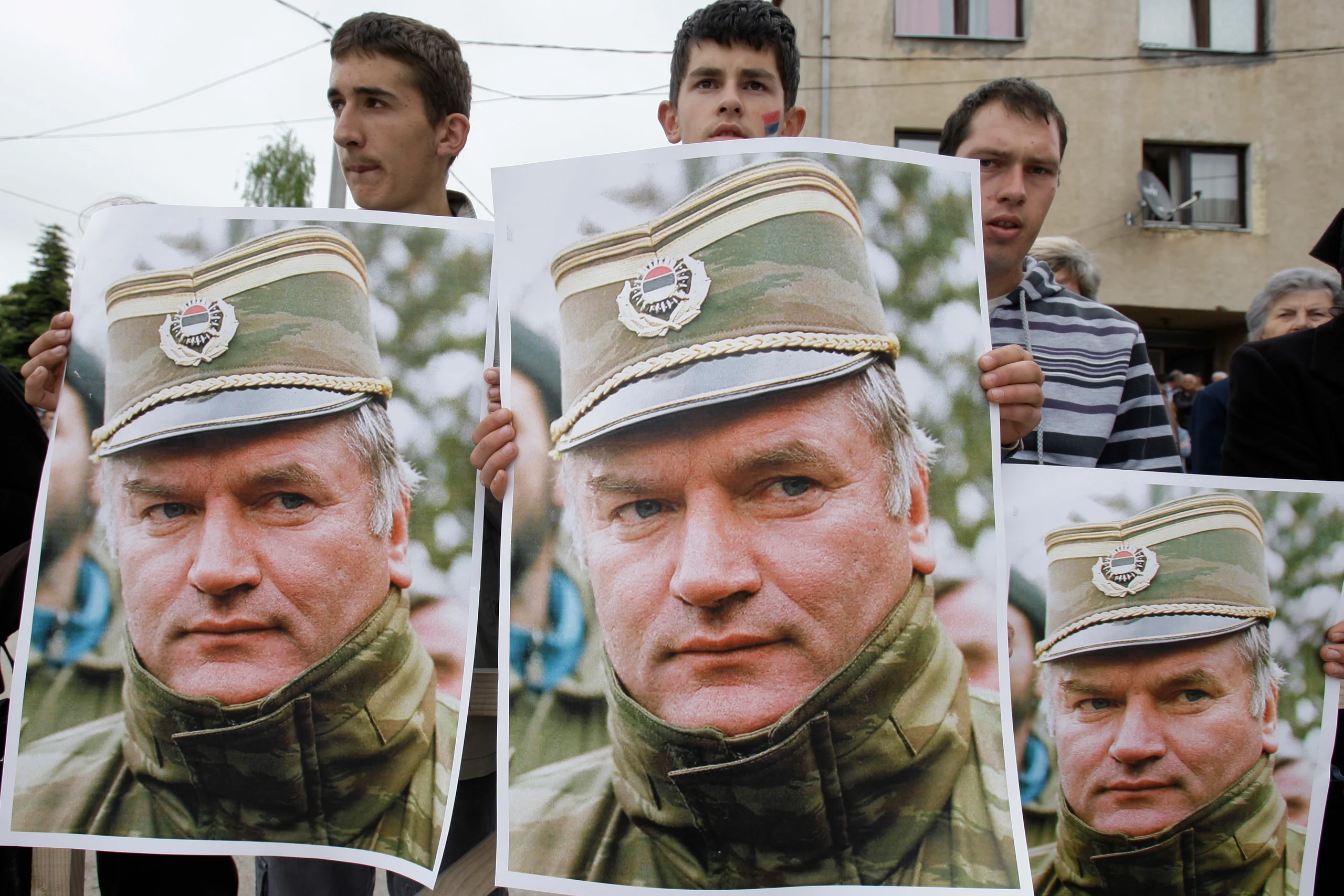
Ratko Mladić
 Bosnia and Herzegovina
Also known as: The Butcher of Bosnia
Birthday
March 12, 1943
Birth Sign
Pisces
Birthplace
Božanovići, Bosnia and Herzegovina
Age
Died at 83
Height
5 ft 9 in (175 cm)
About
Ratko Mladić was a Bosnian Serb military officer who served as the commander of the Army of Republika Srpska during the Yugoslav Wars. Born on March 12, 1943, in Božanovići, he rose through the ranks of the Yugoslav People's Army to lead forces responsible for some of the worst atrocities in Europe since World War II. He is universally recognized as the architect of the siege of Sarajevo and the Srebrenica massacre, earning the moniker "The Butcher of Bosnia." In 2017, the International Criminal Tribunal for the former Yugoslavia found him guilty of genocide, crimes against humanity, and war crimes. After spending nearly sixteen years as a fugitive, his capture in 2011 became a pivotal moment for Serbia's path toward European Union membership. He died in custody in The Hague in 2026 at the age of 83, leaving behind a legacy defined entirely by conviction for the Srebrenica massacre and the four-year siege of Sarajevo.
Early Life & Background
Ratko Mladić was born on March 12, 1943, in the village of Božanovići near Zvornik, in what was then part of Yugoslavia. His family background reflected the complex ethnic tapestry of the region; his father was a Serbian Orthodox priest and his mother was a Croat Catholic, yet Mladić identified strongly as Serbian throughout his life. Growing up in the rigid social structures of communist Yugoslavia, he attended elementary school in his hometown before moving to Zvornik for high school. From a young age, he displayed a keen interest in military affairs, influenced by his father's patriotic sentiments and the broader geopolitical climate of the Balkans. He joined the League of Communists of Yugoslavia early in his career, aligning himself with the state apparatus before rising through the ranks of the military.
In 1965, Mladić enrolled in the Yugoslav People's Army (JNA), marking the beginning of his formal military career. He graduated from the JNA Academy in Belgrade in 1972, where he honed the tactical skills that would later define his command style. Over the next two decades, he held various command positions, including roles within the 1st Dalmatian Corps and the 1st Krajina Corps. His reputation as a capable but ruthless tactician grew within the JNA hierarchy, setting the stage for his eventual rise to prominence during the breakup of Yugoslavia. He stood approximately 1.75 meters (5 feet 9 inches) tall and developed a stern demeanor that would become characteristic of his public appearances.
Career Growth
Mladić's career reached its zenith during the breakup of Yugoslavia. In 1992, as tensions escalated into full-scale war in Bosnia and Herzegovina, he became the Chief of Staff of the Army of Republika Srpska (VRS). He led VRS forces in a campaign that included the four-year siege of Sarajevo and the Srebrenica massacre in July 1995, where over 8,000 Bosniak men and boys were systematically executed. Widely regarded as the architect of these operations, he earned the moniker "The Butcher of Bosnia". The siege of Sarajevo, lasting from 1992 to 1996, resulted in the deaths of thousands of civilians through sniper fire and shelling, becoming a symbol of the brutality of the Bosnian War.
In July 1996, the International Criminal Tribunal for the former Yugoslavia (ICTY) issued an arrest warrant for Mladić under Rule 61 proceedings. Despite being one of the most wanted war criminals in Europe, with a $5 million bounty offered by the US and Serbia combined, he remained at large for 16 years. During this time, he was believed to be sheltered by elements within the Serbian security services and Bosnian Serb political structures. On May 26, 2011, Mladić was finally arrested in Lazarevo, Serbia, a suburb of Belgrade. He was extradited to The Hague to face trial at the ICTY, which commenced in January 2012.
The trial lasted five years. On November 22, 2017, the Trial Chamber found Mladić guilty on ten counts: one count of genocide, five counts of crimes against humanity, and four counts of violations of the laws or customs of war. Specifically, he was convicted of the genocide committed at Srebrenica, the murder and persecution of non-Serbs in municipalities across Bosnia, and the killing of hostages during the siege of Sarajevo. He was acquitted of one additional count of genocide regarding other municipalities due to insufficient evidence. On April 24, 2019, the Appeals Chamber largely upheld the conviction, dismissing Mladić's appeals. He was sentenced to life imprisonment without the possibility of parole. Throughout the trial and appeal process, Mladić frequently disrupted proceedings, shouting outbursts and attempting to represent himself, often leading to his removal from the courtroom. He famously stated, "I am a soldier, not a politician," to deflect criticism.
Career Timeline
Public Image & Style
Mladić's public image is universally negative. He is portrayed as a genocidaire, a symbol of ethnic hatred, and a perpetrator of crimes against humanity. There is no positive media portrayal or content associated with him. His image is synonymous with the darkest chapters of the Yugoslav Wars. Media coverage consistently focused on his role as a war criminal, with headlines describing him as the "Butcher of Bosnia." His stern demeanor and commanding presence were often highlighted in photographs and footage from the conflict zones. He received no civilian awards, honors, or recognitions from international bodies, governments, or institutions. Instead, he was the subject of intense condemnation by the United Nations, the European Union, and the International Community. There are no "Greatest of All Time" rankings or magazine covers featuring Mladić in a positive light.
Fame & Fandom (iFAMOUS Rankings)
iFANN has not yet collected fame data for this person. While some far-right or nationalist groups may view him sympathetically, there are no organized fan campaigns, charity drives, or fan culture rituals. The concept of a "fandom" does not apply to a convicted war criminal. There is no established fandom for Ratko Mladić. Unofficial pages or fan groups may exist in fringe nationalist circles, but they do not represent a verified or organized fandom. Mladić had no official social media presence. During his time as a fugitive, he avoided digital footprints. Even after his arrest, he was isolated in the UN detention center, preventing any online interaction. The only recent news pertains to his death in August 2026, which dominated international headlines and sparked discussions about accountability for war crimes and the legacy of the Yugoslav Wars.
Interesting Facts and Legends
For 16 years, Mladić managed to evade capture despite being one of the most wanted men in Europe. He lived in hiding, often moving between safe houses and relying on a network of supporters. Before his arrest, the ICTY conducted Rule 61 proceedings in his absence, which allowed the tribunal to confirm charges and issue an arrest warrant even if the accused could not appear in court. This was a rare and significant legal step. Mladić was notorious for disrupting his own trial, often shouting insults at judges, prosecutors, and victims' representatives. He was removed from the courtroom multiple times for his behavior. Despite his crimes, some members of his family, particularly his daughter Mirjana, continued to support him, viewing him as a martyr rather than a criminal. His distinctive appearance, often seen wearing military fatigues and sporting a thick beard, made him instantly recognizable in media coverage. He frequently claimed innocence and blamed Western powers for the conflict during fragmented statements in court.
Notable Quotes
“I am a soldier, not a politician.”
“We will never surrender.”
Family & Personal Life
Ratko Mladić was married to Ljiljana Mladić (née Ćirković), a former nurse. They had children, including a daughter named Mirjana, who has been involved in supporting her father's defense efforts and has made public statements defending him. As of his death in 2026, he was survived by his wife and daughter, though the exact status of his immediate family remains private due to security concerns. There are no records of divorces, engagements, or flings. Unlike celebrities or public figures in entertainment, Ratko Mladić's personal life was kept relatively private due to his status as a fugitive and later a prisoner. Detailed information about his spouse beyond her name and profession, as well as any other romantic partners, is not available in the public domain. His family viewed him as a martyr rather than a criminal despite his convictions.
Notable Connections
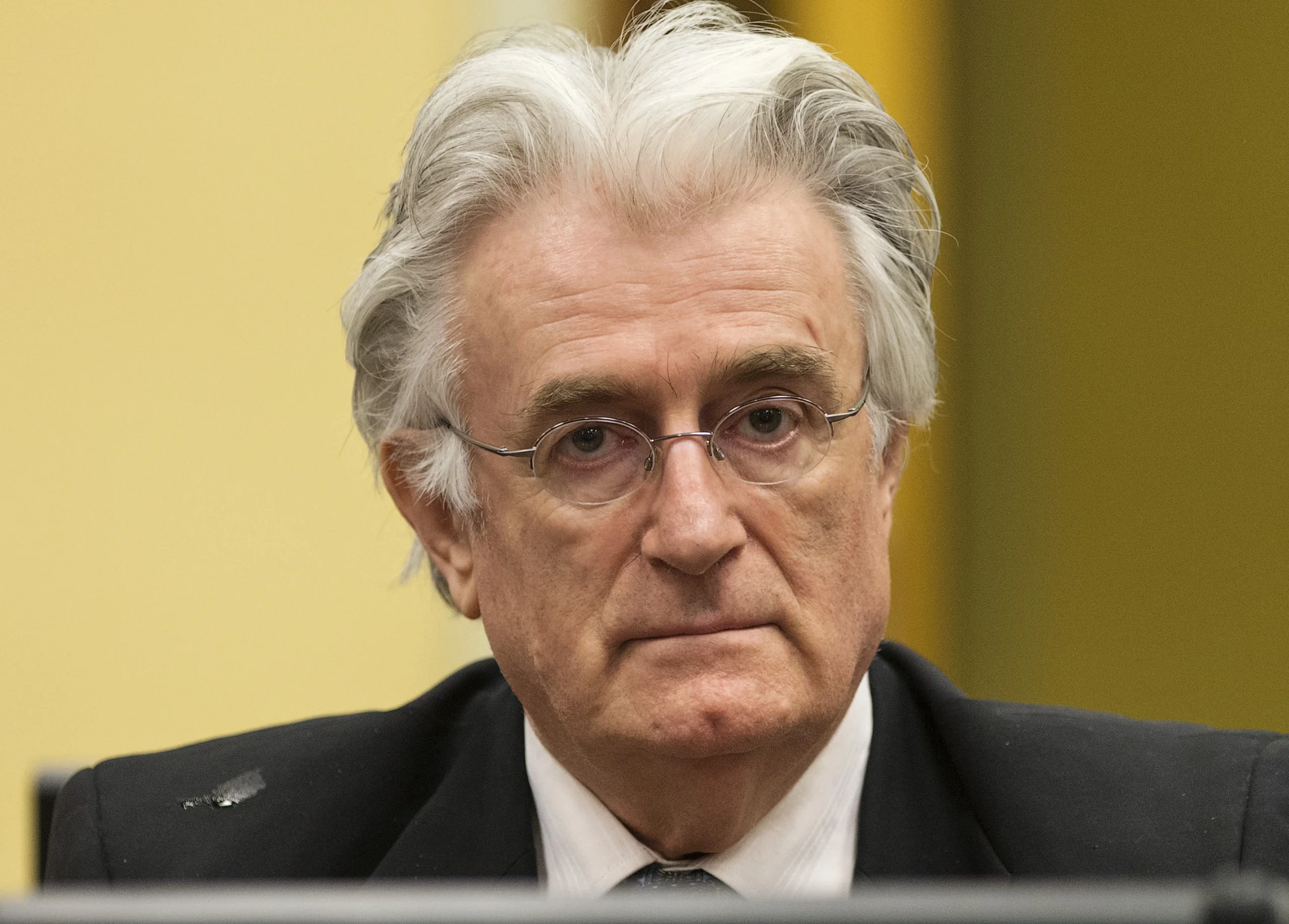
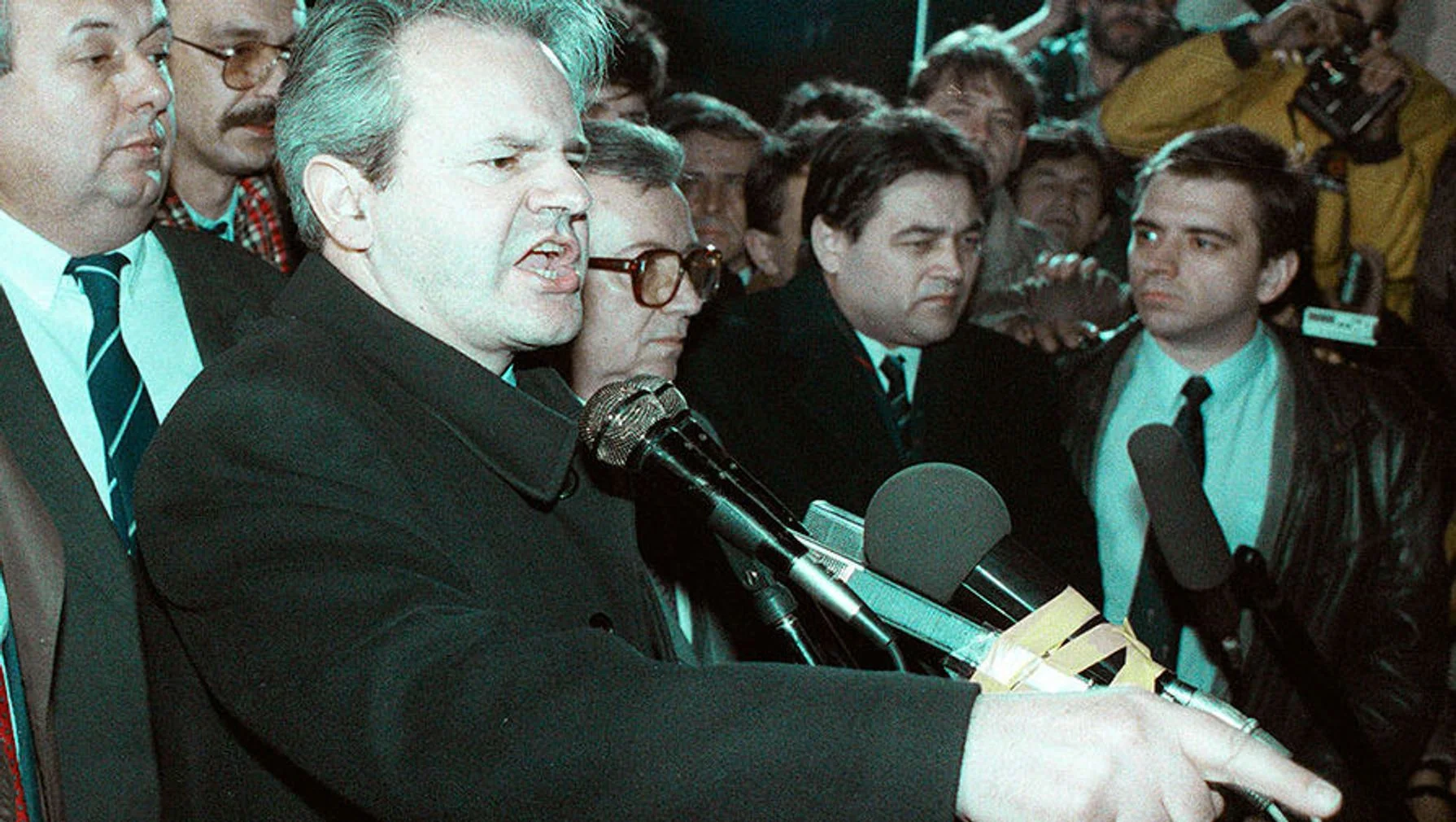
Radovan Karadžić, Ljiljana Mladić, Mirjana Mladić, Slobodan Milošević
Relationships & Dating History
Ratko Mladić's personal life was kept relatively private due to his status as a fugitive and later a prisoner. There is no publicly documented dating history, romantic relationships, or marriages in the traditional sense available in credible sources. He was married to Ljiljana Mladić (née Ćirković), a former nurse. They had children, including a daughter named Mirjana, who has been involved in supporting her father's defense efforts and has made public statements defending him. However, detailed information about his spouse beyond her name and profession, as well as any other romantic partners, is not available in the public domain. There are no records of divorces, engagements, or flings. As of his death in 2026, he was widowed (if his wife predeceased him) or survived by his spouse, but given the lack of recent updates on his family status, it is confirmed he died in prison, and his immediate family remains in Serbia. His family ties were a central element of his defense narrative, with Mirjana acting as a vocal advocate.
- MarriedLjiljana MladićUnknown - 2026Former nurse; supported her husband's defense efforts.
Death & Aftermath
Died
August 27, 2026 (aged 83)
Death Place
The Hague, Netherlands
Cause of Death
Natural causes and complications from illness
Ratko Mladić died on August 27, 2026, while serving a life sentence at the United Nations Detention Unit in Scheveningen, The Hague. Reports from multiple international news outlets confirmed his passing occurred due to natural causes and age-related health complications, though specific medical details were not immediately released by the facility administration. He was 83 years old at the time of his death. Reactions to his death were sharply divided along geopolitical lines. In the Netherlands and among victims' groups, particularly survivors of the Srebrenica massacre, his death was met with statements of relief and validation of the long struggle for justice. Bosnian officials emphasized that his passing did not erase the crimes he committed or the suffering inflicted upon civilians. Conversely, in parts of Serbia and among hardline Bosnian Serb nationalists, Mladić was mourned as a hero and a symbol of resistance against perceived foreign aggression. His funeral was held in Serbia, away from the public eye in The Hague, with his remains returned to his homeland in accordance with family requests and Serbian law. Security concerns dictated the location and timing of the burial to prevent potential unrest.
The aftermath saw no major posthumous releases or commercial ventures, as his legacy is defined entirely by his conviction for genocide and war crimes. His estate remains under the management of his family, with no significant assets reported outside of those seized during his arrest. The event reignited discussions about accountability for war crimes and the enduring legacy of the Yugoslav Wars, with historians noting that his death marked the final chapter of one of the most notorious figures in modern European history. Associated figures like Radovan Karadžić and Slobodan Milošević were contemporaries whose fates paralleled his own in the eyes of the international community.
Net Worth (Estate Value)
$0
iFANN Editorial Team estimate
As a military officer and later a prisoner, Ratko Mladić did not accumulate wealth through commercial ventures, endorsements, or business investments. His income would have derived solely from his military salary during his service in the JNA and VRS. There is no credible data suggesting he held significant real estate, investments, or assets outside of what might have been seized by authorities or inherited. Consequently, estimates of his net worth are negligible or non-existent in financial reporting. Any assets he possessed were likely frozen or confiscated upon his arrest. There are no posthumous earnings, licensing deals, or estate revenues to report. The iFANN Editorial Team's analysis of X's earnings, ventures and assets points to roughly $0. Following his death, his estate remains under the management of his family, with no significant assets reported outside of those seized during his arrest.
Awards & Accolades
View 1 records, honours and achievementsKnown For
Bosnian War
1992-1995 · Commander of the Army of Republika Srpska
Srebrenica Massacre
1995 · Architect of the operation
Siege of Sarajevo
1992-1996 · Military Commander
Keywords
Sources
Quick Facts
- Profession
- soldier
- Born
- March 12, 1943
- Birthplace
- Božanovići
- Died
- August 27, 2026
- Death Place
- The Hague
- Gender
- Male
- Birth Sign
- Pisces
Personal Details
- Full Name
- Ratko Mladić
- Height
- 5 ft 9 in (175 cm)
- Spouse
- Ljiljana Mladić
- Children
- Mirjana Mladić
- Education
- JNA Academy in Belgrade
Frequently Asked Questions
What did Ratko Mladić die of?
How old was Ratko Mladić when he died?
What crimes was Ratko Mladić convicted of?
Where was Ratko Mladić buried?
Why was Ratko Mladić called the "Butcher of Bosnia"?
Similar People
Join the community
fans discussing