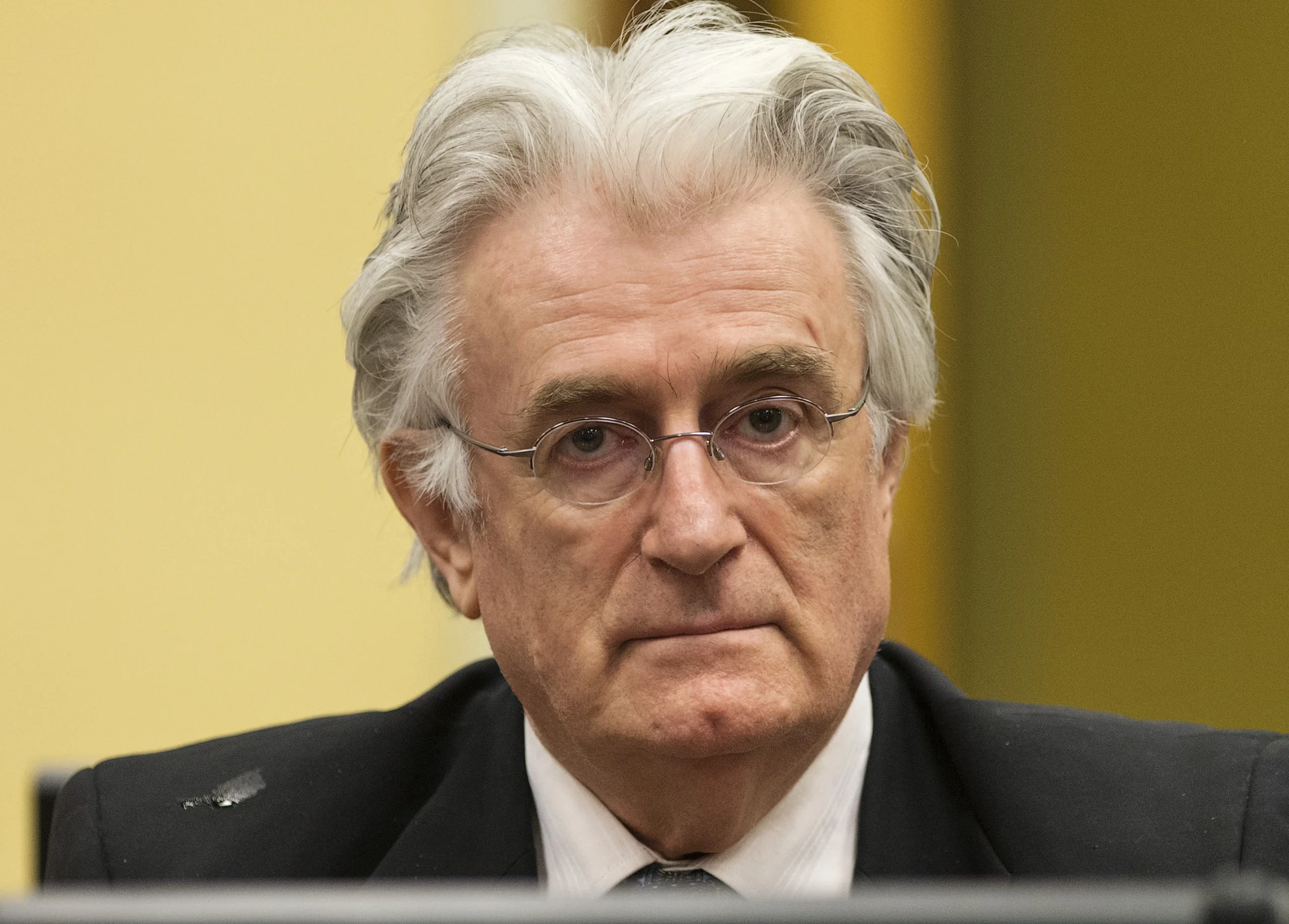
Radovan Karadžić
 Serbia
Also known as: Dragan David Dabić, Petar Glumac, Karadzic Radovan, Radovan V. Karadžić
Birthday
June 19, 1945
Birth Sign
Gemini
Birthplace
Petnjica, Montenegro
Age
81 years old
Height
5 ft 9 in (175 cm)
About
Radovan Karadžić is a Bosnian Serb former politician, psychiatrist, and poet who served as the first president of Republika Srpska from 1992 to 1996. He is currently serving a life sentence for genocide and war crimes committed during the Bosnian War.
Born in 1945 in what is now Montenegro, Karadžić trained as a psychiatrist and published poetry before entering politics. As a political leader, he became one of the most wanted war criminals of the 20th century, evading capture for over a decade. His conviction in 2016 and subsequent life sentence in 2019 marked a historic moment in international justice.
Early Life & Background
Radovan Karadžić was born on June 19, 1945, in Petnjica, a small village in the Kingdom of Yugoslavia, now Montenegro. His father, Vuk, had been a member of the Chetniks, a Serb nationalist guerrilla force, which shaped the family's deep nationalist convictions. Karadžić grew up in a household that prized Serb identity and folklore.
He attended high school in Bijeljina, Bosnia, where he showed an early aptitude for literature and medicine. In 1960, he enrolled at the University of Belgrade's Faculty of Medicine, graduating in 1970 with a specialization in psychiatry. During his studies, he also began writing poetry, adopting the pseudonym "Dr. Dragan David Dabić" for his literary work. His collections, including Pisma iz zatvora (Letters from Prison) and Ludi i obični ljudi (Madmen and Ordinary People), earned him recognition in Yugoslav literary circles.
After completing his studies, Karadžić moved to Sarajevo, where he practiced psychiatry at the Koševo Hospital. He also worked as a poet and playwright, becoming a familiar figure in the city's cultural scene. His political awakening came in the late 1980s, as ethnic tensions in Yugoslavia escalated. In 1990, he co-founded the Serb Democratic Party (SDS) in Bosnia, quickly positioning himself as a defender of Serb interests. By 1992, he had become the president of the self-proclaimed Republika Srpska, a role that would define his legacy.
Career Growth
Karadžić's political career reached its zenith during the Bosnian War (1992–1995). As the president of Republika Srpska, he directed the entity's military and political strategy, which included the siege of Sarajevo and the Srebrenica massacre. In 1995, the International Criminal Tribunal for the former Yugoslavia (ICTY) indicted him on charges of genocide, crimes against humanity, and war crimes.
Rather than face trial, Karadžić went into hiding, evading arrest for over 12 years. He lived in Belgrade under the alias "Dragan Dabić," working as an alternative medicine practitioner and psychologist. In 2008, Serbian authorities arrested him, and he was extradited to The Hague. His trial at the ICTY began in 2009 and concluded in 2016 with a conviction on ten counts, including genocide. He was sentenced to 40 years in prison. In 2019, an appeals chamber increased the sentence to life imprisonment, citing the scale and gravity of the crimes. Since 2021, he has been serving his sentence in a British prison.
Career Timeline
Public Image & Style
Karadžić's public image is overwhelmingly defined by his role in the Bosnian War and his subsequent conviction. To many Bosniaks and the international community, he is a symbol of ethnic cleansing and genocide. Among some Serb nationalists, he is still viewed as a defender of Serb interests, though this view is increasingly marginalized. His persona as a poet and psychiatrist contrasts sharply with his wartime actions, leading to descriptions of him as having "many faces." Media coverage focuses almost exclusively on his crimes, capture, and trial, with little attention to his literary work.
Fame & Fandom (iFAMOUS Rankings)
Radovan Karadžić possesses no organized fanbase, nor is there a formal name for any group of supporters; his legacy is defined exclusively by infamy rather than celebrity worship. There are no documented rituals, campaigns, or cultural myths surrounding his personal life, as he remains a convicted war criminal serving a life sentence rather than an entertainer or pop culture icon. The public discourse surrounding him is characterized by legal proceedings and historical condemnation rather than the adoration typical of famous figures. Despite this lack of traditional fandom, his notoriety in specific geopolitical contexts places him on global fame metrics. According to the iFANN Global Fame Rankings, Radovan Karadžić holds the position of the 8th most famous person from Serbia, a placement that has remained steady through recent cycles. This ranking reflects his enduring presence in media coverage related to international justice and Balkan history, tracked across global signals of attention without requiring explicit explanation of the underlying data inputs. While he does not command the crowds of a concert hall or the digital engagement of a social media star, his status as one of the world's most wanted men and a figure of historic consequence ensures his continued visibility in authoritative databases. The absence of a fan community underscores the unique nature of his fame, which exists within the realm of criminal justice and political history rather than entertainment.
Interesting Facts and Legends
During his years as a fugitive, Karadžić utilized multiple aliases, including "Petar Glumac" (Peter Actor) and "Dragan David Dabić," the latter being his pen name as a poet. He published over ten books of poetry, some of which were well-regarded in Yugoslavia before the conflict. He also practiced bioenergetic healing, claiming to cure ailments through energy manipulation, a practice detailed in a 2020 New York Times opinion piece by a former patient. His arrest in 2008 concluded a decade-long manhunt following a coordinated effort involving Serbian intelligence and the ICTY. Historical records highlight the Srebrenica Genocide of 1995 as a central event in his conviction, where he was found guilty of crimes against humanity. The story of his evasion, living in plain sight in Belgrade while disguised as a general practitioner, remains a widely retold account of his attempts to avoid capture. On March 24, 2016, the International Criminal Tribunal for the former Yugoslavia convicted him, sentencing him to 40 years, a verdict upheld as a life sentence in 2019. In 2021, he began serving his term in a British prison, where he continues to face legal challenges regarding his treatment as of 2026.
Notable Quotes
“I am not a war criminal. I am a victim of a conspiracy.”
“The Tribunal is a tool of the victors.”
“I wrote poetry because it was the only way to express my soul when the world was falling apart.”
Family & Personal Life
Radovan Karadžić's father, Vuk, was a Chetnik fighter, and his mother, Jovanka, was a homemaker. He had two siblings, but their names are not widely publicized. Karadžić married Ljiljana Zelen in 1968, a pharmacist who remained loyal throughout his political career and his years as a fugitive. They had three children: daughters Dijana and Milena, and a son, Marko. Ljiljana managed the household and supported him while he was in hiding. She died in February 2026 in East Sarajevo, leaving Karadžić widowed.
Notable Connections
Ratko Mladić, Slobodan Milošević, Ljiljana Zelen Karadžić.
Relationships & Dating History
Radovan Karadžić married Ljiljana Zelen in 1968. She was a pharmacist and remained by his side during his time as a fugitive, managing their household and caring for their children while he hid. They had two daughters, Dijana and Milena, and a son, Marko. Ljiljana passed away in February 2026. There are no public records of other romantic relationships or marriages; his personal life was largely overshadowed by his political rise and subsequent flight. As of 2026, Karadžić is widowed.
- MarriedLjiljana Zelen Karadžić1968 - 2026Married for 58 years until her death in February 2026.
Salary, Net Worth In 2026
$1 Million
iFANN Editorial Team estimate
As a convicted war criminal serving a life sentence, Radovan Karadžić has no active income stream. Estimates of his net worth prior to his arrest varied significantly, often citing assets accumulated through his political position and potential illicit activities, ranging from $1 million to $5 million, though these figures are speculative and unverified. Per iFANN's editorial analysis, the total value attributed to his estate is $1 Million. Since his incarceration, his assets have been frozen by international tribunals and national governments. As of 2026, his estate value is effectively negligible in terms of liquid wealth accessible to him, with any remaining assets managed by the court or seized for reparations. There is no public data on posthumous earnings or estate management as he is currently alive but imprisoned.
Awards & Accolades
View 1 records, honours and achievementsKnown For
President of Republika Srpska
1992 · Political leader
Bosnian War
1992 · Wartime leader
Srebrenica genocide
1995 · Perpetrator
Keywords
Sources
Quick Facts
- Profession
- politician, poet, psychiatrist
- Born
- June 19, 1945
- Birthplace
- Petnjica, Montenegro
- Gender
- Male
- Spouse
- Ljiljana Zelen Karadžić
- Children
- Dijana, Milena, Marko
- Height
- 5 ft 9 in (175 cm)
Personal Details
- Full Name
- Radovan Karadžić
- Height
- 5 ft 9 in (175 cm)
- Spouse
- Ljiljana Zelen Karadžić
- Children
- Dijana, Milena, Marko
- Education
- University of Belgrade, Faculty of Medicine
Frequently Asked Questions
What is Radovan Karadžić currently doing?
Is Radovan Karadžić still alive?
Why was Radovan Karadžić arrested?
Did Radovan Karadžić write poetry?
How long did Radovan Karadžić evade capture?
Similar People
Join the community
fans discussing