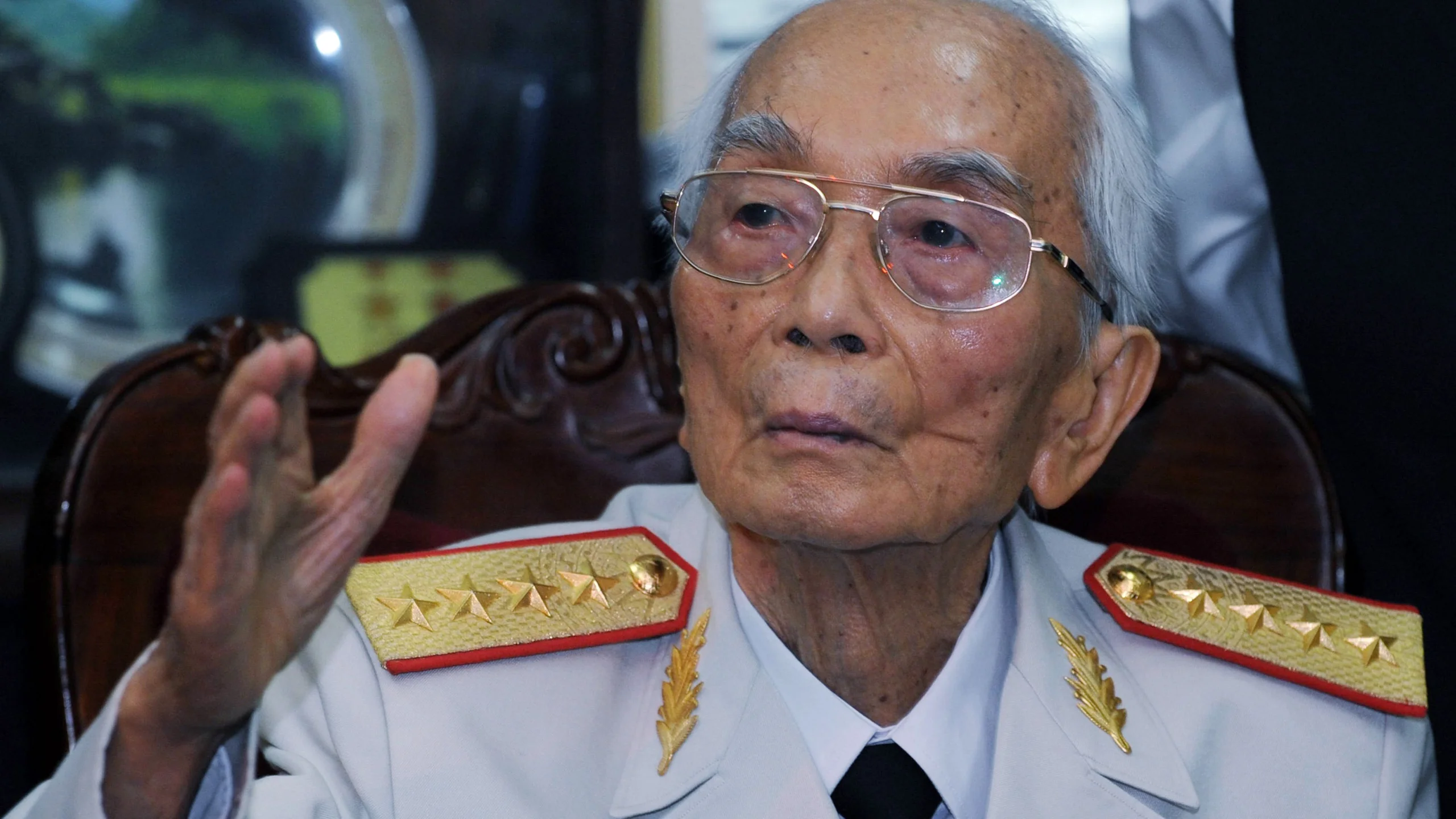
Võ Nguyên Giáp
 Vietnam
military personnel•politician•journalist
Also known as: General Giap, Vo Nguyen Giap, Đại tướng
Birthday
August 25, 1911
Birth Sign
Sagittarius
Birthplace
Lộc Thủy, Quảng Bình Province, Vietnam
Age
Died at 102
Height
5 ft 7 in (1.70 m)
About
Võ Nguyên Giáp was a Vietnamese military commander, politician, and historian whose strategic brilliance defined the 20th-century struggle for decolonization in Southeast Asia. He served as the Minister of Defense of North Vietnam for over three decades and led the People's Army of Vietnam to victory against French colonial rule and later against United States forces during the Vietnam War. His career spanned from the resistance against Japanese occupation in World War II until his retirement from the Politburo in 1982.
Born into a scholarly family in Lộc Thủy, Giáp began his public life as a history teacher and journalist before joining the Việt Minh resistance. He earned the enduring nickname "The Teacher of History" for blending academic rigor with guerrilla tactics. He remained a revered figure in Vietnamese history until his death at the age of 102 in 2013.
Early Life & Background
Võ Nguyên Giáp was born on August 25, 1911, in Lộc Thủy, a village in Quảng Bình Province, Vietnam. He was the eldest of four children in a family that deeply valued education and patriotism. His father worked as a primary school teacher, and his mother managed the household, creating an environment where learning was prioritized. As a young boy, Giáp attended local schools in his hometown before moving to Hanoi to continue his studies.
In Hanoi, he enrolled at the prestigious Lycée Quốc học, where he excelled in history and politics. His academic prowess set him apart, leading him to pursue a career in education rather than immediate military service. Before entering the armed struggle, he worked as a high school history teacher and a journalist. During this time, he edited the revolutionary newspaper Cờ Giải Phóng (Liberation Flag), using his writing skills to spread anti-colonial ideas. This background as an educator shaped his unique approach to warfare, which relied heavily on historical analysis and psychological strategy rather than brute force alone.
His transition from academia to revolution began in earnest in 1941 when he joined the Việt Minh resistance movement fighting against Japanese occupation. He quickly rose through the ranks, demonstrating a talent for organization and strategy that would soon define his legendary military career.
Career Growth
Giáp's military leadership became central to Vietnam's independence movements. In 1946, he became the commander of the Việt Minh military wing and later the People's Army of Vietnam (PAVN). His first major breakthrough came during the First Indochina War with the decisive Battle of Điện Biên Phủ in May 1954. This victory effectively ended French colonial rule in Indochina and marked one of the first times a modern European power was defeated by a peasant army using a combination of guerrilla and conventional tactics.
Following this triumph, he served as Minister of Defense from 1948 to 1980, making him the longest-serving defense minister in Vietnamese history. During the Vietnam War, he commanded North Vietnamese forces against South Vietnam and its American allies, overseeing major operations such as the Tet Offensive in 1968 and the Easter Offensive in 1972. Although he stepped down from direct command in 1972, he remained a key political figure until his retirement from the Politburo in 1982 and as Deputy Prime Minister in 1991. He also led the final offensive in 1975 that unified Vietnam and commanded forces in the 1978 invasion of Cambodia and the 1979 Sino-Vietnamese War.
Career Timeline
Public Image & Style
Giáp's public image was characterized by humility, intellectual depth, and unwavering commitment to national sovereignty. He was portrayed in Vietnamese media as a wise, paternal figure who led his people through decades of conflict with grace and determination. His attire was consistently simple, typically wearing the standard green uniform of the Vietnamese People's Army without adornment. He rarely gave interviews in English, preferring to speak in Vietnamese, and his content primarily took the form of books and speeches emphasizing unity and resilience.
Fame & Fandom
Võ Nguyên Giáp commanded a global historical footprint that transcended his lifetime, maintaining a presence in international memory through decades of conflict and posthumous recognition. His standing remains robust within the iFANN Global Fame Rankings as of September 2026, where he is recorded as the 2nd most famous person in Vietnam and the 21st most famous person in Southeast Asia. These placements reflect a sustained attention to his strategic legacy across media coverage and consumption signals worldwide.
Regarding his audience, there is no formal fandom name documented for Võ Nguyên Giáp; the public relationship with him was defined by state-sanctioned reverence rather than organized fan culture. He was known by titles such as "Đại tướng" or "Người Anh Cả," reflecting a paternal role as the Eldest Brother of the nation rather than the dynamic of a celebrity fanbase. His legacy is celebrated through annual commemorations, schools named after him, and cultural productions that highlight his contributions to Vietnam's independence.
Interesting Facts and Legends
Before becoming a general, Giáp served as a history teacher, a duality often cited as the origin of his scholarly approach to warfare. Historians frequently refer to him as the "Teacher of History" due to his background, noting how he applied historical wisdom to military strategy throughout his career. One legendary story involves his decision to delay the attack at Điện Biên Phủ despite pressure from superiors, allowing him to wait for better weather conditions, a move that proved critical to the victory.
He was also known for his ability to communicate complex military strategies in simple, accessible language. Another notable fact is his role in the 1978 invasion of Cambodia and the 1979 Sino-Vietnamese War, showing his influence extended well beyond the Vietnam conflict. In 2026, his status as a symbol of resistance against imperialism was formally recognized when Palestine awarded him its highest state honor, the Star of Palestine, posthumously conferred by President Mahmoud Abbas.
Notable Quotes
“We must fight with the spirit of the people, not just with weapons.”
“We knew we could not win militarily, but we knew we could win politically.”
Family & Personal Life
Võ Nguyên Giáp was married twice. His first wife was Nguyễn Thị Quang Thái, a fellow revolutionary and journalist who died in 1947 while imprisoned by the French. They had no children together. After her death, he married Đặng Bích Hà in 1950. She was a former student of his and became a prominent writer and journalist. The couple had three children: Võ Anh Linh, Võ Hồng Anh, and Võ Đại tướng. There is no public record of other romantic relationships or dating history beyond these two marriages. Giáp remained devoted to his family throughout his life, often citing his wife's support as crucial to his survival and success. As of his death in 2013, he was widowed, having outlived both his wives.
Notable Connections
Ho Chi Minh, Le Duan, Võ Anh Linh.
Relationships & Dating History
Võ Nguyên Giáp was married twice during his lifetime. His first marriage was to Nguyễn Thị Quang Thái, a fellow revolutionary and journalist. They wed during the early years of the resistance, but their union was cut short when she died in 1947 while imprisoned by the French. The couple did not have any children together. Following her tragic death, Giáp remained dedicated to the revolutionary cause.
In 1950, he married Đặng Bích Hà, who was formerly a student of his. She went on to become a prominent writer and journalist in her own right. Together they raised three children: Võ Anh Linh, Võ Hồng Anh, and Võ Đại tướng. Giáp remained devoted to his family throughout his life, often citing his wife's support as crucial to his survival and success. As of his death in 2013, he was widowed, having outlived both his wives.
- MarriedNguyễn Thị Quang Thái1938 - 1947She died in prison while imprisoned by the French; they had no children.
- MarriedĐặng Bích Hà1950 - 2013Former student who became a writer and journalist; they had three children.
Death & Aftermath
Died
October 4, 2013 (aged 102)
Death Place
Hanoi, Vietnam
Cause of Death
Heart failure
General Võ Nguyên Giáp passed away on October 4, 2013, at Bach Mai Hospital in Hanoi at the age of 102. The official cause of death was heart failure following a long period of illness and advanced age. His final days were spent under medical care within the hospital, and no criminal or civil legal process followed the event, as the circumstances were treated strictly as a matter of natural decline rather than a subject for investigation or inquest.
A grand state funeral was held shortly after his passing, featuring a procession where his coffin was carried through the capital while top political and military leaders attended the rites. Thousands of citizens lined the streets of Hanoi to pay their respects to the man known as the People's General. Following the ceremony, he was cremated, and his ashes were scattered in accordance with his wishes. Tributes poured in from government officials, military leaders, and international figures who recognized his status as a self-taught soldier and one of the foremost military strategists of the twentieth century.
Posthumously, his legacy has continued to be honored through various means, including documentaries such as Đại tướng Võ Nguyên Giáp - Một huyền thoại. Notably, on June 19, 2026, Palestine posthumously awarded him the Grand Collar Medal of the State of Palestine (also referred to as the Star of Palestine), the highest state honor in the country, conferred by President Mahmoud Abbas. This award was presented in recognition of his lifelong support for the Palestinian cause and his role as a symbol of resistance against imperialism.
Net Worth (Estate Value)
$0
iFANN Editorial Team estimate
There is no net worth data for Võ Nguyên Giáp, as he was a public servant and military leader who did not accumulate personal wealth in the traditional sense. His salary and resources were provided by the state, and he lived modestly throughout his life. After his death, there is no estate value to report, as his assets were minimal and managed by his family in accordance with Vietnamese customs. His legacy is measured not in financial terms but in the liberation of his nation and the inspiration he provided to anti-colonial movements worldwide.
Awards Won (3)
Võ Nguyên Giáp received numerous honors during his lifetime and after his death. He was named a Marshal of the People's Army of Vietnam in 1979, the highest rank in the Vietnamese military. He was also awarded the Order of Ho Chi Minh, Vietnam's highest civilian decoration, in 1994. In 2026, the posthumous award from Palestine added to his list of international recognitions.
1979 · Military Rank
1994 · Civilian Decoration
Known For
Battle of Điện Biên Phủ
1954 · Commander
Vietnam War
1968 · Commander
Tet Offensive
1968 · Strategist
Keywords
Sources
Quick Facts
- Profession
- military personnel, politician, journalist
- Born
- August 25, 1911
- Birthplace
- Lộc Thủy, Quảng Bình Province, Vietnam
- Died
- October 4, 2013
- Death Place
- Hanoi, Vietnam
- Gender
- Male
- Spouse
- Nguyễn Thị Quang Thái, Đặng Bích Hà
- Birth Sign
- Sagittarius
Personal Details
- Full Name
- Võ Nguyên Giáp
- Height
- 5 ft 7 in (1.70 m)
- Spouse
- Nguyễn Thị Quang Thái, Đặng Bích Hà
- Children
- Võ Anh Linh, Võ Hồng Anh, Võ Đại tướng
- Education
- Lycée Quốc học
Frequently Asked Questions
Who was Võ Nguyên Giáp?
When did Võ Nguyên Giáp die?
What was Võ Nguyên Giáp's most famous battle?
Did Võ Nguyên Giáp have any children?
What awards did Võ Nguyên Giáp receive?
Join the community
fans discussing