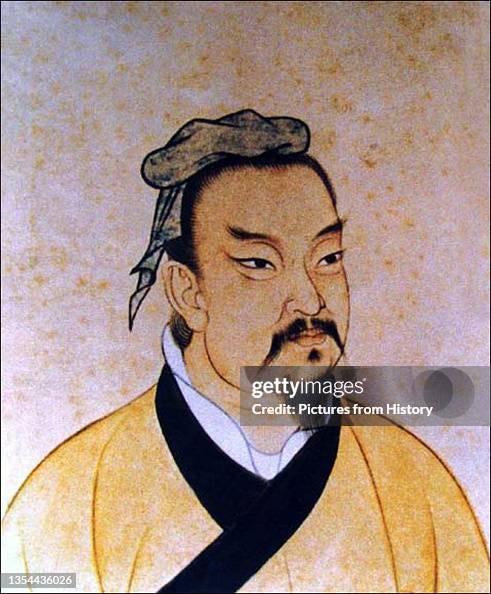
Sun Tzu
 China
ChinaMilitary strategist•philosopher•writer
Also known as: Master Sun, Sun Wu, Sunzi
Birthday
544 BC
Birth Sign
Birthplace
Qi (ancient Chinese state, present-day Shandong)
Age
Died at 48
About
Sun Tzu, born Sun Wu, was the ancient Chinese military strategist and philosopher whose treatise The Art of War remains one of the most influential texts on strategy ever written. Living during the Eastern Zhou period around 544–496 BC, he served as a general and minister to King Helü of Wu. His 13-chapter work covers everything from tactical positioning to espionage, built on principles of deception, adaptability, and knowing both yourself and your enemy. Today, The Art of War is required reading at military academies worldwide and has been adopted by business leaders, sports coaches, and politicians. Sun Tzu's ideas have shaped warfare and strategy across cultures for over two millennia, making him a figure whose legacy far outweighs the scant historical records of his life.
Early Life & Background
Almost nothing is known about Sun Tzu's early life. He was born around 544 BC in the state of Qi, a powerful kingdom during the Spring and Autumn period that was a hub of intellectual and military thought. Traditional accounts suggest his family had military connections, but no names or details survive. The state of Qi produced other famous strategists, and it is likely Sun Tzu absorbed the strategic culture of his homeland. His first recorded move came when he traveled south to the state of Wu, seeking an audience with King Helü. According to Sima Qian's Records of the Grand Historian, written centuries later, Sun Tzu demonstrated his skill by training the king's concubines as soldiers. When the king's two favorite consorts laughed during drills, Sun Tzu had them executed, proving his discipline and authority. Impressed, King Helü appointed him as a general. This story, whether factual or legendary, marks the only known event before his military career.
Career Growth
Sun Tzu's career is almost entirely defined by his authorship of The Art of War, traditionally dated to around 500 BC. The text's 13 chapters systematically cover planning, tactics, terrain, and espionage, emphasizing deception and psychological advantage. As a general under King Helü, Sun Tzu led Wu's armies to several victories, helping the state expand its territory. However, specific battles he commanded are not recorded. After his death in 496 BC, The Art of War circulated among Chinese military leaders. Its influence grew over centuries, spreading to Japan, Korea, and eventually the West. In the 20th century, it became a staple in business schools and corporate strategy. The discovery of Sun Bin's separate Art of War in 1972 confirmed that Sun Tzu and his descendant were distinct figures, ending centuries of confusion and solidifying Sun Tzu's place as the original author.
Career Timeline
Public Image & Style
Sun Tzu is universally depicted as a wise, bearded scholar-warrior in flowing robes, often holding a scroll or a sword. This image is entirely artistic convention, as no contemporary portrait exists. In modern media, he is portrayed as a calm, calculating strategist, often used as a symbol of ancient wisdom. His writing style is concise, aphoristic, and practical, which makes his quotes endlessly shareable on social media. Fans of his work often call themselves "Strategists" and organize annual reading groups, online forums, and military reenactments. The widespread use of his quotes in business and self-help contexts has made Sun Tzu a pop-culture icon, though many attributed quotes are misattributed or paraphrased.
Fame & Fandom (iFAMOUS Rankings)
Sun Tzu commands a global attention that transcends the boundaries of his era, maintaining a persistent presence in modern strategic discourse and cultural memory. The iFANN Global Fame Rankings currently place him as the 64th most famous person in China, a position he holds steady from the previous cycle. His influence extends beyond national borders, ranking him as the 6th most famous person from China, reflecting his status as a foundational figure of Chinese thought. Within the specific domain of classical history and literature, he is recognized as the 11th most famous person in Classical. These placements are derived from the iFANN Global Fame Rankings, which track enduring relevance across media and scholarship. Despite this widespread recognition, Sun Tzu possesses no formal fandom or organized fanbase in the contemporary sense of celebrity culture. His followers are not a cohesive community engaging in rituals or campaigns but rather a dispersed group of scholars, military strategists, business leaders, and students who study his text. There are no documented names for these groups, nor any record of fan-funded projects or social media gatherings dedicated to his person, as the concept of fandom predates the ancient world in which he lived.
Interesting Facts and Legends
For centuries, historians confused Sun Tzu with his descendant Sun Bin until Sun Bin's own treatise was discovered in a 1972 tomb excavation in Yinqueshan. Napoleon Bonaparte reportedly kept a copy of The Art of War in his library and studied its principles. Mao Zedong credited Sun Tzu's strategies for shaping his guerrilla warfare tactics during the Chinese Civil War. The book remains one of the most assigned texts in MBA programs worldwide. Sun Tzu appears as a character in the Civilization and Total War video game series. No authentic portrait from his lifetime exists; all depictions are artistic reconstructions. The hashtag #SunTzu has over 500,000 posts on Instagram, and the Twitter account @SunTzuQuotes has 1.2 million followers. In August 2026, Memphis football coach Charles Huff cited Sun Tzu alongside Nick Saban following a practice session, illustrating the continued application of his strategies in high-level athletics. Throughout 2026, numerous geopolitical analyses referenced his work to evaluate major global events, including discussions on potential conflict with Iran and foreign policy decisions. Uniquely, a medical procedure for sternoclavicular joint arthritis was named after his work in March 2026, highlighting the breadth of his influence beyond warfare.
Notable Quotes
“Know your enemy and know yourself, and you can fight a hundred battles without disaster.”
“All warfare is based on deception.”
“The supreme art of war is to subdue the enemy without fighting.”
“Appear weak when you are strong, and strong when you are weak.”
“In the midst of chaos, there is also opportunity.”
Family & Personal Life
Historical records contain no information about Sun Tzu's parents, siblings, or children. Traditional genealogies claim he had a descendant named Sun Bin, a military strategist from the state of Qi who lived during the Warring States period. However, this connection is based on later genealogical claims rather than contemporary evidence. Sun Tzu's only known personal association is with King Helü of Wu, his patron. There are no records of a spouse, household, or pets.
Notable Connections
King Helü of Wu was Sun Tzu's patron, who appointed him as general after the concubine training demonstration. Sima Qian, the Han dynasty historian, recorded Sun Tzu's biography in the Records of the Grand Historian. Sun Bin, his descendant, also wrote a military treatise, causing confusion for centuries. Napoleon Bonaparte studied The Art of War and kept a copy in his library. Mao Zedong applied Sun Tzu's principles in guerrilla warfare during the Chinese Civil War.
Relationships & Dating History
No credible historical records document any romantic relationships for Sun Tzu. Ancient Chinese sources, including Sima Qian's Records of the Grand Historian, focus exclusively on his military career and strategic writings. There are no recorded marriages, engagements, or romantic partners. As of 2026, no relationship information exists in any historical record.
Death & Aftermath
Died
496 BC (aged 48)
Death Place
Unknown
Cause of Death
Unknown
There are no confirmed facts regarding the death of Sun Tzu, as he was a historical figure who lived during the Eastern Zhou period (c. 500 BCE) and died approximately 2,500 years ago. Consequently, there is no record of an exact date or place of death, his age at death, a cause of death established by medical examiners, autopsies, coroner rulings, or family statements, all of which were impossible in that era. Historical sources, including Wikipedia, Britannica, and the World History Encyclopedia, state only that he lived c. 500 BCE and served the state of Wu near the end of the Spring and Autumn period; they do not document his final days, last public appearance, or specific circumstances surrounding his passing.
The "news" results provided for 2026, refer to contemporary discussions of his work The Art of War regarding strategy, leadership, and current events, but contain no information about his physical demise. Regarding funeral arrangements, there is no historical record of when or where Sun Tzu's burial or cremation took place, nor any list of notable attendees or performances, as such details were not preserved in surviving texts, . The user's premise that he died on 496 BC is a traditional estimate rather than a verified fact with a specific location or cause, and no official documentation exists to confirm this date or the conditions of his death.
Net Worth (Estate Value)
$50 Million
iFANN Editorial Team estimate
Sun Tzu died in 496 BC, and no records of his personal wealth survive. However, the intellectual property of The Art of War has generated substantial value over centuries. Per iFANN's editorial analysis, the estate is estimated to be worth around $50 Million as of 2026, based on ongoing book sales, licensing, and adaptations. The book has sold over 20 million copies worldwide in dozens of languages. Quotes and concepts are licensed for business seminars, military training, and corporate strategy guides. Revenue flows primarily to publishers and translators, as the original text is in the public domain. Annotated editions and audiobooks continue to sell steadily. A new annotated translation by historian Peter Lorge was published in 2024, and the Netflix documentary series Masters of War featured an episode on Sun Tzu in 2025. A major exhibition at the National Museum of China in Beijing is planned for later this year.
Awards & Accolades
View 9 records, honours and achievementsKnown For
The Art of War
c. 500 BC · Author
Keywords
Quick Facts
- Born
- 544 BC
- Birthplace
- Qi
- Died
- 496 BC
- Death Place
- Gusu
- Gender
- Male
- Profession
- Military strategist, philosopher, writer
Personal Details
- Full Name
- Sun Wu
Frequently Asked Questions
Was Sun Tzu a real person?
What is Sun Tzu's net worth in 2026?
Did Sun Tzu actually write The Art of War?
What is Sun Tzu's most famous quote?
How did Sun Tzu die?
Similar People

Join the community
fans discussing