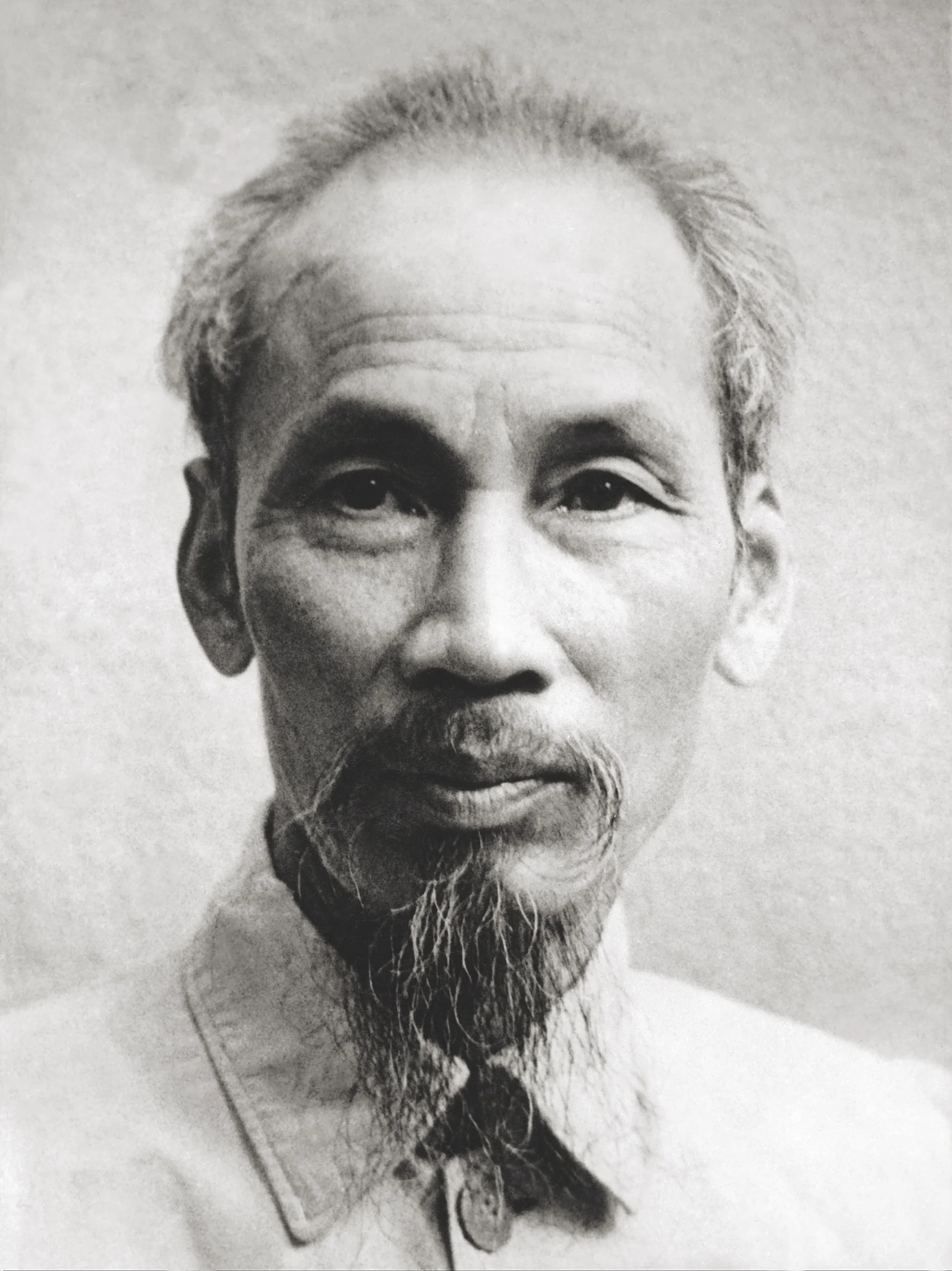
Ho Chi Minh
revolutionary•statesman•writer
Also known as: Nguyễn Ái Quốc, Uncle Ho, Bác Hồ, Nguyễn Sinh Cung
Birthday
May 19, 1890
Birth Sign
Taurus
Birthplace
Kim Liên, Nghệ An, French Indochina
Age
Died at 79
Height
5 ft 4 in (163 cm)
About
Hồ Chí Minh was a Vietnamese communist revolutionary and statesman who founded the Democratic Republic of Vietnam in 1945. Born Nguyễn Sinh Cung in 1890, he became known globally as Uncle Ho. He served as the first Prime Minister from 1945 to 1955 and the President from 1946 until his death in 1969. A committed Marxist–Leninist, he played a central role in establishing the Indochinese Communist Party in 1930 and led the Việt Minh independence movement against French colonial rule and Japanese occupation.
His leadership defined modern Vietnam, guiding the country through decades of war and revolution. Although he never accumulated personal wealth, his influence shaped the nation's identity and political landscape. Today, he is revered across Vietnam as a national hero, with his image appearing on currency, schools, and public monuments. The city formerly known as Saigon was renamed Ho Chi Minh City in his honor following the country's reunification in 1976.
Early Life & Background
Nguyễn Sinh Cung entered the world on May 19, 1890, in Kim Liên village within the Nghệ An province of central Vietnam. His father, Nguyễn Sinh Sắc, worked as a scholar and civil servant before losing his position due to corruption allegations, while his mother, Hoàng Thị Loan, was a teacher. The family moved frequently during his childhood as his father sought new appointments. Hồ received a traditional Confucian education early on, studying classical Chinese texts that would later inform his writing style.
He attended the Quoc Hoc School in Hue, where he was exposed to French colonial administration and began developing nationalist ideas. By 1911, at age 21, he left Vietnam as a kitchen hand on a French steamship named Amiral Latouche-Tréville. This departure marked the start of a thirty-year journey abroad that took him to France, the United States, the United Kingdom, and other countries. In Paris, he became active in socialist circles and eventually joined the French Communist Party in 1920 after reading Lenin's work. He studied in Moscow in the early 1920s before moving to China, where he founded the Vietnamese Revolutionary Youth League in 1925. During this period, he adopted numerous aliases, including Nguyen Ai Quoc (Nguyen the Patriot) and Vo Thuy, to evade detection and communicate with different revolutionary groups.
Career Growth
Ho Chi Minh's career was defined by decades of revolutionary organizing and leadership. In 1919, he submitted the "Demand of the People of Annam" to the Versailles Peace Conference, demanding rights for Vietnamese people. After joining the French Communist Party in 1920, he established the Indochinese Communist Party in 1930, unifying various revolutionary groups under one banner.
In 1941, he returned to Vietnam after thirty years to lead the Việt Minh, a broad independence front. He led the August Revolution in 1945, proclaiming the independence of the Democratic Republic of Vietnam on September 2, 1945. During the First Indochina War from 1946 to 1954, he led the fight against French forces, culminating in the decisive victory at the Battle of Điện Biên Phủ. From 1954 until his death in 1969, he served as President of North Vietnam during the Vietnam War, supporting the Viet Cong insurgency in the South via the Ho Chi Minh Trail. His goal of unifying Vietnam under a communist government was achieved posthumously in 1975 when North Vietnam defeated South Vietnam. In 1967, he was awarded the Lenin Peace Prize by the Soviet Union for his contributions to peace and anti-imperialism.
Career Timeline
Public Image & Style
Ho Chi Minh is portrayed as the "beloved leader" (Bác Hồ) of Vietnam. Media and state narratives emphasize his simplicity, wisdom, and dedication to the nation's independence. He is seen as a unifying figure across generations, often depicted wearing a tunic and sandals. His public persona was built on accessibility and humility, contrasting sharply with the colonial elites he opposed. He cultivated an image of a man who shared the struggles of the common people, eating simple meals and living modestly despite his high office. This approach helped him maintain strong support among the rural population throughout his lifetime.
Fame & Fandom
iFANN has not yet collected fame data for this person. As of September 2026, there is no published ranking or global fame score available for Ho Chi Minh in the iFANN database.
There is no formal fandom name for Ho Chi Minh in the pop-culture sense. Instead, he commands a devoted following of citizens and historians who revere him as a national hero. Fan-like activities include visiting the Ho Chi Minh Mausoleum in Hanoi, participating in national holidays honoring his birthday on May 19, and studying his works. Millions of visitors travel to Vietnam each year to pay respects at his mausoleum, where his embalmed remains rest in Ba Dinh Square. The reverence shown to him functions similarly to fandom rituals, with organized tours, floral tributes, and educational programs dedicated to his legacy.
Interesting Facts and Legends
Hồ Chí Minh used between 50 and 200 different names and pseudonyms throughout his life to evade detection and communicate with different groups. Among his most famous aliases were Nguyen Ai Quoc (Nguyen the Patriot), Vo Thuy, and Ba. He wrote extensively in Chinese, Vietnamese, and French, producing poetry collections like "Prison Diary" (Nhật ký trong tù) which are highly regarded in Vietnamese literature. Despite being a head of state, he famously wore simple clothes, ate plain food, and lived in a small stilt house. He was fluent in several languages including Vietnamese, French, English, Chinese, Russian, and Thai. His ability to connect with common people often involved walking barefoot and sharing meals with peasants, creating a legendary image of humility.
Notable Quotes
“Nothing is more precious than independence and freedom.”
“I would rather smell incense than smoke gunpowder.”
“What I need most is a good cup of tea and a quiet place to think.”
Family & Personal Life
Ho Chi Minh's personal life remained shrouded in secrecy due to his use of numerous aliases and the political climate. Historical records indicate he never married in the traditional sense. One widely documented long-term partner was Tăng Tuyết Minh, a close associate and fellow revolutionary. While some accounts suggest she was his wife, official biographies often describe her as a comrade-in-arms. There are no confirmed children attributed to Hồ Chí Minh. His family background included a father who was a scholar and a mother who was a teacher, but he dedicated his adult life entirely to the revolution rather than raising a family.
Notable Connections
Vo Nguyen Giap, Le Duan, Tăng Tuyết Minh
Relationships & Dating History
Ho Chi Minh's personal life was characterized by secrecy and dedication to the revolution. Unlike modern celebrities, he did not have public romantic relationships or high-profile flings. He never married in the traditional sense, focusing his energy entirely on political work. Historical records identify Tăng Tuyết Minh as a close associate and fellow revolutionary who maintained a long-term relationship with him. While some accounts suggest they may have been married, official biographies often describe her simply as a comrade-in-arms. There are no confirmed children attributed to Hồ Chí Minh. He remained unmarried throughout his life, and as of his death in 1969, he was single by choice for the cause.
- DatingTăng Tuyết Minh? - 1969Long-term companion and fellow revolutionary; nature of relationship debated.
Death & Aftermath
Died
September 2, 1969 (aged 79)
Death Place
Hanoi, Vietnam
Cause of Death
Heart failure
Ho Chi Minh died on September 2, 1969, inside his official residence in Hanoi, which served as a medical facility during his final days. The 79-year-old revolutionary had spent his last months largely bedridden after a public birthday celebration in May, where he addressed party members and military leaders before retreating to private quarters. Medical teams reported heart failure as the cause of death, a condition exacerbated by hypertension and diabetes complications, though some accounts suggest a stroke occurred prior to passing. The nation plunged into profound mourning, with flags flown at half-mast and mass gatherings held across North Vietnam to pay respects. Tributes poured in from communist movements worldwide, including formal condolences from the Soviet Union and China. A grand state funeral took place on September 8, 1969, at Ba Dinh Square, the very site where Ho had proclaimed independence in 1945.
Hundreds of thousands of citizens lined the streets alongside top leaders from the Socialist bloc, while elaborate performances extolled his legacy as the beloved leader of the nation. His body was preserved using techniques similar to those used for Lenin in Moscow rather than buried immediately. He now rests in the Ho Chi Minh Mausoleum in Ba Dinh Square, where his embalmed remains remain on public display. Following reunification in 1975, Saigon was renamed Ho Chi Minh City, and numerous universities, hospitals, and public squares globally bear his name. The state managed his estate entirely, turning personal effects over to museums and establishing the Ho Chi Minh Scholarship to support students.
Net Worth (Estate Value)
$0
iFANN Editorial Team estimate
As a head of state in a developing nation during the mid-20th century, Ho Chi Minh did not accumulate personal wealth in the modern sense. He lived modestly, and his estate was managed by the state upon his death. Research by the iFANN Editorial Team puts his fortune at around $0, reflecting his lack of personal assets. His salary as a government official was not hoarded, and he owned no significant property or investments in his own name.
Following his death, the state turned his personal effects over to museums and established the Ho Chi Minh Scholarship to support students. The state manages his legacy through tourism, including visits to the Mausoleum and museums, generating revenue for the nation rather than his heirs. There were no estate disputes or legal battles over his assets, as everything was absorbed into state institutions dedicated to preserving his memory and supporting education.
Awards Won (1)
Ho Chi Minh received the Lenin Peace Prize in 1967 from the Soviet Union for his contributions to peace and anti-imperialism. He was posthumously declared a national hero, and the Order of Ho Chi Minh was established as the highest decoration in Vietnam. Numerous universities, hospitals, and squares bear his name, serving as enduring honors of his legacy.
1967 · Peace
Contributions to peace and anti-imperialism
Known For
Democratic Republic of Vietnam
1945 · Founder and President
Việt Minh
1941 · Leader
Indochinese Communist Party
1930 · Founder
Keywords
Sources
Quick Facts
- Profession
- writer, poet, politician
- Born
- May 19, 1890
- Birthplace
- Kim Liên
- Died
- September 2, 1969
- Death Place
- Hanoi
- Gender
- Male
- Spouse
- None
- Birth Sign
- Taurus
Personal Details
- Full Name
- Nguyễn Sinh Cung
- Height
- 5 ft 4 in (163 cm)
- Children
- Education
- Quoc Hoc School in Hue; self-taught languages and political theory
Frequently Asked Questions
What was Ho Chi Minh's real name?
How did Ho Chi Minh die?
Is Ho Chi Minh still alive?
Why is the city called Ho Chi Minh City?
Did Ho Chi Minh have children?
Join the community
fans discussing