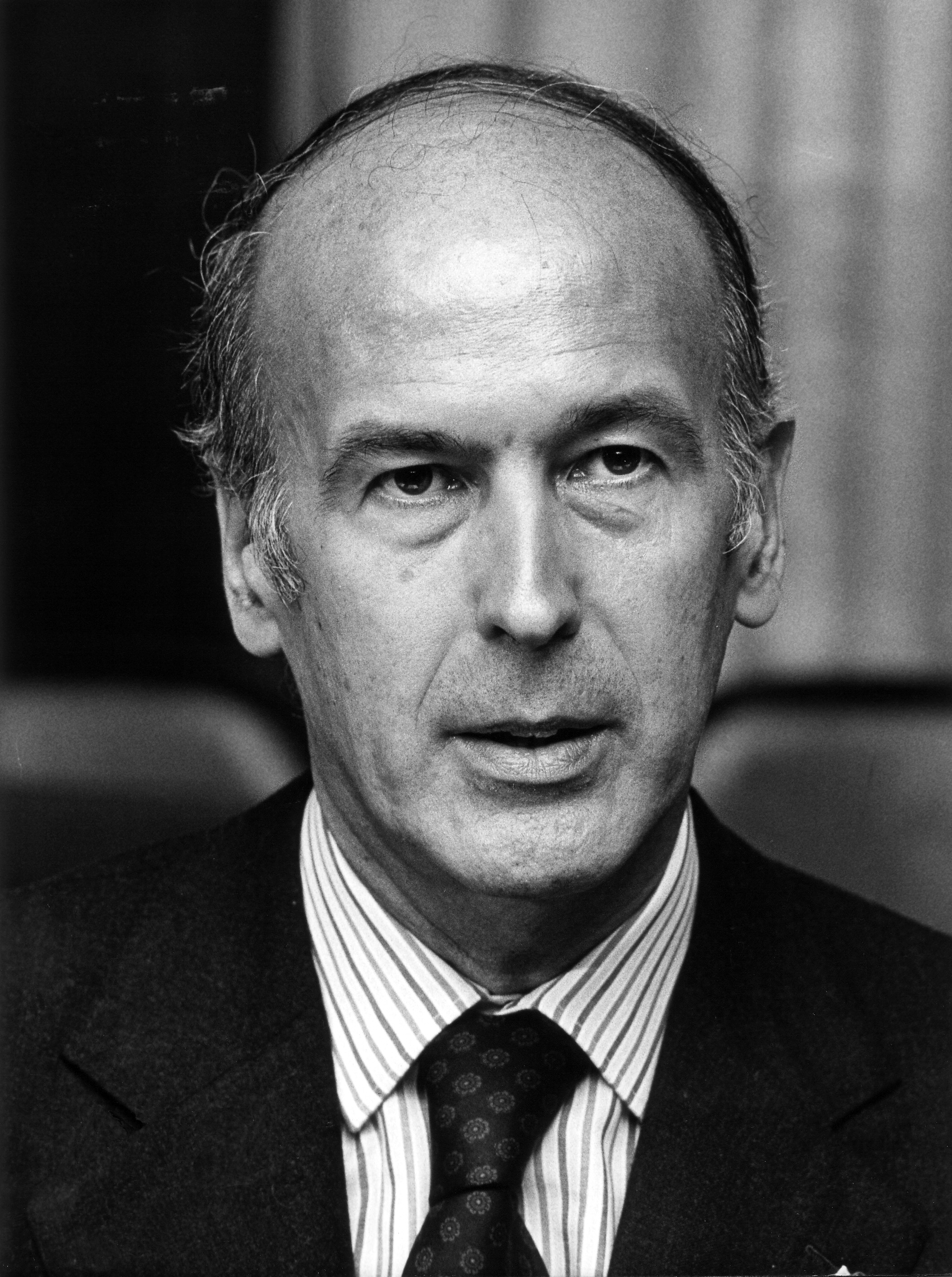
Valéry Giscard d'Estaing
 France
statesperson•official•politician
Birthday
+1926-02-02
Birth Sign
Aquarius
Birthplace
Koblenz
Age
Died at 94
About
Valéry Giscard d'Estaing, often called VGE, was a French statesman who served as President of France from 1974 to 1981. Born on February 2, 1926, in Koblenz, Germany, he grew up in a politically active family. Giscard d'Estaing studied at the École Polytechnique and the École Nationale d'Administration, then entered politics in the 1950s. He held various ministerial posts, including Minister of Finance under Prime Ministers Jacques Chaban-Delmas and Pierre Messmer, before winning the presidency in 1974 with 50.8% of the vote against François Mitterrand. His presidency brought a wave of social liberalization. He championed laws that made divorce easier, legalized contraception, and permitted abortion. He also pushed for modernization, backing major infrastructure projects like the TGV high-speed train and expanding France's nuclear power program. In the Paris region, he initiated projects that later became part of the Grands Projets, including the Grande Arche, the Musée d'Orsay, the Arab World Institute, and the Cité des Sciences et de l'Industrie. On the economic front, he promoted free trade but faced the fallout of the 1973 oil crisis, which ended the postwar boom known as the Trente Glorieuses. His austerity measures and rising unemployment eroded his popularity, and in 1981, despite high approval ratings, he lost the runoff to Mitterrand, receiving 48.2% of the vote. Giscard d'Estaing was a staunch advocate for European unity. He worked closely with West German Chancellor Helmut Schmidt to strengthen Franco-German cooperation. After leaving office, he remained active in public life. He served on the Constitutional Council and as president of the Regional Council of Auvergne from 1986 to 2004. He later presided over the Convention on the Future of Europe, which drafted the Treaty establishing a Constitution for Europe, though that treaty was ultimately rejected. In 2003, he was elected to the Académie Française, succeeding his friend, former Senegalese president Léopold Sédar Senghor. He died on December 2, 2020, at age 94, making him the longest-lived French president in history.
Fame & Fandom
Valéry Giscard d'Estaing commanded the attention of a nation and a continent, though his legacy rests on governance rather than the adulation reserved for entertainers. No formal name exists for any collective that might claim him as an icon; his public interaction remained strictly within the spheres of statecraft and political discourse, devoid of organized fan clubs or ritualistic tributes. His historical footprint is defined by the weight of office rather than the fervor of a following. Despite this lack of a celebrity-style cult, his prominence in global records remains significant. According to iFANN Global Fame Rankings, he stands the 93rd most famous person in France, a position reflecting his enduring status as a central figure in modern French history. This placement marks a shift from the previous cycle where he held the 89th spot. The data confirms that while he does not possess a fandom in the pop culture sense, his influence persists with measurable clarity across digital landscapes. He remains the 93rd most famous person in France in the August 2026 assessment, a reflection of the longevity of his political career. The rankings place him firmly among the most recognized figures of his era, even decades after leaving the Élysée Palace.
Interesting Facts and Legends
The summit hosted at the Château de Rambouillet is widely cited as the origin point for the G7 group of wealthy nations. During this meeting, Giscard d'Estaing invited leaders from five other major democracies alongside U.S. President Gerald Ford, effectively planting the seed for future international economic cooperation. In 2001, he was appointed to lead a commission tasked with drafting a constitutional treaty for the European Union, cementing his reputation as a key architect of European integration. Historians often characterize him as a modernist reformer who championed social liberalism, achieving notable milestones in women's rights and divorce laws during his presidency. He passed away on December 2, 2020, at the age of 94 due to complications from COVID-19. Obituaries described him as the Grand Old Man of French politics and the last great leader of the country's liberal right. While some online discussions have criticized his decisions as controversial, these views represent political debate rather than the formation of a legendary cult following.
Death & Aftermath
Died
+2020-12-02 (aged 94)
Death Place
Loir-et-Cher, France
Cause of Death
Complications from COVID-19 and heart problems
Family statements confirmed the passing of Valéry Giscard d'Estaing on December 2, 2020, following a period of hospitalization that began with cardiac issues. The former President of France, who turned 94 earlier that year, succumbed to complications arising from coronavirus and underlying heart conditions at a facility in the Loir-et-Cher department, rather than in a Parisian institution often reserved for high-profile figures. Public reaction across France and Europe was marked by widespread mourning and formal tributes from political peers. French President Emmanuel Macron and other leaders honored him as a key reformer who modernized French institutions, lowered the voting age to 18, and facilitated easier divorce laws. The European Parliament and various historical organizations issued statements recognizing his legacy as a modernist and a central figure in European integration, while major publications such as The Guardian and The New York Times published retrospective obituaries reflecting his stature as a statesperson.
A state funeral followed standard protocol for former presidents, held at the Invalides in Paris before his remains were interred in a location of personal significance tied to his later life in Auvergne and Loir-et-Cher. Notable attendees included current and former officials along with family members, including his daughter Valerie-Anne Giscard d'Estaing. Posthumously, his legacy persists through academic studies and the continued operation of foundations dedicated to European integration and youth initiatives, while his estate was managed privately without public controversy.
Awards & Accolades
Keywords
Quick Facts
- Profession
- statesperson, official, politician
- Born
- +1926-02-02
- Birthplace
- Koblenz
- Died
- +2020-12-02
- Death Place
- Authon
- Gender
- Male
- Spouse
- Anne-Aymone Giscard d'Estaing
- Birth Sign
- Aquarius
Personal Details
- Spouse
- Anne-Aymone Giscard d'Estaing
Join the community
fans discussing