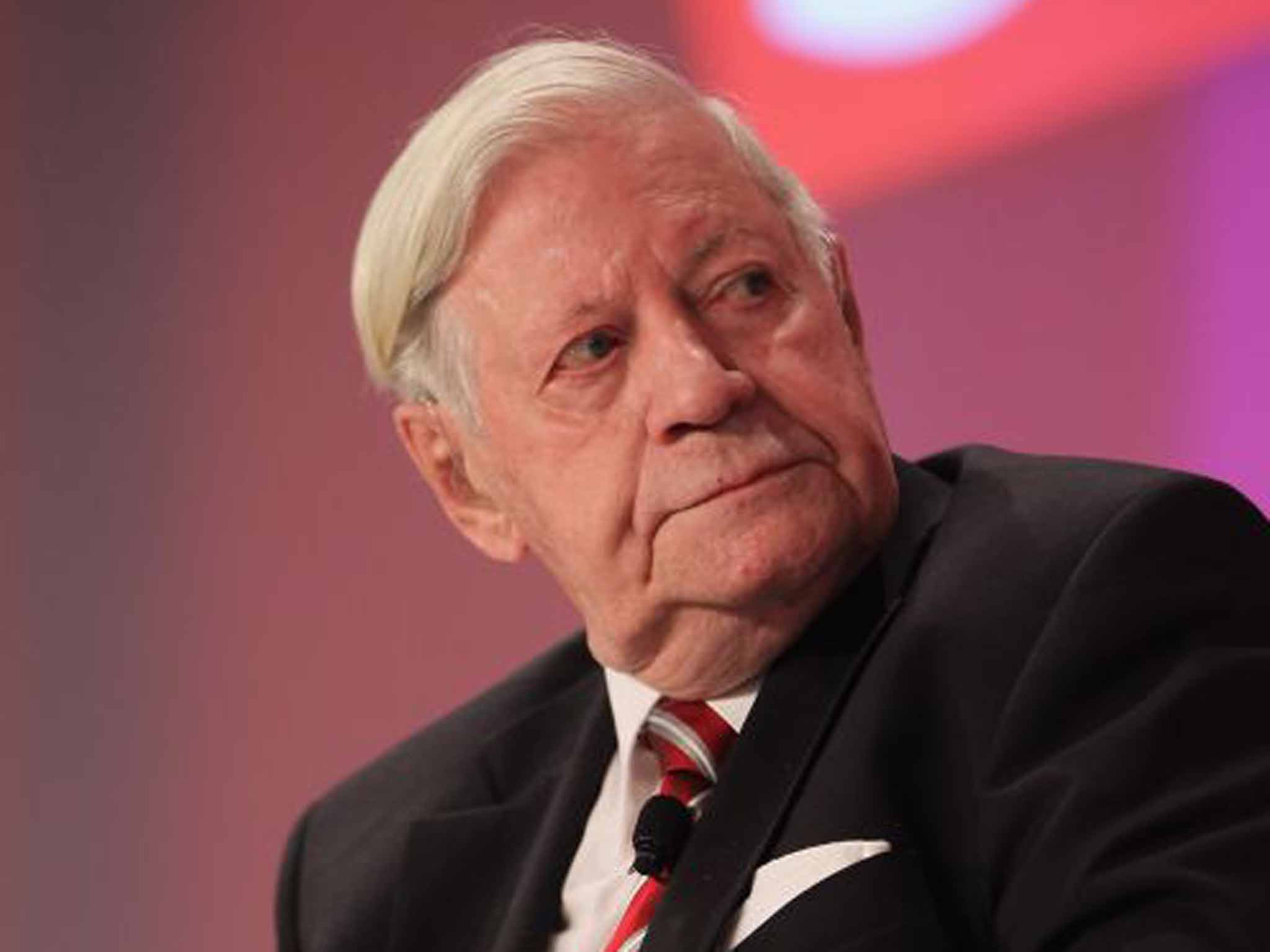
Helmut Schmidt
 Germany
politician•economist•civil servant
Also known as: H. Schmidt, Schmidt, Helmut Heinrich Waldemar
Birthday
December 23, 1918
Birth Sign
Sagittarius
Birthplace
Hamburg, Germany
Age
Died at 96
Height
6 ft 1 in (185 cm)
About
Helmut Schmidt, born Helmut Heinrich Waldemar Schmidt on December 23, 1918, in Hamburg, was a towering figure in 20th-century European politics. A member of the Social Democratic Party (SPD), he served as Chancellor of West Germany from October 1974 to September 1982, steering the nation through turbulent economic crises and managing Cold War tensions. He is widely regarded by historians as one of the most competent leaders in German history, known for his sharp intellect and strategic foresight. Schmidt died on November 10, 2015, leaving behind a legacy of steady leadership and economic prudence that defined a critical period in modern German history.
His tenure as Chancellor coincided with some of the most challenging years for the Western world. He navigated the oil shock of the 1970s, managed domestic terrorism from the Red Army Faction, and championed European integration alongside strong transatlantic relations. Before reaching the Chancellery, he built a formidable reputation as Minister of Defence and Minister of Finance under Willy Brandt. His pragmatic approach earned him two re-elections before his coalition government collapsed in 1982 due to internal disagreements over economic policy.
Early Life & Background
Helmut Schmidt was born into a middle-class family in Hamburg. His father, Carl Schmidt, worked as a customs official while his mother, Anna Helene, managed the household. His early years unfolded against the backdrop of rising Nazism. As a young man, he joined the Hitler Youth in 1933 but later expressed deep regret over this involvement, noting it resulted from the coercive environment rather than ideological conviction. In 1937, he was conscripted into the German army where he served in an artillery unit during World War II. He rose to the rank of Lieutenant before being wounded twice and spending time as a prisoner of war in British custody from 1945 to 1946.
Following his release, Schmidt pursued higher education at the University of Hamburg. He studied economics, law, and political science, earning his doctorate in economics in 1953 with a dissertation on the German steel industry. Before entering full-time politics, he worked as a journalist for the Hamburgischer Correspondent and later as a civil servant in the Hamburg Ministry of Finance. These roles allowed him to develop a reputation for fiscal prudence and administrative competence that would serve him well in his future political career. He joined the Social Democratic Party in 1946 and began his ascent through local politics in Hamburg.
Career Growth
Schmidt's political rise accelerated after joining the SPD in 1946. He was elected to the Hamburg city parliament in 1953 and entered the Bundestag in 1961. His national prominence grew rapidly when appointed Minister of Defence under Chancellor Willy Brandt in 1969. In this role, he modernized the Bundeswehr and established himself as a key architect of West Germany's defense policy. From 1972 to 1974, he served as Minister of Finance where he managed the economy during the initial stages of the global oil crisis, earning widespread acclaim for his fiscal discipline.
In October 1974, following the resignation of Willy Brandt amid the Guillaume scandal, Schmidt was elected Chancellor by the Bundestag. He led a coalition government with the Free Democratic Party until 1982. During his chancellorship, he hosted the first G7 summit at Rambouillet in 1975, establishing the framework for regular meetings among the world's leading industrial nations. He also played a crucial role in the NATO Double-Track Decision of 1979. The coalition collapsed in September 1982 due to disagreements over economic policy, and he was succeeded by Helmut Kohl. After retiring from the Bundestag in 1986, he remained an influential voice as Chairman of the International Council and a prolific author on European unity and geopolitical strategy.
Career Timeline
Public Image & Style
Schmidt projected an image of strength and determination that contrasted with the more emotional styles of some contemporaries. He stood approximately 1.85 meters tall with intense gray eyes and a firm jaw. His public persona was that of a serious, intellectual, and sometimes stern leader who prioritized facts over feelings. He was often depicted in media wearing a dark suit and tie, reinforcing his austere and professional demeanor. Known for his no-nonsense approach, he frequently stated that he was not a man of sentiment but of reason. This assertive style helped him maintain order during domestic terrorism and international crises, earning him a reputation as a far-sighted political strategist.
Fame & Fandom
The global attention directed toward Helmut Schmidt remains substantial, tracking his enduring status as a defining statesman of the late twentieth century. According to the iFANN Global Fame Rankings, he holds the position of the 78th most famous person in Germany, a placement that has held steady from the previous cycle. This ranking reflects sustained recognition across media coverage, search activity, and consumption signals worldwide. While no formal fandom name exists for his supporters, his legacy is maintained through institutional channels rather than organized fan clubs or celebrity-driven rituals. The Helmut-Schmidt-Stiftung serves as the primary vehicle for preserving his political ideas, while scholarship programs like the DAAD Helmut-Schmidt Programme continue to honor his commitment to governance. His support base consists primarily of members of the Social Democratic Party and citizens who view him as a competent leader, a reputation rooted in his handling of economic crises and Cold War tensions rather than performative appeal. Unlike modern entertainers, Schmidt did not cultivate a fanbase characterized by inside jokes, viral moments, or charitable campaigns funded by admirers. Instead, his relationship with the public remained one of a serious leader to his constituents, defined by his assertive demeanor and strategic foresight.
Interesting Facts and Legends
Helmut Schmidt was a skilled pianist who enjoyed classical music, often playing works by Beethoven and Bach. Despite his stern public image characterized by intense gray eyes and a firm jaw, he possessed a dry sense of humor and appreciated wit in conversation. He was an avid reader and wrote numerous books on history, politics, and economics, including titles like Germany and the Balance of Power and The Future of Europe. He maintained close ties with American presidents, particularly Jimmy Carter, with whom he shared a complex but productive relationship. His legendary direct dialogues with East German leader Erich Honecker included a famous statement about the difficulty of reaching agreements on the arms race. The 1967 speech regarding potential Soviet attacks on Europe remains a key document of his strategic foresight.
Notable Quotes
“If the third attempt fails, there won't be a fourth.”
“I am not a man of sentiment, but of reason.”
“The world is not a safe place for the weak.”
“We must not allow ourselves to be driven by emotions.”
Family & Personal Life
Helmut Schmidt was married only once to Loki Schmidt, née Lore Maria Schmitt. They met while both were students in Hamburg in the late 1930s or early 1940s and married on August 10, 1942. Loki Schmidt was a prominent social worker and activist known for her work in child welfare and strong support for her husband's political career. Their marriage lasted 73 years until Helmut's death in 2015. The couple had two children: a son named Johannes and a daughter named Gudrun. Both children largely stayed out of the political spotlight, though Johannes has occasionally commented on his father's legacy. Loki predeceased her husband, passing away in 2014 just months before Helmut. Their partnership was characterized by mutual respect and shared values, often cited as a model of stability in a volatile political era.
Notable Connections
Helmut Schmidt worked closely with US President Jimmy Carter and French President Valéry Giscard d'Estaing. He maintained significant relationships with fellow German politicians including Willy Brandt and Helmut Kohl. His diplomatic engagements extended to leaders across Europe and North America, particularly during his time hosting the first G7 summit. He collaborated extensively with military leaders to modernize the Bundeswehr and worked with economic advisors to navigate the oil crisis.
Relationships & Dating History
Helmut Schmidt was married only once throughout his life. He wed Loki Schmidt, née Lore Maria Schmitt, on August 10, 1942. They had met while both were students in Hamburg in the late 1930s or early 1940s. Loki Schmidt was a prominent social worker and activist known for her work in child welfare and strong support for her husband's political career. Their marriage lasted 73 years, from 1942 until Helmut's death in 2015. The couple had two children: a son named Johannes and a daughter named Gudrun. Loki predeceased her husband, passing away in 2014 just months before Helmut. There were no divorces, separations, or publicly confirmed romantic relationships outside of this marriage. Their long-standing partnership was characterized by mutual respect and shared values, often cited by contemporaries as a model of stability in a volatile political era.
- MarriedLoki Schmidt1942 - 2014Married for 73 years until her death; they had two children together.
Death & Aftermath
Died
November 10, 2015 (aged 96)
Death Place
Hamburg, Germany
Cause of Death
Natural causes related to old age
Helmut Schmidt passed away on November 10, 2015, at his home in Hamburg at the age of 96. His death marked the end of an era for post-war German politics as he was the last surviving chancellor from the immediate post-war generation who had served as head of government. A state funeral was held three days later on November 13 at St. Michael's Church in Hamburg, attended by high-ranking officials including Federal President Joachim Gauck and Chancellor Angela Merkel. Tributes poured in from across the globe with leaders praising his statesmanlike conduct and unshakeable resolve during times of crisis. His ashes were interred at Ohlsdorf Cemetery in Hamburg. Following his death, the Helmut Schmidt Foundation and the DAAD Helmut-Schmidt-Programme continued to promote his ideals of social justice and good governance. His literary works saw renewed interest and his legacy remains a benchmark for political competence in Germany.
Net Worth (Estate Value)
$1 Million
iFANN Editorial Team estimate
As a public servant and politician, Helmut Schmidt did not accumulate wealth in the manner of celebrities or entrepreneurs. His net worth at the time of his death was modest, estimated to be in the range of €500,000 to €1 million, derived primarily from his salary as Chancellor, book royalties, and speaking fees. There is no public record of a massive estate or significant business ventures. The value associated with him today is largely symbolic, representing the worth of his intellectual legacy and the ongoing revenue generated by the Helmut Schmidt Foundation and the DAAD program, which are funded by public and private donations rather than his personal assets. iFANN currently estimates Helmut Schmidt's net worth at approximately $1 Million based on available historical records of his earnings and assets.
Awards Won (3)
Helmut Schmidt received numerous accolades throughout his life reflecting his status as a global statesman. He was awarded the Charlemagne Prize in 1988 for his contributions to European integration and the Four Freedoms Award in 1976 by the Roosevelt Institute. He received the Order of Merit of the Federal Republic of Germany in 1976 and honorary doctorates from the University of Hamburg, Cambridge, and Paris. He was granted Freedom of the City by multiple cities including London and New York.
1988 · European Integration
Contributions to European unity
1976 · Human Rights
Commitment to democratic freedoms
Known For
Chancellor of West Germany
1974 · Politician
Minister of Defence
1969 · Government Official
First G7 Summit Host
1975 · Diplomat
Keywords
Sources
Quick Facts
- Profession
- politician, economist, civil servant
- Born
- December 23, 1918
- Birthplace
- Hamburg
- Died
- November 10, 2015
- Death Place
- Hamburg
- Gender
- Male
- Spouse
- Loki Schmidt
- Birth Sign
- Sagittarius
Personal Details
- Full Name
- Helmut Heinrich Waldemar Schmidt
- Height
- 6 ft 1 in (185 cm)
- Spouse
- Loki Schmidt
- Children
- Johannes Schmidt · Gudrun Schmidt
- Education
- University of Hamburg
Frequently Asked Questions
How long did Helmut Schmidt serve as Chancellor?
Who was Helmut Schmidt's wife?
What caused Helmut Schmidt's death?
Why is Helmut Schmidt considered one of the greatest German chancellors?
Does Helmut Schmidt have a foundation today?
Join the community
fans discussing