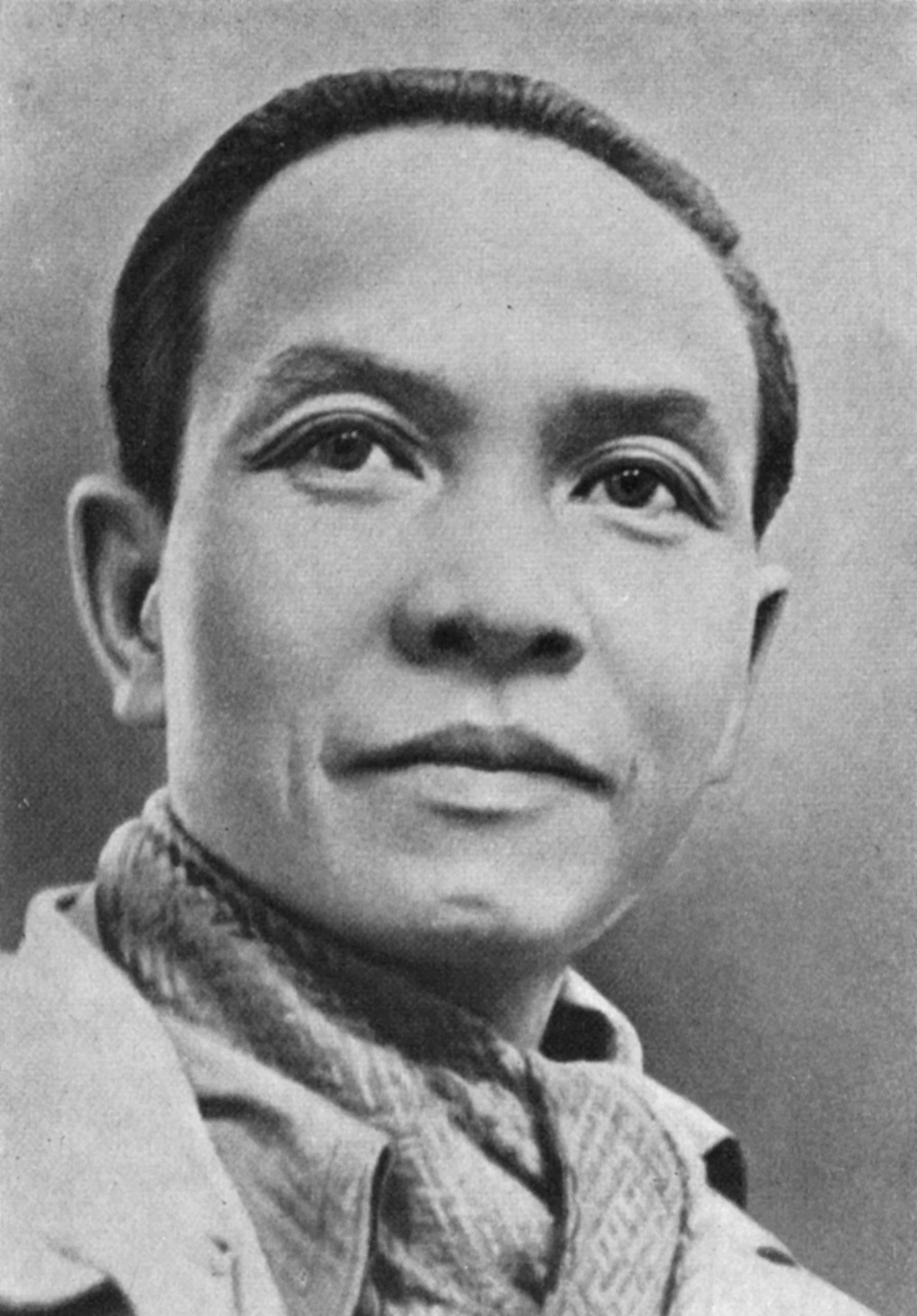
Trường Chinh
 Vietnam
Also known as: Đặng Xuân Khu, Sóng Hồng, Anh Nhân
Birthday
February 9, 1907
Birth Sign
Aquarius
Birthplace
Nam Định province, Vietnam
Age
Died at 81
About
Đặng Xuân Khu, better known by his revolutionary pseudonym Trường Chinh, was a foundational figure in modern Vietnamese history who served as a key architect of the nation's independence and socialist framework. Born in 1907 in Nam Định province, he rose through the ranks of the Indochinese Communist Party to become its General Secretary during critical periods of anti-colonial struggle. His intellectual rigor shaped the party's strategy during the First Indochina War and the subsequent establishment of the Democratic Republic of Vietnam.
Early Life & Background
Đặng Xuân Khu entered the world on February 9, 1907, in Hành Thiện village within Xuân Hồng commune of Xuân Trường district, Nam Định province. This region was historically significant as a center of scholarship and resistance against foreign rule, providing a fertile ground for young nationalist sentiments. Coming from a family of scholars and intellectuals, he received a traditional education that emphasized Confucian values alongside emerging patriotic ideals. His early years were marked by a deep engagement with literature and political philosophy, setting the stage for his future theoretical work. During the French colonial era, the young Khu became increasingly active in underground anti-colonial activities. He joined the Indochinese Communist Party in its formative years, quickly distinguishing himself through his organizational skills and sharp intellect. Before assuming national leadership roles, he worked extensively as an editor for party publications and organized student movements across the country. These early years involved dangerous underground operations and the dissemination of Marxist-Leninist theory, often requiring him to operate under multiple aliases such as "Sóng Hồng" and "Anh Nhân." It was in 1940, during a pivotal meeting in Macau, that he adopted the name Trường Chinh, meaning "Long March," signaling his commitment to a new strategic direction for the revolution.
Career Growth
Trường Chinh's ascent to power began in earnest when he was elected General Secretary of the Indochinese Communist Party in 1940. In this capacity, he formulated the key strategies that guided the August Revolution of 1945, which successfully ended French colonial rule and established the Democratic Republic of Vietnam. During the First Indochina War (1946–1954), he remained a central figure in the Central Committee, authoring influential documents that directed the war effort and the shift to guerrilla tactics. In 1951, he became the First Secretary of the Workers' Party of Vietnam, succeeding Hồ Chí Minh in many operational duties. His tenure is most noted for overseeing the land reform program between 1953 and 1956. While intended to redistribute land to peasants, the campaign faced severe implementation errors and backlash, leading to his resignation from the top post in 1956. Despite this setback, he retained significant influence within the Politburo. He served as Chairman of the Standing Committee of the National Assembly from 1960 to 1981, effectively acting as the head of the legislative body for two decades. In 1981, he succeeded Tôn Đức Thắng as the President of Vietnam. A remarkable chapter closed in July 1986 when he was elected General Secretary again following the death of Lê Duẩn. Just five months later, he pushed through the Đổi Mới reforms, initiating a shift from a centrally planned economy to a more market-oriented system. Facing internal resistance and health issues, he resigned in December 1986 and retired from active politics in 1987.
Career Timeline
Public Image & Style
In official Vietnamese narratives, Trường Chinh is portrayed as a "model communist," a brilliant theoretician, and a steadfast revolutionary. He is respected for his intellectual rigor and loyalty to the party, though his legacy is nuanced by the human cost of the land reform campaigns. He is not seen as a pop culture icon but as a foundational state figure. His image appears primarily in official party journals, historical textbooks, and state-run media in Vietnam. He is remembered for his dry, analytical writing style and his unwavering commitment to the party line, even during times of great turmoil.
Fame & Fandom (iFAMOUS Rankings)
Trường Chinh remains a figure of enduring historical weight, his presence tracked across global attention metrics that span media coverage, search activity, and consumption signals worldwide. In the August 2026 cycle of the iFANN Global Fame Rankings, he holds the position of the 50th most famous person in Vietnam, maintaining the standing from the previous period. His prominence within his native land places him at the 23rd most famous person from Vietnam, a rank that has held steady against shifting cultural tides. On a broader regional scale, he is identified as the 92nd most famous person in Southeast Asia, reflecting his lasting influence beyond national borders. Despite these measurable placements, no formal fandom exists for the late revolutionary; there is no documented name for any collective following, nor are there organized rituals or fan campaigns associated with his legacy. Public engagement with his memory remains strictly commemorative and educational, managed by state institutions rather than an organic fanbase. The absence of a named group underscores the distinction between political history and pop culture celebrity, as his image serves official narratives rather than entertainment-driven devotion.
Interesting Facts and Legends
Historical accounts suggest that Đặng Xuân Khu traced his lineage back to the Trần dynasty, specifically the family of the legendary general Trần Quốc Tuấn, adding a layer of aristocratic heritage to his revolutionary identity. Before settling on the moniker that would define his public life, he used several other revolutionary pseudonyms, including "Sóng Hồng" (Red Wave) and "Anh Nhân." He was a prolific writer whose works, such as Questions and Answers on the National Question, became required reading for party cadres. There is a distinct lack of confusion between him and other figures named "Truong" in the news, though a Chinese rocket named "Truong Chinh-7A" experienced a launch failure unrelated to the politician. Streets and schools across Vietnam bear his name, ensuring his continued presence in daily life without the need for fan-organized tributes.
Notable Quotes
“The revolution is not a dinner party.”
“We must rely on our own strength.”
Family & Personal Life
Details regarding Trường Chinh's private life were kept strictly out of the public eye, consistent with the culture of the time which prioritized revolutionary duty over personal publicity. Historical records indicate he was married, but specific details about his spouse's name, the date of their marriage, or any children are not widely recorded in public international archives or even in detailed Vietnamese biographies available in open sources. The family lived modestly, and the couple remained largely invisible to the press throughout his decades of high office. No verifiable information exists regarding siblings or extended family members who held prominent positions, suggesting a focus on the collective over the individual in his personal narrative.
Notable Connections
Relationships & Dating History
As a high-ranking official in a secretive communist regime during a period of intense conflict, details regarding Trường Chinh's private life were not publicly documented in the Western sense of celebrity gossip. Historical records indicate he was married, but specific details about his spouse's name, the date of their marriage, or any children are not widely recorded in public international archives or even in detailed Vietnamese biographies available in open sources. The culture of the time prioritized revolutionary duty over personal publicity, and his family life was kept out of the public eye. Consequently, there is no verifiable chronological dating history, list of romantic partners, or information regarding divorces or widowed status beyond the fact of his passing. He died without a publicly known partner in the context of modern relationship tracking.
Death & Aftermath
Died
September 30, 1988 (aged 81)
Death Place
Hanoi, Vietnam
Cause of Death
Natural causes due to old age
The Vietnamese Communist Party and state institutions formally announced the passing of Trường Chinh, formerly known as Đặng Xuân Khu, on September 30, 1988. The official narrative described the event as a natural conclusion to a life dedicated to revolution, characterizing him as a model communist and an outstanding leader without citing specific medical details or family statements regarding the precise circumstances leading to his final moments. Born in 1907, he reached the age of 81 before his death occurred in Hanoi, Vietnam, where he had spent much of his later years after retiring from his role as General Secretary in December 1986. Public reaction was defined by solemn tributes rather than spontaneous gatherings, with state organs issuing statements honoring his contributions to the independence movement and the theoretical development of the party.
Standard protocol for figures of his stature dictated a state funeral attended by top leadership shortly following his death, likely involving cremation or burial in a designated cemetery for national heroes, though specific venue details and attendee rosters beyond general party officials are not explicitly documented. The immediate aftermath saw no legal controversies or external inquiries, as his status as a revered revolutionary leader precluded such proceedings. Posthumously, his legacy endured through educational initiatives and institutional dedications designed to preserve his ideological teachings. Notably, the Ninh Binh Provincial Political School was renamed the Truong Chinh Political School in August 2026 to commemorate his contributions, while campaigns such as "Following in the Footsteps of the Trường Chinh Campaign" continue to be conducted by youth delegations.
Net Worth (Estate Value)
$0
iFANN Editorial Team estimate
As a politician who served under a socialist command economy where personal wealth accumulation was restricted and state salaries were modest, Trường Chinh did not accumulate a net worth in the traditional capitalist sense. He received a standard salary for a high-ranking party official. Upon his death in 1988, there was no significant private estate to report. Any assets he owned were likely minimal and held by the state or family members who lived modestly. Therefore, no credible financial estimates exist for his net worth, and it is considered negligible or non-existent in terms of personal fortune. The iFANN Editorial Team estimates his net worth at $0 based on the absence of private assets and the nature of his service.
Awards Won (1)
Trường Chinh received numerous state-level recognitions for his contributions to the revolution and the nation. He was awarded the Order of Ho Chi Minh, one of the highest decorations given by the Vietnamese state for exceptional merit. Although the Ho Chi Minh Prize was established later, he is frequently cited as a recipient of the highest state honors for his theoretical writings and leadership. He is recognized as a key figure in the struggle for independence and is enshrined in the collective memory of the Communist Party of Vietnam.
Undisclosed · State Honor
Service to the Revolution
Known For
August Revolution
1945 · Key Strategist
First Indochina War
1946-1954 · Central Committee Member
Land Reform Program
1953-1956 · First Secretary
Đổi Mới Reforms
1986 · General Secretary
Keywords
Sources
Quick Facts
- Profession
- politician
- Born
- February 9, 1907
- Birthplace
- Nam Định province, Vietnam
- Died
- September 30, 1988
- Death Place
- Hanoi, Vietnam
- Gender
- Male
- Birth Sign
- Aquarius
Personal Details
- Full Name
- Đặng Xuân Khu
- Education
- Self-taught political theorist; studied at Indochinese Communist Party training schools
Frequently Asked Questions
What was Trường Chinh's real name?
When did Trường Chinh die?
What was Trường Chinh's main contribution to Vietnam?
Did Trường Chinh have children?
Why is there a street named after him?
Join the community
fans discussing