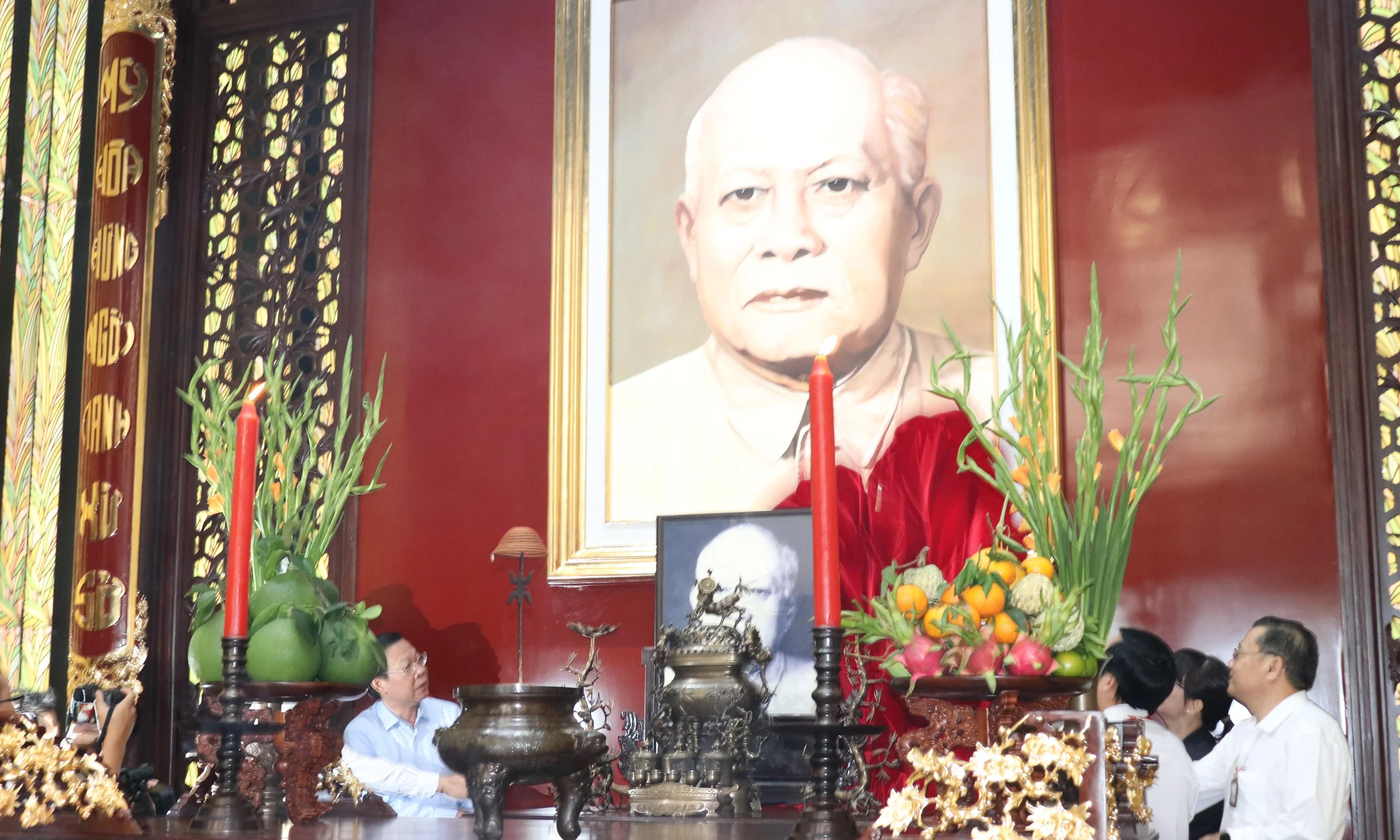
Tôn Đức Thắng
 Vietnam
Revolutionary•Politician•Statesman
Also known as: Bác Tôn, Ton Duc Thang
Birthday
August 20, 1888
Birth Sign
Leo
Birthplace
Mỹ Hòa Hưng village, Long Xuyên district, An Giang province, French Cochinchina (now Vietnam)
Age
Died at 91
About
Tôn Đức Thắng was a pivotal Vietnamese revolutionary and communist statesman who served as the second President of North Vietnam and the first President of reunified Vietnam. Born into a poor peasant family in 1888, he spent nearly his entire life dedicated to the struggle for independence and national unity. Widely revered in Vietnam as "Uncle Tôn" (Bác Tôn), he is remembered not for personal wealth or celebrity, but for his symbolic role as a unifier during war and reconstruction. He lived to see the transition from French colonization to total independence, passing away in 1980 at the age of 91.
His political career spanned decades of underground organizing, imprisonment, and eventual leadership. After serving as Vice President under Hồ Chí Minh, he assumed the presidency in September 1969 following Hồ's death. Despite the ceremonial nature of the role within the one-party state structure, his longevity and deep connection to the revolutionary movement made him an essential figure for continuity. He remained the oldest head of state to hold the title of president in Vietnam's history, leaving behind a legacy defined by humility and service.
Early Life & Background
Tôn Đức Thắng was born on August 20, 1888, in Mỹ Hòa Hưng village, located in the Long Xuyên district of An Giang province. Growing up in a poor peasant family during the height of French colonial rule, his childhood was marked by economic hardship and the harsh realities of foreign domination. He left home at a young age to work as a stoker on a merchant ship, a trade that took him across Southeast Asia and Europe. This maritime career exposed him to international labor movements and socialist ideas far beyond the borders of his native village.
In 1908, while working in Saigon, he participated in a rice tax protest, an early act of defiance against French authority that signaled his growing political consciousness. A defining moment occurred in 1919 when he joined the crew of the French battleship Liberté stationed in Toulon, France. There, he actively participated in the mutiny and protests against the French government's refusal to grant independence to its colonies. This event led to his arrest and subsequent imprisonment before he was exiled. Upon returning to Vietnam in 1920, he became deeply involved in the nascent communist movement, eventually joining the Indochinese Communist Party in 1930.
Career Growth
Tôn Đức Thắng's political ascent was gradual, built on decades of underground organizing and imprisonment. In 1930, he became a key organizer for the Ba Son Naval Dockyard strike in Saigon, which galvanized the working class and established his reputation as a labor leader. From 1930 to 1945, he spent much of this period in prison or exile due to French persecution, yet remained a symbol of resistance. In 1945, he played a crucial role in the August Revolution, helping to seize power from the Japanese and French.
From 1946 to 1955, he served as a member of the National Assembly and held various ministerial positions related to labor and industry. Between 1955 and 1960, he was elected Chairman of the Standing Committee of the National Assembly, effectively serving as the head of state in the absence of a formal presidency. In 1960, he was appointed Vice President of the Democratic Republic of Vietnam under Hồ Chí Minh. During this decade, he was often seen as the face of the state in diplomatic ceremonies and domestic affairs, particularly when Hồ Chí Minh was occupied with military strategy.
On September 2, 1969, following the death of Hồ Chí Minh, Tôn Đức Thắng was elected President of the Democratic Republic of Vietnam. Despite the ceremonial nature of the role in the context of a one-party state where real power lay with the Politburo and General Secretary Lê Duẩn, his position provided essential continuity and national unity. He continued as President after the reunification of Vietnam in 1975, serving as the first President of the Socialist Republic of Vietnam until his death in 1980.
Career Timeline
Public Image & Style
Tôn Đức Thắng is portrayed in Vietnamese media and public memory as a figure of paternal benevolence, wisdom, and unwavering loyalty to the nation. The affectionate title "Uncle Tôn" reflects his status as a grandfatherly figure who united the people during their struggle for independence. Media portrayals focus on his longevity, his humble origins as a poor peasant and sailor, and his role as a unifying figure during the war and post-war era. Unlike many Western figures, there are no viral incidents, stage performances, or tabloid scandals associated with him; his lore is built on verified historical narratives of resistance and state-building.
Fame & Fandom (iFAMOUS Rankings)
The reverence for Tôn Đức Thắng exists in a unique space where modern fandom rituals dissolve into state-sponsored commemoration and academic legacy. Unlike pop stars who cultivate fan clubs with specific names or organize birthday drives, the public connection to Uncle Tôn is maintained through institutional memory rather than collective adoration. His primary 'fanbase' consists of students at Ton Duc Thang University and citizens participating in annual birth anniversaries organized by provincial governments, viewing him as a foundational figure rather than an entertainer. This distinction creates a quiet, enduring presence that spans generations without the volatility of celebrity culture.
According to the iFANN Global Fame Rankings, he holds a stable position among the world's most recognized figures. As of the October 2026 rankings, he is the 51st most famous person in Vietnam. Featured at No. 51 in the September 2026 iFAMOUS Rankings, his standing reflects a lifetime of dedication that continues to resonate within the historical narrative of the region. His influence places him as the 88th most famous person in Southeast Asia, a ranking that has held steady over recent cycles.
Interesting Facts and Legends
Tôn Đức Thắng holds the unique distinction of being the only Vietnamese president to have worked as a sailor before entering politics. His experience as a stoker on merchant ships and his participation in the mutiny aboard the French battleship Liberté in 1919 are rare biographical details that set him apart from other heads of state. He lived to see the entire 20th century, witnessing the transition from French colonization to total independence and reunification.
The "Ba Son Strike" of 1930 is considered a seminal event in the history of the Vietnamese labor movement, directly linked to his rise as a revolutionary leader. Even in death, his influence extends to infrastructure, with major thoroughfares like Ton Duc Thang Street in Ho Chi Minh City bearing his name. The Ton Duc Thang Museum, built in 1988 to commemorate the centenary of his birth, stands as a testament to his enduring legacy in Ho Chi Minh City.
Notable Quotes
“We must work hard to build a new life for our children.”
“The revolution is a continuous process.”
Family & Personal Life
Historical records indicate that Tôn Đức Thắng maintained a strictly private personal life, a common trait among high-ranking communist revolutionaries who spent significant portions of their lives in prison and exile. While he was known to be a dedicated husband to his wife, her name and specific details are rarely highlighted in English-language historical accounts compared to his political achievements. The lack of public relationship data reflects the cultural and political norms of the time, where personal lives of leaders were often subsumed by their public service. He did not have any publicly documented children, focusing his energy entirely on the revolutionary cause and the nation's future.
Notable Connections
Hồ Chí Minh, Lê Duẩn, Võ Nguyên Giáp, Indochinese Communist Party, Socialist Republic of Vietnam.
Relationships & Dating History
As a high-ranking communist revolutionary who spent significant portions of his life in prison and exile, Tôn Đức Thắng maintained a strictly private personal life. Historical records do not document any public romantic relationships, engagements, or marriages in detail. Unlike many Western figures or entertainers, his biography does not include dating history, divorce, or children in the traditional sense. He was known to be a dedicated husband to his wife, though her name and details are rarely highlighted in English-language historical accounts compared to his political achievements. The lack of public relationship data reflects the cultural and political norms of the time, where personal lives of leaders were often subsumed by their public service. As of his death in 1980, he was widowed, having outlived his spouse.
Death & Aftermath
Died
March 30, 1980 (aged 91)
Death Place
Hanoi, Vietnam
Cause of Death
Natural causes due to old age and illness
Tôn Đức Thắng passed away on March 30, 1980, in Hanoi at the age of 91 following a long period of declining health. His death marked the end of an era for the Vietnamese revolution, as he was the last surviving member of the original revolutionary generation who had fought alongside Hồ Chí Minh since the early days. The nation observed a period of profound mourning, with state media broadcasting his passing and organizing official tributes across the country. A grand state funeral was held, attended by top party officials and representatives from all sectors of society, reflecting his status as a founding father of the modern Vietnamese state.
Following the ceremony, his body was cremated, and his ashes were interred at Mai Dịch Cemetery in Hanoi, placed alongside other prominent leaders like Võ Nguyên Giáp. The transition of power was immediate and seamless, with Lê Duẩn assuming the leadership of the party while the state continued to honor his memory through official commemorations. Decades later, his legacy remains vibrant through institutions named in his honor, including Ton Duc Thang University in Ho Chi Minh City and the annual Ton Duc Thang Award for science and technology presented by the Ho Chi Minh City Labor Federation. Wreath-laying ceremonies led by National Assembly figures continue on significant anniversaries, ensuring his contributions to the revolution remain central to the nation's historical narrative.
Net Worth (Estate Value)
$0
iFANN Editorial Team estimate
Tôn Đức Thắng was a revolutionary statesman whose life was dedicated to public service rather than personal accumulation of wealth. As a high-ranking government official and the President of Vietnam, he did not amass a fortune in the traditional sense. His financial status was typical of communist leaders of his era, who lived modestly on state salaries and did not engage in private business ventures or speculative investments. The concept of net worth does not apply to him in the same way it does to modern celebrities or entrepreneurs.
Upon his death in 1980, his estate consisted primarily of personal belongings and papers related to his revolutionary activities. Today, the value of his legacy is measured not in currency but in the institutions he inspired. Ton Duc Thang University, established in his honor, educates thousands of students annually, and the Ton Duc Thang Award continues to recognize excellence in science and technology. These entities generate revenue and impact the economy, but they belong to the state and the public, not to his heirs. Research by the iFANN Editorial Team confirms that no significant personal assets or estates exist for him to manage, reflecting the selfless nature of his public life.
Awards Won (2)
Tôn Đức Thắng received numerous honors throughout his life, primarily state-sponsored distinctions recognizing his lifelong dedication to the revolution. He was designated as a National Hero for his contributions to Vietnam's independence. Posthumously, he was honored with the establishment of the Ton Duc Thang Award for science and technology and the naming of Ton Duc Thang University. Major streets and boulevards in Ho Chi Minh City and other cities also bear his name, serving as daily reminders of his status as a founding father.
1994 · State Honor
Lifetime Achievement
1988 · Science and Technology
Posthumous Recognition
Known For
President of Vietnam
1969 · Head of State
Vice President of Vietnam
1960 · Second in Command
Ba Son Strike
1930 · Labor Leader
Keywords
Sources
Quick Facts
- Profession
- Politician, Revolutionary
- Born
- August 20, 1888
- Birthplace
- Long Xuyên, Vietnam
- Died
- March 30, 1980
- Death Place
- Hanoi, Vietnam
- Gender
- Male
- Birth Sign
- Leo
Personal Details
- Full Name
- Tôn Đức Thắng
- Children
- Education
- Self-educated; apprenticed as a stoker
Frequently Asked Questions
Who was Tôn Đức Thắng?
When did Tôn Đức Thắng die?
Why is he called Uncle Tôn?
What is Ton Duc Thang University?
Did Tôn Đức Thắng have children?
Join the community
fans discussing