Thích Quảng Đức
 Vietnam
Birthday
+1897-01-01
Birth Sign
Capricorn
Birthplace
Vạn Khánh
Age
Died at 66
About
Born Lâm Văn Túc around 1897 in Vạn Khánh, Vietnam, Thích Quảng Đức was a respected Mahayana Buddhist monk. His life's work was dedicated to his faith and the principles of Buddhism. However, he is most remembered for his final act on June 11, 1963, a sacrifice that resonated globally.
Fame & Fandom
Thích Quảng Đức remains a figure of enduring global resonance, currently recognized as the 31st most famous person in Vietnam, the 4th most famous person from Vietnam, the 56th most famous person in Southeast Asia, and the 21st most famous person in Religious Leaders. These standing positions within the iFANN Global Fame Rankings reflect a legacy that has held steady across cycles, anchoring his memory firmly in the cultural consciousness of his homeland and beyond. His influence extends far beyond regional borders, marking him as a pivotal voice in the history of religious leadership worldwide.
Unlike modern celebrities who cultivate organized fanbases with specific names or digital campaigns, Thích Quảng Đức does not have a documented fandom in the contemporary sense. There is no formal group name for those who revere him; instead, his admirers are a diverse tapestry of Buddhists, historians, activists, and the global public who view his life's end as a profound symbol of resistance. The devotion he inspires is not expressed through streaming numbers or birthday billboards but through deep spiritual veneration and academic study. His supporters do not gather to cheer for a living star but to honor a historical sacrifice that continues to galvanize discussions on religious freedom and non-violent protest decades after his passing.
Interesting Facts and Legends
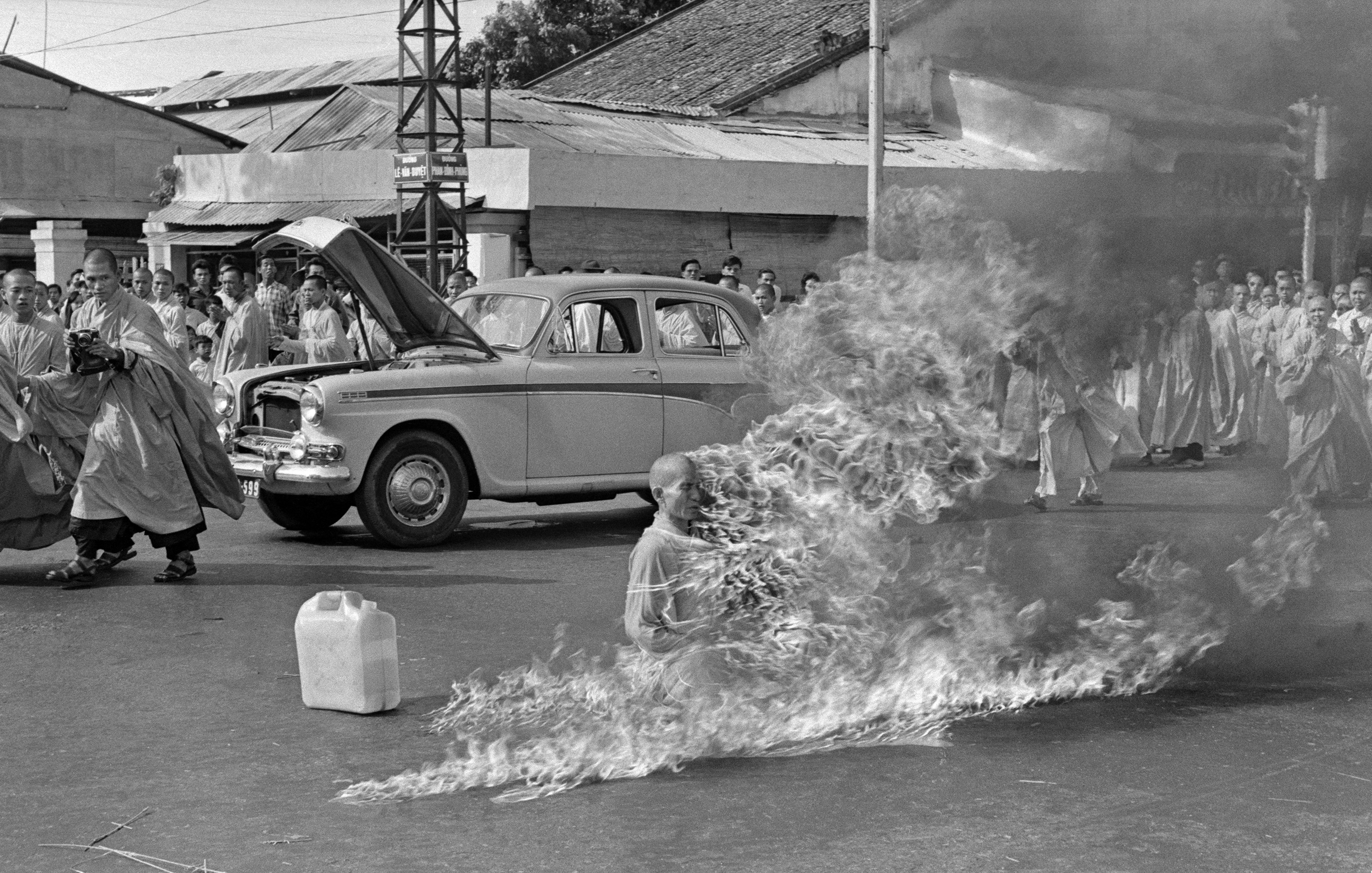
Born Lâm Văn Túc around 1897 in Vạn Khánh, this Mahayana Buddhist monk dedicated his life to his faith until his final act on June 11, 1963. He traveled from Hue to Saigon specifically to protest the government's refusal to allow the Buddhist flag to be flown. Upon arriving at the intersection of Nguyen Truong To and Le Van Duyet streets, he sat in the lotus position and was doused with kerosene by fellow monks.
The defining legend of his life centers on his absolute composure during the self-immolation. While surrounded by flames for approximately 20 minutes, reports state he did not scream or move, holding a hand gesture of blessing throughout the ordeal. This stillness amidst the inferno shocked the world and became one of the most influential images of the 20th century. A core part of the mythology surrounding his death concerns the preservation of his heart; accounts claim that after his body burned completely, his heart remained intact and uncharred. Many Buddhists interpret this as a miraculous sign of his Bodhisattva status, reinforcing his sanctity among followers even today.
Death & Aftermath
Died
+1963-06-11 (aged 66)
Death Place
Saigon, South Vietnam
Cause of Death
Self-immolation
The Diệm regime initially attempted to characterize the event as a mental illness or a tragic accident, but the visual record rendered such denials impossible. On June 11, 1963, Thích Quảng Đức sat cross-legged at the busy intersection of Le Van Duyet and Nguyen Dinh Chieu streets in Saigon, where he poured gasoline over himself and lit a match. He remained motionless for approximately seventeen minutes until his body was consumed by fire, an act that served as his final public appearance after failed negotiations with the government regarding Buddhist grievances. The global reaction was immediate and profound; Malcolm Browne's photograph became one of the most iconic images of the twentieth century, appearing on the front pages of major newspapers worldwide and sparking widespread condemnation of the South Vietnamese administration.
While no traditional funeral could be held due to the incineration of the body, fellow monks collected the remaining ash and charred fragments, which were later enshrined in temples. Annual commemorations are now held on June 11 featuring chanting and candle lighting, while memorials stand at the original site in Saigon and at the Quảng Đức Pagoda in Melbourne. His legacy endures through the establishment of foundations bearing his name and his reverence as a Bodhisattva within the Buddhist community.
Awards & Accolades
Keywords
Quick Facts
- Profession
- Buddhist monk
- Born
- +1897-01-01
- Birthplace
- Vạn Khánh
- Died
- +1963-06-11
- Death Place
- Saigon
- Gender
- Male
- Birth Sign
- Capricorn
Join the community
fans discussing