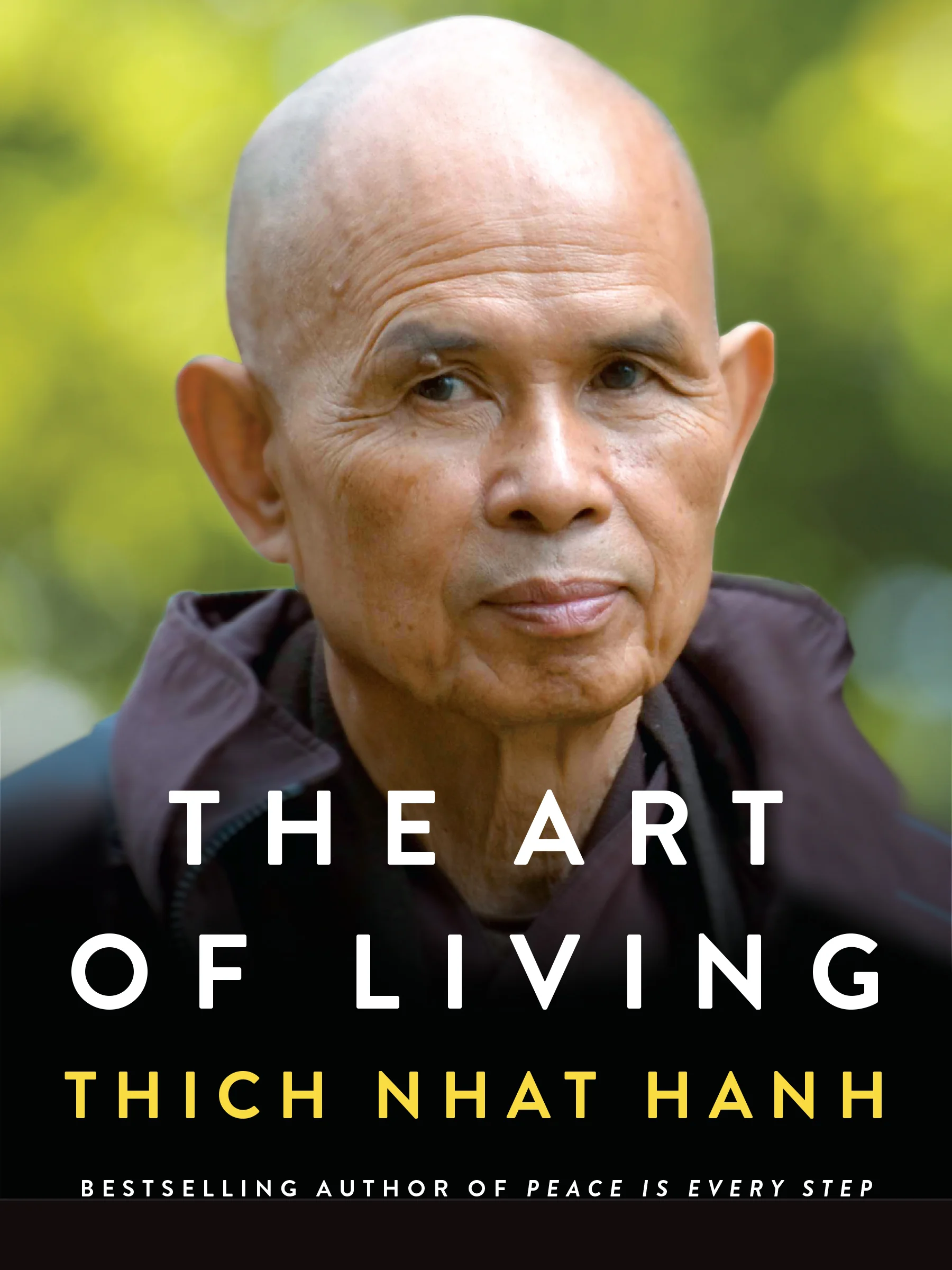
Thích Nhất Hạnh
 Vietnam
Buddhist monk•poet•peace activist•author
Also known as: Nhat Hanh, Thầy Nhất Hạnh, Thiền Sư Nhất Hạnh, Nguyễn Xuân Bảo, Nguyễn Đình Lang, Trừng Quang, Phùng Xuân
Birthday
October 11, 1926
Birth Sign
Libra
Birthplace
Huế, Vietnam
Age
Died at 95
Height
5 ft 5 in (165 cm)
About
Thích Nhất Hạnh was a Vietnamese Thiền Buddhist monk, poet, scholar and peace activist, and the figure most responsible for carrying Buddhist mindfulness practice into mainstream Western life. He died on January 22, 2022, at Từ Hiếu Temple in Huế, Vietnam, at 95.
He founded the Plum Village Tradition and the Order of Interbeing, and he gave the modern world its working vocabulary for engaged Buddhism, the idea that meditation and social action are not separate pursuits. His books, more than 100 of them, sold in the millions and turned phrases like "peace in every step" and "no mud, no lotus" into everyday language. Martin Luther King Jr. nominated him for the Nobel Peace Prize in 1967, calling him "an apostle of peace and nonviolence."
What set him apart was not scale but stillness. He walked slowly, spoke softly, and taught that the present moment is the only place real life happens. That message outlived him. His monasteries, his publishing program and the institutions named for him keep the practice running today.
Early Life & Background
He was born Nguyễn Xuân Bảo on October 11, 1926, in Huế, in central Vietnam, into a modest family. At 16, in 1942, he entered Từ Hiếu Temple near Huế, and the following year he was ordained as a novice monk. He took the dharma name Thích Nhất Hạnh, and over the decades he also used Nguyễn Đình Lang, Trừng Quang and Phùng Xuân.
Formal training followed at the Bao Quoc Buddhist Academy, and in 1949 he was ordained a full monk in the Liễu Quán lineage of Vietnamese Zen. By the early 1950s he was in Saigon, helping found and edit Buddhist publications and teaching at Buddhist institutions. Even then his instinct was to fuse rather than separate: traditional meditation on one side, modern scholarship and social concern on the other.
That instinct took him to the United States. In the early 1960s he studied at Princeton University and later lectured at Columbia University, learning to explain Vietnamese Buddhism in English to people who had never sat on a cushion. He returned home in 1963 as the war was widening, and what he did next turned a monk into a public figure.
Career Growth
In 1964, with the Vietnam War escalating, Nhất Hạnh co-founded the School of Youth for Social Services, a grassroots relief organization whose workers rebuilt bombed villages, opened schools and medical stations, and resettled refugees. Two years later he founded the Order of Interbeing and published Vietnam: Lotus in a Sea of Fire, the book that laid out engaged Buddhism as a doctrine rather than a sentiment.
That same year, 1966, he traveled to the United States on a peace mission and was barred from returning to South Vietnam. The exile lasted 39 years. In 1967 Martin Luther King Jr. nominated him for the Nobel Peace Prize, and in 1969 he led the Buddhist delegation to the Paris Peace Talks. He founded the Sweet Potato community near Paris in 1975 and, in 1982, Plum Village Monastery in the Dordogne region of southwest France, which became the movement's flagship practice center.
His 1975 book The Miracle of Mindfulness did more than any other single title to spark the global mindfulness movement. In 2005 Vietnam permitted him to return for a landmark visit, with further trips in 2007 and 2008. A severe brain hemorrhage in 2014 ended his public teaching career; in October 2018 he returned to Vietnam to live out his final years at Từ Hiếu Temple.
Career Timeline
Public Image & Style
Brown robes, a shaved head, slow walking, a soft voice. Nhất Hạnh's public image was built almost entirely on how he carried himself, and it read as the opposite of celebrity. Newspapers and magazines treated him as a serene counterweight to political noise, a monk who could sit in a room with generals and heads of state without raising his voice.
His social media presence, maintained by his community rather than by him, reflects the same restraint: the Facebook page carries roughly 2.14 million followers, and the official Instagram is run with monastic and lay Dharma teachers. There is no personal branding, no product, no performance of personality. What the public sees is the teaching itself.
Fame & Fandom (iFAMOUS Rankings)
By the numbers of the iFANN Global Fame Rankings, Thích Nhất Hạnh is the 6th most famous person in Vietnam, the 43rd most famous person in Southeast Asia, and the 18th most famous person in Religious Leaders. He also appears at No. 6 on the Vietnam list in the September 2026 iFAMOUS Rankings. For a monk who spent 39 years barred from his own country, the placements say something about how far a quiet message can travel.
There is no fandom name here, no equivalent of ARMY or Beliebers. His followers call themselves practitioners, students or dharma friends, and they organize through more than 30 monasteries and practice centers in the Plum Village Tradition rather than through fan clubs. What they do looks different from a pop fandom: they sit retreats, run local sanghas, ring "mindfulness bells" at set intervals, and raise money for charitable work. Gatherings are marked by silence and walking meditation, not screaming. The relationship between teacher and student is one of shared practice, and it has outlasted him.
Interesting Facts and Legends
His signature teaching, "no mud, no lotus," is the whole of his philosophy in four words: without suffering there is no happiness, because the lotus only grows in mud. He used it so often it became shorthand among his students.
He and bell hooks carried on a long friendship, and hooks credited him in her later writing with shaping how she understood love as a practice rather than a feeling. The two corresponded and met over the years, a pairing of Buddhist monk and Black feminist thinker that surprised people who assumed their worlds did not overlap.
Nhất Hạnh was a poet before he was a famous teacher, and he kept writing verse throughout his life, often in Vietnamese. He also wrote children's books, including one about watching a cloud become rain, and he insisted that a child could understand impermanence better than most adults.
Notable Quotes
“The past is gone, the future is not yet here, and if we do not go back to the present moment, we cannot be truly alive.”
“Peace in every step.”
“When another person makes you suffer, it is because he suffers deeply within himself, and his suffering is spilling over.”
“No mud, no lotus.”
“Feelings come and go like clouds in a windy sky. Conscious breathing is my anchor.”
Family & Personal Life
He was born into a family of modest means in Huế, and his birth name was Nguyễn Xuân Bảo. He entered the monastery at 16, so his adult household was never a family in the conventional sense. As a celibate monk he had no spouse, no partner and no children, and he spoke of his monastic community as his family.
His chosen home was Từ Hiếu Temple near Huế, where he was ordained as a novice and where he returned in 2018 to spend his final years. In between, Plum Village in southwest France served as the center of his community life for nearly four decades, a working monastery with resident monks, nuns and lay practitioners rather than a private residence.
Notable Connections
Martin Luther King Jr., whose 1967 Nobel nomination and friendship shaped his international profile; the Dalai Lama, who offered condolences at his death; bell hooks, who credited him with shaping her understanding of love as practice; Thomas Merton; and the monastic and lay Dharma teachers of the Plum Village community who carry on his tradition.
Relationships & Dating History
Thích Nhất Hạnh was a celibate Buddhist monk for his entire adult life. He was ordained as a novice at 16 and took full vows in 1949, and he never married, never had a partner and never had children. There is no documented romantic or dating history, and no credible source suggests otherwise. His relationship status at the time of his death in 2022 was single, in the monastic sense of having no spouse or partner.
The relationships that defined his life were not romantic. He counted Martin Luther King Jr. as a friend and ally, and their correspondence in 1966 and 1967 shaped King's public opposition to the Vietnam War. He and bell hooks maintained a long friendship that hooks wrote about in her later work. And he lived in community with monks, nuns and lay practitioners at Plum Village and Từ Hiếu Temple, a form of chosen family that structured his daily life for more than 70 years.
Death & Aftermath
Died
January 22, 2022 (aged 95)
Death Place
Từ Hiếu Temple, Huế, Vietnam
Cause of Death
Natural causes associated with advanced age
Thích Nhất Hạnh died on January 22, 2022, at Từ Hiếu Temple in Huế, Vietnam, the same monastery where he had been ordained as a novice in 1943. He was 95. The Plum Village community confirmed he died peacefully of natural causes associated with advanced age, following years of fragile health after a severe brain hemorrhage in 2014 that had left him unable to speak or walk unaided.
Tributes arrived within hours. The Dalai Lama offered condolences, the U.S. State Department issued a statement honoring his nonviolent witness, and practitioners across Asia, Europe and North America held silent sittings in his memory. His body was cremated after a private funeral conducted according to traditional Buddhist rites at the temple, with senior monks and close disciples in attendance.
What followed was quieter than a celebrity memorial but wider in reach. In April 2023, the Harvard T.H. Chan School of Public Health opened the Thich Nhat Hanh Center for Mindfulness in Public Health, an institution built explicitly around his teaching. In April 2025, New York City renamed the intersection of Broadway and West 109th Street "Thích Nhất Hạnh Way." The Plum Village community, which manages his literary estate, has continued publishing new compilations and translations, and the monasteries he founded in France, Vietnam, the United States and Thailand still run on the schedule he set.
Net Worth (Estate Value)
$1 Million
iFANN Editorial Team estimate
Thích Nhất Hạnh never held assets in his own name in any conventional sense. As a celibate monk, his income and property belonged to the monastic communities he founded, which is why no reliable net worth figure has ever been published for him. The iFANN Editorial Team estimates the value of his estate and intellectual property at approximately $1 Million, a figure that reflects book royalties and publishing rights rather than personal wealth.
The money that flows from his work comes from more than 100 books, including The Miracle of Mindfulness, Peace Is Every Step and Being Peace, which continue to sell worldwide and are translated into dozens of languages. Royalties from those titles are managed by the Plum Village community and the Thich Nhat Hanh Foundation, which directs revenue toward monastic centers, retreat programs and charitable work rather than to individuals.
Since his death in 2022, the estate has continued to generate income through new compilations, translations and reissues, and the monasteries he founded in France, Vietnam, the United States and Thailand remain operational. Any specific dollar figure circulating for Nhất Hạnh should be treated with caution. His legacy was never structured as a fortune, and the organizations that hold his work are set up to keep it that way.
Awards & Accolades
View 8 records, honours and achievementsKnown For
The Miracle of Mindfulness
1975 · Author
Peace Is Every Step
1991 · Author
Being Peace
1987 · Author
Vietnam: Lotus in a Sea of Fire
1967 · Author
The Heart of the Buddha's Teaching
1998 · Author
Plum Village Monastery
1982 · Founder
Order of Interbeing
1966 · Founder
Keywords
Sources
Quick Facts
- Profession
- Buddhist monk, poet, peace activist, author
- Born
- October 11, 1926
- Birthplace
- Huế, Vietnam
- Died
- January 22, 2022
- Death Place
- Từ Hiếu Temple, Huế, Vietnam
- Gender
- Male
- Birth Sign
- Libra
- Height
- 5 ft 5 in (165 cm)
- Books Published
- More than 100
- Founded
- Plum Village Tradition, Order of Interbeing, School of Youth for Social Services
Personal Details
- Full Name
- Nguyễn Xuân Bảo
- Height
- 5 ft 5 in (165 cm)
- Education
- Bao Quoc Buddhist Academy; Princeton University; Columbia University
Frequently Asked Questions
How did Thich Nhat Hanh die?
Was Thich Nhat Hanh married?
Why was Thich Nhat Hanh exiled from Vietnam?
Who nominated Thich Nhat Hanh for the Nobel Peace Prize?
What is Thich Nhat Hanh most famous for?
Similar People
Join the community
fans discussing