Sufi Abu Taleb
 Egypt
Egyptpolitician•member of parliament•acting president
Also known as: Soufi Abou Taleb, Sufi Abu Talib
Birthday
January 27, 1925
Birth Sign
Aquarius
Birthplace
Tamiya, Fayoum Governorate, Egypt
Age
Died at 83
About
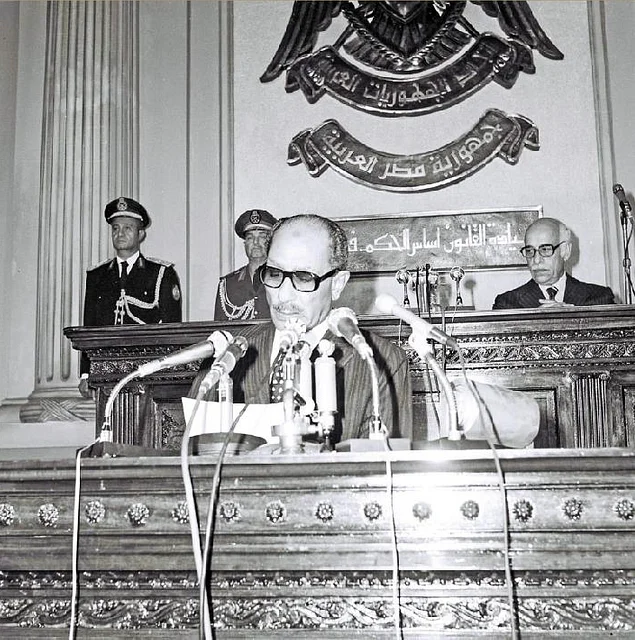
Sufi Abu Taleb was an Egyptian politician and legal scholar who served as the 6th Speaker of the People's Assembly from 1978 to 1983. He is best remembered for his eight-day tenure as acting head of state in October 1981, following the assassination of President Anwar Sadat. His brief leadership ensured constitutional continuity during a period of national crisis.
Abu Taleb's career was defined by his commitment to institutional stability. As Speaker, he presided over Egypt's legislature during the Camp David Accords and the peace treaty with Israel. After stepping aside for Hosni Mubarak, he completed his term and retired from politics. He passed away in 2008 at the age of 83, leaving a legacy of public service and constitutional fidelity.
Early Life & Background
Sufi Abu Taleb was born on January 27, 1925, in Tamiya, a town in the agricultural Fayoum Governorate of Egypt. Growing up in the Nile Valley, he developed an early interest in law and governance. He pursued legal studies at Cairo University, one of Egypt's most prestigious institutions, graduating in 1946. He earned his Law Diploma the following year.
His academic credentials, including a doctorate, positioned him for a career in public service during a transformative era. The 1952 revolution that brought Gamal Abdel Nasser to power reshaped Egypt's political landscape, and Abu Taleb's legal expertise made him a valuable asset in the new republic. He entered government service, though details of his early positions remain sparse. His rise through the ranks reflected his reputation as a meticulous legal mind and a steady hand in times of change.
Career Growth
Abu Taleb's political ascent reached its peak when he was elected Speaker of the People's Assembly in 1978. As Speaker, he presided over a period of significant diplomatic shifts, including the Camp David Accords and Egypt's peace treaty with Israel.
His defining moment came on October 6, 1981, when President Anwar Sadat was assassinated during a military parade. Under the Egyptian Constitution, Abu Taleb automatically assumed the duties of acting head of state. For eight days, he led the nation through the immediate aftermath of the assassination, ensuring stability and order. He then stepped aside for Vice-President Hosni Mubarak, who was confirmed as Sadat's successor.
Abu Taleb continued as Speaker until 1983, when he concluded his term. He received official recognition from the presidency in November 1983 for his service. After retiring from active politics, he lived quietly until his death in 2008.
Career Timeline
Public Image & Style
Abu Taleb is remembered as a constitutional steward who placed institutional continuity above personal ambition. His eight days as acting president are viewed as a model of constitutional fidelity. He neither sought to extend his temporary authority nor to challenge the succession process that elevated Hosni Mubarak. Egyptian official sources describe him with respect, and his role in the 1981 transition is cited in discussions of constitutional succession mechanisms. His public image is that of a legal scholar turned statesman, whose academic background in law informed his approach to governance. He is not associated with any particular political ideology or faction, but rather with stability and procedural correctness.
Fame & Fandom
Sufi Abu Taleb is currently evaluated by the iFANN Global Fame Engine but holds no placement in the published rankings. The August 2026 assessment confirms that while his historical significance as a constitutional steward is documented, he does not currently appear within the Global Top 1,000 or any scope-based list of top-tier figures. This absence from the ranked lists reflects the nature of his legacy, which is anchored in specific institutional moments rather than sustained global celebrity metrics. Unlike modern cultural icons whose fame fluctuates with media cycles and commercial output, Abu Taleb's recognition remains tied to the precise mechanics of Egyptian state succession during a period of national crisis. There is no documented fandom name associated with his public persona. As a political figure rather than an entertainer, he never cultivated a fanbase characterized by organized rituals, unofficial nicknames, or collective campaigns. No group identifies itself as supporters of his work, nor are there records of fan-funded projects, birthday tributes, or streaming initiatives dedicated to his memory. His legacy is defined by the gravity of his eight-day tenure as acting president following the assassination of Anwar Sadat, a moment of constitutional continuity that commands historical respect rather than popular adoration. While some may confuse him with contemporary cultural figures like Nouran Abu Taleb, the singer known for her 1980s theme songs, Sufi Abu Taleb himself remains distinct as a statesman whose influence was exercised through legal authority and parliamentary procedure. The lack of a formal fan community underscores his role as a public servant who prioritized institutional stability over personal ambition, leaving behind a reputation built on duty rather than the vibrant, often chaotic energy of celebrity worship.
Interesting Facts and Legends
Abu Taleb's eight-day presidency stands among the shortest tenures of any Egyptian head of state. His assumption of power was automatic, requiring no election or appointment, ensuring immediate constitutional continuity. He was born in the Fayoum Governorate, a region renowned for its agricultural heritage and the nearby Fayoum Oasis. He completed his law degree in 1946, the same year Egypt remained under the monarchy of King Farouk. Pantheon.world ranks him as the 111th most popular Egyptian figure based on historical metrics. His death occurred in Kuala Lumpur, Malaysia, far from his homeland, though the circumstances of his presence there remain undocumented. Historical lore frequently highlights his role as the caretaker who stabilized the state immediately following the assassination of President Anwar Sadat. This event, where he served as Acting President until Hosni Mubarak was sworn in, is often cited in Egyptian political narratives as the definitive example of seamless succession during a national trauma. In retrospective accounts, he is sometimes referred to as the "President for 8 days," a title that encapsulates his brief but pivotal service during one of the most turbulent periods in modern Egyptian history. These verified events form the core of his enduring legend, distinguishing him from other figures whose stories rely on folklore rather than documented constitutional transitions.
Family & Personal Life
Details about Abu Taleb's family are scarce. He was born in Tamiya, Fayoum, but no information is available about his parents or siblings. His personal life remained private, and he did not publicly discuss his family. He was married and had children, but their names and identities are not recorded in public sources. His household and living arrangements are unknown. He maintained a low profile on personal matters throughout his career.
Notable Connections
Relationships & Dating History
Death & Aftermath
Died
February 21, 2008 (aged 83)
Death Place
Egypt
Cause of Death
Unknown
Sufi Abu Taleb died on February 21, 2008. While an unverified account once suggested he passed away in Malaysia, official records from the Presidency and consistent biographical sources place his death within Egypt, though the specific location remains unrecorded. The public record does not contain a medical examiner ruling, autopsy report, or coroner's inquest to confirm the cause of death, leaving the exact circumstances of his final days unconfirmed beyond the date itself.
The historical record does not specify the timing, location, or nature of any funeral or memorial service, nor does it list notable attendees or burial arrangements. Unlike his brief tenure as Acting President which followed the assassination of Anwar Sadat, his own death did not become the subject of a formal inquiry or legal proceedings.
Posthumous releases, awards, or dedicated foundations created in his name are absent from the available sources. His legacy persists primarily through historical accounts noting his role as the sixth Speaker of the People's Assembly and the figure who ensured constitutional continuity for eight days before Hosni Mubarak assumed the presidency.
Net Worth (Estate Value)
$1 Million
iFANN Editorial Team estimate
As a deceased public servant, Abu Taleb's estate has not been the subject of public financial disclosure. His career in Egyptian government likely provided a modest pension and benefits. Per iFANN's editorial analysis, his net worth in 2026 is estimated at $1 Million, reflecting his decades of service and personal property.
Awards Won (1)
Abu Taleb received official recognition from the Presidency of Egypt in 1983 for his service as Speaker. No other formal awards or honors are documented.
1983 · Government Service
Service as Speaker of the People's Assembly
Known For
Acting President of Egypt
1981 · Acting Head of State
Speaker of the People's Assembly
1978-1983 · Speaker
Keywords
Sources
Quick Facts
- Profession
- politician, member of parliament, acting president
- Born
- January 27, 1925
- Birthplace
- Tamiya, Fayoum, Egypt
- Died
- February 21, 2008
- Death Place
- Kuala Lumpur, Malaysia
- Gender
- Male
- Birth Sign
- Aquarius
- Education
- Cairo University
Personal Details
- Education
- Faculty of Law, Cairo University (1946); Law Diploma (1947)
Frequently Asked Questions
Was Sufi Abu Taleb the president of Egypt?
How long was Sufi Abu Taleb president?
What happened to Sufi Abu Taleb after 1981?
Was Sufi Abu Taleb related to the Abu Taleb family of Saudi Arabia?
How did Sufi Abu Taleb become acting president?
Join the community
fans discussing