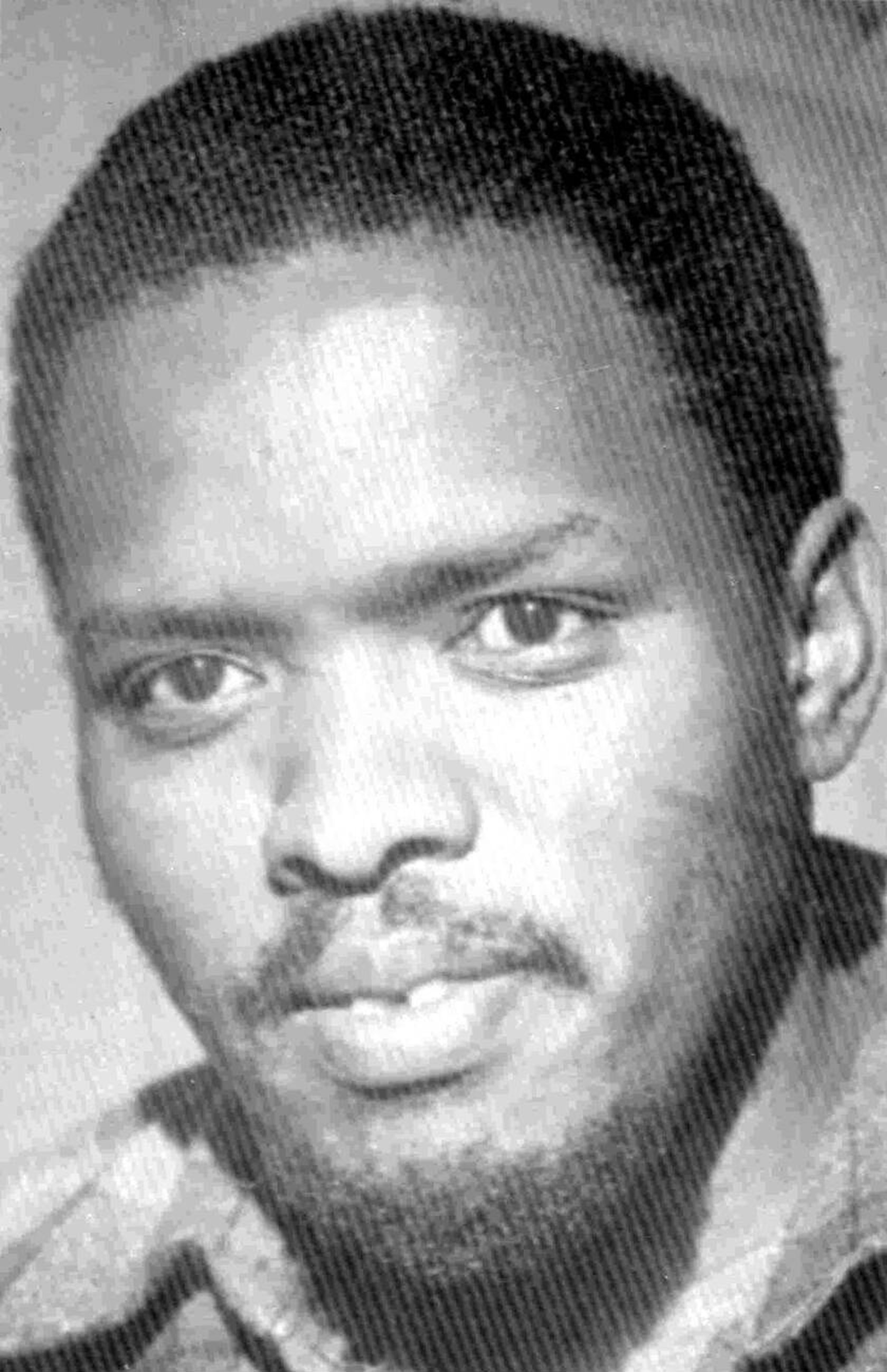
Steve Biko
 South Africa
Anti-apartheid activist•Black Consciousness Movement founder
Also known as: Bantu Stephen Biko, Frank Talk
Birthday
December 18, 1946
Birth Sign
Sagittarius
Birthplace
Tarkastad, Cape Province, South Africa
Age
Died at 30
About
Bantu Stephen Biko, known to the world as Steve Biko, was a South African anti-apartheid activist and the founder of the Black Consciousness Movement. Born on December 18, 1946, in Tarkastad in the Eastern Cape, he grew up in Ginsberg township outside King William's Town. Biko's life was cut short on September 12, 1977, when he was beaten to death in police custody in Pretoria at the age of 30. His ideas and martyrdom made him one of the most enduring icons of the anti-apartheid struggle.
Biko's political awakening began at the University of Natal, where he studied medicine from 1966. He joined the National Union of South African Students but grew frustrated with its white liberal leadership, which he felt failed to grasp the realities of black life under apartheid. This frustration led him to co-found the South African Students' Organisation (SASO) in 1968, a group exclusively for black students. Drawing on Frantz Fanon, Biko developed the ideology of Black Consciousness, emphasizing psychological liberation and the slogan "black is beautiful." He helped establish the Black People's Convention in 1972 to spread these ideas beyond campus.
The apartheid government banned Biko in 1973, restricting his movement and speech, yet he continued organizing community projects, including a healthcare centre and crèche in Ginsberg. He was detained multiple times, and after his final arrest in August 1977, he was killed by security officers. His funeral drew over 20,000 mourners. Biko's writings, collected in I Write What I Like, remain foundational texts, and his life inspired the 1987 film Cry Freedom. He is remembered as the Father of Black Consciousness, a legacy that continues to shape South Africa's identity. His posthumous honours include the Order of the Companions of O. R. Tambo, and his legacy is preserved by the Steve Biko Foundation, which promotes his vision through educational and community programs. Biko's impact extends globally, influencing movements for racial equality and psychological liberation beyond South Africa.
Early Life & Background
Steve Biko was born into a Xhosa family in Tarkastad, Eastern Cape, in 1946. His father, Mzingaye Mathew Biko, worked as a policeman and later as a clerk in the King William's Town Native Affairs office while studying law through UNISA, but he died in 1950 when Steve was just four years old. His mother, Alice "Mamcete" Nokuzola Biko, worked as a domestic servant at Grey Hospital in King William's Town. The family moved to Ginsberg township in 1948, where Biko grew up with his older brother Khaya, older sister Bukelwa, and younger sister Nobandile. Their combined names formed the Xhosa phrase "Hayi ukuBukeka kweKhaya laBantu aBandileyo," meaning "We admire the expanded family." Biko's given name "Bantu" means "people" in IsiXhosa, which he interpreted through the saying "Umntu ngumntu ngabantu" ("a person is a person by means of other people"). As a child, he was nicknamed "Goofy" and "Xwaku-Xwaku," the latter referring to his unkempt appearance, and was raised in the Anglican faith.
Biko began his education at Charles Morgan Higher Primary School around 1952, where his teacher Damsie Monaheng recommended he skip Standard Four due to his intelligence. In 1963, at age 15, he was admitted to Lovedale College, a missionary institution in Alice, Eastern Cape, where his brother Khaya had enrolled a year earlier. That same year, both brothers were arrested along with 50 other learners on suspicion of supporting the outlawed PAC-aligned Poqo movement. Steve was interrogated and, despite a lack of evidence of political involvement, was expelled and blacklisted from all government schools; Khaya was imprisoned for PAC membership. According to Khaya, this experience was when "the great giant was awakened." Biko was then admitted to St. Francis College, a Roman Catholic boarding school in Mariannhill, Natal, in 1964, where he became acutely focused on exploring contradictions between Christian liberal teachings and the lived experience of black people under apartheid. He graduated in 1966 and enrolled at the University of Natal Medical School, where he became active in the multiracial National Union of South African Students (NUSAS). He grew disenchanted with NUSAS, believing its white liberal leadership failed to grasp the realities of black life under apartheid and that society itself needed restructuring around Black culture rather than simply allowing Black participation in white society. His early experiences of racial discrimination and the stark inequalities of apartheid society fueled his determination to challenge the system, and he began to formulate the ideas that would later crystallize into Black Consciousness.
Career Growth
In 1968, Biko co-founded the South African Students' Organisation (SASO), a group exclusively for Black students, including Africans, Coloureds, and Indians, and was selected as its first president in 1969 after resigning from NUSAS. Influenced by Martinican philosopher Frantz Fanon, Biko and his compatriots developed Black Consciousness as SASO's official ideology, campaigning for an end to apartheid, universal suffrage, and a socialist economy. He popularized the slogan "black is beautiful" and focused on the psychological empowerment of Black people, believing they needed to rid themselves of internalized racial inferiority. In 1972, he was involved in founding the Black People's Convention (BPC) to spread Black Consciousness ideas beyond campus. That same year, he was expelled from the University of Natal.
In 1973, the apartheid government placed him under a banning order, severely restricting his movement, speech, and activities. Despite this, he helped organize Black Community Programmes (BCPs), including a healthcare centre and a crèche in the Ginsberg area, and played a key role in organizing protests that culminated in the Soweto Uprising of 1976. He was detained by state security services on multiple occasions, and following his final detention in August 1977, he was beaten to death by security officers on September 12, 1977, in Pretoria, at age 30. His funeral drew over 20,000 mourners. Nelson Mandela later described Biko as "the spark that lit a veld fire across South Africa," underscoring his catalytic role in the anti-apartheid movement.
Career Timeline
Public Image & Style
Biko's signature contribution was the ideology of Black Consciousness, emphasizing psychological liberation and the slogan "black is beautiful." He is portrayed in media as a political martyr and one of the earliest icons of the anti-apartheid movement. His writings, compiled in I Write What I Like, remain foundational texts for Black Consciousness studies. There is no formal fandom name, but his legacy is celebrated annually in South Africa on September 12, the anniversary of his death, and through the Steve Biko Foundation. His friend Donald Woods wrote a biography in 1978 that became the basis for the 1987 film Cry Freedom, and his life has inspired numerous songs and works of art. Biko is widely regarded as the "Father of Black Consciousness," and his image is used in public memorials, including the Steve Biko Garden of Remembrance in Qonce, where he is buried.
Fame & Fandom
Steve Biko never courted a celebrity following, nor did he cultivate a fanbase that organizes streaming campaigns or buys subway ads. He was not an entertainer but a political architect whose life ended in police custody at age 30. His audience consists of historians, activists, and students who study his ideology rather than fans who chant his name at concerts. There is no formal fandom name to attach to this legacy; the community honoring him is defined by shared struggle and historical remembrance rather than commercial worship. While pop stars rely on trending hashtags, Biko's impact endures through annual commemorations and the relentless study of his writings. The most powerful story attached to his name remains the verified tragedy of his death in September 1977, an event that transformed him from a local activist into a global symbol of resistance against apartheid. This single moment of martyrdom eclipses any potential for traditional celebrity lore, grounding his fame in historical necessity rather than viral entertainment. Despite the absence of a commercial fan club, his influence has rippled across decades, shaping modern discourse on racial identity and liberation. Recent legal developments have only deepened this engagement, with South African authorities reopening the inquest into his killing nearly five decades later to seek justice. His presence in the cultural consciousness is absolute, driven by the weight of his ideas rather than the mechanics of stardom. As the world continues to grapple with systemic racism, Biko's voice resonates with renewed urgency. In the latest iFANN Global Fame Rankings, Steve Biko stands as the 36th most famous person in South Africa and the 25th most famous person from South Africa.
Interesting Facts and Legends
Bantu Stephen Biko wrote under the pseudonym "Frank Talk" for various publications, hiding his identity while spreading radical ideas. His father died when Biko was four, leaving the family dependent on his mother's income to survive. Friends and schoolmates recalled him as a joker who could lighten even the darkest moods during tense times. The National Party government initially supported SASO's creation, mistakenly viewing it as a victory for apartheid's ethos of racial separatism before realizing its true threat. Biko was expelled from the University of Natal in 1972 after years of organizing student resistance. His father studied law through UNISA but did not complete the degree before his death. A story often retold involves the brutal circumstances of his arrest and subsequent beating, leading to his death on September 12, 1977. This verified documented event exposed the brutality of the regime and sparked international outrage. Recent reports indicate that exactly 48 years after his death, the South African government officially reopened the inquest into his killing, aiming to finally yield justice for the struggle icon.
Notable Quotes
“The Black man has become a shell, a shadow of man, completely defeated, drowning in his own misery, a slave, an ox bearing the yoke of oppression with sheepish timidity.”
“Being black is not a matter of a pigment but a reflection of a mental attitude.”
“The most potent weapon in the hands of the oppressor is the mind of the oppressed.”
Family & Personal Life
Biko's father, Mzingaye Mathew Biko, died when Steve was four, leaving his mother Alice to support the family as a domestic servant. His brother Khaya was imprisoned for PAC membership in 1963, an event that deeply affected Steve. Biko married Ntsiki Mashalaba in 1970, and they had two sons, Nkosinathi and Samora. He also had a long-term relationship with Mamphela Ramphele, with whom he had a daughter Lerato (who died in infancy) and a son Hlumelo, born in 1978. Additionally, he had a daughter Motlatsi with Lorraine Tabane in 1977. In total, Biko had five children. His wife Ntsiki and son Nkosinathi survived him. His mother Alice played a central role in raising the children after his father's early death, and his siblings remained close throughout his life.
Notable Connections
Relationships & Dating History
Steve Biko married Ntsiki Mashalaba in 1970, and they had two sons, Nkosinathi and Samora. The marriage was reportedly strained due to Biko's infidelity. He had a long-term relationship with Mamphela Ramphele, an active member of the Black Consciousness Movement, with whom he had two children: a daughter named Lerato, born in 1974, who died of pneumonia at two months old, and a son named Hlumelo, born in 1978. Additionally, Biko had a daughter named Motlatsi with Lorraine Tabane in 1977. He remained married to Ntsiki at the time of his death in 1977. Biko's relationships were complicated by his political activism and the pressures of apartheid-era life, and his partner Mamphela Ramphele went on to become a prominent academic and activist in her own right.
- MarriedNtsiki Mashalaba1970 - 1977Married in 1970, they had two sons, Nkosinathi and Samora; marriage strained by Biko's infidelity.
- DatedMamphela Ramphele1973 - 1977Long-term partner and fellow activist; they had two children, Lerato (died in infancy) and Hlumelo.
- DatedLorraine Tabane1976 - 1977Had a daughter, Motlatsi, born in 1977.
Death & Aftermath
Died
September 12, 1977 (aged 30)
Death Place
Pretoria, South Africa
Cause of Death
Reported as brain hemorrhage following blunt force trauma
Biko was transported naked in the back of a police vehicle from Port Elizabeth to Pretoria while unconscious. He arrived at the prison hospital on September 10, 1977, comatose, and died two days later at age 30. Police initially reported he died from complications of a starvation strike, an account widely disputed by a post-mortem revealing severe head injuries consistent with beatings. An inquest acquitted four security officers of murder in 1978, yet a civil court later awarded his family damages, acknowledging state liability without securing criminal convictions. The government banned public gatherings for his funeral, but thousands of mourners defied the order in King William's Town on September 20, turning the burial into a demonstration.
His mother and other leaders spoke as the community gathered. International condemnation followed swiftly, with the United Nations and various governments condemning the events. Posthumous releases like 'I Write What I Like' cemented his intellectual legacy, while the renaming of the Pretoria Central Prison hospital ensured his name remained central to the struggle. Recent legal developments have seen a reopened inquest begin in Gqeberha in August 2026, where the family seeks to subpoena former security policeman Craig Williamson to re-examine the circumstances of his death nearly fifty years after it occurred.
Net Worth (Estate Value)
$1 Million
iFANN Editorial Team estimate
As a banned anti-apartheid activist denied employment and living under severe restrictions, Steve Biko accumulated no personal wealth during his lifetime. His estate, managed by the Steve Biko Foundation, derives value from his intellectual property, including his writings collected in I Write What I Like, which continue to generate royalties. His image and legacy have been used in films, books, and cultural works, but specific estate revenue figures are not publicly documented. Per iFANN's editorial analysis, the estate's estimated value is approximately $1 Million as of 2026, reflecting ongoing royalties and licensing. The Steve Biko Foundation, established to preserve his legacy, also receives funding from donations and grants for its educational and community programs. Biko's life was marked by financial hardship due to the apartheid regime's restrictions, and he died leaving no significant assets.
Awards Won (1)
Steve Biko was posthumously awarded the Order of the Companions of O. R. Tambo by the South African government. He is widely regarded as the Father of Black Consciousness and a national hero of the anti-apartheid struggle. His legacy is commemorated through the Steve Biko Garden of Remembrance in Qonce, Eastern Cape, where he is buried.
2002 · National Honour
For his contribution to the liberation struggle
Known For
Black Consciousness Movement
1968 · Founder
South African Students' Organisation
1968 · Co-founder and first president
Black People's Convention
1972 · Co-founder
I Write What I Like
1978 · Author
Keywords
Sources
Quick Facts
- Profession
- Anti-apartheid activist, Black Consciousness Movement founder
- Born
- December 18, 1946
- Birthplace
- Tarkastad, Cape Province, South Africa
- Died
- September 12, 1977
- Death Place
- Pretoria, South Africa
- Gender
- Male
- Spouse
- Ntsiki Mashalaba
- Birth Sign
- Sagittarius
- Children
- 5
Personal Details
- Full Name
- Bantu Stephen Biko
- Spouse
- Ntsiki Mashalaba
- Children
- Nkosinathi, Samora, Lerato (deceased), Hlumelo, Motlatsi
- Education
- University of Natal Medical School (expelled 1972)
Frequently Asked Questions
How did Steve Biko die?
What is Steve Biko famous for?
Did Steve Biko have children?
What was Steve Biko's real name?
Was Steve Biko married?
Join the community
fans discussing