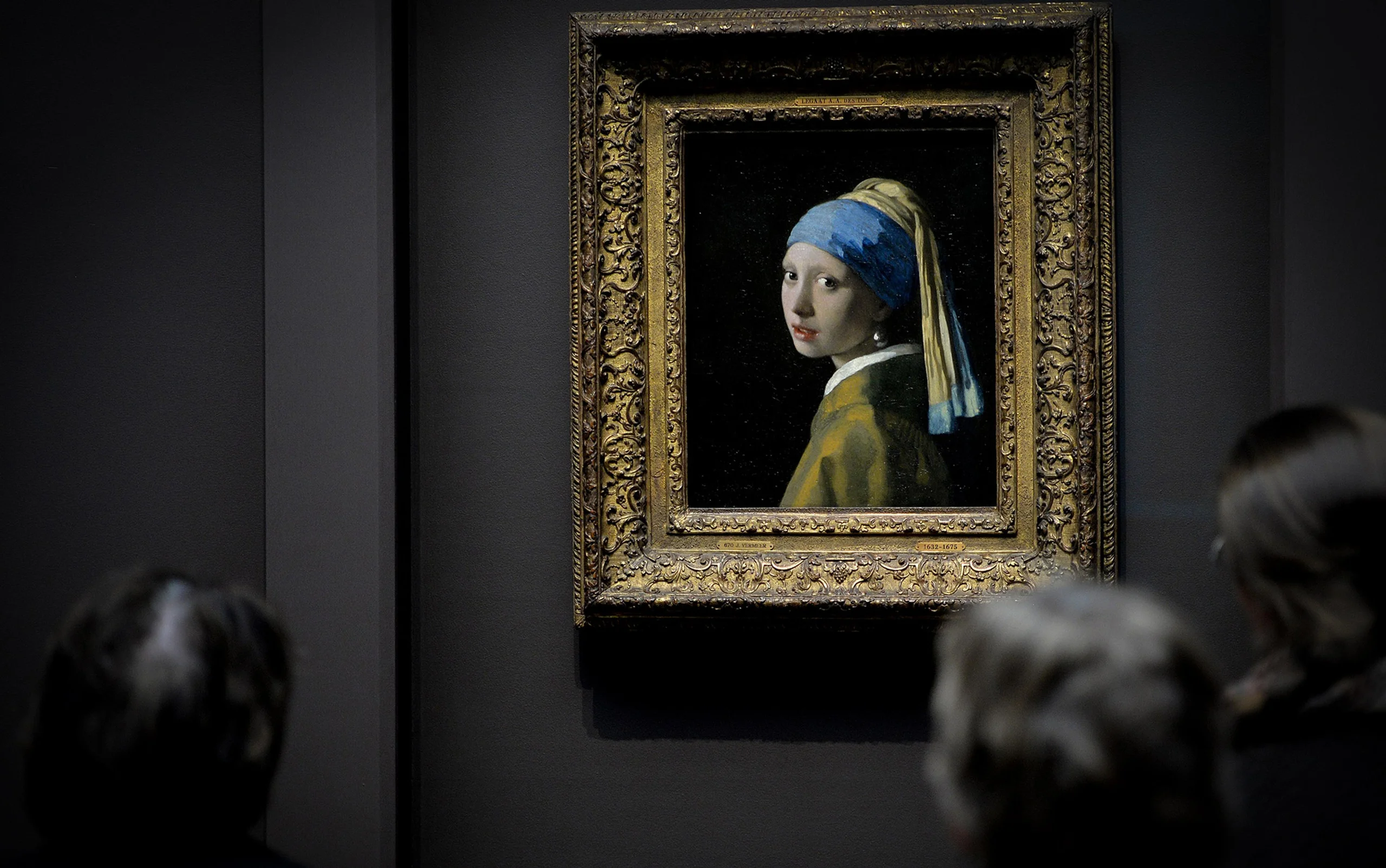
Stendhal
 France
Also known as: Marie-Henri Beyle, Henri Beyle
Birthday
January 23, 1783
Birth Sign
Sagittarius
Birthplace
Grenoble, France
Age
Died at 59
Height
5 ft 7 in (170 cm)
About
Marie-Henri Beyle, universally known by his pen name Stendhal, was a pioneering French novelist born on January 23, 1783, in Grenoble. He is widely celebrated as a precursor to literary realism and a master of psychological analysis in fiction. His two most enduring works, Le Rouge et le Noir (The Red and the Black) and La Chartreuse de Parme (The Charterhouse of Parma), remain cornerstones of 19th-century literature. Beyond fiction, he authored De l'amour, a treatise that introduced the concept of "crystallization" to describe the process of romantic idealization. Despite his posthumous global acclaim, Stendhal died largely unrecognized in his own time, passing away on March 23, 1842, in Paris.
His writing style combined sharp observation with a unique narrative voice that dissected the inner lives of his characters. Critics like Marcel Proust and Albert Camus later cited him as a primary inspiration, with Camus calling him "the greatest psychologist of all time." Stendhal's ability to portray social ambition and human hypocrisy set a new standard for the novel genre. His influence extends well beyond literature into psychology and cultural studies, particularly through the syndrome named after him.
Early Life & Background
Stendhal was born Marie-Henri Beyle in Grenoble, the capital of the Dauphiné region in southeastern France. He was the second son of Henri-Gérard Beyle, a lawyer and prominent local figure who served as a member of the Conseil des Cinq-Cents during the Directory, and Anne Gagnon, whose family owned a successful textile business. The family lived in a large house on the Place Saint-André. Stendhal's childhood was marked by a strict and often cold relationship with his father, whom he described as a "tyrant," while he found solace in his mother until her death when he was seven years old. This loss deeply affected him; he later wrote that his mother's death was the first great tragedy of his life and that he never fully recovered from it.
His early education took place at the École Centrale in Grenoble, where he developed a love for mathematics, science, and the arts, particularly music and painting. He was an avid reader of Plutarch's Lives and Rousseau's Confessions, which influenced his later autobiographical style. In 1799, at the age of 16, he moved to Paris to study engineering at the École Polytechnique but found the rigid military discipline stifling. After only a few months, he left the school, disillusioned by the Napoleonic conscription laws and the atmosphere of the era. Instead, he returned to Grenoble and briefly worked in the Ministry of War before rejoining the Napoleonic army as a civil servant in 1800.
Stendhal's early career was defined by his service in Napoleon's administration rather than his writing. He accompanied the Grande Armée through Italy, Germany, and Russia, serving as a logistics officer and administrator. These travels provided him with firsthand experience of European politics and society, material that would later permeate his novels. During this period, he adopted the pseudonym "Stendhal" in 1806, reportedly inspired by the German town of Stendal, though some biographers suggest it may have been a reference to the German writer Johann Wolfgang von Goethe or simply a desire to create a distinct persona separate from his bourgeois upbringing.
Career Growth
The pivotal moment of his career arrived in 1830 with the release of Le Rouge et le Noir. The novel was an immediate sensation, praised for its psychological depth and its unflinching portrayal of social ambition in post-Napoleonic France. It established him as a major literary figure, even if he continued to struggle financially and professionally. His subsequent masterpiece, La Chartreuse de Parme, published in 1839, is widely considered his greatest work and a definitive text of literary realism.
Before these novels, he had published Rome, Naples et Florence in 1817, a travelogue that showcased his keen observational skills. In 1822, he released De l'amour, an anonymous treatise that was controversial but garnered attention among intellectuals for its clinical yet passionate dissection of love. He also completed Lucien Leuwen in 1827, a satirical novel critiquing the Restoration monarchy, though it remained unpublished until after his death. His influence on the literary world was profound, with critics such as Marcel Proust and Albert Camus later citing him as a primary inspiration. Proust famously stated that Stendhal was "the first modern novelist," and Camus called him "the greatest psychologist of all time." His ability to dissect the inner lives of his characters, particularly their motivations and hypocrisies, set a new standard for the novel genre.
Career Timeline
Public Image & Style
Stendhal is portrayed as a man of intense sensitivity, intellectual rigor, and emotional depth. His signature style in writing was characterized by clarity, irony, and a focus on the inner workings of the human mind. He is often depicted as a recluse who valued truth over social convention. Physically, he was described as having a somewhat unkempt appearance, with a balding head and a heavy build in his later years. He stood approximately 5 feet 7 inches tall, which was average for a Frenchman of his era. He was known for his sharp eyes and expressive face, which reflected his intense emotional life.
Fame & Fandom (iFAMOUS Rankings)
Stendhal holds no current placement in the Global Top 1,000 or any Top-100 scope list within the iFANN rankings. While the author remains a towering figure in literary history, his standing as a historical personality places him outside the active celebrity metrics that define contemporary fame hierarchies. The lack of a formal ranking reflects his status as a figure from the nineteenth century rather than a modern pop culture icon with active fan-driven visibility. Regarding his audience, there is no documented fandom name for Marie-Henri Beyle. As a writer who passed away nearly two centuries ago, he does not possess a contemporary collective of fans engaging in organized campaigns, birthday tributes, or social media movements. His readership exists primarily within academic and literary circles where his works are studied rather than celebrated through modern fan rituals. While the name has been adopted by recent musical projects like the album Stendhal by Ozuna and Beéle, and art installations such as Nan Goldin's Stendhal Syndrome, these entities have not generated a unified fanbase bearing a specific title under the author's legacy. The cultural conversation surrounding Stendhal today focuses on the phenomenon known as Stendhal Syndrome, a psychosomatic reaction to art in Florence, rather than devotion to the man himself. This distinction separates the enduring influence of his psychological realism from the fleeting dynamics of modern celebrity fandoms. He is not featured on the August 2026 iFAMOUS Rankings flagship list.
Interesting Facts and Legends
Marie-Henri Beyle died on March 23, 1842, in Paris, though folklore suggests his heart gave out from the intensity of his travels. A defining legend of his life involves his visit to Florence, where viewing the painting Beatrice Cenci caused him such overwhelming physical distress, rapid heartbeat, dizziness, and confusion, that he collapsed. This personal experience birthed the term Stendhal Syndrome, describing a rare condition where tourists faint from the sheer beauty of art. While the syndrome is an unofficial diagnosis rather than a formal clinical condition, it remains the most widely retold story attached to his name.
In modern times, the moniker resurfaced when reggaeton artists Ozuna and Beéle released their collaborative album Stendhal in late 2025, using the title to evoke themes of artistic intoxication. That same year, photographer Nan Goldin faced controversy at the Art Gallery of Ontario regarding her work Stendhal Syndrome, which sparked debates about political dissent in the acquisition of art. These events keep the name alive, shifting focus from the biographical details of the author to the powerful effects of art on the human psyche. Stendhal was also an avid opera lover and once wrote that he could not live without music.
Notable Quotes
“A man must be a hero to be happy.”
“I am a strange creature; I need to be loved by everyone.”
“The only way to get rid of a temptation is to yield to it.”
“Happiness is something real, good, and positive.”
“To love is to suffer. To be loved is to be happy.”
Family & Personal Life
Stendhal was the second son of Henri-Gérard Beyle, a lawyer and prominent local figure, and Anne Gagnon, whose family owned a successful textile business. He grew up in a large house on the Place Saint-André in Grenoble. His relationship with his father was distant and often hostile, leading him to view his father as a tyrant. In contrast, he was very close to his mother until she died when he was just seven years old, an event he described as the first great tragedy of his life. He never married and had no children. Throughout his life, he maintained deep emotional bonds with various women, most notably Countess Teresa Gamba, with whom he shared a lifelong intellectual and emotional connection despite never consummating a traditional marriage. He spent his final years living alone in Paris.
Notable Connections
Stendhal is closely associated with the Romantic movement and the development of literary realism. He had significant interactions with contemporaries like Prosper Mérimée, who wrote his biography, and was influenced by the political climate of Napoleonic France and the Bourbon Restoration. His works are frequently compared to those of Honoré de Balzac and Gustave Flaubert, who followed in his footsteps as masters of psychological realism.
Relationships & Dating History
Stendhal's romantic life was defined by intellectual passion and unfulfilled longing rather than conventional marriage or family life. He never married. His romantic history is documented through his diaries and letters, revealing a pattern of passionate, often unrequited, infatuations. One of his earliest significant attachments was to Mathilde Demontier, a young woman he met in Milan around 1806. Their relationship was brief and ended due to her marriage to another man. Stendhal later described this as one of his first great loves.
Perhaps the most significant romantic figure in his life was Countess Teresa Gamba. Stendhal met Teresa in Bologna in 1814. She was the wife of Count Pietro Gamba, an Italian patriot and friend of Stendhal. Their relationship was complex; they maintained a deep emotional bond and frequent correspondence over many years, though they never consummated a physical affair in the traditional sense. Stendhal referred to her as his "ideal" and she remained a central figure in his life until her death in 1841. Their connection was based on mutual intellectual respect and shared political ideals. Throughout his life, he pursued numerous other women, often recording his crushes in his diaries with a mix of humor and despair. Notable mentions include a young girl named "Madame de la Mure" and various opera singers he admired in Paris and Milan. However, these were typically fleeting obsessions rather than long-term partnerships. At the time of his death in 1842, Stendhal was unmarried and had no children. His final years were spent in Paris, living alone and focusing on his writing. There is no record of any subsequent relationships after Teresa Gamba's death, and he died without a spouse or issue.
- RumouredTeresa Gamba1814 - 1841Deep emotional bond and frequent correspondence; never consummated physically.
- DatedMathilde Demontier1806 - 1807Brief relationship in Milan that ended when she married another man.
Death & Aftermath
Died
March 23, 1842 (aged 59)
Death Place
Paris, France
Cause of Death
Stroke (apoplexy)
Marie-Henri Beyle died on March 23, 1842, in his apartment on the Rue de la Chaussée-d'Antin in Paris. He was 59 years old when a sudden stroke, or apoplexy as it was then called, claimed his life. The event was relatively quiet and lacked the fanfare of a modern celebrity death; there were no public vigils or massive outpourings of grief from the general population at the time. His funeral took place shortly after at the Père Lachaise Cemetery, attended by a small circle of friends and admirers, including the writer Prosper Mérimée who delivered a eulogy.
At the moment of his passing, Stendhal remained largely unrecognized by the broader public. While Le Rouge et le Noir had found some success in 1830, his reputation as a literary giant was still a future possibility rather than a present reality. The immediate aftermath saw his estate pass to his heirs with modest assets consisting mainly of manuscripts and personal effects. It would take decades for critics and readers to fully appreciate his psychological depth and contribution to realism. The posthumous journey of his legacy began slowly in the mid-19th century and accelerated through the 20th century, transforming him from an obscure figure into one of the most studied authors in French literature. Today, his name is synonymous with the phenomenon known as Stendhal Syndrome, a condition describing the overwhelming physical reaction to art, ensuring his memory endures far beyond the scope of his original works.
Net Worth (Estate Value)
$0
iFANN Editorial Team estimate
As Stendhal died in 1842, he possessed no modern net worth. His estate at the time of his death was modest, consisting mainly of manuscripts, personal belongings, and a small amount of cash. The value of his literary rights and royalties has grown exponentially since then. His works are now managed by various publishers and estates, with rights held by his heirs and later transferred to publishing houses. Major revenue sources for his estate today include book sales, translations, film adaptations, and academic licensing. While exact figures for a 19th-century estate are not tracked in modern financial terms, the cumulative value of his intellectual property is estimated to be in the tens of millions of dollars globally. The Red and the Black and Chartreuse of Parma remain bestsellers, generating significant royalties annually. The iFANN Editorial Team estimates the current value of his estate and intellectual property to be substantial, driven by continuous global interest in his works and the cultural phenomenon named after him.
Awards Won (1)
Stendhal did not receive awards during his lifetime, as the modern systems of literary prizes did not exist in the same form. However, his posthumous recognition has been immense. He was awarded the Legion of Honour (Légion d'honneur) in 1830, a rare distinction for a writer at the time, though he declined the full ceremonial aspects due to his aversion to official pomp. He is frequently listed in "Greatest Novelists" rankings, such as being ranked highly in lists by Time and The Guardian. His inclusion in the canon of "Greatest Writers" by institutions like the Académie Française and his status as a required reading in French schools serve as a form of national honor.
1830 · Civil Distinction
General Recognition
Known For
Le Rouge et le Noir
1830 · Author
La Chartreuse de Parme
1839 · Author
De l'amour
1822 · Author
Keywords
Sources
Quick Facts
- Profession
- writer, autobiographer, diarist
- Born
- January 23, 1783
- Birthplace
- Grenoble
- Died
- March 23, 1842
- Death Place
- Paris
- Gender
- Male
- Birth Sign
- Sagittarius
Personal Details
- Full Name
- Marie-Henri Beyle
- Height
- 5 ft 7 in (170 cm)
- Children
- Education
- École Centrale, Grenoble; École Polytechnique (briefly)
Frequently Asked Questions
Who was Stendhal?
What is Stendhal Syndrome?
Did Stendhal ever get married?
Why is Stendhal famous?
Where did Stendhal die?
Join the community
fans discussing