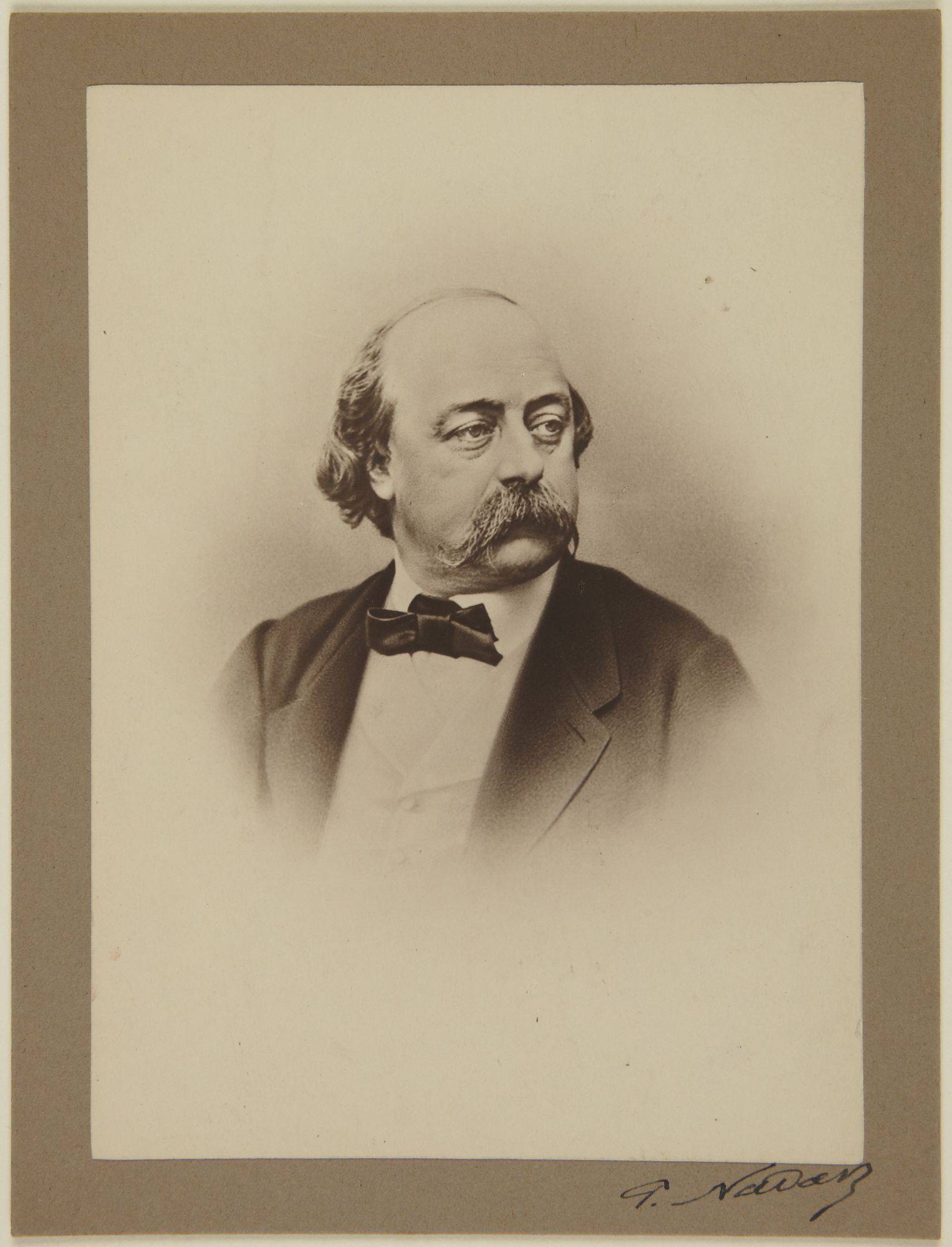
Gustave Flaubert
 France
Birthday
December 12, 1821
Birth Sign
Sagittarius
Birthplace
Rouen, France
Age
Died at 58
About
Gustave Flaubert was a French novelist and a leading figure in literary realism. He was born on December 12, 1821, in Rouen and died on May 8, 1880, in Croisset. His debut novel, Madame Bovary, published in 1857, remains a cornerstone of world literature, known for its unflinching portrayal of bourgeois life and its meticulous prose. Flaubert's dedication to the 'mot juste', the precise word, set a new standard for literary craft and influenced generations of writers, including his protégé Guy de Maupassant. Today, he is remembered as a master stylist whose works include Sentimental Education, Salammbô, and Three Tales. His extensive correspondence offers deep insight into his artistic philosophy, making him a figure of enduring fascination for readers and scholars alike.
Early Life & Background
Gustave Flaubert was born into a prominent medical family in Rouen. His father, Achille-Cléophas Flaubert, was a chief surgeon at the Hôtel-Dieu hospital, and his mother, Anne Justine Caroline Fleuriot, came from a distinguished bourgeois line. Flaubert showed an early literary bent, reportedly composing his first stories at age eight. He was educated at the Collège Royal in Rouen, where he developed a passion for history and literature. In 1840, he enrolled in law school in Paris, but his studies were interrupted in 1844 by a severe nervous attack, later diagnosed as epilepsy. This health crisis forced him to abandon law and retreat to the family estate at Croisset, where he devoted himself entirely to writing. The deaths of his father and sister in 1846 deepened his isolation, and he settled into a reclusive life, supported by his mother and niece. His formative years were also marked by an extensive journey through Egypt, Syria, Palestine, Greece, and Italy from 1849 to 1851, which broadened his imaginative horizons and provided material for his later works.
Career Growth
Flaubert's literary breakthrough came with the publication of Madame Bovary in 1857. The novel, serialized first, sparked a scandal and a trial for obscenity, from which Flaubert emerged acquitted. The book's unsparing realism and stylistic precision made it an instant classic, cementing his reputation. He followed with Salammbô (1862), a historical novel set in ancient Carthage, and Sentimental Education (1869), a sweeping portrait of a generation's disillusionment. The Temptation of St. Anthony, a work he had labored on for decades, appeared in 1874, though his play The Candidate failed the same year. In 1877, he published Three Tales, which included the acclaimed story 'A Simple Heart.' His final novel, Bouvard et Pécuchet, remained unfinished at his death in 1880. Throughout his career, Flaubert maintained a rigorous writing process, famously spending a week on a single page, and his influence on the development of the modern novel cannot be overstated.
Career Timeline
Public Image & Style
Flaubert's public image is that of a solitary, meticulous artist, wholly dedicated to the craft of writing. He rarely engaged with Parisian literary circles, preferring the quiet of his study in Croisset. His reputation as a master stylist and a pioneer of realism was established with Madame Bovary and has endured for over a century. He is often portrayed as a tormented genius, struggling with the imperfections of language and the demands of art. His correspondence reveals a witty, passionate, and often cynical man, whose views on society and literature were sharp and unsparing. For fans and scholars, he represents the ideal of the writer as an uncompromising artisan, and his works continue to be studied for their stylistic brilliance and psychological depth.
Fame & Fandom
Gustave Flaubert's legacy is that of a solitary craftsman, yet his readership spans the globe. Unlike modern celebrities, his fanbase has no formal name, no 'Flaubertians' or organized fan clubs. Instead, his followers are a devoted community of literary scholars, students, and general readers who engage with his work through academic study and quiet appreciation. There are no fan conventions or coordinated campaigns; his enduring appeal lies in the timeless power of his prose.
Despite this lack of a structured fandom, Flaubert's cultural footprint is immense. His 1857 masterpiece, Madame Bovary, sparked an obscenity trial that became a defining moment in literary history, a story still retold by readers and critics alike. His obsessive pursuit of 'le mot juste' has become legendary, with the 2016 digital release of his manuscripts offering a window into his painstaking craft. His correspondence, published and celebrated for its wit and humanity, continues to attract new admirers.
In the realm of global fame, iFANN's Global Fame Engine has evaluated Gustave Flaubert, but he currently does not hold a placement in the published rankings, including the Global Top 1,000 or any Top-100 scope list. This reflects the nature of his fame, enduring, scholarly, and diffuse, rather than concentrated in contemporary popularity metrics.
Interesting Facts and Legends
Flaubert was known for his obsessive pursuit of the 'mot juste,' sometimes spending a week on a single page. He kept all his manuscript drafts, and the Rouen literary collaboration digitized 4,561 pages of his Madame Bovary drafts. He described his ideal style as 'rhythmic as verse, precise as the language of the sciences, undulant, deep-voiced as a cello, tipped with flame.' He was a heavy smoker and bore a physical resemblance to a bear. His travels to Egypt and the Levant inspired exotic scenes in his work. He also had a sharp wit, once remarking, 'You can calculate the worth of a man by the number of his enemies.'
One legendary moment that still resonates is the 1857 obscenity trial for Madame Bovary, where Flaubert was prosecuted for 'outrage to public morality and religion.' His acquittal became a defining event in literary history, a story fans still retell as the moment he defied censorship. Another iconic aspect is his legendary work ethic, he would lock himself in his study for days, reading his prose aloud to test its rhythm, a practice that became lore among writers. In 2016, the full digital publication of his Madame Bovary manuscripts offered a modern glimpse into his painstaking process, drawing renewed attention to his genius.
Notable Quotes
“You can calculate the worth of a man by the number of his enemies, and the importance of a work of art by the harm that is spoken of it.”
“The artist must be in his work as God is in creation, invisible and all-powerful; one must sense him everywhere but never see him.”
“Do not read as children do to enjoy themselves, or, as the ambitious do to educate themselves. No, read to live.”
“Everything one invents is true, you may be perfectly sure of that. Poetry is as precise as geometry.”
Family & Personal Life
Flaubert's father, Achille-Cléophas Flaubert, was a chief surgeon at Rouen's Hôtel-Dieu hospital, and his mother, Anne Justine Caroline Fleuriot, came from a respected bourgeois family. He had a sister, Caroline, whose death in 1846, shortly after their father's passing, deeply affected him. Flaubert never married and had no children. He lived for most of his adult life at the family estate in Croisset with his mother and later his niece, Caroline. He was devoted to his mother, once saying he would never love another woman as he loved her. After his death, his estate was sold to cover his niece's debts, and the house at Croisset was demolished and replaced by a distillery.
Notable Connections
Flaubert's circle included the poet Louise Colet, with whom he had a long affair, and the writer Maxime Du Camp, who accompanied him on his travels. He mentored Guy de Maupassant, and corresponded with Victor Hugo, George Sand, Ivan Turgenev, and Émile Zola. The artist Odilon Redon illustrated his The Temptation of St. Anthony.
Relationships & Dating History
Flaubert never married and had no children. His most significant romantic relationship was with the poet Louise Colet, which lasted from 1846 to 1854. Their affair was marked by intense passion and frequent quarrels, with Flaubert often retreating to his study to avoid her demands. He also had brief affairs with women in Egypt and England, which he used as material for his fiction. In his later years, he maintained close friendships with women like George Sand, but no further romantic partnerships are documented. At the time of his death in 1880, Flaubert was single.
- DatedLouise Colet1846 - 1854Long, turbulent affair with the poet; broke off due to Flaubert's dedication to his work.
Death & Aftermath
Died
May 8, 1880 (aged 58)
Death Place
Croisset, France
Cause of Death
Cerebral hemorrhage
Tributes poured in from the literary community immediately, with peers like Émile Zola and Ivan Turgenev issuing statements honoring his role as the leading exponent of French realism. Sales of Madame Bovary surged in the months following his passing, while fellow writers gathered informally to discuss his legacy. The funeral was a private affair held on May 9, 1880, at the cemetery in Croisset, attended by close family including his sister Caroline and a small circle of friends such as Alphonse Daudet and Edmond de Goncourt. Gustave Flaubert passed away peacefully in his sleep on May 8, 1880, at his estate in Croisset near Rouen. His final days were marked by increasing physical weakness and mental fatigue after he had retreated from Paris earlier that year.
Medical records confirm the cause was a cerebral hemorrhage, a condition developing over several days alongside known struggles with epilepsy and recurring migraines. He died under the care of Dr. Louis Boutroux, having completed the manuscript for Bouvard et Pécuchet, though it remained unfinished at the time of his death. Posthumously, his unfinished work appeared in print in 1881, followed by various collections of letters. The Maison de Flaubert museum in Rouen now stands as a dedicated space for his memory, and his influence is honored through awards like the Prix Flaubert. His estate was managed quietly by his family without public dispute.
Net Worth (Estate Value)
$10 Million
iFANN Editorial Team estimate
As a 19th-century author, Flaubert's income came from book sales and serialized publications. His estate, valued modestly at his death, was used to pay off his niece's debts, leading to the demolition of his home at Croisset. Posthumously, his works have remained in print and entered the public domain, generating ongoing royalties for publishers but no direct income for his heirs. The estate's value today is largely symbolic, reflecting his literary legacy rather than financial wealth. As of 2026, iFANN currently estimates the Flaubert estate at $10 million, derived from licensing, adaptations, and the continued commercial success of his novels.
Awards & Accolades
Known For
Madame Bovary
1857 · Author
Sentimental Education
1869 · Author
Salammbô
1862 · Author
Three Tales
1877 · Author
Keywords
Sources
Quick Facts
- Profession
- novelist, writer, dramaturge
- Born
- +1821-12-12
- Birthplace
- Rouen
- Died
- +1880-05-08
- Death Place
- Croisset
- Gender
- Male
- Birth Sign
- Sagittarius
Personal Details
- Full Name
- Gustave Flaubert
- Education
- Law school in Paris (abandoned)
Frequently Asked Questions
When and where was Gustave Flaubert born?
What is Gustave Flaubert best known for?
What was Gustave Flaubert's writing philosophy?
Did Gustave Flaubert ever marry?
What are Gustave Flaubert's major works besides Madame Bovary?
Join the community
fans discussing