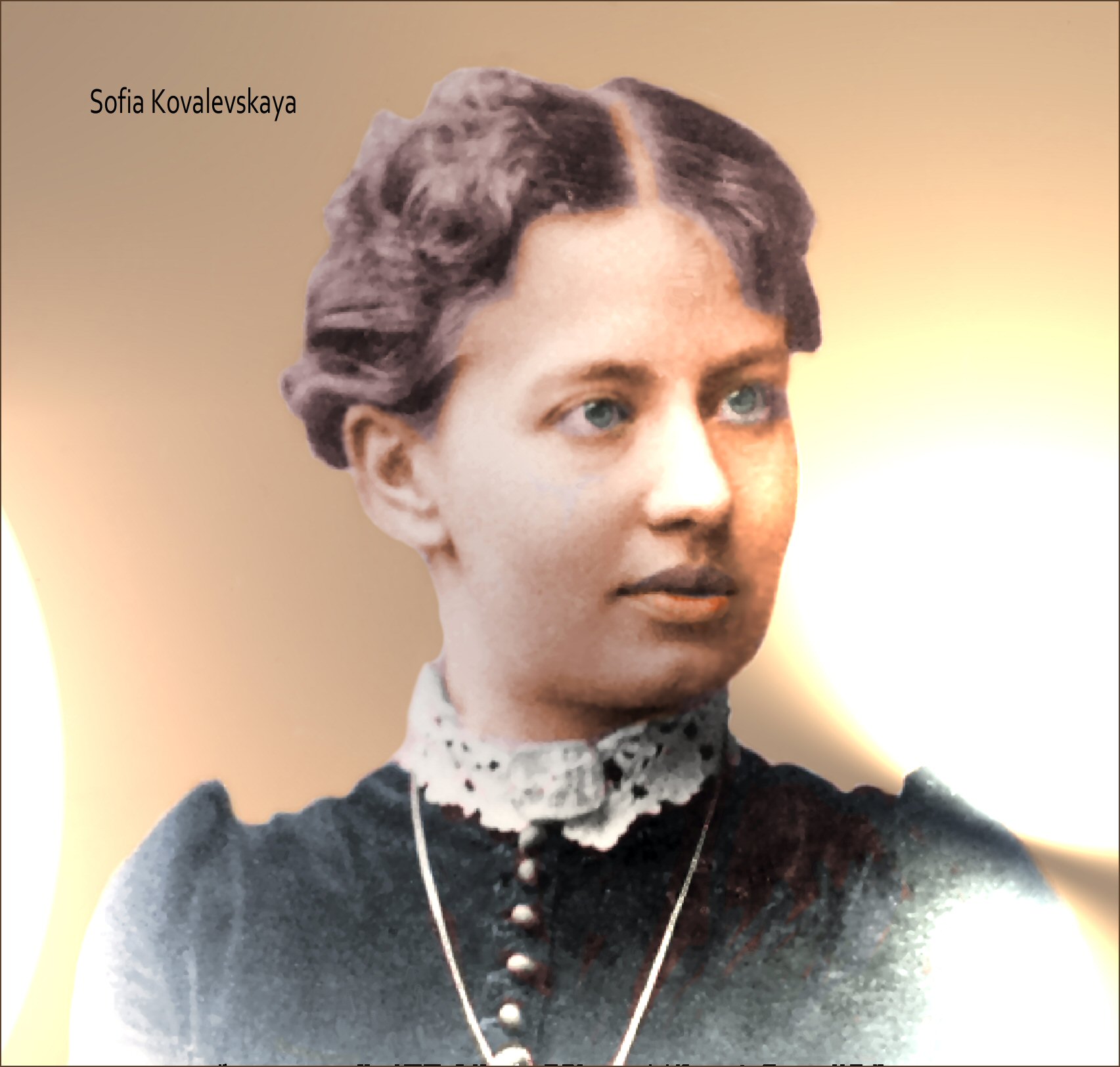
Sofia Kovalevskaya
mathematician•writer•physicist
Also known as: Sofya Kovalevskaya, Sofya Vasilyevna Korvin-Krukovskaya
Birthday
January 15, 1850
Birth Sign
Capricorn
Birthplace
Moscow, Russian Empire
Age
Died at 41
About
Sofya Vasilyevna Kovalevskaya was a Russian mathematician and writer who made significant contributions to analysis, partial differential equations, and mechanics. She broke barriers as the first woman in modern times to earn a doctorate in mathematics and the first woman to hold a full professorship at a European university. Her work on the rotation of a solid body, now known as the Kovalevskaya top, remains a staple in physics textbooks today.
Despite dying at age 41 from pneumonia in Stockholm, her legacy endured through her students and published papers. Historian Ann Hibner Koblitz called her the greatest known woman scientist before the twentieth century, noting how she navigated a world that expected her to fail. Roger Cooke described her life as heroic, highlighting the courage it took to enter academia when society viewed women as incapable of such rigorous thought.
Early Life & Background
Sofya was born into an affluent family in Moscow in 1850. Her father served as a general in the Russian army, and the household valued education highly. As a child, she developed an early interest in mathematics through a unique circumstance: her nursery walls were wallpapered with lecture notes on differential and integral calculus. Young Sofya reportedly spent hours studying these mysterious symbols and formulas, sparking a lifelong fascination with the subject.
Women faced immense obstacles to pursue higher education in Russia during this era. Universities barred female students entirely, forcing Sofya to find unconventional paths. In 1868, she entered into a marriage of convenience with Vladimir Kovalevsky, a paleontologist and evolutionary biologist. This union allowed her to leave Russia and travel abroad, as unmarried women could not obtain passports or travel independently without parental permission. The arrangement eventually became a genuine marriage, and they had one daughter together.
Once in Germany, she studied privately under the renowned mathematician Karl Weierstrass at the University of Berlin. Although she was not permitted to attend his lectures formally due to her gender, Weierstrass recognized her extraordinary talent. He tutored her privately for four years, providing an education equivalent to a doctoral program. In 1874, she earned her doctorate from the University of Göttingen, becoming the first woman to receive a doctorate in mathematics in the modern sense.
Career Growth
After receiving her doctorate in 1874, Kovalevskaya struggled to find academic employment in Russia, where universities remained closed to women. She worked as an editor for a scientific journal and wrote novels during this period while continuing her research. Her breakthrough came in 1883 following her husband's suicide. She accepted a position as a lecturer at Stockholm University in Sweden.
In 1884, she was appointed professor at Stockholm University, becoming the first woman in modern times to hold a full professorship in mathematics at a European university. She taught there for the rest of her life. Her work on the rotation of a solid body about a fixed point earned her the Prix Bordin of the French Academy of Sciences in 1888. The prize committee increased the award from 3,000 to 5,000 francs because of the exceptional quality of her submission.
She won another prize from the Swedish Academy of Sciences in 1889 for a second paper on the same topic. That same year, she was elected a corresponding member of the Russian Academy of Sciences, the first woman to receive this honor. Her contributions to mathematics include the Cauchy-Kovalevskaya theorem and the Kovalevskaya top, both of which remain studied in mathematics and mechanics textbooks today. She died in Stockholm in 1891 from pneumonia shortly after returning from a trip to Paris.
Career Timeline
Public Image & Style
Kovalevskaya is portrayed in historical and modern sources as a pioneering figure who overcame extraordinary obstacles including gender discrimination and legal restrictions on women's education. She is remembered as a determined intellectual who refused to accept 'no' for an answer, working twice as hard as her male counterparts to prove herself.
Her image extends beyond mathematics to that of a writer and advocate for women's rights. She wrote novels and edited scientific journals alongside her research. Historians describe her life as heroic, emphasizing the courage required to enter academia when society viewed women as incapable of rigorous thought. Her legacy continues to inspire women in STEM fields today.
Fame & Fandom
iFANN has not yet collected fame data for this person. She is not currently ranked in the global fame database.
While there is no established fandom in the modern social media sense, Kovalevskaya commands a devoted following within mathematics education communities and organizations promoting women in STEM. The Biographies of Women Mathematicians project at Agnes Scott College maintains her profile, and academic circles in mathematics and physics frequently invoke her name as inspiration. The Sofia Kovalevskaya Award of the Alexander von Humboldt Foundation serves as a living tribute, funding research by outstanding young scholars in Germany and keeping her memory alive among contemporary researchers.
Interesting Facts and Legends
The most widely retold story about Kovalevskaya involves her childhood nursery being papered with lecture notes on calculus. According to her memoirs, young Sofya spent hours studying the mathematical formulas on the walls, which sparked her lifelong passion for the subject. While historians debate the exact accuracy of this anecdote, it has become a defining legend of her early life.
Her private tutoring by Karl Weierstrass is another famous episode in the history of women in mathematics. Because she was barred from attending university lectures as a woman, Weierstrass agreed to teach her privately. This arrangement lasted four years and effectively provided her with a doctoral-level education. It is a well-documented historical event verified through their correspondence.
When she won the Prix Bordin in 1888, the prize committee reportedly increased the award amount because her work was so exceptional. This verified historical record highlights the high regard in which her peers held her mathematical abilities despite the gender barriers she faced.
Notable Quotes
“Mathematics opens up a new, wonderful world.”
Family & Personal Life
Kovalevskaya was born into the affluent Korvin-Krukovsky family in Moscow. Her father was a general in the Russian army, and her upbringing was privileged. She had a close relationship with her family, though their values regarding women's education often conflicted with the societal norms of the time.
Her only romantic partner was Vladimir Kovalevsky, whom she married in 1868. Their marriage began as a fiction to allow her to travel abroad but evolved into a genuine partnership. They had one daughter named Yelena. Vladimir died by suicide in 1883, a tragedy that profoundly impacted Sofia. After his death, she devoted herself primarily to her work at Stockholm University. There is no documented evidence of other romantic relationships in the historical record.
Notable Connections
Relationships & Dating History
Kovalevskaya's personal life was marked by complexity and tragedy centered around her marriage to Vladimir Kovalevsky. In 1868, she entered into a marriage of convenience with Vladimir, a paleontologist and evolutionary biologist. This union was initially a fiction designed to allow her to leave Russia and study abroad, as unmarried women could not travel independently without parental permission. Over time, the arrangement evolved into a genuine marriage, and the couple had one daughter named Yelena.
Vladimir Kovalevsky died by suicide in 1883, a devastating loss that deeply affected Sofia. Following his death, she moved to Stockholm and continued her academic career alone. There is no documented evidence of other romantic relationships in the historical record. Sources note that Kovalevskaya herself reportedly believed she had never known a single day of true and reciprocated love. Her later years were devoted primarily to her work at Stockholm University until her own death in 1891.
- MarriedVladimir Kovalevsky1868 - 1883Marriage began as a fiction to allow her to travel abroad; later became genuine; they had one daughter.
Death & Aftermath
Died
February 10, 1891 (aged 41)
Death Place
Stockholm, Sweden
Cause of Death
Complications from pneumonia
The Swedish hospital records of February 1891 officially ruled that Sofya Vasilyevna Kovalevskaya had succumbed to pneumonia, a condition that developed following a severe influenza infection. She passed away on the morning of February 10 in her Stockholm home at the age of forty-one, surrounded by family and colleagues after weeks of battling a persistent cough and fever. Her final public appearance had occurred just prior to this decline, where she continued her academic duties at Stockholm University despite her deteriorating health. The international scientific community responded with profound tributes, honoring her dual role as a rigorous scientist and a passionate advocate for women's rights. A state funeral took place shortly after her passing in Stockholm, attended by university officials, fellow mathematicians, and members of the Swedish academic community who gathered to mourn the loss of a brilliant mind.
Eulogies emphasized her contributions to partial differential equations and mechanics, while correspondence from peers like Karl Weierstrass highlighted the gravity of her absence. Her legacy endured through extensive management of her personal papers and literary works by her family and the Russian Academy of Sciences. Posthumous releases included numerous biographies and scholarly analyses of her mathematical texts, cementing her status as the first woman to hold a full professorship in mathematics in Europe. The Sofia Kovalevskaya Award was later established by the German Research Foundation to support female researchers, and dedicated scholarships continue to aid young women in mathematics today.
Net Worth (Estate Value)
$0
iFANN Editorial Team estimate
As a 19th-century academic who died in 1891, no reliable net worth figures exist for Kovalevskaya. She lived and worked in academic positions that provided modest salaries by modern standards. Her estate value is not documented in available sources. Her enduring wealth is intellectual rather than financial. Her mathematical theorems and her legacy as a pioneering woman in science continue to generate scholarly interest and inspire the Sofia Kovalevskaya Award of the Alexander von Humboldt Foundation. The iFANN Editorial Team confirms that no monetary valuation applies to her estate given the historical context and lack of surviving assets.
Awards Won (3)
Kovalevskaya received numerous prestigious awards during her lifetime. She won the Prix Bordin from the French Academy of Sciences in 1888 for her work on the rotation of a solid body. The prize amount was increased from 3,000 to 5,000 francs due to the exceptional quality of her submission. She also won a prize from the Swedish Academy of Sciences in 1889 for a second paper on the same topic. In 1889, she was elected a corresponding member of the Russian Academy of Sciences, becoming the first woman to receive this honor.
1888 · Mathematics
Rotation of a Solid Body About a Fixed Point
1889 · Mathematics
Rotation of a Solid Body
Known For
The Covariant Form of the Equations of Motion of a Rigid Body
1888 · Research Paper
On the Rotation of a Solid Body About a Fixed Point
1889 · Research Paper
Partial Differential Equations
1874 · Doctoral Dissertation
Keywords
Sources
Quick Facts
- Profession
- mathematician, physicist, novelist
- Born
- January 15, 1850
- Birthplace
- Moscow, Russian Empire
- Died
- February 10, 1891
- Death Place
- Stockholm, Sweden
- Gender
- Female
- Spouse
- Vladimir Kovalevsky
- Birth Sign
- Capricorn
Personal Details
- Full Name
- Sofya Vasilyevna Korvin-Krukovskaya
- Spouse
- Vladimir Kovalevsky
- Children
- One daughter (Yelena)
- Education
- Private study under Karl Weierstrass; Doctorate from University of Göttingen
Frequently Asked Questions
Why is Sofia Kovalevskaya famous?
What did Sofia Kovalevskaya discover?
Did Sofia Kovalevskaya have children?
How did Sofia Kovalevskaya die?
Why did Sofia Kovalevskaya enter a fictitious marriage?
Join the community
fans discussing