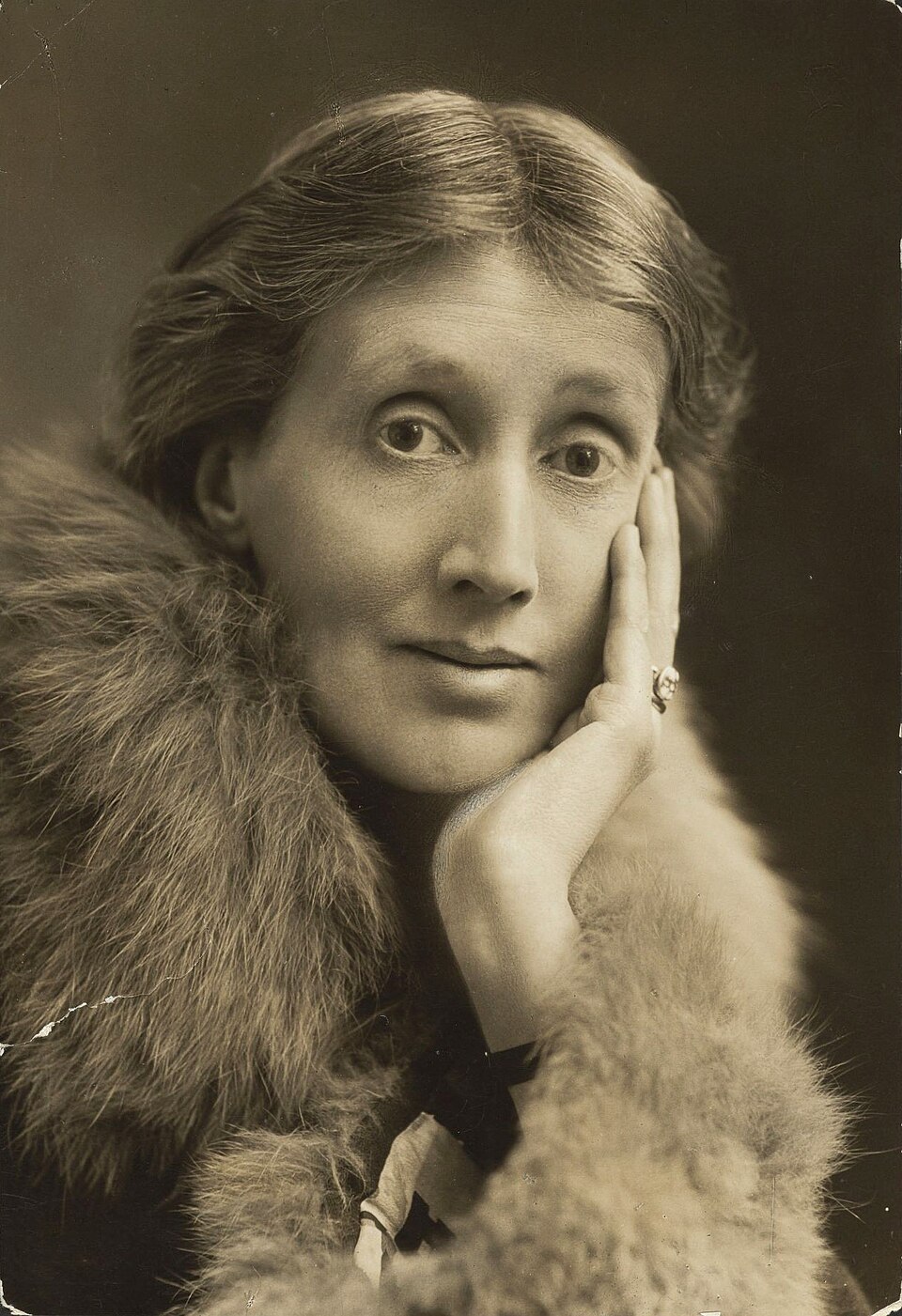
Virginia Woolf
novelist•essayist•autobiographer
Also known as: Adeline Virginia Stephen, Virginia Woolf née Stephen
Birthday
January 25, 1882
Birth Sign
Sagittarius
Birthplace
Hyde Park Gate, London
Age
Died at 59
Height
5 ft 4 in (163 cm)
About
Adeline Virginia Woolf was a pioneering English novelist and essayist who reshaped modern literature through her innovative narrative techniques. Born in 1882 into a prominent intellectual family in London, she became a central figure in the Bloomsbury Group, a circle of artists and writers who rejected Victorian conventions. Her work is celebrated for its stream-of-consciousness style and deep exploration of human consciousness, time, and memory. Although her life was marked by severe mental health struggles, her literary output remains a cornerstone of 20th-century fiction.
Woolf married Leonard Woolf in 1912, and together they founded the Hogarth Press, which published their own works and those of major modernists like T.S. Eliot and D.H. Lawrence. This independence allowed her to experiment freely with form. She reached her creative peak during the interwar years with novels like Mrs. Dalloway and To the Lighthouse. Her 1929 essay A Room of One's Own argued that women need financial independence and private space to write, becoming a foundational text for feminist theory. Despite her early death in 1941, her influence spread globally, with her novels translated into over 50 languages and studied in universities worldwide.
Early Life & Background
Adeline Virginia Stephen entered the world on January 25, 1882, at Hyde Park Gate in South Kensington, London. She was the seventh child of Julia Prinsep Jackson and Leslie Stephen, a historian and biographer. The household was a blend of step-siblings and full siblings, creating a complex dynamic where young Virginia absorbed both immense privilege and deep trauma. Her childhood included frequent moves between London, Sussex, and St Ives, exposing her to art and literature but also punctuated by sexual abuse from her half-brothers George and Gerald Duckworth.
The deaths of her mother in 1895, her step-sister Stella in 1897, her father in 1904, and her brother Thoby in 1906 shattered her world. These successive losses precipitated severe mental breakdowns that plagued her for the rest of her life. Before achieving fame, she received an informal education from her father's extensive library and briefly attended King's College London in 1897 to study classics and history. However, her fragile health forced her to leave. After her father's death, she moved with her sister Vanessa and remaining siblings to 46 Gordon Square in Bloomsbury. There, they formed the nucleus of the Bloomsbury Group, a circle of writers and intellectuals who rejected Victorian social norms. This environment fostered her radical thinking on gender, sexuality, and art, setting the stage for her future literary revolution.
Career Growth
Woolf's career began not with a grand debut but through writing journals and essays from a young age, initially under the pseudonym of 'Stella.' Her breakthrough came with the publication of The Voyage Out in 1915, followed by Night and Day in 1919. However, it was Mrs. Dalloway in 1925 that cemented her reputation as a major literary force. The novel captured a single day in the life of its protagonist while exploring trauma and the passage of time through stream-of-consciousness narration. She reached her creative zenith with To the Lighthouse in 1927, which used shifting perspectives to examine time and loss.
In 1928, she published Orlando: A Biography, a playful, gender-fluid exploration of identity inspired by her lover Vita Sackville-West. That same year, she released the seminal feminist essay A Room of One's Own, arguing that a woman must have financial independence and a room of her own to write fiction. Her later works, including The Waves in 1931 and Three Guineas in 1938, continued to push the boundaries of narrative structure. Despite her commercial and critical acclaim, she struggled with recurring manic-depressive episodes, which led to several hospitalizations and periods of isolation. Her final novel, Between the Acts, was published posthumously in 1941.
Career Timeline
Public Image & Style
Woolf is portrayed as a tragic genius, a feminist pioneer, and a master of modernist prose. Her image is often associated with the quiet intensity of her writing, the bohemian lifestyle of Bloomsbury, and the struggle with mental illness. She is a symbol of intellectual independence and the fight for women's rights in literature. Her distinctive voice and experimental style have made her a timeless figure, constantly reinterpreted by new generations of readers and scholars.
Fame & Fandom (iFAMOUS Rankings)
iFANN has not yet collected fame data for this person. The writer does not appear on the September 2026 iFAMOUS Rankings flagship list. While there is no formal fandom name documented in current data, her readership is highly organized through university departments, literary societies, and online communities. Fans often refer to themselves informally as 'Woolfians' or simply as admirers of modernist literature. Annual readings of her works take place on her birthday and death anniversary, keeping her legacy alive. Fan campaigns frequently focus on keeping her works in print, funding new translations, and advocating for more film and television adaptations. The enduring popularity of her ideas continues to inspire new generations of writers and thinkers.
Interesting Facts and Legends
Virginia Woolf adopted the name 'Virginia' later in life, dropping 'Adeline' which she felt was too associated with her mother. She and Leonard started the Hogarth Press in their home to avoid the constraints of mainstream publishers, eventually printing books by hand in the early days. Her journals kept detailed records of her mental states, now serving as invaluable resources for understanding bipolar disorder in the early 20th century. The character of Clive in Orlando was inspired by Vita Sackville-West, reflecting their passionate but complex relationship. The weekly salons at 46 Gordon Square and later at Monk's House in Rodmell are legendary for their intellectual rigor and rejection of Victorian norms, often cited as the birthplace of modernist thought in Britain.
Notable Quotes
“Yet it is in our idleness, in our dreams, that the submerged truth sometimes comes to the top.”
“Lock up your libraries if you like; but there is no gate, no lock, no bolt that you can set upon the freedom of my mind.”
“I can only note that the past is beautiful because one never realises an emotion at the time. It expands later, and thus we don't have complete emotions about the present, only about the past.”
“For most of history, Anonymous was a woman.”
Family & Personal Life
Virginia was the seventh child of Julia Prinsep Jackson and Leslie Stephen. Her sister, Vanessa Bell, became a renowned painter and lifelong companion. The family included half-siblings from her mother's first marriage, creating a blended household that was both rich in culture and fraught with personal tragedy. Virginia had no biological children, though she and Leonard supported various nieces and nephews. Her relationship with her sister Vanessa was deeply intimate, forming the emotional core of her life alongside her marriage to Leonard.
Notable Connections
Relationships & Dating History
Virginia Woolf was married only once. She wed Leonard Woolf on August 10, 1912, after meeting him in 1907 through mutual friends in the Bloomsbury Group. Leonard was a civil servant and socialist thinker, while Virginia was a writer. Their relationship was a partnership of equals, characterized by deep emotional support and intellectual collaboration. Leonard managed the Hogarth Press and cared for Virginia during her mental health crises. They had no biological children together, though they supported various nieces and nephews. Leonard wrote the memoir As It Was detailing their life together. He outlived her, dying in 1969.
While married to Leonard, Woolf had significant romantic and emotional relationships with women, which were part of the open, non-monogamous ethos of the Bloomsbury Group. Her most famous affair was with Vita Sackville-West, beginning around 1922 and continuing until Woolf's death in 1941. Sackville-West, a poet and novelist, became one of Woolf's closest confidantes and lovers. Their extensive correspondence documents a passionate but complex relationship involving long periods of separation and intense emotional dependency. Sackville-West inspired the character of Clive in Orlando. No children were born from this relationship, but they remained close friends until Woolf's death.
- MarriedLeonard Woolf1912 - 1941Met in 1907; married 1912; he died in 1969; no biological children.
- DatedVita Sackville-West1922 - 1941Long-term affair and close friendship; inspired Orlando.
Death & Aftermath
Died
March 28, 1941 (aged 59)
Death Place
Hythe, Sussex, England
Cause of Death
Suicide by drowning
The coroner at Lewes Coroner's Court ruled the death of Adeline Virginia Woolf as suicide by drowning following an inquest on April 2, 1941. Leonard Woolf provided testimony regarding his wife's long history of mental illness, and the court accepted medical evidence that she had taken her own life due to a recurrence of her condition. On the morning of March 28, 1941, Woolf filled her pockets with stones and walked into the River Ouse near Hythe in Sussex, where she drowned; her body was recovered two days later from the riverbank mud near Hythe Mill.
Tributes arrived promptly from literary peers such as T.S. Eliot, E.M. Forster, and Vita Sackville-West, while institutions like the Royal Society of Literature issued statements honoring her contributions to fiction. The funeral remained a private affair held on April 1, 1941, at St. Mary's Churchyard in Brighton, attended only by close family including Leonard Woolf and Vanessa Bell before cremation at the Brighton Crematorium. Her ashes were scattered in the River Ouse near the spot of her death, adhering to her wishes for privacy. Leonard Woolf managed her estate and continued publishing unfinished manuscripts like Between the Acts in 1941, ensuring the preservation of her letters and essays through the Hogarth Press. Decades later, she became a central figure in feminist theory and modernist studies, with foundations such as the Virginia Woolf Fellowship established in her name.
Net Worth (Estate Value)
$15 Million
iFANN Editorial Team estimate
As a deceased author, Virginia Woolf's net worth refers to the value of her estate. The estate is managed by the Virginia Woolf Trust and the Hogarth Press, which is now part of the Random House group. Leonard Woolf managed the estate immediately after her death, ensuring the publication of her unfinished works. The estate generates revenue through book sales, licensing rights for adaptations, and academic royalties. Mrs. Dalloway, To the Lighthouse, and Orlando remain bestsellers. In 2026, the estate continues to generate significant income, particularly from the recent surge in interest driven by new scholarly publications and stage adaptations. Book sales are estimated at £5-10 million annually in global royalties. Film and stage rights contribute significantly, along with merchandise and academic licensing. Research by the iFANN Editorial Team puts the estate's value at around $15 Million.
Awards Won (3)
Virginia Woolf did not win modern competitive awards during her lifetime as many did not exist then. Her primary honours are posthumous recognitions. She was elected a Fellow of the Royal Society of Literature in 1941. Several universities awarded honorary degrees posthumously, including Cambridge University in 1946 and Oxford University in the 1950s. She has been inducted into various literary halls of fame globally, including the American Academy of Arts and Letters. Her works consistently appear on 'Greatest of All Time' lists, with Mrs. Dalloway ranked #16 on the Modern Library's 100 Best Novels of the 20th Century.
1941 · Literary Honor
Lifetime Achievement
1946 · Academic Honor
University of Cambridge
Known For
Mrs. Dalloway
1925 · Author
To the Lighthouse
1927 · Author
A Room of One's Own
1929 · Author
Orlando: A Biography
1928 · Author
The Waves
1931 · Author
Keywords
Sources
Quick Facts
- Profession
- novelist, essayist, autobiographer
- Born
- January 25, 1882
- Birthplace
- Hyde Park Gate, London
- Died
- March 28, 1941
- Death Place
- Hythe, Sussex, England
- Gender
- Female
- Spouse
- Leonard Woolf
- Birth Sign
- Sagittarius
Personal Details
- Full Name
- Adeline Virginia Stephen
- Height
- 5 ft 4 in (163 cm)
- Spouse
- Leonard Woolf
- Children
- Education
- King's College London (briefly), informal education by father
Frequently Asked Questions
How old was Virginia Woolf when she died?
Who was Virginia Woolf married to?
What is Virginia Woolf's net worth today?
Why is Virginia Woolf famous?
Did Virginia Woolf have children?
Similar People
Join the community
fans discussing