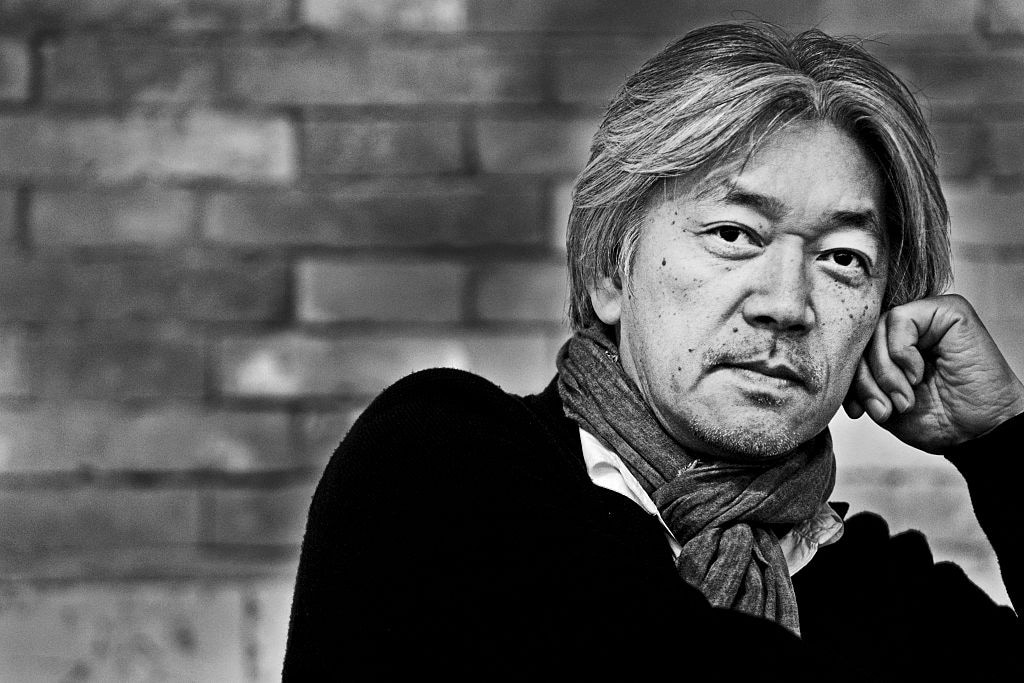
Ryuichi Sakamoto
 Japan
JapanMember of Yellow Magic Orchestra
composer•record producer•actor
Birthday
January 17, 1952
Birth Sign
Capricorn
Birthplace
Nakano, Tokyo, Japan
Age
Died at 71
Height
5 ft 7 in (170 cm)
About
Ryuichi Sakamoto was a Japanese composer, keyboardist, record producer, and actor who reshaped modern music across five decades. He is renowned for his pioneering work with Yellow Magic Orchestra, which helped invent techno and synth-pop, and for his Academy Award-winning score for The Last Emperor. Sakamoto's prolific output spanned classical, electronic, jazz, and world music, achieving significant success, including Japan's first instrumental number-one single, "Energy Flow." He was known for his insatiable curiosity, blending diverse genres and collaborating with artists such as David Bowie and the Dalai Lama. His activism also infused his work with moral significance. Sakamoto's legacy endures through his extensive catalog, from YMO's electronic anthems to the introspective beauty of his final album, async, continuing to captivate audiences worldwide.
Early Life & Background
Ryuichi Sakamoto was born on January 17, 1952, in Nakano, Tokyo, Japan. His musical journey began remarkably early; he started piano lessons at the age of three and composed his first piece just a year later. By the time he was ten, his prodigious talent was recognized, leading him to study under a professor at the Tokyo University of the Arts. While initially drawn to classical masters like Bach and Debussy, Sakamoto also keenly absorbed the contemporary sounds of the 1960s, including The Beatles and emerging electronic music experiments. He pursued higher education at the Tokyo National University of Fine Arts and Music, where he earned a Bachelor of Arts degree in composition and a Master of Arts in electronic and ethnic music. During his time there, he gained rare access to groundbreaking instruments like Buchla and Moog synthesizers, which would profoundly influence his future work. He also engaged with the political landscape, joining the leftist student group Zen Ga Kren.
After completing his studies, Sakamoto embarked on his professional career, working as a versatile session musician for various Japanese rock and jazz acts. This period of collaborative work laid the groundwork for a pivotal encounter in 1976, when he met musician Haruomi Hosono and subsequently joined his live band. Their artistic connection quickly deepened, and a year later, in 1977, Sakamoto co-produced Yukihiro Takahashi's debut solo album, Saravah! . The synergy between Sakamoto, Hosono, and Takahashi was immediate and undeniable. This creative chemistry culminated in 1978 when the trio recorded Hosono's album Paraiso under the moniker Harry Hosono and the Yellow Magic Band. The same year marked their official formation as Yellow Magic Orchestra, a synth-driven trio that would become internationally renowned for helping to invent the techno and synth-pop genres. Sakamoto's profound understanding of music theory earned him the nickname "The Professor" from his bandmates, a testament to his intellectual rigor and musical depth.
Career Growth
Yellow Magic Orchestra's 1978 self-titled debut launched a phenomenon. Playing at Tokyo's Pit Inn jazz club, they caught the attention of A&M Records, and soon Japanese fans were screaming and chasing them through streets, a scene dubbed "Japanese Beatlemania." Sakamoto also released his first solo album, Thousand Knives, that year. YMO's 1979 album Solid State Survivor became a landmark, and Sakamoto's 1980 solo track "Riot in Lagos" from B-2 Unit helped shape electro and hip hop.
In 1983, he made his acting and film composing debut in Merry Christmas, Mr. Lawrence alongside David Bowie. The theme became "Forbidden Colours" with David Sylvian. That same year, YMO disbanded. Four years later, Sakamoto won the Academy Award for Best Original Score for The Last Emperor, the first Japanese composer to do so, along with a BAFTA, two Golden Globes, and a Grammy. He went on to score The Sheltering Sky, Little Buddha, and The Revenant. In 1992, he composed for the Barcelona Olympics. His 1999 single "Energy Flow" became Japan's first instrumental number-one. He later launched an eco-friendly label, commmons, in 2006, with the middle 'm' standing for 'music'. He was named an Officier of the Ordre des Arts et des Lettres in 2009.
Career Timeline
Public Image & Style
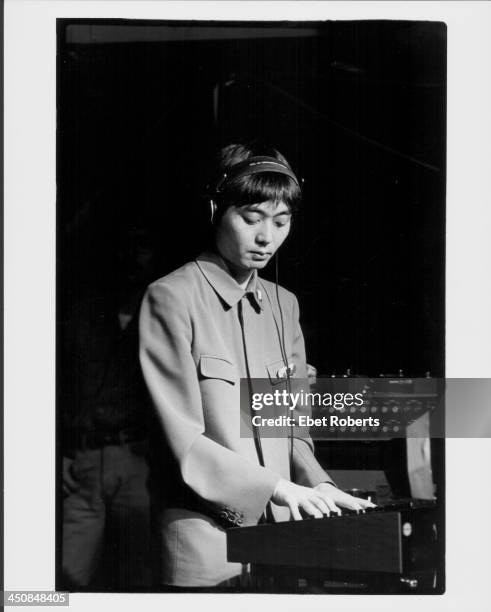
Sakamoto's public persona was that of a thoughtful, intellectually curious artist who moved between worlds. On stage with YMO, he wore futuristic costumes and played synthesizers with theatrical flair. In his solo work, he was often seen at a grand piano, head bowed, playing with quiet intensity. Media described him as a "Renaissance Man", composer, activist, actor. His social media reflected his activism: he posted about anti-nuclear protests and Ainu rights alongside concert announcements. Fans admired his refusal to be pinned down, moving from pop stardom to avant-garde composition without apology. YMO's fan culture was intense; at the height of their fame, fans tore at the band members' clothes in the streets.
Fame & Fandom (iFAMOUS Rankings)
The community surrounding Ryuichi Sakamoto is defined by its reverence for his artistic depth rather than a single monolithic identity. Unlike pop acts with specific collective nouns, his supporters span electronic enthusiasts, classical aficionados, and film score lovers who coalesce around niche interests on platforms like Reddit and dedicated wikis. While lacking formal campaigns comparable to K-pop stans, this diverse fanbase has been instrumental in preserving his legacy through digital archiving, reissuing obscure vinyl, and organizing streaming drives following his passing. They engage in deep-dive projects analyzing his production techniques, treating him as a figure of academic and artistic respect. His respectful distance from the public only heightened this devotion, allowing his work to speak for itself while his charitable actions, such as supporting 2011 disaster relief, deeply resonated with those who followed his career. This unique blend of intellectual curiosity and emotional connection has kept his influence alive across generations. His enduring global stature is reflected in the iFANN Global Fame Rankings. He stands as the 37th most famous person in Japan, holding steady from the previous cycle. From his origin country, he ranks as the 33rd most famous person from Japan. Within East Asia, he is positioned as the 65th most famous person in East Asia. Most notably within his musical sphere, he remains the 2nd most famous person in J-Pop / J-Rock.
Interesting Facts and Legends
As a high schooler in Tokyo, Sakamoto passed time on crowded trains by counting the distinct sounds the train made, identifying more than ten each morning. Born in 1952, the same year John Cage composed 4′33″, he carried that era's experimental spirit into his own work. He once described the piano as an extension of his body and brain while simultaneously calling himself a gadget victim. He also noted that while others' ears close to new sounds with age, his continued to open. His first studio album was a collaborative project with percussionist Toshiyuki Tsuchitori titled Disappointment - Hateruma. Standing approximately 5 feet 7 inches tall, he collaborated with William S. Burroughs, Robert Wilson, José Carreras, and the Dalai Lama. A widely retold story from his early days involves composing the theme for Merry Christmas, Mr. Lawrence while recovering in a hospital bed, blending Western classical structures with Eastern dissonance. Fans often cite his refusal to play Behind the Mask in a standard pop format as evidence of his refusal to be typecast, preferring instead to rearrange it into haunting, minimalist pieces. Following his diagnosis with pancreatic cancer in 2014, he continued to compose until the end, completing his final album async just months before his death. His posthumous removal of music from Israeli streaming services in October 2025 as part of the No Music For Genocide campaign further cemented his legacy as an artist whose principles extended beyond his music.
Notable Quotes
“Asian music (Javanese Gamelan) heavily influenced Debussy, and Debussy heavily influenced me. So, the music goes around the world and comes full circle.”
“Piano is my main instrument. It is like the extension of my body and brain.”
“I'm basically a gadget victim, I always like new things!”
“As people get older, normally their ears close to new sounds. My ears get more open as I get older.”
Family & Personal Life
Sakamoto's father, Kazuki, was a well-known literary editor. His mother, Keiko, designed women's hats. He had no siblings. He married keyboardist Akiko Yano in the early 1980s; they had a daughter, Miu Sakamoto, who became a singer-songwriter. The marriage ended in divorce. He also had a second daughter from a different relationship, though details about her mother are not public. As of his death, he lived in Tokyo. His estate is managed by Kab Inc.
Notable Connections
Sakamoto's closest collaborators were his YMO bandmates Haruomi Hosono and Yukihiro Takahashi. He also worked extensively with David Sylvian, Bernardo Bertolucci, Alva Noto, and Bryce Dessner. His acting co-star David Bowie became a lifelong friend. He collaborated with William S. Burroughs, Robert Wilson, José Carreras, and the Dalai Lama.
Relationships & Dating History
Sakamoto was married to keyboardist Akiko Yano, a prominent figure in Japanese music. They met through the Tokyo music scene and had one daughter, Miu Sakamoto, who became a singer-songwriter. The marriage ended in divorce, though the exact year is not widely publicized. He also had a second daughter from a different relationship, but details about that partner have not been publicly confirmed. At the time of his death, Sakamoto was not known to be in a romantic relationship.
- MarriedAkiko Yano1982 - 1990Met through the Japanese music scene; had one daughter, Miu Sakamoto. Marriage ended in divorce.
Death & Aftermath
Died
March 28, 2023 (aged 71)
Death Place
Tokyo, Japan
Cause of Death
Complications from throat cancer
The cultural landscape shifted immediately following the announcement, with major music platforms reporting significant surges in streaming for his Academy Award-winning score for The Last Emperor and his ambient works. Tributes poured in from peers like David Byrne, Brian Eno, and Hans Zimmer, while institutions such as the Japan Society in New York held moments of silence and the Berlin Philharmonic dedicated concerts to his memory. Fan vigils organized in Tokyo and other cities saw supporters gathering to play his music and leave flowers, marking a global outpouring of grief for an artist who remained active until shortly before his passing.
Ryuichi Sakamoto passed away on March 28, 2023, at a hospital in Tokyo, Japan, where he had been receiving treatment for throat cancer since his diagnosis in late 2014. His death was confirmed by his management agency and family through official statements, establishing the cause as complications arising from his long-term battle with cancer. While details of his specific final hours were not made public, it is confirmed that he died peacefully surrounded by loved ones, ending a private struggle that had not diminished his creative output until the very end. A private funeral or memorial service was held consistent with the wishes of the Sakamoto family, though specific dates, locations, and attendee lists were not made public to maintain discretion during their time of grief.
Consequently, the burial or cremation location has never been disclosed to the public. In the aftermath, a joint venture between Exceleration Music and NexTone acquired his recording and publishing catalog in July 2026, ensuring the preservation of his work globally alongside plans for a retrospective film series titled Music by Ryuichi Sakamoto and an immersive exhibition called Ambient Kyoto.
Net Worth (Estate Value)
$15 Million
iFANN Editorial Team estimate
Per iFANN's editorial analysis, the estate of Ryuichi Sakamoto is valued at $15 Million as of 2026. The bulk of this wealth derives from his extensive music catalog, encompassing YMO royalties, solo album sales, and film score licensing. His Oscar-winning score for The Last Emperor alone generates ongoing revenue through streaming and physical sales. Posthumous releases, such as the single G.T. (2026) and the EP The Unfinished (2025), continue to add value. The documentary Ryuichi Sakamoto: Opus also contributes to the financial portfolio. His independent label commmons, launched in 2006, operated as an eco-friendly venture that never aimed at profit but successfully distributed his later work. The estate is managed by Kab Inc., which runs his official website and scores shop.
Awards Won (6)
Sakamoto won the Academy Award for Best Original Score for The Last Emperor, becoming the first Japanese composer to do so. He also won a BAFTA, two Golden Globes, and a Grammy for the same film. He received the Silver Lion at Venice Film Festival and was named an Officier of the Ordre des Arts et des Lettres by France.
1988 · Best Original Score
The Last Emperor
1991 · Best Original Score
The Sheltering Sky
1988 · Best Original Score
The Last Emperor
Known For
Merry Christmas, Mr. Lawrence
1983 · Composer, Actor
The Last Emperor
1987 · Composer
The Sheltering Sky
1990 · Composer
The Revenant
2015 · Composer
async
2017 · Album
Keywords
Sources
Quick Facts
- Profession
- composer, record producer, actor
- Born
- +1952-01-17
- Birthplace
- Nakano, Tokyo, Japan
- Died
- +2023-03-28
- Death Place
- Tokyo, Japan
- Gender
- Male
- Spouse
- Akiko Yano
- Birth Sign
- Capricorn
Personal Details
- Full Name
- Ryuichi Sakamoto
- Height
- 5 ft 7 in (170 cm)
- Spouse
- Akiko Yano
- Children
- 2 daughters (including Miu Sakamoto)
- Education
- Tokyo National University of Fine Arts and Music (BA in composition, MA in electronic and ethnic music)
Filmography
35
Total
30
Film
5
TV
Frequently Asked Questions
How old was Ryuichi Sakamoto when he died?
Did Ryuichi Sakamoto have children?
What was Ryuichi Sakamoto's net worth at the time of his death?
Was Ryuichi Sakamoto married?
What instruments did Ryuichi Sakamoto play?
Social Media

Join the community
fans discussing